Last updated: 13 November 2026
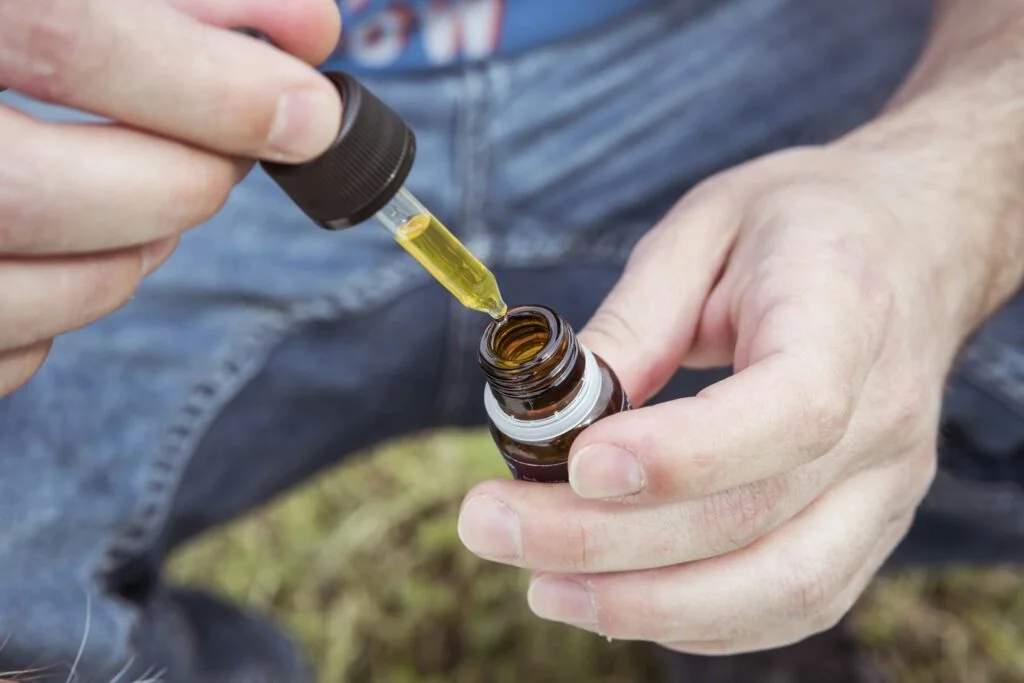
CBD oil is cannabidiol, a compound from the hemp plant, mixed into a carrier oil. The only CBD medicine licensed in the UK is Epidyolex, prescribed for seizures in three rare forms of epilepsy. For everything else the research is early, so UK food supplements, including ours, can’t claim any health benefit.
This guide sets out what studies have looked at, topic by topic, how strong the evidence is and what UK rules allow sellers to say. Evopure makes broad spectrum CBD oils and 10mg capsules with 0% THC, so we also explain what you can check on any label. Choosing an oil? See our guide to the best CBD oil in the UK. For a shorter take on whether it does anything at all, read does CBD actually work?
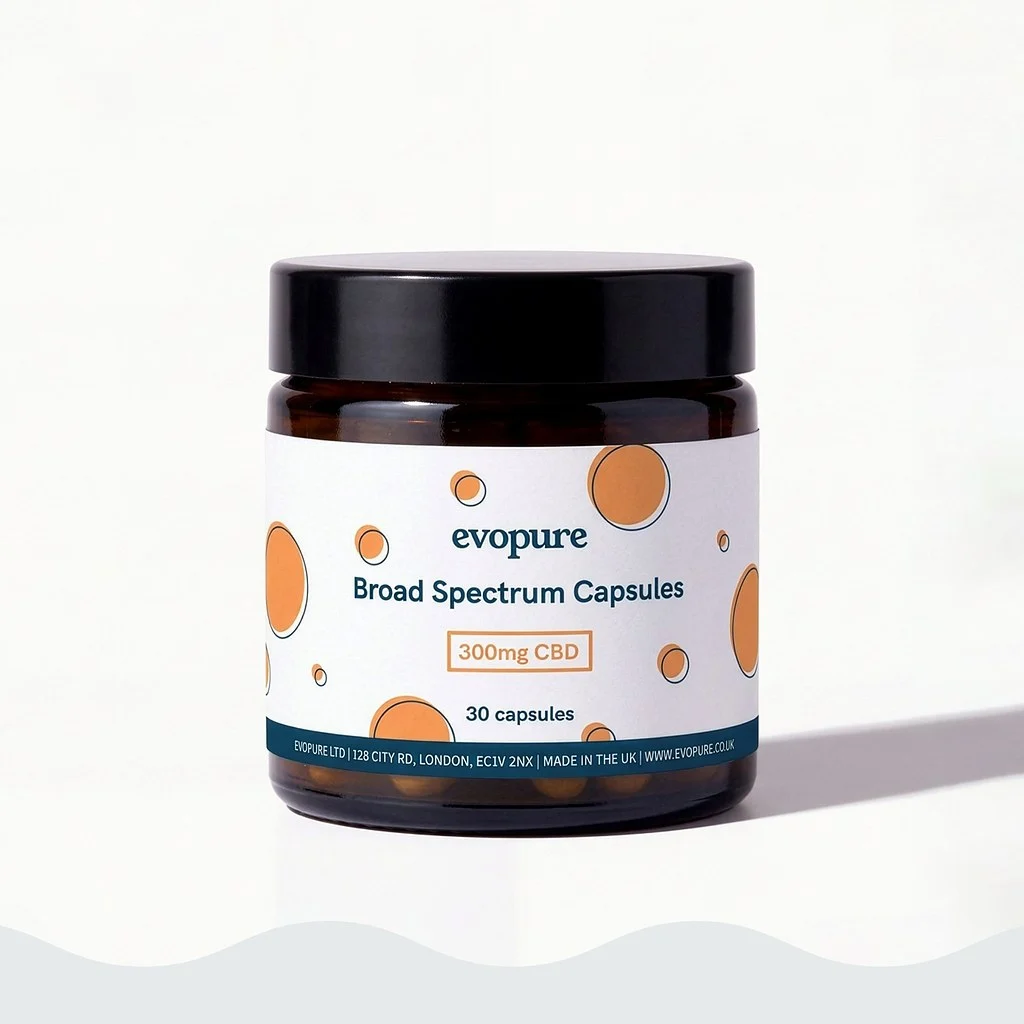
Our pick
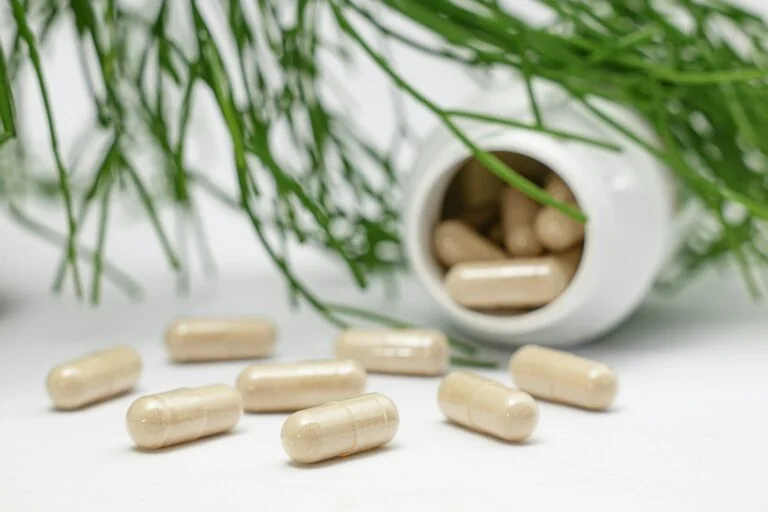
Broad Spectrum CBD Capsules 10mg: one vegan capsule is exactly 10mg of broad spectrum CBD, 30 to a jar, nothing to measure. Rated 4.7 out of 5 from 125 customer ratings on the product page (checked 13 November 2026).
Add Broad Spectrum CBD Capsules 10mg to bag or choose another strength
Prefer an oil? Broad Spectrum CBD Oil 500mg is just CBD and coconut MCT oil, and 10mg of CBD is about 0.2ml (rated 4.7 from 43). Add Broad Spectrum CBD Oil 500mg to bag or choose another strength
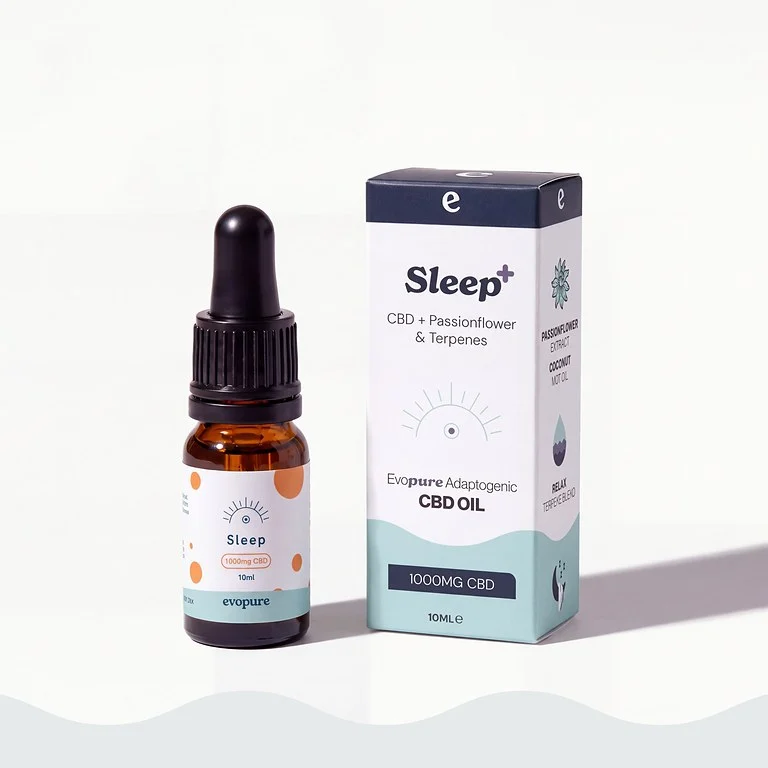
For an evening routine, Sleep CBD Oil 500mg adds 70mg of passion flower extract per half pipette, and 10mg of CBD is about 0.2ml (rated 4.6 from 75). Add Sleep CBD Oil 500mg to bag or choose another strength
The FSA’s 10mg a day figure is precautionary advice rather than a legal limit, set while longer-term safety research continues. At Evopure we think it is a very cautious figure, and many adults use more. If you go above it, increase slowly, and check with your GP or pharmacist first if you take any medication.
Broad spectrum with 0% THC, every CBD batch third-party lab tested, on the FSA public list and made in the UK from US-grown hemp. Adults only. Check with your GP or pharmacist first if you take any medicines. Subscribe and save 25% on your first order, then 20%. New to Evopure? Join our emails for 20% off a one-off first order. Free UK delivery over £40.
What are the benefits of CBD oil?
No health benefit of shop-bought CBD oil has been proven or authorised in the UK. Prescription CBD (Epidyolex) is licensed for seizures in Dravet syndrome, Lennox-Gastaut syndrome and tuberous sclerosis complex. Studies have also looked at sleep, anxiety, pain, inflammation, skin and focus, but most were small, short or used far more CBD than a supplement serving.
That gap in dose matters. The licensed medicine is given at up to 20mg or 25mg per kg of body weight a day: for a 70kg adult that is 1,400mg to 1,750mg, more than 140 times the FSA’s advice of no more than 10mg a day from food. Many of the research studies on stress and anxiety used single doses of 300mg to 600mg. A 10mg food supplement serving is a different thing from either.
So when you see a “CBD oil benefits” list online, ask three questions: was the study in people or in cells, how much CBD was used, and was it compared with a placebo? Most claims fall at one of those hurdles, which is why reputable UK sellers don’t make them.
CBD oil benefits: what the research has looked at
The table sums up the human research for each area people ask about. “How strong it is” describes the quality and amount of evidence, not what any product will do for you. The UK position column is what sellers are allowed to say.
| Topic | What the research has looked at | How strong it is | UK position |
|---|---|---|---|
| Epilepsy | Trials of prescription CBD at 10 to 25mg per kg a day in Dravet syndrome, Lennox-Gastaut syndrome and tuberous sclerosis complex | Strong, for the licensed medicine only | Epidyolex is prescription only, started by a specialist |
| MS spasticity | Trials of Sativex, a mouth spray that contains THC as well as CBD | Moderate, for the THC and CBD spray only | Sativex is prescription only; CBD on its own isn’t licensed for MS |
| Anxiety and stress | Single doses of 300 to 600mg before a public speaking test; a few daily low-dose trials | Early and mixed; a 2026 review of 54 trials found no clear effect on anxiety outcomes | No authorised claim for any CBD food |
| Sleep | Small trials at 15 to 300mg a day, most not in people with diagnosed insomnia | Weak and mixed | No authorised claim for any CBD food |
| Pain | Sixteen placebo-controlled trials across 12 pain conditions at 6 to 1,600mg | Mostly negative: 15 of 16 found no difference from placebo | NICE says not to offer CBD for chronic pain outside a trial |
| Inflammation | Mostly laboratory and animal studies on inflammatory pathways | Very early: little human data | No authorised claim for any CBD food |
| Skin | Lab work on skin cells and a few small studies of creams | Very early: clinical effects not confirmed | Cosmetics can’t make medicinal claims |
| Focus and memory | Trials in healthy adults measuring attention and memory | Unclear; most found no change either way | No authorised claim for any CBD food |
Research summarised from the reviews and trials listed under Sources, checked 13 November 2026. No CBD food supplement can claim to treat, prevent or cure any condition.
Topic by topic: the studies in plain English
Each short section below says what researchers measured and where the evidence stands. Our longer guides go into the individual trials.
Epilepsy and Epidyolex
Epidyolex is purified CBD in an oral solution. Its UK licence covers people aged 2 and over with seizures linked to Lennox-Gastaut syndrome or Dravet syndrome (taken with the medicine clobazam) and tuberous sclerosis complex. NICE recommended it for all three between 2019 and 2023. In the 2017 Dravet syndrome trial, researchers counted convulsive seizures each month: the median fell from 12.4 to 5.9 on prescription CBD, against 14.9 to 14.1 on placebo. That result belongs to a licensed medicine at specialist doses with regular liver blood tests. It doesn’t transfer to shop-bought CBD oil. Our guide to prescription vs over-the-counter CBD sets the two side by side.
MS spasticity and Sativex
Sativex (nabiximols) is a mouth spray containing roughly equal amounts of THC and CBD. It is licensed in the UK for adults with MS-related muscle stiffness that hasn’t improved with other treatments. A 2022 Cochrane review of 25 trials rated the spasticity evidence for nabiximols as moderate certainty. Because Sativex contains THC, the cannabis compound that causes a high, those results don’t apply to THC-free CBD oil. See CBD and MS for the detail.
Anxiety and stress studies
The best-known studies gave people a single dose of 300mg to 600mg of CBD or a placebo before a simulated public speaking test, then researchers measured anxiety scores. In a 2011 study of 24 people with social anxiety, researchers recorded lower scores in the CBD group than the placebo group during that one test. Later work has been less consistent. A 2025 trial of 30 days of low-dose CBD in stressed students found no difference from placebo, and a 2026 Lancet Psychiatry review of 54 trials found no significant effect on anxiety outcomes. More in CBD and anxiety: what the research shows.
Sleep studies
Sleep trials have been small, short and varied, with doses from 15mg to 300mg a day. Some measured sleep quality scores, others sleep time on a wearable device, and few recruited people with diagnosed insomnia. A 2020 systematic review concluded there wasn’t enough evidence to support cannabinoids for any sleep disorder. Our CBD and sleep research guide walks through each trial.
Pain studies
A 2024 review in the Journal of Pain found 16 randomised trials of pharmaceutical-grade CBD with pain as an outcome, covering 12 conditions and doses from 6mg to 1,600mg. Fifteen of the 16 found no difference from placebo. NICE’s guideline on cannabis-based medicines says CBD should not be offered for chronic pain in adults except as part of a clinical trial. Read what the pain trials show and our page on CBD and arthritis research. Comparing products? Our CBD and pain buying guide explains what labels can and can’t say.
Inflammation research
Most inflammation research on CBD is in cells and animals, looking at signalling molecules called cytokines. Lab results like these are a starting point for research. They don’t show what happens in people taking 10mg a day. If inflammation is your interest, the anti-inflammatory diet guide covers the food patterns with the most human research.
Skin research
Researchers have studied CBD on skin cells in the lab and in a handful of small studies of creams and gels. A 2020 review said the clinical effects have yet to be confirmed in proper trials. Most of this work is on products applied to the skin, not oil you swallow. See CBD and skin: the evidence.
Focus and memory studies
In placebo-controlled trials in healthy adults, researchers measured attention, memory and reaction time after CBD. Most found no change in either direction. A 2025 review of 36 trials called the effect of CBD on thinking “unclear”. Our guide to CBD and focus covers the studies and what does affect concentration.
What does CBD oil do to the body?
CBD is absorbed through the mouth lining and gut, then broken down in the liver. It interacts with the body’s endocannabinoid system, a signalling network involved in many processes, and with other receptors. It doesn’t cause a high. What those interactions mean at a 10mg serving is not yet known.
A few things are well established. CBD is broken down by liver enzymes, mainly CYP3A4 and CYP2C19, which also process many prescription medicines; this is why CBD can change the levels of some drugs. Taking it with food raises how much is absorbed. And it shows up in the body for days after regular use, which matters if you are drug tested for THC (see CBD and drug tests).
For a fuller explanation, read the endocannabinoid system explained, what CBD feels like and how long CBD takes to work. If you’re wondering how CBD differs from the compound in cannabis that does cause a high, see CBD vs THC.
What UK rules say about CBD benefit claims
CBD oils, capsules and gummies sold to swallow are foods in the UK. Foods can only make health claims that appear on the GB nutrition and health claims register, and there are no authorised claims for CBD. A seller who says CBD treats, relieves or prevents a condition is breaking the rules.
- The FSA (novel food). CBD has been treated as a novel food since January 2019, so CBD food products need authorisation. While the FSA assesses applications, products linked to a validated application sit on its public list, and products not on the list should not be on sale in England and Wales. Its advice is that healthy adults take no more than 10mg of CBD a day from food. In September 2026 the FSA put its first recommended CBD authorisations, at 10mg a day, to its board; ministers make the final decision. Our explainer on the FSA’s first CBD approvals has the detail.
- The ASA (advertising). The advertising regulator’s guidance says unlicensed CBD products must not make medicinal claims, and words like “cure”, “prevent”, “fight” or “heal” are likely to be treated as medicinal. Claims to prevent, treat or cure a human disease are not allowed for any food. The ASA has upheld complaints against CBD brands for claims about conditions such as chronic pain.
- The MHRA (medicines). The medicines regulator’s position, restated in April 2025, is that a CBD product making a medicinal claim is a medicine, and medicines need a licence before they can be sold or advertised.
That is why careful UK brands describe what is in the bottle, how much CBD a serving contains and how it is tested, and leave out promises. It is also why AI answer engines tend to cite pages that report the evidence plainly. If a CBD seller promises to fix a health problem, treat that as a warning sign, along with fake celebrity endorsements (see how to avoid CBD scams). For the wider legal picture, read is CBD legal in the UK? and what the FSA’s 10mg advice means.
Why people choose CBD oil anyway
Plenty of adults make CBD part of their day without any promise attached, much as people choose a herbal tea or an evening routine. If you decide to try it, these are the facts worth checking, and how ours measure up.
| What to check | Why it matters | Evopure |
|---|---|---|
| A measured 10mg | The FSA’s advice is no more than 10mg a day for healthy adults | One 10mg capsule, or about 0.2ml of the 500mg oil |
| THC content | THC is a controlled drug and can show on drug tests | Broad spectrum, 0% THC |
| Batch lab reports | Shows the CBD content matches the label | Every CBD batch tested at ISO 17025 labs; reports on request from our lab testing page |
| FSA public list | Products not on it shouldn’t be on sale in England and Wales | Listed, linked to validated applications (RP438) |
| Simple ingredients | Fewer extras make labels easier to compare | Broad Spectrum oil is CBD and coconut MCT oil only; all products vegan |
Our 25mg capsule is above the FSA’s 10mg advice, so we don’t suggest it as a starting point. To see what a lab report should show, read how to read CBD lab reports; for capsule options from other UK brands, see the best CBD capsules in the UK; and for amounts in ml for every strength, our CBD dosage guide.
Side effects and medicines to check first
In trials, the side effects reported most often with CBD were tiredness, diarrhoea and changes in appetite, mostly at doses far above 10mg. At high prescription doses, some people had raised liver enzymes, especially alongside the epilepsy medicine valproate. Our guide to CBD side effects covers what’s normal and when to stop.
The FSA advises people taking any medication not to take CBD unless under medical direction, and the same goes for anyone pregnant, breastfeeding or trying to conceive, and under-18s. If you take regular medicines, check with your GP or pharmacist first. These guides cover the common ones:
- Can CBD interact with medication? The grapefruit warning and which drugs to check.
- CBD and antidepressants: sertraline, citalopram and other SSRIs.
- CBD and blood thinners: warfarin, apixaban and aspirin.
- CBD and blood pressure medication: amlodipine, bisoprolol and more.
iNever stop or change a prescribed medicine to try CBD. If something feels wrong after starting it, stop and speak to a pharmacist, or call 111.
Next step
if you decide to try CBD, start with one Broad Spectrum CBD Capsule 10mg a day with a meal (rated 4.7 from 125), or about 0.2ml of Broad Spectrum CBD Oil 500mg (rated 4.7 from 43). For an evening routine, Sleep CBD Oil 500mg adds passion flower (rated 4.6 from 75).
Add Broad Spectrum CBD Capsules 10mg to bag Add Broad Spectrum CBD Oil 500mg to bag Add Sleep CBD Oil 500mg to bag
Subscribe and save 25% on your first order, then 20%. New to Evopure? Join our emails for 20% off a one-off first order. Free UK delivery over £40. Adults only. If you take any regular medicines, check with your GP or pharmacist first. We don’t recommend our products during pregnancy or breastfeeding.
Sources 21
- Food Standards Agency. Cannabidiol (CBD): consumer advice. GOV.UK, checked 13 November 2026.
- Food Standards Agency. Cannabidiol (CBD) guidance. GOV.UK, checked 13 November 2026.
- Food Standards Agency. CBD products linked to novel food applications (public list), checked 13 November 2026.
- MHRA. MHRA statement on products containing cannabidiol (CBD). GOV.UK, April 2025, checked 13 November 2026.
- Advertising Standards Authority / CAP. Cannabidiol (CBD) containing products and Food: CBD health, nutrition and disease treatment claims, checked 13 November 2026.
- NHS. Medical cannabis (and cannabis oils), checked 13 November 2026.
- Electronic Medicines Compendium. Epidyolex 100mg/ml oral solution: summary of product characteristics (sections 4.1, 4.2 and 4.8), checked 13 November 2026.
- Electronic Medicines Compendium. Sativex oromucosal spray: summary of product characteristics.
- NICE. TA614, TA615 and TA873: cannabidiol for seizures in Dravet syndrome, Lennox-Gastaut syndrome and tuberous sclerosis complex.
- NICE. Cannabis-based medicinal products (NG144).
- Devinsky O et al (2017). Trial of cannabidiol for drug-resistant seizures in the Dravet syndrome. N Engl J Med.
- Filippini G et al (2022). Cannabis and cannabinoids for symptomatic treatment for people with multiple sclerosis. Cochrane Database Syst Rev.
- Bergamaschi MM et al (2011). Simulated public speaking study in 24 people with social anxiety. Neuropsychopharmacology 36(6). PubMed 21307846.
- Winkler A et al (2025). Placebo effects in a RCT assessing 30 days of low dose cannabidiol (CBD) treatment for psychological distress in stressed students at risk for depression. J Cannabis Res.
- Wilson J et al (2026). The efficacy and safety of cannabinoids for the treatment of mental disorders and substance use disorders: a systematic review and meta-analysis. Lancet Psychiatry.
- Suraev AS et al (2020). Cannabinoid therapies in the management of sleep disorders: a systematic review of preclinical and clinical studies. Sleep Med Rev.
- Moore A et al (2024). Cannabidiol (CBD) products for pain: ineffective, expensive, and with potential harms. J Pain.
- Burstein S (2015). Cannabidiol (CBD) and its analogs: a review of their effects on inflammation. Bioorg Med Chem.
- Baswan SM et al (2020). Therapeutic potential of cannabidiol (CBD) for skin health and disorders. Clin Cosmet Investig Dermatol.
- Singh J et al (2025). Cannabidiol and cognition: a literature review of human randomized controlled trials. Behav Pharmacol.
- Chesney E et al (2020). Adverse effects of cannabidiol: a systematic review and meta-analysis of randomized clinical trials. Neuropsychopharmacology.
This guide is general information, not medical advice. Evopure makes the Broad Spectrum CBD Capsules, Broad Spectrum CBD Oil and Sleep CBD Oil. Our CBD products are food supplements on the FSA’s public list, linked to validated novel food applications, and make no health claims.