Last updated: 10 November 2026
St John’s wort is a yellow-flowered plant, Hypericum perforatum, sold in the UK as a registered traditional herbal medicine for slightly low mood and mild anxiety. It interacts with many common medicines, including the contraceptive pill, antidepressants, warfarin and epilepsy medicines, so speak to a pharmacist before taking it.
iBelow: what it is, the UK rules, what the trials show, the full interaction list, side effects, who shouldn’t take it and when to see a GP. Checked against the NHS, NICE, the MHRA and a UK registered product leaflet in November 2026. Evopure doesn’t sell St John’s wort.
What is St John’s wort?
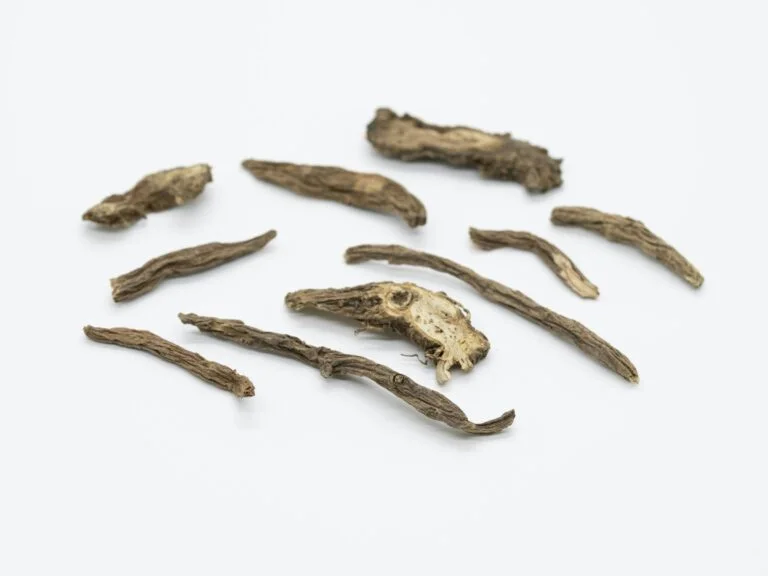
St John’s wort is a wild plant, Hypericum perforatum, with small yellow flowers that bloom around midsummer. Its flowering tops are dried and made into tablets, capsules, teas and tinctures. The main active compounds are hypericin and hyperforin, and hyperforin is the one mainly responsible for its many interactions with medicines.
It grows wild across the UK and has a long history in European folk medicine. Unlike most products on a health shop shelf, the St John’s wort tablets sold in UK pharmacies are regulated as medicines, not food supplements.
Is St John’s wort legal in the UK?
Yes. St John’s wort is legal to buy in the UK, and the products sold in pharmacies are registered herbal medicines under the MHRA’s Traditional Herbal Registration (THR) scheme. A THR means the MHRA has checked safety, quality and evidence of traditional use. It does not mean the product has been proven to work.
| UK fact | What it means |
|---|---|
| Regulator | MHRA (medicines regulator), not the Food Standards Agency |
| How to spot a registered product | A THR number on the pack (for example THR 23056/0011) and often the THR certification mark |
| Registered wording | “traditionally been used to relieve the symptoms of slightly low mood and mild anxiety … based on traditional use only” (the medicine’s leaflet wording) |
| Typical registered dose | One 250mg extract tablet a day, equal to 875 to 1,500mg of dried herb |
| Age | Adults 18 and over only |
| Unregistered products | The MHRA warns some unlicensed products on the UK market or online lack the interaction warnings |
That registered wording belongs to the licensed medicine and its leaflet, not to us: we’re quoting it so you know what the label means. The MHRA’s own advice is that the effectiveness of a THR product hasn’t been assessed, only its safety, quality and history of use.
If you buy St John’s wort online, check for a THR number. Products sold without one, including some teas and imported capsules, may not carry the warnings you need about the pill and other medicines.
What is St John’s wort used for?
St John’s wort is mainly used for low mood. UK registered products are for slightly low mood and mild anxiety, based on traditional use only, and their leaflets say not to take them if you’ve been diagnosed with depression. Elsewhere in Europe, some doctors prescribe it for mild to moderate depression.
The UK leaflet we checked says the product does not relieve the symptoms of depression, and to talk to your doctor first if you think you may be depressed. The NHS says some people take it for depression, but it’s not recommended by doctors.
If low mood is what’s behind your search, our guides to low mood vs depression and the winter blues cover the signs, what helps and when it’s time to speak to someone. For prescribed options, see anxiety medication in the UK.
Does St John’s wort work? What the evidence says
Trials suggest some St John’s wort extracts work better than placebo for mild to moderate depression, and about as well as standard antidepressants over 4 to 12 weeks. But results vary by country and product, strengths differ between brands, and long-term evidence is thin. NICE advises doctors not to prescribe or advise it.
| Source | What it found | How to read it |
|---|---|---|
| Cochrane review, 2008: 29 trials, 5,489 people with major depression | Extracts did better than placebo and similarly to standard antidepressants, with fewer dropouts from side effects | Trials from German-speaking countries were more favourable; the authors had received a grant, fees or travel costs from a manufacturer |
| Meta-analysis, 2017: 27 trials, 3,808 people | Similar response and remission rates to SSRIs in mild to moderate depression | All trials lasted only 4 to 12 weeks; unclear for severe depression |
| NICE depression guideline (NG222) | Accepts some evidence for less severe depression | Says doctors should not prescribe or advise it because of uncertain doses, varying preparations and serious interactions |
| NHS | Some evidence it may help less severe depression | Not recommended by doctors; active ingredients vary between brands and batches |
Most of this research is on depression, not anxiety. The extracts tested in trials were specific standardised products, so the results don’t automatically apply to any tablet, tea or tincture on sale. And the UK registered products are not meant for diagnosed depression at all.
Hyperforin, thought to drive part of its effect on mood, also speeds up the breakdown of many medicines. For other mood-related supplements and their safety, see saffron benefits, 5-HTP and tryptophan.
Which medicines interact with St John’s wort?
St John’s wort interacts with a long list of medicines, including all hormonal contraceptives, antidepressants, HRT, warfarin, epilepsy medicines, ciclosporin and tacrolimus, HIV medicines, digoxin, some statins, triptans, some blood pressure medicines, lithium and thyroxine. It can make some of them work less well, and with antidepressants it can cause dangerous side effects.
| Medicine group | Examples on the UK leaflet | Why it matters |
|---|---|---|
| Hormonal contraception | The pill, emergency pill, implant, patch, hormonal coil | Can stop it working: unplanned pregnancies reported |
| Antidepressants | Sertraline, citalopram, fluoxetine, paroxetine, venlafaxine, duloxetine, amitriptyline | Risk of serotonin syndrome |
| Blood thinners | Warfarin, acenocoumarol | Can lower the blood thinner’s effect |
| Epilepsy medicines | Carbamazepine, phenytoin, phenobarbital, sodium valproate | Seizure control can change |
| Transplant and immune medicines | Ciclosporin, tacrolimus | Lower levels: organ rejection reported |
| HIV medicines | Ritonavir, darunavir, efavirenz and others | Can lower their levels so they work less well |
| Heart medicines | Digoxin, ivabradine, amiodarone | Lower levels of the medicine |
| Others on the leaflet | HRT, simvastatin, atorvastatin, triptans, amlodipine, nifedipine, lithium, thyroxine, some cancer medicines | Effects can change: ask a pharmacist |
The leaflet also lists medicines not to take at the same time unless a doctor has said it’s safe, including some antibiotics (clarithromycin, erythromycin), some antifungals, omeprazole and lansoprazole, tramadol, gliclazide and anaesthetics. It also says to stop St John’s wort at least 10 days before an operation and tell the hospital you take it.
Never stop or change a prescribed medicine in order to take St John’s wort instead. And if you already take St John’s wort alongside another medicine, don’t stop it suddenly without speaking to your pharmacist or doctor, because stopping it can change the level of the other medicine in your blood too.
St John’s wort and the pill
St John’s wort can make hormonal contraception less effective, which means it may not prevent pregnancy. The MHRA advises women using hormonal contraception to prevent pregnancy not to take any product containing St John’s wort. That covers the combined pill, the mini pill, the implant, patches and emergency contraception.
The MHRA had received 19 Yellow Card reports of suspected interactions with hormonal contraceptives when it issued that warning, and 15 of them involved unplanned pregnancies, including four with contraceptive implants. If you’ve taken St John’s wort while relying on hormonal contraception, speak to a pharmacist or your GP or sexual health clinic about extra protection.
St John’s wort with sertraline and other antidepressants
Don’t take St John’s wort with sertraline or any other antidepressant. The NHS says not to use St John’s wort when taking sertraline, and the UK leaflet lists every main antidepressant. Together they can raise serotonin too far and cause serotonin syndrome, a rare but serious reaction.
iSigns include a fast heartbeat, sweating, shaking, twitching muscles and feeling confused or agitated: call NHS 111 straight away if you get these. For more on antidepressant side effects, see does sertraline cause insomnia? and does fluoxetine make you tired?
Asking about CBD and medicines instead? See can CBD interact with medication? For other herbs with medicine cautions, see ashwagandha side effects and lemon balm.
St John’s wort side effects
The most common St John’s wort side effects are stomach upsets, tiredness, restlessness, headache and dizziness. It can also make skin more sensitive to strong sunlight and sunbeds, causing sunburn-like reactions, especially in fair skin. If you get an allergic reaction such as a rash or hives, stop taking it and see a doctor.
- Stomach: indigestion, loss of appetite, feeling sick, diarrhoea or constipation.
- Nervous system: tiredness, restlessness, headache, nerve pain or tingling, dizziness, anxiety and, rarely, mania (raised excitability).
- Skin and light: the leaflet says to avoid excessive sunbathing and sunbeds while taking it.
- Driving: it may make you dizzy or sleepy; if it does, don’t drive or use machines.
Tell your pharmacist or doctor if a side effect is severe or lasts more than a few days. You can report suspected side effects from herbal medicines to the MHRA’s Yellow Card scheme.
Who should not take St John’s wort?
Don’t take St John’s wort if you’re under 18, pregnant or breastfeeding, have been diagnosed with depression, take any medicine on the interaction list, have very sun-sensitive skin or are having light treatment, or have an operation coming up. If you’re unsure whether any medicine you take is affected, ask a pharmacist first.
- Pregnancy and breastfeeding: the NHS says not to take it, because it isn’t known for sure to be safe.
- Diagnosed depression: UK registered products are not for depression; speak to your GP about treatment.
- Bipolar disorder: mania is a listed side effect, so speak to your doctor before any mood remedy.
- Light therapy: including a SAD lamp used as treatment; check with your doctor first.
- Surgery: stop at least 10 days before an operation, as the leaflet advises.
- Lactose intolerance: some tablets contain lactose; check the pack.
Women going through the menopause should also take care: the leaflet lists all HRT. Our guide to the best supplements for menopause covers what’s known for each option.
How much St John’s wort do you take?
Follow the pack of a registered product. The UK registered tablet we checked contains 250mg of dried extract, equal to 875 to 1,500mg of St John’s wort, taken once a day by adults. The leaflet says to talk to a pharmacist or doctor if symptoms worsen or don’t improve after 6 weeks.
iStrength varies a lot between products, which is one reason NICE gives for not recommending it. Don’t double up with teas or tinctures alongside tablets, and don’t take more than the pack says. Taking too many is a reason to speak to a pharmacist or doctor.
When to see a GP or get urgent help
See a GP if you’ve had a low mood for more than 2 weeks, you’re struggling to cope, or what you’re trying yourself isn’t helping, the NHS says. Adults can also refer themselves to NHS Talking Therapies without seeing a GP. Get urgent help if you feel you can’t keep yourself safe.
| If you have | What to do |
|---|---|
| Low mood for more than 2 weeks, or you think you may be depressed | See a GP before trying St John’s wort |
| You’ve taken it while using hormonal contraception | Ask a pharmacist, GP or sexual health clinic about extra protection |
| Fast heartbeat, sweating, shaking or confusion while taking it with another medicine | Call NHS 111 now |
| Thoughts of harming yourself, or you need to talk | Call NHS 111 and choose the mental health option, or Samaritans on 116 123 |
| Your life or someone else’s is at risk | Call 999 or go to A&E |
For men in particular, our men’s mental health guide lists where to get help in the UK.

Next step
Magnesium Glycinate Sleep Complex
Evopure doesn’t sell St John’s wort. If you’re not taking it or any other medicine and want an everyday supplement, Evopure’s Magnesium Glycinate Sleep Complex is a berry drink powder with 290mg of magnesium (77% NRV) per 4.75g serving, from bisglycinate and citrate. Magnesium contributes to normal psychological function and to a reduction of tiredness and fatigue.
Add Magnesium Glycinate Sleep Complex to bag See ingredients and reviews
Subscribe and save 25% on your first order, then 20%. New to Evopure? Join our emails for 20% off a one-off first order. Free UK delivery over £45. If you take any medicine, including St John’s wort, check with a pharmacist first. We don’t recommend our products during pregnancy or breastfeeding.
Subscribe £22.49One-off £29.99
View productSwapping a late coffee? Our Reishi Mushroom Adaptogenic Complex is a reishi hot chocolate powder with 0.5g reishi and 0.5g maca per 8g serving; it contains a little natural caffeine from cocoa. Its pack says it isn’t for people on medication or during pregnancy and breastfeeding. St John’s wort is a registered herbal medicine, so check with a pharmacist if you take it or any other medicine.
Sources 12
- NHS. Treatment for depression (St John’s wort section).
- NHS. Sertraline (cautions with other medicines).
- NHS. Low mood, sadness and depression.
- NHS. Where to get urgent help for mental health.
- NICE (2022). Depression in adults: treatment and management (NG222), recommendation 1.4.38.
- MHRA Drug Safety Update (2014). St John’s wort: interaction with hormonal contraceptives, including implants. GOV.UK.
- MHRA. Herbal medicines granted a traditional herbal registration (THR). GOV.UK.
- Electronic medicines compendium. Patient leaflet: St John’s Wort Mood Lift Tablets 250mg (THR 23056/0011). Checked November 2026.
- Linde K et al (2008). St John’s wort for major depression. Cochrane Database of Systematic Reviews.
- Ng QX et al (2017). Clinical use of Hypericum perforatum (St John’s wort) in depression: a meta-analysis. Journal of Affective Disorders.
- Nicolussi S et al (2020). Clinical relevance of St. John’s wort drug interactions revisited. British Journal of Pharmacology (three authors work for a St John’s wort manufacturer).
- Borrelli F, Izzo AA (2009). Herb-drug interactions with St John’s wort (Hypericum perforatum): an update on clinical observations. AAPS Journal.
This guide is general information, not medical advice. Evopure doesn’t sell St John’s wort.