Last updated: 10 November 2026
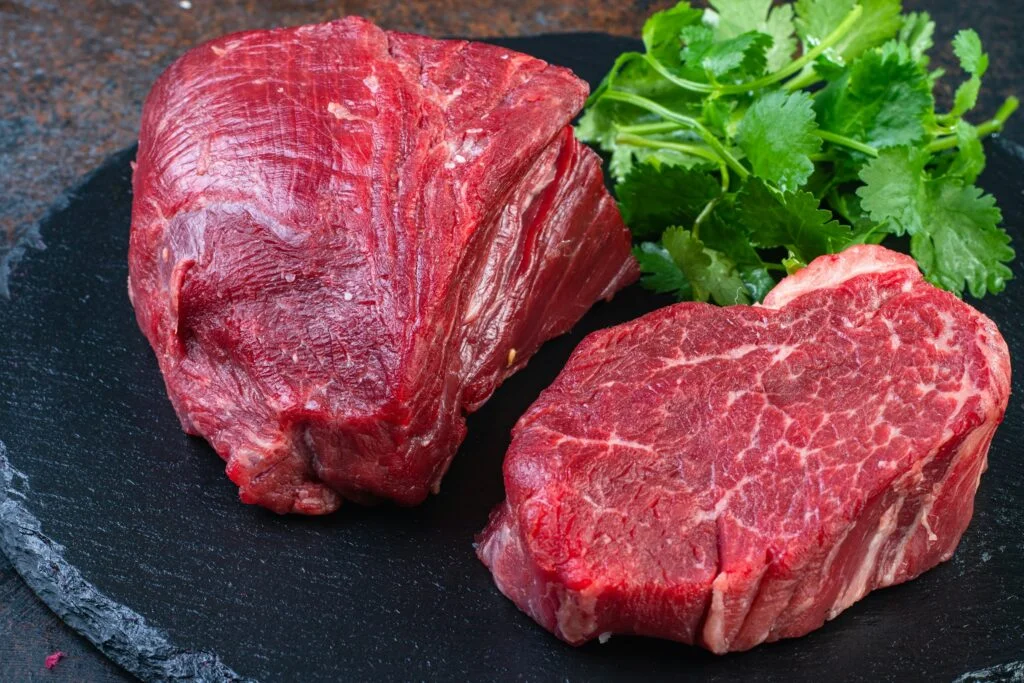
L-carnitine is a nutrient your liver and kidneys make from the amino acids lysine and methionine. It carries fatty acids into your mitochondria to be burned for energy. Red meat is the richest food source. Healthy adults make enough, and supplement trials, usually 1 to 3g a day, show only modest effects.
L-carnitine is sold as a supplement for weight loss, exercise and energy. Below: what it does, the forms (including acetyl-L-carnitine), what the research really shows, how much people take, the TMAO heart question, vegan diets, and why anyone on thyroid medicine should check first.

Our pick
Magnesium Glycinate Sleep Complex
Evopure doesn’t sell L-carnitine. If tiredness is the reason you’re looking, Evopure’s Magnesium Glycinate Sleep Complex is a berry drink powder with 290mg of magnesium (77% NRV) per 4.75g serving, from magnesium bisglycinate and citrate. Magnesium contributes to normal energy-yielding metabolism and to a reduction of tiredness and fatigue.
Add Magnesium Glycinate Sleep Complex to bag See ingredients and reviews
Subscribe and save 25% on your first order, then 20%. New to Evopure? Join our emails for 20% off a one-off first order. Free UK delivery over £45.
Subscribe £22.49One-off £29.99
View productWhat is L-carnitine?
L-carnitine is a compound made from two amino acids, lysine and methionine, in the liver and kidneys. Its main job is moving long-chain fatty acids into the mitochondria, the parts of cells that turn fat into energy. It is stored mostly in muscle, including the heart, and you also get it from meat and dairy.
| L-carnitine fact | The detail |
|---|---|
| Made by | Liver and kidneys, from lysine and methionine |
| Main job | Carries long-chain fatty acids into mitochondria |
| Richest food | Red meat: 42 to 122mg in 85g (3oz) of cooked beef steak |
| Typical intake | Mixed diet 24 to 145mg a day; vegan diet about 1.2mg a day |
| Absorption | About 63 to 75% from food, but only 14 to 18% from supplements |
| Amounts used in trials | Usually 1 to 3g a day, for weeks to months |
| Side effects | 3g a day or more can cause nausea, diarrhoea and a fishy body odour |
| GB health claims | None authorised; EFSA rejected claims for weight, energy and exercise |
| UK medicine | Levocarnitine is prescribed for diagnosed carnitine deficiency |
| Check first | Thyroid medicine, warfarin, kidney disease, pregnancy |
Because the body makes enough for healthy adults, there is no UK or EU daily reference amount for carnitine. A true deficiency is rare, and is diagnosed and treated by doctors.
L-carnitine vs acetyl-L-carnitine: which form?
L-carnitine is the basic form, while acetyl-L-carnitine has an acetyl group attached that helps it cross into the brain, so it is the form used in memory and mood studies. L-carnitine L-tartrate is the form used in most exercise recovery trials. Avoid D-carnitine and DL-carnitine, which aren’t active and can lower your natural L-carnitine.
| Form | What it is | Where it’s studied |
|---|---|---|
| L-carnitine | The natural form found in food | Weight and general use |
| L-carnitine L-tartrate | L-carnitine bound to tartaric acid, about 68% carnitine by weight | Exercise recovery |
| Acetyl-L-carnitine | Crosses into the brain more easily | Memory, mood, nerve pain |
| D- or DL-carnitine | Synthetic, inactive form | Avoid |
Labels can give the weight of the compound rather than the carnitine in it. A 1,000mg L-carnitine L-tartrate capsule provides roughly 680mg of L-carnitine.
L-carnitine benefits: what the research shows
L-carnitine is studied mainly for weight loss, exercise recovery and, as acetyl-L-carnitine, for mood and memory. In trials, people taking L-carnitine lost about 1kg more than people on a placebo, and had a little less muscle soreness after exercise. These are modest effects, and the GB register has no authorised health claim for L-carnitine.
| What was studied | What studies found | How strong |
|---|---|---|
| Weight loss | 43 trials: about 1.1kg more weight lost than placebo; no change in body fat percentage or waist size | Review, modest effect |
| Exercise recovery | 7 trials: less muscle soreness and lower muscle damage markers at 24 hours, mainly in resistance training and untrained people | Review, small trials |
| Mood (acetyl-L-carnitine) | 12 small trials, mostly older adults, reported fewer depressive symptoms; results varied widely | Review, low quality |
| Endurance and energy | EFSA found no cause and effect for endurance or recovery claims; an energy claim was too vague to assess | Claims rejected |
Does L-carnitine help you lose weight?
Only a little. Across 43 trials, L-carnitine led to about 1.1kg more weight loss than a placebo, mostly in adults with overweight or obesity, but body fat percentage didn’t change. It isn’t a fat burner: your body already has enough carnitine, and diet and activity matter far more. See magnesium for weight loss and menopause weight gain for other evidence-led options.
iIf low mood is the reason you’re looking at acetyl-L-carnitine, please speak to your GP: it isn’t a replacement for treatment. For exercise, protein and creatine have far stronger evidence: see how much protein do I need?, creatine and creatine for women.
How much L-carnitine should you take?
Most L-carnitine supplements provide 500mg to 2g a day, and trials mostly used 1 to 3g a day. A review by a US supplement industry body set 2g a day as the highest amount with strong evidence of safety for long-term use. At 3g a day or more, nausea, stomach cramps, diarrhoea and a fishy body odour become more likely.
- Check the form: 1,000mg of L-carnitine L-tartrate gives about 680mg of L-carnitine.
- Split the dose: trials often split it across meals, which may help with stomach upset.
- Give it time: weight and exercise trials ran for weeks to months, not days.
- Count everything: sports drinks, fat burner blends and pre-workouts may already contain carnitine.
If you are tired all the time, a supplement is rarely the answer on its own. Our guides to why you might always be tired and the best supplements for energy go through the checks worth doing first.
Is L-carnitine bad for your heart? The TMAO question
The worry is TMAO (trimethylamine N-oxide), a compound gut bacteria make from carnitine. In a 2013 study, carnitine raised TMAO and sped up artery disease in mice, and people who ate meat made more TMAO from carnitine than vegans did. Human studies show an association, not proof that carnitine supplements harm the heart.
What this means in practice: there is no evidence that ordinary dietary amounts are a problem, and long-term human trials of carnitine supplements and heart outcomes are lacking. If you have heart disease, kidney disease or high cholesterol, ask your GP before taking carnitine supplements regularly. For heart-friendly fats, see our omega-3 guide.
Do vegans need L-carnitine?
Most vegans don’t need an L-carnitine supplement. A vegan diet provides very little carnitine, about 1.2mg a day, but the liver and kidneys make enough for healthy adults. In a study of vegetarian and vegan adults, blood carnitine was slightly lower than in meat eaters, but not by a nutritionally important amount.
The kidneys also adapt by holding on to more carnitine when intake is low. The nutrients vegans do need to plan for are vitamin B12, iodine, iron and omega-3: see vitamin B12 supplements.
L-carnitine side effects, thyroid medicine and other cautions
L-carnitine is generally well tolerated at up to 2g a day. Higher amounts can cause nausea, vomiting, stomach cramps, diarrhoea and a fishy body odour. The biggest medicine caution is thyroid: carnitine can block thyroid hormone working inside cells, so anyone taking levothyroxine should speak to their GP first.
- Thyroid medicine: in a trial, 2 to 4g a day of L-carnitine reduced the effects of too much thyroid hormone in women taking levothyroxine. That means it could also make thyroid medicine for an underactive thyroid work less well. If you take levothyroxine or have any thyroid condition, check with your GP. See underactive thyroid symptoms and overactive thyroid symptoms.
- Warfarin and similar blood thinners: case reports describe L-carnitine making acenocoumarol, a warfarin-type medicine, work more strongly. Speak to your anticoagulant clinic first.
- Sodium valproate and some antibiotics: these can lower carnitine levels. Doctors sometimes prescribe levocarnitine for this, but only under specialist advice.
- Kidney disease or dialysis: carnitine is managed by your kidney team; don’t add a supplement yourself.
- Pregnancy and breastfeeding: there isn’t enough safety evidence for supplements, so avoid unless your doctor advises it.
iStop taking it and speak to a pharmacist if you get side effects. If you take any regular medicines, check with your GP or pharmacist before starting any supplement.
Next step
Magnesium Glycinate Sleep Complex
Most healthy adults make all the carnitine they need. If everyday tiredness is the issue, Evopure’s Magnesium Glycinate Sleep Complex gives 290mg of magnesium (77% NRV) per 4.75g serving in a berry drink, with 500mg glycine and 100mg L-theanine. Magnesium contributes to normal muscle function and to a reduction of tiredness and fatigue.
Add Magnesium Glycinate Sleep Complex to bag
Subscribe and save 25% on your first order, then 20%. New to Evopure? Join our emails for 20% off a one-off first order. Free UK delivery over £45. If you take any regular medicines, check with your GP or pharmacist first. We don’t recommend our products during pregnancy or breastfeeding.
Subscribe £22.49One-off £29.99
View productAlready use CBD? The FSA advises healthy adults to take no more than 10mg of CBD a day: about 0.2ml of the 500mg Broad Spectrum CBD Oil (0.1ml of the 1,000mg) gives 10mg. Adults only.
The FSA’s 10mg a day figure is precautionary advice rather than a legal limit, set while longer-term safety research continues. At Evopure we think it is a very cautious figure, and many adults use more. If you go above it, increase slowly, and check with your GP or pharmacist first if you take any medication.
Our Reishi Mushroom Adaptogenic Complex is a cacao drink with 0.5g reishi and 0.5g maca per 8g serving, and contains a little natural caffeine from cacao.
Sources 12
- NIH Office of Dietary Supplements. Carnitine: fact sheet for health professionals.
- Department of Health and Social Care. Great Britain nutrition and health claims (NHC) register. GOV.UK.
- EFSA Panel on Dietetic Products, Nutrition and Allergies (2011). Scientific opinion on the substantiation of health claims related to L-carnitine. EFSA Journal.
- Askarpour M et al (2020). Beneficial effects of l-carnitine supplementation for weight management in overweight and obese adults. Pharmacological Research.
- Yarizadh H et al (2020). The effect of L-carnitine supplementation on exercise-induced muscle damage. Journal of the American College of Nutrition.
- Veronese N et al (2018). Acetyl-L-carnitine supplementation and the treatment of depressive symptoms. Psychosomatic Medicine.
- Koeth RA et al (2013). Intestinal microbiota metabolism of L-carnitine, a nutrient in red meat, promotes atherosclerosis. Nature Medicine.
- Benvenga S et al (2001). Usefulness of L-carnitine, a naturally occurring peripheral antagonist of thyroid hormone action, in iatrogenic hyperthyroidism. Journal of Clinical Endocrinology and Metabolism.
- Martinez E et al (1993). Potentiation of acenocoumarol action by L-carnitine. Journal of Internal Medicine.
- Hathcock JN, Shao A (2006). Risk assessment for carnitine. Regulatory Toxicology and Pharmacology. Authors from the Council for Responsible Nutrition, a US supplement industry body.
- Lombard KA et al (1989). Carnitine status of lactoovovegetarians and strict vegetarian adults and children. American Journal of Clinical Nutrition.
- FSA. Cannabidiol (CBD) guidance.
This guide is general information, not medical advice. Evopure doesn’t sell L-carnitine.