Last updated: November 2026
The Holmes and Rahe stress scale is a list of 43 life events, each scored in “life change units”, published in 1967. You tick the events from the past 12 months and add up the scores. Under 150 is usually read as low risk, 150 to 300 as moderate and over 300 as high risk of stress-related illness.
Its proper name is the Social Readjustment Rating Scale, and you’ll also see it called the Holmes-Rahe Life Stress Inventory. It’s a timely check for Stress Awareness Day on Wednesday 4 November.
What is the Holmes and Rahe stress scale?
Two psychiatrists, Thomas Holmes and Richard Rahe, published the Social Readjustment Rating Scale (SRRS) in the Journal of Psychosomatic Research in 1967. Their idea was simple: any big change in life, good or bad, asks us to adjust, and a lot of adjustment in a short time may wear us down.
They asked people to rate how much readjustment 43 common life events needed. The average ratings became the scores, called life change units (LCUs). Death of a spouse sits at the top with 100. Getting married scores 50, and even a holiday scores 13.
It’s not a diagnosis or a measure of how stressed you feel: it’s a rough count of how much change you’ve been through.

Our pick
Magnesium Glycinate Sleep Complex
if a busy year has left your evenings frazzled, our Magnesium Glycinate Sleep Complex is an evening wind-down drink: magnesium bisglycinate and citrate in a 4.75g scoop, berry flavoured, with glycine and L-theanine. Magnesium contributes to normal psychological function.
Add Magnesium Glycinate Sleep Complex to bag See ingredients and reviews
Vegan and made in the UK, for adults only. Free UK delivery over £45, 14-day returns on unopened items.
Subscribe £22.49One-off £29.99
View productThe top 10 life events and their scores
These are the ten highest-scoring events, using the wording and values published by the American Institute of Stress (checked November 2026).
| Life event | Life change units |
|---|---|
| Death of a spouse | 100 |
| Divorce | 73 |
| Marital separation | 65 |
| Time in prison or another institution | 63 |
| Death of a close family member | 63 |
| Major personal injury or illness | 53 |
| Marriage | 50 |
| Being fired at work | 47 |
| Marital reconciliation | 45 |
| Retirement from work | 45 |
The other 33 events run from 44 down to 11. They include a major change in a family member’s health (44), pregnancy (40), a major change in finances (38), the death of a close friend (37), a son or daughter leaving home (29), an outstanding personal achievement (28), trouble with the boss (23), moving house (20), a big change in sleep habits (16), a holiday (13), major holidays such as Christmas (12) and minor law breaking such as a traffic ticket (11).
Notice how many of these are happy events. The scale counts change, not misery.
How to score it and what your total means
- Go through the list and tick each event that has happened to you in the past 12 months.
- Add up the life change units for every event you ticked.
- Compare your total with the bands below.
| Total score | How it’s usually read |
|---|---|
| 150 or lower | Low risk: relatively little life change |
| 151 to 300 | Moderate risk: about a 50% chance of a major health breakdown within two years, in the original prediction model |
| Over 300 | High risk: about an 80% chance, in the same model |
Sources draw the lines slightly differently (some use 150 to 299), and the percentages describe groups in old studies, not your personal odds. A widowed person who then retired and moved house in the same year would score 165 (100 + 45 + 20): a sign to be kind to yourself, not a forecast.
How to use your score today
Treat a high score as a prompt to protect the basics while life settles.
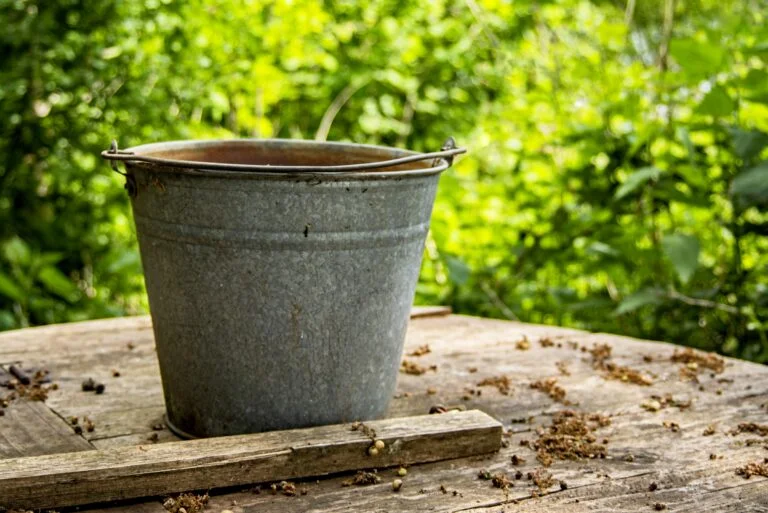
- Notice the load. Several “medium” changes add up. Drawing your stress bucket shows what’s filling it and what lets it out.
- Watch for signs. Poor sleep, headaches, irritability and feeling unable to cope are common stress symptoms.
- Protect sleep and movement. A regular bedtime, daylight and a daily walk help. See ways to relieve stress and box breathing.
- Lean on people. After a bereavement, see our guide to grief; living alone, loneliness can add to the strain.
- Delay what you can. After a big year, a non-urgent move or job change may be better left for later. If work is the pressure, see stress at work and burnout symptoms.
Is the scale still valid?
- The scores have moved. When Rahe and Mark Miller rescaled the events for the 1990s, average scores were 45% higher than in 1967, and gender had a marked effect on how people rated events.
- Some items are dated. Wording about mortgages, a spouse starting work or changes in religious activity reflects 1960s America.
- Good and bad change count the same. A wanted promotion and a feared one get the same score.
- It ignores how you see it and what support you have. The same event can hit two people very differently.
- It misses daily strain. Long-term caring, money worries or loneliness may never appear as a single “event”.
- It’s self-reported. People forget or misdate events.
- Correlation isn’t cause. Illness can itself cause life changes, such as losing a job.
Versions for young people
Adult events don’t fit children, so separate scales grew out of work such as R. Dean Coddington’s 1972 study of life events in children. The “non-adult” version online includes a parent dying, parents divorcing, failing a school year, starting to date and breaking up with a boyfriend or girlfriend. If a child or teenager seems overwhelmed, talk to their GP or school.
The diathesis-stress model
The diathesis-stress model says problems such as depression or anxiety tend to appear when two things meet: a vulnerability (the diathesis) and stress. Vulnerability can come from genes, early experiences, personality or health. Stress includes life events like those on the Holmes and Rahe scale.
So the same stressful year can affect two people differently. Joseph Zubin and Bonnie Spring set out an influential version, the stress vulnerability model, in 1977, and later researchers have used it to study how life stress and vulnerability combine in depression. You’ll also see it called the vulnerability-stress model.
The stress bucket is a picture of the same idea: the size of your bucket is your vulnerability, and life events are the water pouring in. The Holmes and Rahe scale measures only the water.
Supplements and your routine
No supplement changes your score or the events behind it: sleep, people and time matter most. Some adults like a drink or a few drops as part of a calmer routine.
- Magnesium Glycinate Sleep Complex: a berry drink with magnesium bisglycinate and citrate in a 4.75g scoop. Magnesium contributes to normal psychological function and to a reduction of tiredness and fatigue.
- Reishi Mushroom Adaptogenic Complex: a reishi hot chocolate. It contains a little natural caffeine from the cacao, so have it earlier in the evening.
- Flow CBD Oil: broad spectrum CBD with ashwagandha and maca for a daytime routine. Because it contains ashwagandha, it isn’t for anyone with a thyroid, liver or autoimmune condition, and don’t take it alongside another ashwagandha product.
The FSA’s 10mg a day figure is precautionary advice rather than a legal limit, set while longer-term safety research continues. At Evopure we think it is a very cautious figure, and many adults use more. If you go above it, increase slowly, and check with your GP or pharmacist first if you take any medication.
iIf you take any regular medicines, check with your GP or pharmacist first. We don’t recommend our products during pregnancy or breastfeeding. For adults (18+) only. For the research on individual ingredients, see supplements to lower cortisol and how to lower cortisol naturally.
When to get help
A high score alone isn’t a reason to worry. Get support if you’re struggling to cope, sleeping badly for weeks or feeling low most days. See being signed off with stress if work is part of it.
Where to get help
- Your GP: if you’re struggling to cope or would like a referral.
- NHS Talking Therapies (England): if you’re 18 or over (16 or over in some areas), you can refer yourself without seeing a GP.
- NHS 111: if you need help urgently but it isn’t an emergency, call 111 and choose the mental health option.
- Samaritans: call 116 123, free, day or night.
- Shout: text SHOUT to 85258, free and 24/7.
- 999 or A&E: if someone’s life is at risk or they have seriously harmed themselves.
Sources 10
- Holmes TH, Rahe RH (1967). The Social Readjustment Rating Scale. J Psychosom Res 11(2):213-8.
- The American Institute of Stress. The Holmes-Rahe Stress Inventory.
- Miller MA, Rahe RH (1997). Life changes scaling for the 1990s. J Psychosom Res 43(3):279-92.
- Coddington RD (1972). The significance of life events as etiologic factors in the diseases of children. II. A study of a normal population. J Psychosom Res 16(3):205-13.
- Zubin J, Spring B (1977). Vulnerability: a new view of schizophrenia. J Abnorm Psychol 86(2):103-26.
- Monroe SM, Simons AD (1991). Diathesis-stress theories in the context of life stress research: implications for the depressive disorders. Psychol Bull 110(3):406-25.
- NHS. Stress.
- NHS. Find an NHS Talking Therapies service.
- Samaritans. Contact Samaritans.
- Shout. Get help.
This guide is general information, not medical advice. Evopure makes the Magnesium Glycinate Sleep Complex, the Reishi Mushroom Adaptogenic Complex and Flow CBD Oil.