









Last updated: October 2026
IBS stands for irritable bowel syndrome, a common long-term condition of the gut. The main symptoms are tummy pain or cramps linked to pooing, bloating, and diarrhoea, constipation or both. A GP diagnoses it from your symptoms after ruling out other conditions (NICE CG61). It’s usually lifelong but manageable. Bleeding or unexplained weight loss needs an urgent GP appointment.
Below: symptoms (including in men), the types of IBS, how to know if you have it, how long flare-ups last, whether it’s genetic, and what helps, based on NHS and NICE advice.
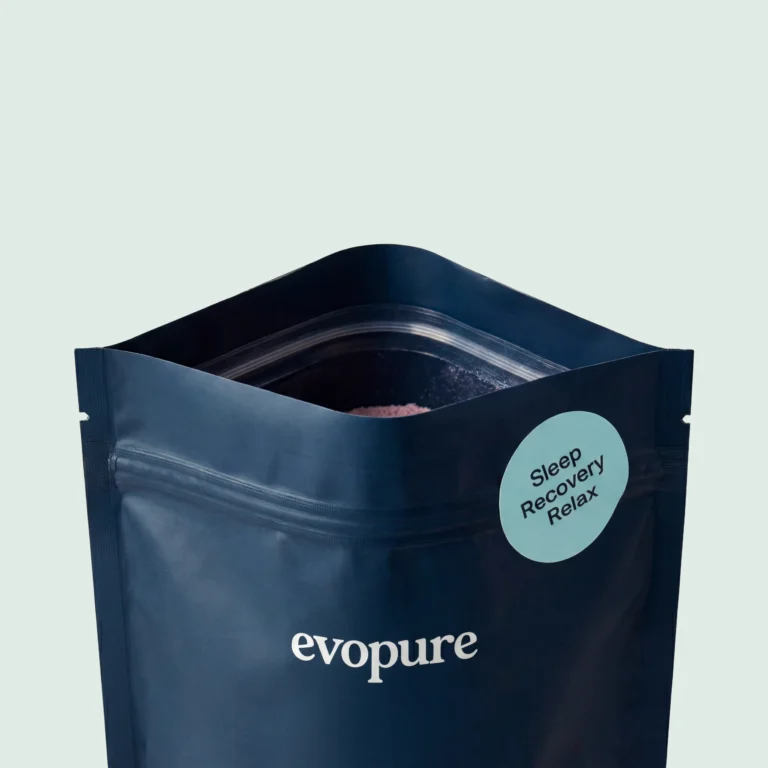
A note before you read: our products aren’t a treatment for IBS. If stress is part of your picture and you’d like a calming bedtime drink, our Magnesium Glycinate Sleep Complex combines magnesium with L-theanine and botanicals. Magnesium contributes to normal psychological function. It can also loosen stools, so read the supplements section first if you have IBS with diarrhoea.
What does IBS stand for, and what is it?
IBS stands for irritable bowel syndrome. The NHS describes it as a common condition of the digestive system that causes stomach cramps, bloating, diarrhoea and constipation, which tend to come and go. It’s usually lifelong, but diet changes and medicines can often keep symptoms under control.
The British Society of Gastroenterology now classes IBS as a disorder of gut-brain interaction. Guts UK, the UK digestive charity, explains that the nerves in the gut become oversensitive to normal bowel activity, so ordinary digestion can hurt. There’s no test that shows IBS itself, but the symptoms are real.
NICE’s summary for GPs estimates that 5% to 20% of people have IBS, depending on how it’s measured. It’s most common between the ages of 20 and 39.
IBS vs IBD: not the same thing
IBS is often confused with IBD (inflammatory bowel disease), which includes Crohn’s disease and ulcerative colitis.
| IBS | IBD (Crohn’s, colitis) | |
|---|---|---|
| What’s going on | An oversensitive gut and altered gut-brain signalling | Ulcers and inflammation in the gut |
| Blood in poo | Not expected: see a GP urgently | A common symptom |
| Weight loss without trying | Not expected: see a GP urgently | A common symptom |
| Main treatment | Diet, lifestyle, symptom medicines, talking therapies | Specialist medicines, sometimes surgery |
Our products aren’t a treatment for IBS. If you’d like a calming evening drink as part of a wind-down routine, there’s an honest note on magnesium and loose stools in the supplements section.
IBS symptoms (and signs of IBS in men)
The NHS lists four main symptoms of IBS:
- Stomach pain or cramps, usually worse after eating and better after doing a poo.
- Bloating: your tummy feels uncomfortably full and swollen. See bloating and magnesium.
- Diarrhoea: watery poo, sometimes with a sudden urge to go.
- Constipation: straining, and feeling you can’t empty your bowels fully. See foods that help constipation.
IBS can also cause farting, mucus in your poo, tiredness, feeling sick, backache, needing to pee often or urgently, pelvic pain and sometimes bowel accidents. If tiredness is a big part of your day, our guide on why you might always feel tired covers other causes worth checking. Symptoms vary from day to day, and the worse spells are called flare-ups.
Signs of IBS in men
The symptoms are the same in men and women. The differences are in who gets diagnosed and which type is more common:
- Guts UK says women are diagnosed with IBS about twice as often as men.
- Community surveys suggest the gap is smaller: a review of 56 studies (over 188,000 people) found women had about 1.7 times the odds of IBS.
- Men with IBS were more likely to have the diarrhoea-predominant type; women were more likely to have the constipation type.
So if you’re a man with urgent loose stools, cramps that ease after the toilet and bloating that comes and goes, IBS is a real possibility and worth raising with a GP.
Types of IBS: IBS-C, IBS-D and IBS-M
Doctors group IBS by your usual bowel habit, because it changes which treatments to try first.
| Type | What it means | How common (Guts UK) |
|---|---|---|
| IBS-C | Mainly constipation: hard, lumpy or infrequent poo | About 1 in 3 |
| IBS-D | Mainly diarrhoea: loose, watery or urgent poo | About 1 in 3 |
| IBS-M | Mixed: switching between the two | Most of the rest |
Some people don’t fit any group (IBS-U, unclassified), and your type can change over time.
How to know if you have IBS
There’s no single test for IBS. A GP diagnoses it from your symptoms once other conditions have been ruled out. The NHS says to see a GP if you think you might have IBS and have had symptoms for more than 4 weeks.
The checklist doctors use, in plain English
NICE guidance for GPs (CG61) says IBS fits when you’ve had tummy pain or discomfort for at least 6 months that is either eased by doing a poo or comes with a change in how often you go or what your poo looks like, plus at least 2 of these:
- straining, urgency, or feeling you haven’t finished
- bloating, swelling, tightness or hardness of the tummy
- symptoms made worse by eating
- passing mucus
Specialists often use the stricter Rome IV criteria: tummy pain on at least 1 day a week, on average, over the last 3 months, linked to two or more of: pooing, a change in how often you go, or a change in what your poo looks like.
What tests will a GP do?
Tests rule out other conditions rather than prove IBS. NICE recommends:
- Blood tests: a full blood count (for anaemia) and inflammation markers (ESR or CRP).
- A coeliac disease blood test. Keep eating gluten until it’s done: the NHS says cutting it out first can give an inaccurate result.
- A poo sample, often for faecal calprotectin (a marker of gut inflammation), especially if you’re 45 or under with diarrhoea, to rule out IBD. It can also check for infection.
A colonoscopy or scan isn’t usually needed if your symptoms fit and there are no warning signs. Reassuringly, follow-up studies summarised by NICE found fewer than 5% of people diagnosed with IBS after normal tests later turned out to have another gut condition.
Can you self-diagnose IBS? It’s better not to. Coeliac disease, IBD and, less often, bowel or ovarian cancer can cause similar symptoms. Before your appointment, keep a 2-week diary of food, drinks, symptoms, your poo and your stress levels.
Red flags: when to see a GP urgently
Ask for an urgent GP appointment or contact NHS 111 if you have:
- bleeding from your bottom or bloody diarrhoea
- lost a lot of weight without trying
- a hard lump or swelling in your tummy
- shortness of breath, palpitations and paler skin than usual
Call 999 or go to A&E for severe tummy pain, non-stop bleeding from your bottom or vomiting blood.
NICE’s guidance for GPs also lists these as reasons for further checks before IBS is diagnosed:
- a change in bowel habit starting over the age of 60
- persistent or frequent bloating in women, especially over 50
- a family history of bowel cancer, ovarian cancer, coeliac disease or IBD
- iron deficiency anaemia, or a positive bowel screening (FIT) test
These don’t necessarily mean something serious, but they should always be checked.
How long does an IBS flare-up last?
There’s no fixed length. The NHS says IBS symptoms come and go and can last for days, weeks or months at a time. A flare set off by one meal or a night of drinking may settle once it has passed through, while one linked to ongoing stress, illness or antibiotics can drag on.
Common triggers, according to the NHS, are alcohol, caffeine, spicy or fatty food, stress and anxiety, and regular antibiotic use. Flare-ups can also happen for no obvious reason. Guts UK says more than 8 in 10 people with IBS link some symptoms to food, which is why a food and symptom diary helps.
During a flare
- Eat smaller meals slowly, and don’t skip meals.
- Sip water or herbal tea, especially if you have diarrhoea.
- Ease off alcohol, coffee, fizzy drinks and fatty or spicy food.
- Ask a pharmacist about an over-the-counter option for your main symptom (see medicines).
Does IBS get better over time?
Often, yes. In studies following people for around 2 years, NICE’s summary reports that symptoms improved in 12% to 38%, stayed the same in 30% to 50%, and got worse in 2% to 18%. IBS that starts after a stomach bug clears in about half of people within 6 to 8 years.
See a GP if a flare feels different from your usual pattern or lasts much longer than usual.
What causes IBS? Is it genetic?
The exact cause isn’t known. The NHS links IBS to food moving through the gut too quickly or too slowly, gastroenteritis, an oversensitive gut, stress and a family history of IBS. Several factors usually work together:
- Gut-brain signalling. The gut and brain talk through nerves such as the vagus nerve, so stress can change gut movement and sensitivity.
- After a stomach bug. A review of 45 studies found about 1 in 10 people developed IBS within a year of infectious gastroenteritis, with higher risk in women, after severe infections or antibiotics, and in people who were anxious or low at the time.
- Gut bacteria. Changes are linked to IBS, though it’s unclear which comes first. See our guide to gut health.
Is IBS genetic or hereditary?
Partly. IBS runs in families, but no single “IBS gene” has been found, and shared environment matters too.
- In a US family study of nearly 2,500 relatives, 50% of families of people with IBS had another relative with it, compared with 27% of other families: about 2.75 times the odds.
- Husbands and wives didn’t share the risk. The authors say this supports either a genetic cause or something in the shared family environment.
- A genetic study of 53,400 people with IBS, including UK Biobank, found six gene regions linked to IBS, several involved in the nervous system or linked to mood and anxiety.
Having a parent with IBS raises your chances; it doesn’t mean you’ll get it.
What helps IBS
The NHS is clear that no single diet or medicine works for everyone, so expect some trial and error. UK guidance works in steps: diet and lifestyle first, then pharmacy medicines, then a dietitian, prescription medicines or talking therapies.
Step 1: everyday diet and lifestyle (NICE and NHS)
- Have regular meals, take your time, and don’t skip meals.
- Drink at least 8 cups of fluid a day, mainly water or non-caffeinated drinks.
- Limit tea and coffee to 3 cups a day, and cut down on alcohol and fizzy drinks.
- Limit fresh fruit to 3 portions (about 80g each) a day, and go easy on fatty, spicy and processed food.
- Keep active, and make real time to relax.
Match it to your main symptom
| Main symptom | Diet tips (NHS and NICE) | Ask a pharmacist about |
|---|---|---|
| Bloating, cramps and wind | Oats regularly; up to 1 tablespoon of linseeds a day; fewer hard-to-digest foods such as cabbage, beans and onions | Antispasmodics such as Buscopan, or peppermint oil |
| Diarrhoea (IBS-D) | Less high-fibre food such as wholegrains, nuts and seeds; avoid the sweetener sorbitol; drink plenty of water | Loperamide (Imodium) |
| Constipation (IBS-C) | Plenty of water; more soluble fibre from oats, pulses, carrots, peeled potatoes and linseeds | A laxative such as Fybogel |
Fibre needs care. NICE advises against insoluble fibre such as bran, and the British Dietetic Association (BDA) warns that a sudden increase can make symptoms worse, so build up slowly. For ideas, see flaxseed (linseed) and high fibre foods.
Step 2: low FODMAP, with a dietitian
If everyday changes don’t help, a GP may refer you to a dietitian, who may suggest a low FODMAP diet. It cuts back on carbohydrates the gut doesn’t break down easily, found in some fruit and vegetables, milk and wheat products. Guts UK says it helps about half to two-thirds of people with IBS. NICE says it should only be guided by a professional with expertise in diet; if you go private, choose a BDA-registered dietitian.
Peppermint oil and probiotics
A 2022 review of 10 trials found people taking peppermint oil capsules were more likely to report improvement than those on a placebo, but the evidence was very low quality and side effects were more common. Guts UK notes it can worsen heartburn, so take care if you get acid reflux.
If you try probiotics, NICE says to take one product at the pack dose for at least 4 weeks while you watch your symptoms; Guts UK suggests up to 12 weeks, stopping if nothing changes. Our guide to probiotics explains how to choose one.
Medicines from a pharmacist or GP
Medicines are matched to your main symptom. Ask a pharmacist or GP which suits you, especially if you take other medicines.
- Antispasmodics (such as hyoscine butylbromide or mebeverine) for cramps, taken when needed.
- Laxatives for constipation. NICE advises against lactulose for people with IBS.
- Loperamide, the first choice for diarrhoea.
- Low-dose antidepressants such as amitriptyline or citalopram, prescribed by a GP if other medicines haven’t helped. Here they’re used to ease IBS pain, not to treat depression. The NHS says they can take a few weeks to work and can cause side effects.
Talking therapies: CBT and gut-directed hypnotherapy
These don’t mean IBS is “in your head”; they target the gut-brain connection. A 2020 review of 41 trials found IBS-specific CBT and gut-directed hypnotherapy had the largest evidence base and the most lasting results. NICE says GPs should consider them if symptoms continue for 12 months despite medicines, and you can refer yourself to NHS Talking Therapies for CBT. NICE doesn’t recommend aloe vera, acupuncture or reflexology for IBS.
Is kombucha good for IBS?
There’s no good evidence that it helps, and it may make symptoms worse for some people:
- It’s fizzy, and NICE and the NHS advise people with IBS to cut down on fizzy drinks.
- It usually contains some caffeine, because it’s brewed from black or green tea.
- Flavoured versions may add fruit juice, sugar or sweeteners, all possible triggers.
The only IBS trial we found was a 10-day pilot in 40 women with IBS-C, testing a kombucha drink with added inulin (a fibre) and vitamins against water, so it tells us little about ordinary kombucha. If you enjoy it, try a small glass of a plain, low-sugar one on a good day. Our guide to kombucha benefits covers sugar, alcohol and caffeine.
IBS, stress and anxiety
Stress and anxiety are among the most common IBS triggers, and the link runs both ways: worrying about finding a toilet can make symptoms worse, which adds to the worry. The genetic study above found a strong overlap between genes linked to IBS and those linked to anxiety and depression, which the authors put down to shared pathways rather than anxiety simply causing tummy symptoms.
- Spot the early signs with our guide to stress symptoms.
- Find a technique that suits you in how to relieve stress.
- If nerves go straight to your stomach, read about anxiety stomach.
If low mood or anxiety is affecting daily life, talk to your GP or contact NHS Talking Therapies.
Do supplements help IBS?
Beyond peppermint oil, probiotics and soluble fibre such as linseed, the evidence for supplements in IBS is thin. Our guide to supplements for digestion ranks the options by evidence, and our separate guide to CBD and IBS looks at what the research does and doesn’t show.
Magnesium and IBS: be careful with IBS-D
Magnesium can loosen stools: the NHS notes that high doses (more than 400mg) can cause diarrhoea. Some people with IBS-C use it for constipation (see magnesium for constipation), but people with IBS-D may find it makes loose stools worse.
Our Magnesium Glycinate Sleep Complex is a warm bedtime drink with 148mg of magnesium per serving from bisglycinate and citrate, plus L-theanine and botanicals. Magnesium contributes to normal functioning of the nervous system and to normal psychological function. It isn’t a treatment for IBS. If you have IBS-D, start with a half serving, or skip it if your stools loosen.
Our products are for adults only. We don’t recommend our products during pregnancy or breastfeeding. If you take any medication, check with your GP or pharmacist first.
FAQs
What does IBS stand for?
IBS stands for irritable bowel syndrome, a common long-term gut condition that causes tummy pain or cramps, bloating, diarrhoea and constipation that come and go.
How do I know if I have IBS?
IBS is likely if you’ve had tummy pain for at least 6 months that eases after a poo or comes with changes in your bowel habit, plus symptoms such as bloating or urgency. A GP confirms it after tests to rule out conditions such as coeliac disease.
How long does an IBS flare-up last?
It varies. The NHS says IBS symptoms can last for days, weeks or months at a time. A flare linked to one meal may settle sooner than one linked to ongoing stress or illness.
Is IBS genetic?
Partly. IBS runs in families, and a close relative with IBS raises your odds roughly two to three times, but no single IBS gene has been found and shared environment plays a part.
Are the signs of IBS different in men?
No, the symptoms are the same. Men are diagnosed less often than women and are more likely to have the diarrhoea-predominant type (IBS-D).
Is kombucha good for IBS?
There’s no good evidence that it helps. It’s fizzy and usually contains some caffeine, both of which NICE advises people with IBS to limit, so try a small glass of a plain one and see how you feel.
Can IBS go away?
IBS is usually long term, but symptoms often improve. IBS that starts after a stomach bug clears in about half of people within 6 to 8 years.
Sources
- NHS. IBS (irritable bowel syndrome) (what is IBS, symptoms, diagnosis, diet, lifestyle and medicines and further help pages).
- NICE. Irritable bowel syndrome in adults: diagnosis and management (CG61), last updated 2017.
- NICE Clinical Knowledge Summaries. Irritable bowel syndrome, revised July 2025.
- Guts UK. Irritable bowel syndrome (IBS).
- British Dietetic Association. Irritable bowel syndrome (IBS) and diet.
- NHS. Inflammatory bowel disease (IBD), Coeliac disease: diagnosis and Vitamins and minerals: magnesium.
- Vasant DH, et al. British Society of Gastroenterology guidelines on the management of irritable bowel syndrome. Gut, 2021.
- Lovell RM, Ford AC. Effect of gender on prevalence of irritable bowel syndrome in the community: systematic review and meta-analysis. Am J Gastroenterol, 2012.
- Saito YA, et al. Familial aggregation of irritable bowel syndrome: a family case-control study. Am J Gastroenterol, 2010.
- Eijsbouts C, et al. Genome-wide analysis of 53,400 people with irritable bowel syndrome highlights shared genetic pathways with mood and anxiety disorders. Nat Genet, 2021.
- Klem F, et al. Prevalence, risk factors, and outcomes of irritable bowel syndrome after infectious enteritis: a systematic review and meta-analysis. Gastroenterology, 2017.
- Ingrosso MR, et al. Systematic review and meta-analysis: efficacy of peppermint oil in irritable bowel syndrome. Aliment Pharmacol Ther, 2022.
- Black CJ, et al. Efficacy of psychological therapies for irritable bowel syndrome: systematic review and network meta-analysis. Gut, 2020.
- Isakov VA, et al. Evaluation of the efficacy of kombucha-based drink enriched with inulin and vitamins for the management of constipation-predominant irritable bowel syndrome in females: a randomized pilot study. Curr Dev Nutr, 2023.
This guide is general information, not medical advice. Evopure makes the Magnesium Glycinate Sleep Complex.