Last updated: October 2026
A cough is often worse at night because lying flat lets mucus pool at the back of your throat (postnasal drip) and stomach acid creep up. Asthma and dry or cold bedroom air can trigger it, and in a quiet room you notice every cough. Sit propped up, sip warm honey and lemon and keep water by the bed.
Honey isn’t suitable for babies under 1. See a GP if your cough lasts more than 3 weeks, and call 999 if you’re struggling to breathe. Below: the causes and their clues, tickly cough remedies, how to get rid of a cough fast, the truth about vapour rub on your feet, and when to get help.
Why do coughs get worse at night?
Most coughs come from a cold or flu, and the NHS lists smoking, acid reflux, allergies such as hay fever, infections and mucus dripping down the throat from the back of the nose as other common causes. Several of these are made worse by bedtime itself:
- Lying flat. Mucus from a cold or catarrh can collect at the back of your throat (postnasal drip), and the NHS says reflux symptoms are often worse when lying down.
- Your body clock. The NHS says asthma symptoms, including coughing, may be worse at night and early in the morning.
- Your bedroom. Dust mites live in bedding and mattresses, and heating can leave the air warm and dry. A cold bedroom matters too: the NHS lists cold air, dust and mould among asthma triggers. See our guide to dust mite allergy.
- Drifting off and waking up. In a sleep lab study of people with severe chronic bronchitis, 85% of night-time coughing bouts happened while they were awake, and coughing in deep sleep was rare. That fits what many people notice: the cough is worst as you settle and when you wake, and with fewer distractions you notice every bout.
So if your cough is worse at night and first thing in the morning, think about mucus that has collected while you lay flat, reflux and asthma. If it carries on even when you sit up, or comes with wheeze, a tight chest or breathlessness, see a GP to check for asthma or another chest problem.

Our pick
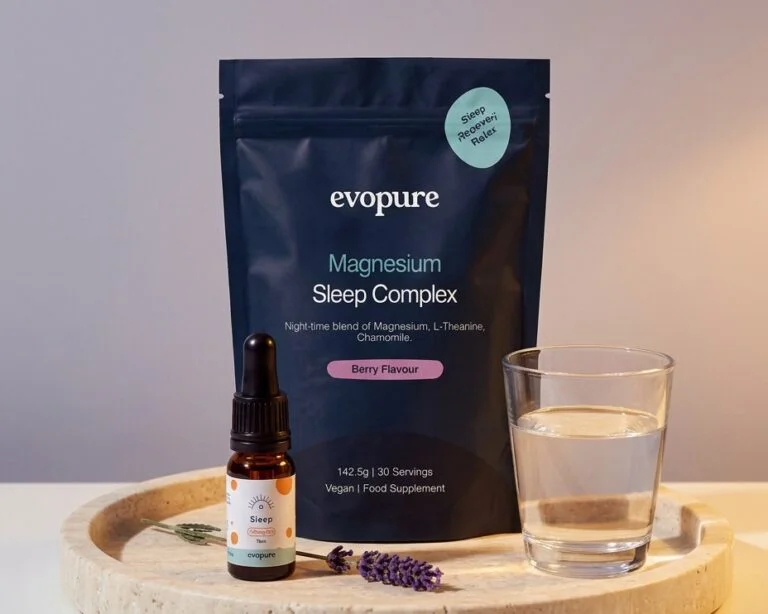
Magnesium Glycinate Sleep Complex
Magnesium Glycinate Sleep Complex is a berry drink powder with 290mg of magnesium a scoop from bisglycinate and citrate, plus glycine and L-theanine. Magnesium contributes to a reduction of tiredness and fatigue.
Add Magnesium Glycinate Sleep Complex to bag See ingredients and reviews
Vegan and made in the UK. Free UK delivery over £45, 14-day returns on unopened items.
Subscribe £22.49One-off £29.99
View productCauses of a cough at night: clues and what helps
More than one cause is often present, according to NICE’s guidance for GPs. Use this table as a guide, not a diagnosis.
| Cause | Clues | What helps |
|---|---|---|
| Cold, flu or other virus | Blocked or runny nose, sore throat, started in the last week or two | Rest, fluids, honey and lemon (over 1s), propping yourself up. See how to sleep with a cold |
| Postnasal drip (catarrh) | Feeling of mucus dripping down your throat, constant throat clearing | Sip water, salt water nose rinses, steam or a humidifier |
| Acid reflux | Heartburn, sour taste, hoarse voice, worse after late meals | No food 3 to 4 hours before bed, raise the head of the bed, ask a pharmacist |
| Asthma | Wheeze, tight chest, breathlessness, worse at night and early morning | See a GP or asthma nurse; don’t put up with it |
| Allergies (dust mites, pets, mould) | Sneezing, itchy eyes, worse in bed or first thing | Wash bedding at 60C, keep humidity down, pharmacy allergy treatments |
| Dry, heated air | Tickly throat, dry mouth on waking | Don’t overheat the bedroom, open a window for a while each day |
| Smoking or second-hand smoke | Long-standing cough, often with phlegm | Stopping smoking; see a GP if it won’t go |
| ACE inhibitor blood pressure tablets (such as ramipril) | Dry, persistent cough that started after the medicine | Talk to your doctor; don’t stop the medicine yourself |
| Whooping cough | Coughing bouts lasting minutes, worse at night, sometimes a “whoop” | See a GP or call 111 |
| Heart failure (less common) | Breathless lying down, swollen ankles, frothy pink phlegm | Urgent GP appointment or 111 |
Why do I cough at night when I lie down?
The two most common reasons are postnasal drip and acid reflux, and the clues are different.
Postnasal drip feels like mucus slowly dripping down the back of your throat, with a frequent need to swallow or cough to clear it. The NHS says catarrh usually follows a cold, flu or sinusitis and often lasts a few days, sometimes longer.
Acid reflux can cause a cough or hiccups that keep coming back, a hoarse voice and a sour taste, and the NHS says the symptoms are often worse after eating, when lying down and when bending over. You don’t always get obvious heartburn. Our guide to the best sleeping position covers sleeping with reflux.
Less often, a cough that comes on when you lie down is linked to the heart or lungs. The NHS lists coughing at night and feeling breathless when lying down as possible heart failure symptoms, so get an urgent GP appointment or call 111 if you notice either.
Dry cough at night
A dry, tickly cough at night (one that brings up little or no phlegm) commonly hangs on after a cold. NICE’s guidance for GPs says a cough lasting 3 to 8 weeks is most often a lingering cough after an infection. Other causes worth thinking about:
- Asthma, especially if you also wheeze or feel tight-chested.
- Reflux, even without heartburn.
- ACE inhibitors. The NHS lists a dry, persistent cough as a common side effect of ramipril, affecting more than 1 in 100 people, and says cough medicines don’t usually help it. Talk to your doctor if it carries on or stops you sleeping, as another medicine may suit you better.
- Dry air and mouth breathing. Heated air often feels dry and irritating, although research on low humidity and the airways is mixed. A blocked nose that makes you breathe through your mouth at night can dry your throat further.
Tickly cough remedies
A tickly cough is usually a dry cough: a tickle at the back of the throat that sets you off, with little or no phlegm. A chesty cough brings mucus up. The NHS self-care advice is much the same for both, and it is refreshingly honest about what works.
| Remedy | What the NHS says | Who it suits |
|---|---|---|
| Rest and plenty of fluids | The first things to do for any cough | Everyone |
| Hot lemon and honey | Can have a similar effect to cough syrup, though evidence is limited | Not babies under 1; no hot drinks for small children |
| Pelargonium (a herbal medicine) | Limited evidence that it eases a cough | Aged 12 or over |
| Cough syrup, cough medicine or cough sweets | Won’t stop your cough, but may help you cough less | Ask a pharmacist; some aren’t suitable under 12 |
| Decongestants and codeine cough medicines | Won’t stop your cough | Not a cough remedy |
| Paracetamol or ibuprofen | For any pain | Check the leaflet |
Do cough medicines work? Not as a cure. Their job is to take the edge off while the cough runs its course. If you buy one, tell the pharmacist what else you take: the NHS warns against using other cough and cold medicines if you’re already taking paracetamol and ibuprofen tablets, as you may take more medicine than you should. If you’re pregnant, check with a pharmacist before taking any medicine or herbal remedy.
iFor the throat itself, our guide to sore throat remedies covers gargling, lozenges and Pharmacy First. A tickly cough that hangs on for weeks after a cold is common, but see a GP if any cough lasts more than 3 weeks.
How to stop coughing at night: 10 things to try
- Prop yourself up. An extra pillow can ease a cold-related cough. For reflux, the NHS suggests raising the head of the bed by 10 to 20cm instead, as extra pillows can press on your belly. The NHS’s COVID-19 advice is to lie on your side or sit upright rather than on your back if you have a cough.
- Have a warm honey and lemon drink. The NHS recipe is half a lemon and 1 to 2 teaspoons of honey in a mug of hot water, drunk warm. Never give honey to babies under 12 months.
- Rest and drink plenty of fluids.
- Keep water by the bed. The NHS suggests sipping ice-cold water when you need to clear your throat, rather than coughing.
- Loosen mucus with a steamy bathroom before bed or a humidifier. If you have a dust mite allergy, keep bedroom humidity below 50%.
- Keep the bedroom cool and aired, with clean bedding. See the best temperature for sleep.
- Eat earlier. If you get reflux, the NHS says not to eat within 3 or 4 hours of bed, and to go easy on alcohol. See alcohol and sleep.
- Avoid smoke. Smoking is a common cause of cough, and the NHS says it can make cold symptoms worse.
- Ask a pharmacist. The NHS says cough syrups and sweets won’t stop a cough but may help you cough less. NICE lists pelargonium (a herbal medicine) and cough medicines with guaifenesin or a non-codeine cough suppressant (over 12s) as having limited evidence of some benefit, while antihistamines, decongestants and codeine don’t appear to help the cough. Mention any other medicines you take.
- Don’t ignore a cough that wakes you every night. The NHS says to see a GP if asthma symptoms are waking you up.
Does honey really work? A Cochrane review of six trials in 899 children found honey probably reduces how often children cough compared with no treatment or a placebo, mainly in the first few days. An Oxford review of 14 studies found honey eased cough frequency and severity compared with usual care, though the authors called for better trials.
Catching one cold after another? See cold or flu, supporting your immune system, vitamin C and zinc.
How to get rid of a cough fast
Honestly, there’s no quick cure. Most coughs come from a cold or flu, and the NHS says a cough usually clears up on its own within 3 to 4 weeks, even though the cold itself usually starts to feel better in 1 to 2 weeks. Antibiotics are not normally prescribed for coughs, and GPs don’t recommend them for colds because they won’t speed up your recovery.
What you can do is look after yourself and cough less in the meantime:
- Rest and drink plenty, enough that your pee is light yellow or clear.
- Take paracetamol or ibuprofen if you feel uncomfortable, checking the leaflet.
- Have a teaspoon of honey or a warm honey and lemon drink (not for babies under 1).
- Breathe in steam for a blocked nose by sitting in the bathroom with a hot shower running. Don’t let children breathe in steam from a bowl of hot water, because of the risk of scalding.
- Don’t smoke, as it can make cold symptoms worse.
- Sleep propped up or on your side. Our guide to how to sleep with a cold has 10 tips for a blocked nose and cough.
Could it be COVID-19 or flu? The NHS lists a new, continuous cough (coughing a lot for more than an hour, or 3 or more coughing episodes in 24 hours) as a COVID-19 symptom, alongside a high temperature and a change to your sense of smell or taste. It also says the symptoms are very similar to colds and flu. If you have a high temperature or don’t feel well enough for your normal activities, try to stay at home and avoid contact with other people. Our cold or flu guide helps you tell them apart, and if you’ve just had your jab, see flu jab side effects for what’s normal afterwards.
Does vapour rub on your feet stop a cough?
Rubbing menthol vapour rub on your soles and putting socks on is one of the most shared cough tips online, often “proved” by a Canadian study. We couldn’t find any published study testing it, and pharmacist and fact-checking sources say the group supposedly behind it denies any knowledge of it. The maker of the best-known rub says its approved use for cough is on the chest and throat.
So why do people swear by it? The usual explanation is that you breathe in the menthol and camphor vapour, wherever it is applied. The research on that is small and mixed:
- A Sheffield study in 20 healthy volunteers found inhaled menthol reduced coughing set off on purpose in the lab.
- A Leicester study in 42 schoolchildren found menthol made noses feel clearer without changing airflow, and didn’t reduce coughing more than a placebo.
- The one trial of a vapour rub for night-time cough, in children aged 2 to 11, applied it to the chest and neck, not the feet, and found more skin irritation with the rub.
Our view: there’s no evidence the feet are the place for it, and warm socks and a calm bedtime may be doing much of the work. Always follow the age limits and directions on the pack.
How long does a cough last?
The NHS says a cough usually clears up on its own within 3 to 4 weeks. NICE’s guidance for GPs uses three time frames:
- Acute: less than 3 weeks, usually a cold or flu.
- Sub-acute: 3 to 8 weeks, most often a lingering cough after an infection.
- Chronic: more than 8 weeks, most often linked to smoking, postnasal drip, asthma, reflux or ACE inhibitors.
iThe NHS says antibiotics are not normally needed for a cough. NICE also lists obstructive sleep apnoea among the less common causes of a long-lasting cough, so mention loud snoring or pauses in breathing if you see a GP.
Getting some sleep while you have a cough
Keep your wake-up time steady, nap briefly if you need to, and give yourself an unhurried hour before bed. Our bedtime routine for adults walks through one, and why can’t I sleep? covers the other reasons nights go wrong.
No supplement will stop a cough, so treat this as part of a calm wind-down rather than a remedy. Our Magnesium Glycinate Sleep Complex is a berry-flavoured, caffeine-free bedtime drink with magnesium bisglycinate and citrate, L-theanine and chamomile. Magnesium contributes to a reduction of tiredness and fatigue and to normal functioning of the nervous system. It is for adults only; if you take regular medicines, check with your pharmacist first. Read more in magnesium for sleep.
The FSA’s 10mg a day figure for CBD is precautionary advice rather than a legal limit, set while longer-term safety research continues. At Evopure we think it is a very cautious figure, and many adults use more. If you go above it, increase slowly, and check with your GP or pharmacist first if you take any medication.
Children coughing at night
iCold symptoms can last longer in young children, the NHS says, and they may get sick after coughing. For children, ask a pharmacist first and note:
- Rest, plenty of fluids and, for over 1s, honey and lemon are the NHS’s first suggestions. Let any drink cool to warm first.
- Don’t let children breathe in steam from a bowl of hot water, and don’t give aspirin to anyone under 16.
- The MHRA says over-the-counter cough and cold medicines should not be given to children under 6, and the NHS says some cough medicines are not suitable under 12.
- Never give honey to babies under 12 months, and don’t give hot drinks to small children.
- Call 999 if a child is struggling to breathe, making grunting noises, sucking their stomach in under their ribs, or their lips or skin are turning very pale, blue or grey.
- Whooping cough can be serious. The NHS says to get an urgent GP appointment or call 111 if a baby under 6 months has symptoms, such as coughing bouts that last a few minutes and are worse at night. See the signs below.
- See a GP if you’re worried about your child’s cold symptoms. If your child only has a mild cough or runny nose and feels well enough, the NHS says they can go to school or childcare.
Our products are for adults only and are not for children.
When to see a GP, call 111 or 999
iSee a GP if:
- you’ve had a cough for more than 3 weeks
- you’re losing weight for no reason
- you have a weakened immune system, for example from chemotherapy or diabetes
- your cough started after a new blood pressure medicine
Get an urgent GP appointment or call 111 if:
- your cough is very bad or quickly getting worse, or you can’t stop coughing
- you’re coughing up blood
- you have chest pain, find it hard to breathe or feel very unwell
- the side of your neck is swollen and painful
- you feel breathless when lying down
Call 999 or go to A&E if you have severe difficulty breathing (gasping, choking or unable to get words out), your chest feels tight or heavy, pain spreads to your arms, back, neck or jaw, your lips or skin turn very pale, blue or grey, or you suddenly feel confused.
Whooping cough: the signs
Whooping cough (pertussis) spreads very easily. The NHS says it starts like a cold, then after about a week brings coughing bouts that last a few minutes and are worse at night. There may be a “whoop” as you gasp for breath, though young babies under 3 months and some adults may not whoop. Thick mucus can make you vomit, and the cough may last for several weeks or months.
- Urgent GP appointment or 111: a baby under 6 months with symptoms, a very bad cough that is getting worse, or you’re pregnant and have been in contact with someone with whooping cough.
- Call 999 or go to A&E: lips, tongue, face or skin suddenly turn blue or grey, breathing is shallow or difficult, chest pain is worse when breathing or coughing, or a child is having a seizure.
The NHS offers the vaccine to babies in the 6-in-1 vaccine, as a pre-school booster, and in pregnancy, usually at around 20 weeks.
iIf reflux is behind your night-time cough, our guide to acid reflux at night covers triggers, sleeping position and when to see a GP.
Related guides
- Winter wellness: staying well through the colds and flu season.
- Elderberry for colds: what the trials show and safety.
- Wondering about herbal remedies? See does echinacea work?
- Manuka honey vs ordinary honey for coughs.
- If you think heartburn is behind it, our guide to acid reflux explains the causes and what helps.
Sources 20
- NHS. Cough.
- NICE. Cough (acute): antimicrobial prescribing (NG120).
- NICE CKS. Cough: causes.
- NHS. Heartburn and acid reflux.
- NHS. Common cold.
- NHS. COVID-19 symptoms and what to do.
- NHS. Whooping cough.
- NHS. Catarrh.
- NHS. Asthma.
- NHS. Side effects of ramipril.
- NHS. Heart failure.
- NHS. Shortness of breath.
- MHRA. Over-the-counter cough and cold medicines for children.
- Oduwole O et al (2018). Honey for acute cough in children. Cochrane Database of Systematic Reviews.
- Abuelgasim H et al (2021). Effectiveness of honey for symptomatic relief in upper respiratory tract infections. BMJ Evidence-Based Medicine.
- Power JT et al (1984). Nocturnal cough in patients with chronic bronchitis and emphysema. American Review of Respiratory Disease.
- Morice AH et al (1994). Effect of inhaled menthol on citric acid induced cough in normal subjects. Thorax.
- Kenia P et al (2008). Does inhaling menthol affect nasal patency or cough? Pediatric Pulmonology.
- Paul IM et al (2010). Vapor rub, petrolatum, and no treatment for children with nocturnal cough and cold symptoms. Pediatrics.
- Wolkoff P (2018). Indoor air humidity, air quality, and health: an overview. International Journal of Hygiene and Environmental Health.
This guide is general information, not medical advice. Evopure makes the Magnesium Glycinate Sleep Complex.