Last updated: 12 November 2026
Breathing exercises for anxiety are slow, gentle patterns that help your body switch out of “fight or flight”. The simplest is the NHS one: breathe in through your nose for 5 and out through your mouth for 5, for at least 5 minutes. Box breathing, 4-7-8, the physiological sigh and a longer out-breath work in a similar way.
Below: the 5 techniques step by step, a table of when to use each, what to do in a panic attack, what the research shows, and when breathing exercises aren’t enough and it’s time to get help.
What are the best breathing exercises for anxiety?
The best breathing exercises for anxiety are slow and gentle, with an out-breath as long as or longer than the in-breath. Good ones to start with are the NHS 5-count belly breath, box breathing, 4-7-8 breathing, the physiological sigh and extended exhale breathing. Most take 1 to 5 minutes, need no app, and work best when you practise them daily.
No single technique is proven best for everyone, so try each for a few days and keep the one that feels easiest. The best breathing technique for anxiety is the one you will actually use when you need it.
| Technique | How to do it | When to use it | Time it takes |
|---|---|---|---|
| NHS belly breathing | In through the nose for 5, out through the mouth for 5 | Daily practice and everyday stress | 5 minutes or more |
| Box breathing | In 4, hold 4, out 4, hold 4 | Before a meeting, exam or hard conversation | 1 to 5 minutes |
| 4-7-8 breathing | In 4, hold 7, out 8 | Winding down in bed | 4 rounds, about 1 minute |
| Physiological sigh | Two breaths in, one long sigh out | A fast reset when you feel wound up | 1 to 5 minutes |
| Extended exhale | In for 4, out for 6 to 8 | Anywhere, including on a bus or at your desk | 2 to 5 minutes |
5 breathing techniques for anxiety step by step
Sit with your back supported, lie down, or stand with your feet hip-width apart, and loosen anything tight around your waist or chest. Breathe through your nose if you can, as it slows the breath naturally. If you often breathe through your mouth, our guide to mouth breathing explains why and what helps.
1. The NHS breathing exercise (belly breathing)
This is the breathing exercise the NHS suggests for stress, anxiety and panic, and the best place to start.
- Put one hand on your chest and one on your belly if it helps you notice the breath.
- Let the breath flow as low into your belly as feels comfortable, without forcing it. The hand on your belly should rise more than the one on your chest.
- Breathe in gently through your nose, counting steadily from 1 to 5.
- Without pausing or holding, breathe out gently through your mouth, counting from 1 to 5.
- Keep going for at least 5 minutes.
You may not reach 5 at first. That’s fine: count to 3 or 4 and build up. Doing it once a day when you’re calm makes it far easier to use when you’re anxious.
2. Box breathing
Breathe in through your nose for 4, hold for 4, breathe out through your mouth for 4, then hold for 4, tracing the four sides of a square in your mind. The even rhythm gives a racing mind something steady to follow, which is why it’s popular before stressful moments. If the holds make you feel tight or panicky, shorten them or leave them out. Our full guide to box breathing covers the steps and common mistakes.
3. 4-7-8 breathing
Breathe in quietly through your nose for 4, hold for 7, then breathe out slowly through your mouth for 8, with a soft “whoosh”. Do 4 rounds, then breathe normally. The long out-breath is the important part, and many people save it for bedtime. If holding for 7 feels too long, speed up the count but keep the same 4:7:8 ratio. See our step-by-step guide to 4-7-8 breathing.
4. The physiological sigh
Breathe in through your nose, then take a second, shorter sip of air on top of it to fill your lungs. Let it all go in one long, slow sigh through your mouth. One or two sighs can take the edge off a stressful moment. Repeating them for 5 minutes is called cyclic sighing.
A small trial at Stanford, published in 2023, compared 5 minutes a day of cyclic sighing, box breathing, fast breathing and mindfulness meditation over a month. Cyclic sighing gave the biggest lift in mood and the largest drop in resting breathing rate. It was a small study in healthy volunteers, not people with an anxiety disorder, so treat it as promising rather than proven.
5. Extended exhale breathing
Breathe in through your nose for a count of 4, then breathe out slowly through your mouth or nose for 6 to 8, as if blowing through a straw. Aim for about 6 breaths a minute. This one is quiet enough to do anywhere without anyone noticing. Our guide to the vagus nerve explains why a longer out-breath seems to settle the body, and some people find it easier to breathe along to slow music for anxiety.
What about Wim Hof breathing? Fast, forceful breathing styles aren’t calming breathing exercises. They can cause dizziness, tingling and fainting, and should never be done in water, while driving or standing up. Read the safety section of our Wim Hof breathing guide before trying it, and if you get anxious easily, stick with the slow techniques above. For a wider look at all the styles, see our guide to breathwork.
Breathing during a panic attack
During a panic attack the NHS advises staying where you are if you can, breathing slowly and deeply, and reminding yourself that the attack will pass and isn’t life-threatening. Most panic attacks last 5 to 20 minutes. Focus on making the out-breath slow and long rather than trying to take big breaths in.
- Breathe out first. Let a long, slow breath out through pursed lips, then let the next breath in come by itself.
- Count. In for 4, out for 6. Counting gives your mind a job.
- Don’t gulp air or breathe into a paper bag. Big, fast breaths can make tingling and dizziness worse.
- Ground yourself. Name 5 things you can see, 4 you can touch and 3 you can hear. Our guide to grounding techniques has more.
For a fuller plan, read how to stop a panic attack. If feeling short of breath is a big part of your anxiety, read shortness of breath from anxiety first: it lists the signs that need a doctor rather than a breathing exercise.
Why slow breathing calms you down
When you’re anxious, your body’s stress response speeds up your heart and breathing. Fast, shallow breathing from the top of the chest can then cause dizziness, tingling and a tight chest, which feel frightening and feed the anxiety. You can read more about this loop in our guide to the fight or flight response.
Breathing is one of the few parts of that response you can control on purpose. Slowing it down, especially the out-breath, is linked with a shift towards the “rest and digest” side of the nervous system and with steadier heart rate patterns.
The research is encouraging but modest. A 2018 systematic review found that slow breathing of about 6 breaths a minute was linked with greater relaxation and lower anxiety in small studies. A 2023 meta-analysis of randomised trials found that breathwork lowered self-reported stress, anxiety and low mood a little compared with control groups, though the trials were small and varied. Breathing exercises are a useful tool, not a treatment for an anxiety disorder.
Tips to make breathing exercises work
- Practise when you’re calm. 5 minutes once or twice a day makes the technique automatic, so it’s there when anxiety hits.
- Keep breaths small and soft. Deep doesn’t mean big. If you feel dizzy or tingly, you’re breathing too hard: breathe normally for a minute. Anxiety can cause dizziness on its own too (see anxiety and dizziness).
- Link it to a habit. Do it after brushing your teeth, on the commute, or when you sit down at your desk.
- Pair it with other skills. Progressive muscle relaxation and mindfulness use the breath too, and suit people who find counting stressful.
- At night, use 4-7-8 or extended exhale breathing in bed with the lights off. Our guide to anxiety at night has more ideas.
- If it makes you more anxious, stop. Some people find focusing on the breath unsettling. Try a grounding technique instead, or simply other ways to calm down.
For the bigger picture, including lifestyle changes and treatment, read how to deal with anxiety.
When to get help for anxiety
iBreathing exercises help in the moment, but they aren’t a treatment for an anxiety disorder or panic disorder. See a GP if anxiety is affecting your daily life, keeps coming back, or you’re avoiding things because of it.
- NHS Talking Therapies: in England you can refer yourself for free talking therapy, such as CBT, without seeing a GP first.
- NHS 111: call 111 if you need urgent help, and choose the mental health option in England.
- Samaritans: call free on 116 123, day or night, if you’re struggling to cope.
- Call 999 if you have chest pain or tightness, pain spreading to your arm, back, neck or jaw, you’re struggling to breathe or can’t speak in full sentences, your lips turn blue or grey, or you collapse. Don’t assume it’s anxiety.
Our guides to anxiety symptoms and anxiety chest pain explain what’s common and what needs checking.
Next step
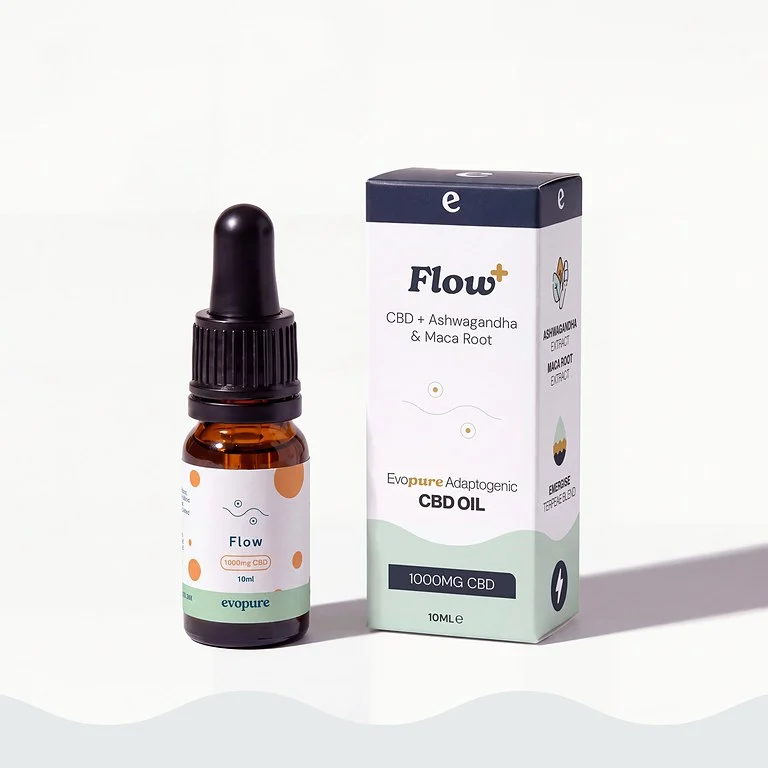
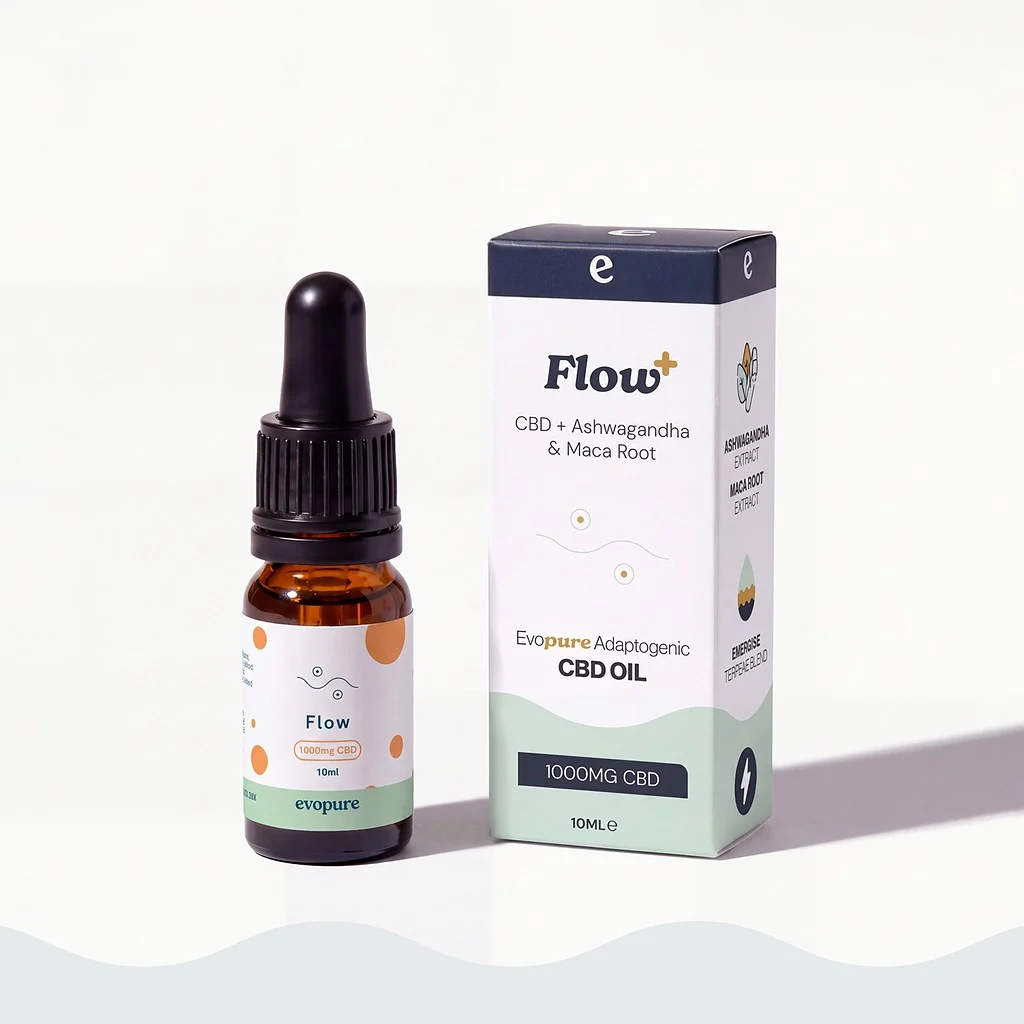
some people like to add a simple daily routine alongside their breathing practice. Flow CBD Oil is our daytime oil: broad spectrum CBD with 35mg ashwagandha root extract and 35mg maca root extract per half pipette. 10mg of CBD is about 0.2ml of the 500mg oil. Rated 4.6 out of 5 from 46 verified ratings. CBD and ashwagandha aren’t treatments for anxiety.
Flow isn’t for anyone who is pregnant, breastfeeding or trying to conceive, or who has a thyroid, liver or autoimmune condition. If you take sedatives, antidepressants or thyroid medicine, ask your GP or pharmacist first. The UK’s Committee on Toxicity has reviewed ashwagandha safety: see our ashwagandha safety review. Adults only.
Add Flow CBD Oil 500mg to bag or choose another strength
Prefer CBD on its own with nothing to measure? Broad Spectrum CBD Capsules give one 10mg capsule, vegan, 0% THC and third-party lab tested. Rated 4.7 out of 5 from 125 reviews. Compare options in our guide to the best CBD capsules UK.
Add Broad Spectrum CBD Capsules 10mg to bag or choose another strength
The FSA advises healthy adults to take no more than 10mg of CBD a day: about 0.2ml of the 500mg oil, or one 10mg capsule.
The FSA’s 10mg a day figure is precautionary advice rather than a legal limit, set while longer-term safety research continues. At Evopure we think it is a very cautious figure, and many adults use more. If you go above it, increase slowly, and check with your GP or pharmacist first if you take any medication.
If you take antidepressants or anxiety medicines, read CBD and antidepressants first. Subscribe and save 25% on your first order, then 20%. New to Evopure? Join our emails for 20% off a one-off first order. Free UK delivery over £40. We don’t recommend our products during pregnancy or breastfeeding.
Sources 6
- NHS. Breathing exercises for stress (reviewed June 2026).
- NHS. Panic disorder.
- NHS. Find NHS talking therapies for anxiety and depression.
- Balban MY et al (2023). Brief structured respiration practices enhance mood and reduce physiological arousal. Cell Reports Medicine.
- Zaccaro A et al (2018). How breath-control can change your life: a systematic review on psycho-physiological correlates of slow breathing. Frontiers in Human Neuroscience.
- Fincham GW et al (2023). Effect of breathwork on stress and mental health: a meta-analysis of randomised-controlled trials. Scientific Reports.
iThis guide is general information, not medical advice. If you’re worried about your anxiety or your breathing, speak to your GP, call 111, or call 999 in an emergency. Evopure makes CBD oils and capsules.