Last updated: October 2026
Anxiety can make you feel dizzy, lightheaded, woozy or off-balance, often because fast, shallow breathing during stress or panic changes how your body feels. It usually eases as you calm down. But dizziness has many causes, from dehydration to inner-ear problems, so see a GP if it keeps happening or comes with other symptoms.
Below: what anxiety dizziness feels like, why it happens, how to stop it, other causes to rule out, and when to get help.
Call 999 if dizziness comes with sudden weakness or numbness on one side, a drooping face, slurred speech, sudden confusion, chest pain, or you pass out and don’t come round quickly. These can be signs of a stroke or heart problem.
What does anxiety dizziness feel like?
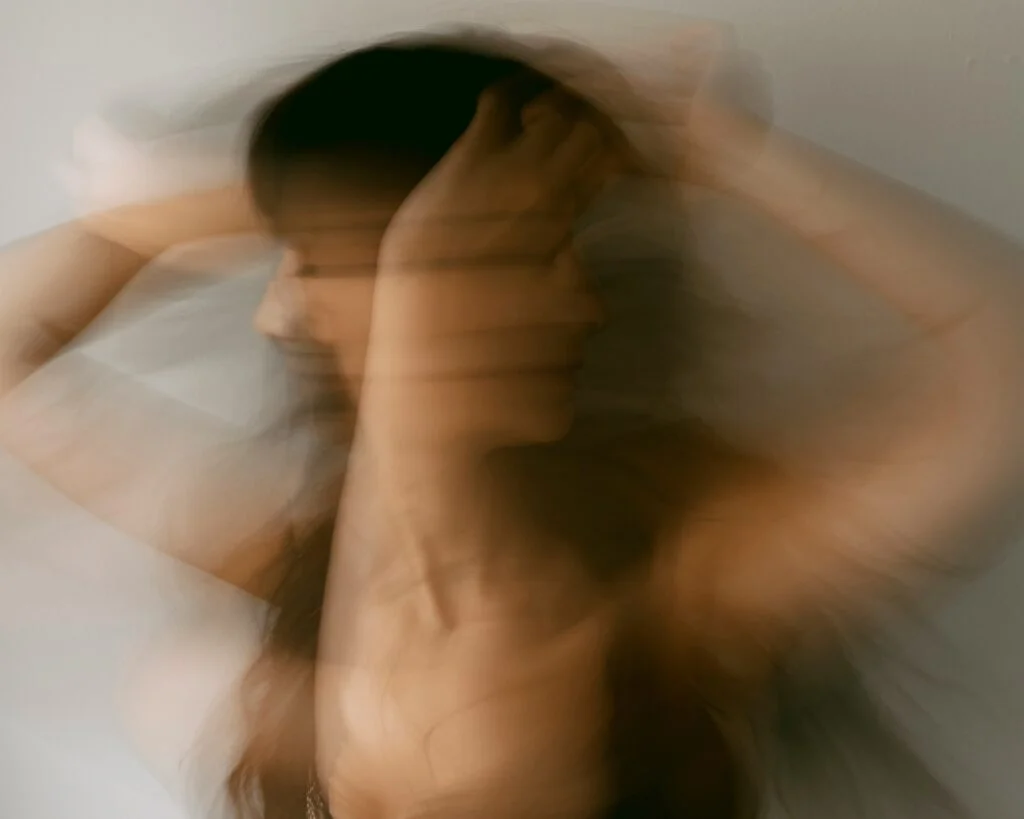
- lightheaded or woozy, as if you might faint
- off-balance or unsteady, like walking on a boat
- a “floaty” or spaced-out feeling
- feeling detached or unreal
- tingling in your hands, feet or around your mouth
It often comes with other anxiety symptoms, such as a racing heart, chest tightness, sweating and fast breathing. See anxiety symptoms and anxiety chest pain.
Why does anxiety make you dizzy?
- Over-breathing (hyperventilation). Breathing fast and high in the chest lowers carbon dioxide in your blood, which can cause lightheadedness and tingling.
- The fight-or-flight response changes your heart rate and blood flow.
- Tense neck and shoulder muscles can add to a woozy, off-balance feeling. See tension headaches.
- Not eating or drinking enough when you’re stressed.
- The fear cycle: noticing dizziness makes you more anxious, which makes the dizziness worse. See health anxiety.
For some people, dizziness carries on for months after an illness or a stressful period. Doctors call one form of this persistent postural-perceptual dizziness (PPPD), and it can be treated with specialist balance therapy and talking therapy.
How to stop anxiety dizziness
- Sit or lie down until it passes, then get up slowly, as the NHS advises.
- Slow your breathing. Breathe in through your nose for 4, out for 6, into your belly. See box breathing.
- Ground yourself by focusing on a fixed point and what you can see, hear and feel. See grounding techniques.
- Drink some water and eat something if you’ve gone a long time without.
- Remind yourself that it’s anxiety and it will pass.
- Cut back on caffeine and alcohol, which the NHS suggests avoiding when you feel dizzy. See does caffeine cause anxiety?
Longer term, regular exercise, good sleep and tackling the anxiety itself help most. See how to deal with anxiety and how to stop a panic attack.
Our Magnesium Glycinate Sleep Complex is a caffeine-free evening drink with L-theanine, and magnesium contributes to normal psychological function and the reduction of tiredness and fatigue.
Other causes of dizziness
The NHS lists many common causes of dizziness, so don’t assume it’s anxiety:
- standing up too quickly (a drop in blood pressure)
- dehydration or heat
- inner-ear problems, such as labyrinthitis, especially with ringing in the ears or hearing changes
- migraine
- low blood sugar
- iron deficiency anaemia. See iron deficiency symptoms
- a side effect of a new medicine
When to see a GP
See a GP if dizziness won’t go away or keeps coming back, or comes with hearing loss, ringing in the ears, changes in your vision, numbness or weakness, fainting, headaches or being sick. Adults in England can refer themselves to NHS Talking Therapies for anxiety.
FAQs
Can anxiety cause dizziness?
Yes. Anxiety and panic can cause lightheadedness and feeling off-balance, often from fast, shallow breathing. See a GP if it keeps happening.
How do I stop feeling dizzy from anxiety?
Sit down, slow your breathing with a longer out-breath, ground yourself, drink some water and remind yourself it will pass.
Can anxiety cause dizziness all day?
Ongoing anxiety can cause lingering dizziness, but constant dizziness should be checked by a GP to rule out other causes.
How do I know if dizziness is anxiety or something else?
You can’t always tell. Anxiety dizziness often comes with worry, fast breathing and a racing heart and eases as you calm down. See a GP if you’re unsure.
Sources
- NHS. Dizziness.
- NHS. Panic disorder.
- NHS. Low blood pressure.
This guide is general information, not medical advice. Evopure makes the Magnesium Glycinate Sleep Complex.