Last updated: 11 November 2026
Cholesterol lowering supplements with the best evidence are plant sterols and stanols, which lower LDL cholesterol by about 7 to 12% at 1.5 to 3g a day, and oat beta-glucan at 3g a day. Psyllium helps a little; red yeast rice carries real safety warnings. None replaces a statin, so start with a GP check.
iHigh cholesterol usually has no symptoms, and the NHS says the only way to know is a blood test. Below: what each supplement can and can’t do, the authorised UK claim wording, why red yeast rice is different, who must check with a doctor, and the food changes that matter most.
Do cholesterol lowering supplements work?
Some do, modestly. Plant sterols and stanols and oat beta-glucan have authorised UK health claims for blood cholesterol, and trials show LDL falls of roughly 5 to 12%. A statin typically lowers LDL by 30% or more. Supplements can add to a healthy diet, but they aren’t a substitute for treatment your GP recommends.
| Supplement | Effect on LDL in trials | Authorised GB claim? |
|---|---|---|
| Plant sterols and stanols | About 6 to 12% lower at 0.6 to 3.3g a day (124 studies) | Yes |
| Oat beta-glucan | About 0.19 mmol/L lower at about 3.5g a day (58 trials) | Yes, at 3g a day |
| Psyllium | About 0.33 mmol/L lower at about 10g a day (28 trials) | No |
| Red yeast rice | Lowers LDL like a low-dose statin | Listed, but serious safety concerns |
| Fish oil (omega 3) | Lowers triglycerides, not LDL | Triglycerides only, at 2g a day |
| Berberine | Modest falls; trials small and mixed | No |
The plant sterol review was written by scientists working for Unilever, which makes sterol-enriched spreads. Lower LDL is a marker: no trial has shown that sterols or stanols prevent heart attacks or strokes, which is why NICE doesn’t advise them to prevent heart disease.
Statins and supplements: talk to your GP first
If your cholesterol is high, your GP will look at your overall risk of heart attack and stroke, not just the number. NICE recommends offering a statin when that 10-year risk is 10% or more, after talking through diet and activity. Never stop or reduce a statin yourself because you’ve started a supplement.
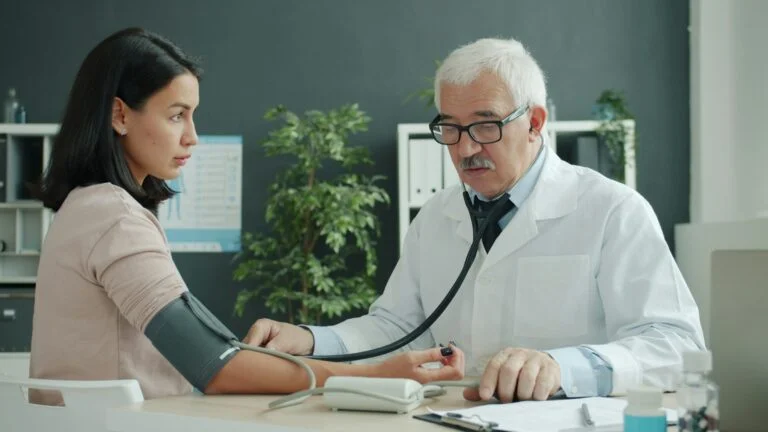
For healthy adults the NHS gives total cholesterol below 5mmol/L, non-HDL cholesterol below 4mmol/L, and HDL above 1.0mmol/L for men or 1.2mmol/L for women. Your own target depends on your risk. You can get a cholesterol test from your GP, or as part of the free NHS Health Check if you’re 40 to 74.
Some supplements can be taken alongside a statin, and plant sterols add to its effect. Others, such as red yeast rice, act like a statin and must not be combined with one. If statins make you feel tired or achy, see do statins make you tired? and speak to your GP, who can change the dose or try another statin. Our CoQ10 guide covers the statin muscle question, and does high cholesterol make you tired? explains why it usually causes no symptoms.
Plant sterols and stanols
Plant sterols and stanols are natural plant compounds that block some cholesterol from being absorbed in the gut. Eating 1.5 to 3g a day lowers LDL cholesterol by 7 to 12% within 2 to 3 weeks. They come in fortified spreads, yoghurts and mini drinks, and in capsules. Take them with a meal, every day.
Two authorised claims apply in Great Britain:
- “Plant sterols/stanols contribute to the maintenance of normal blood cholesterol levels”, with an intake of at least 0.8g a day.
- “Plant sterols and plant stanol esters have been shown to lower/reduce blood cholesterol. High cholesterol is a risk factor in the development of coronary heart disease”, with 1.5 to 3g a day. Foods may quote 7 to 10% at 1.5 to 2.4g, or 10 to 12.5% at 2.5 to 3g, in 2 to 3 weeks.
There’s no extra benefit above 3g a day. HEART UK says these products aren’t suitable for pregnant or breastfeeding women or children under 5, and labels advise people on cholesterol-lowering medication to use them only under medical supervision. A large amount can slightly lower blood levels of beta-carotene, so keep eating fruit and vegetables.
Oat beta-glucan and other fibres
Oat beta-glucan is a soluble fibre that forms a gel in the gut and carries cholesterol out. Eating 3g a day lowers blood cholesterol, an authorised UK claim, and products carrying it must give at least 1g per portion. Oats contain roughly 3 to 5g of beta-glucan per 100g, so oat bran or a beta-glucan product helps reach 3g.
Barley beta-glucan has the same authorised claim. Other fibres with authorised cholesterol claims include glucomannan (4g a day), guar gum (10g a day) and pectins (6g a day), all of which must be taken with plenty of water. Psyllium has no authorised claim, though trials show a small LDL fall: see our psyllium husk guide, and our high fibre foods list for everyday sources of the 30g of fibre a day the NHS advises.
Is red yeast rice safe?
Red yeast rice is rice fermented with a mould that makes monacolin K, the same chemical as the statin lovastatin. That’s why it lowers cholesterol, and why it carries a statin’s risks. In 2025 the European Food Safety Authority said it could not identify a safe daily intake, and doses as low as 3mg have been linked to muscle and liver problems.
- EU and Northern Ireland: since 2022, supplements must give less than 3mg of monacolins a day and carry warnings, including not for use with cholesterol-lowering medicines, in pregnancy or by people under 18 or over 70.
- Great Britain: that EU limit doesn’t automatically apply, and the GB register still lists a claim for 10mg of monacolin K a day.
- Contamination: in 2024, red yeast rice supplements in Japan were linked to serious kidney illness, thought to be from a contaminant.
iNever take red yeast rice with a statin, and don’t take it instead of one without your GP. If you’re intolerant of statins, ask about other prescribed options such as ezetimibe.
Does fish oil lower cholesterol?
No. Fish oil doesn’t lower LDL cholesterol and can nudge it up slightly. What it does lower is triglycerides, another blood fat. EPA and DHA contribute to the maintenance of normal blood triglyceride levels at 2g a day, an authorised UK claim, with no more than 5g a day from supplements.
NICE advises doctors not to offer omega 3 supplements to prevent heart disease. A purified prescription form of EPA, icosapent ethyl, is used for some people who already take a statin and have raised triglycerides. Oily fish twice a week is still good advice: see our omega 3 guide.
Do berberine and garlic lower cholesterol?
Berberine lowers LDL a little in small trials, but it interacts with diabetes and other medicines. Garlic supplements have shown small, inconsistent falls. CoQ10 doesn’t lower cholesterol at all; people take it for statin muscle aches, with mixed results. None has an authorised UK claim for cholesterol.
| Supplement | What the evidence says | Main caution |
|---|---|---|
| Berberine | LDL about 0.39 mmol/L lower in a review, often with other ingredients added | Diabetes medicines, many interactions, pregnancy |
| Garlic | Small falls in some trials, not others | Blood thinners |
| CoQ10 | No effect on cholesterol | Warfarin, blood pressure medicines |
| Flaxseed | Small LDL falls with ground seed | Take with water; space from medicines |
Read more in our berberine, garlic benefits and flaxseed benefits guides.
Who should check with a doctor first
Speak to your GP or pharmacist before taking any cholesterol supplement if you take a statin, ezetimibe or other cholesterol medicine, a blood thinner such as warfarin, or diabetes medicines. The same applies if you’re pregnant or breastfeeding, have liver or kidney disease, or have inherited high cholesterol.
- Familial hypercholesterolaemia: inherited high cholesterol needs medical treatment; supplements won’t control it.
- Statin side effects: contact your GP if you get unexplained muscle pain, tenderness or weakness, especially with dark urine or feeling unwell.
- Children: don’t give cholesterol supplements to children unless a specialist advises it.
Call 999 for chest pain that spreads to your arms, jaw or back, or with breathlessness or sweating. For tiredness alongside high cholesterol, our guides to diabetes and tiredness and underactive thyroid symptoms cover two common links.
Foods that lower cholesterol
Food changes do more than any supplement. The NHS advises cutting saturated fat from fatty meat, butter, cheese and cakes, eating more fibre from oats, beans, fruit and vegetables, and swapping to unsaturated fats such as olive oil, nuts and seeds. Activity, a healthy weight, less alcohol and stopping smoking all help.
Nuts, soya foods, oats, beans and sterol-enriched foods together form the “portfolio” style of eating that HEART UK recommends. Our avocado benefits and anti-inflammatory diet guides give practical swaps, and does stress cause high cholesterol? covers the stress link. For men’s heart checks, see our supplements for men over 50 guide.

Next step
Magnesium Glycinate Sleep Complex
Get your cholesterol checked, start with food, and ask your GP or pharmacist before adding a supplement. Evopure doesn’t sell cholesterol supplements. If tiredness is also on your mind and your GP or pharmacist is happy, our Magnesium Glycinate Sleep Complex gives 290mg of magnesium (77% NRV) per 4.75g berry drink. Magnesium contributes to a reduction of tiredness and fatigue. It doesn’t lower cholesterol.
Add Magnesium Glycinate Sleep Complex to bag
Subscribe and save 25% on your first order, then 20%. New to Evopure? Join our emails for 20% off a one-off first order. Free UK delivery over £40. If you take any regular medicines, check with your GP or pharmacist first. We don’t recommend our products during pregnancy or breastfeeding.
Subscribe £22.49One-off £29.99
View productSources 12
- NHS. High cholesterol and Cholesterol levels.
- NHS. Statins.
- NICE (2023). Cardiovascular disease: risk assessment and reduction, including lipid modification (NG238).
- Department of Health and Social Care. Great Britain nutrition and health claims (NHC) register. GOV.UK.
- Ras RT et al (2014). LDL-cholesterol-lowering effect of plant sterols and stanols across different dose ranges. British Journal of Nutrition. Authors employed by Unilever.
- Ho HV et al (2016). The effect of oat beta-glucan on LDL-cholesterol, non-HDL-cholesterol and apoB. British Journal of Nutrition.
- Jovanovski E et al (2018). Effect of psyllium fiber on LDL cholesterol and alternative lipid targets. American Journal of Clinical Nutrition.
- Hernandez AV et al (2024). Impact of berberine or berberine combination products on lipoprotein, triglyceride and biological safety marker concentrations. Journal of Dietary Supplements.
- EFSA (2018). Scientific opinion on the safety of monacolins in red yeast rice. EFSA Journal.
- UK Government (2022). Explanatory memorandum: monacolins from red yeast rice.
- Nakanoh H et al (2025). Elucidation of puberulic acid-induced nephrotoxicity using stem cell-based kidney organoids. Scientific Reports.
- HEART UK. Plant sterols and stanols.
This guide is general information, not medical advice. Evopure doesn’t sell cholesterol supplements.