Last updated: 10 November 2026
Psyllium husk is a soluble fibre made from the seed coats of the Plantago ovata plant. Stirred into water, it swells into a gel that softens and bulks up stools. Trials usually use about 10g a day, and it is the same fibre as ispaghula husk, the active ingredient in Fybogel.
UK adults are advised to eat 30g of fibre a day, and most of us eat about half that. Below: what psyllium is, what the research shows for constipation, IBS, cholesterol and blood sugar, how much to take, why you need plenty of water, and how to space it from medicines.
Our pick
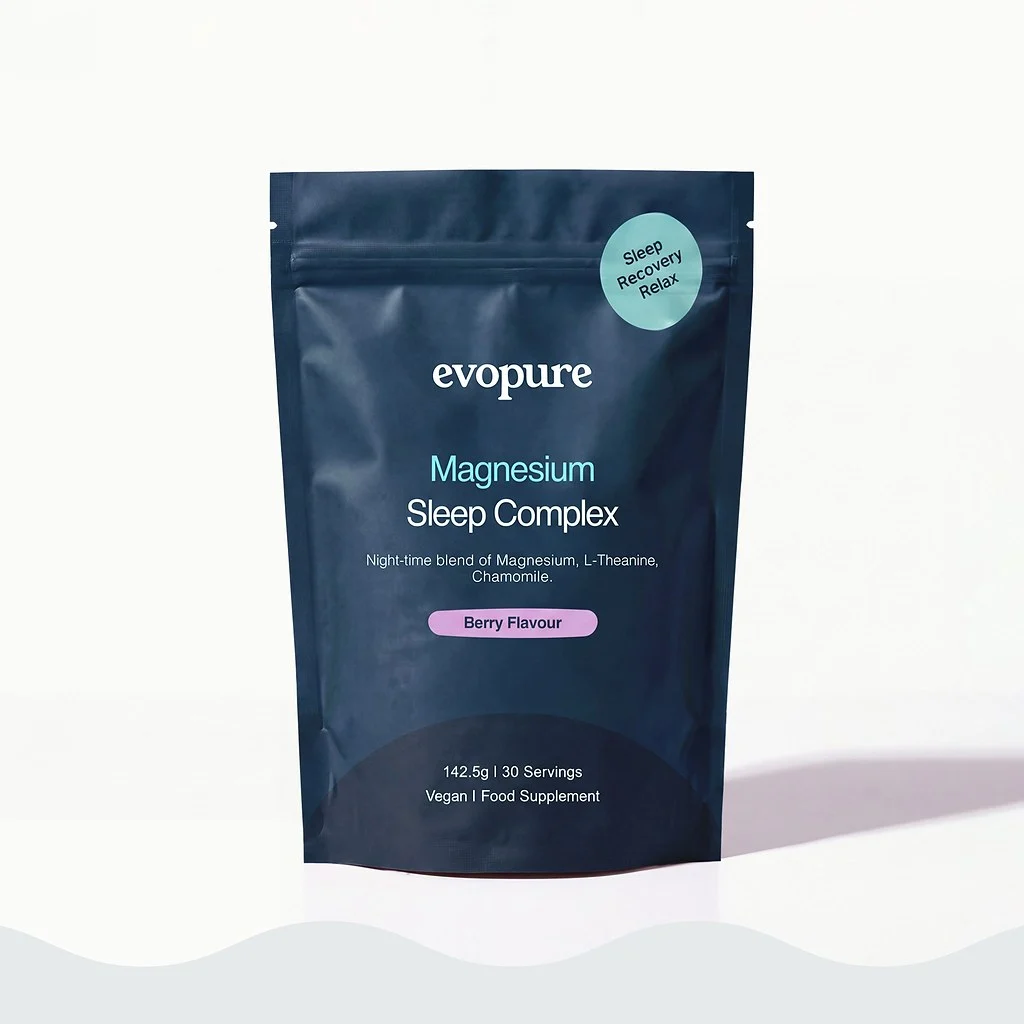
Magnesium Glycinate Sleep Complex
Evopure doesn’t sell psyllium husk. If you are building an evening routine around your gut and energy, Evopure’s Magnesium Glycinate Sleep Complex is a berry drink powder with 290mg of magnesium (77% NRV) per 4.75g serving, from magnesium bisglycinate and citrate, plus glycine and L-theanine. Magnesium contributes to a reduction of tiredness and fatigue and to electrolyte balance. If you take psyllium too, leave at least an hour, ideally 2 hours, between them.
Add Magnesium Glycinate Sleep Complex to bag See ingredients and reviews
Subscribe and save 25% on your first order, then 20%. New to Evopure? Join our emails for 20% off a one-off first order. Free UK delivery over £45.
Subscribe £22.49One-off £29.99
View productWhat is psyllium husk?
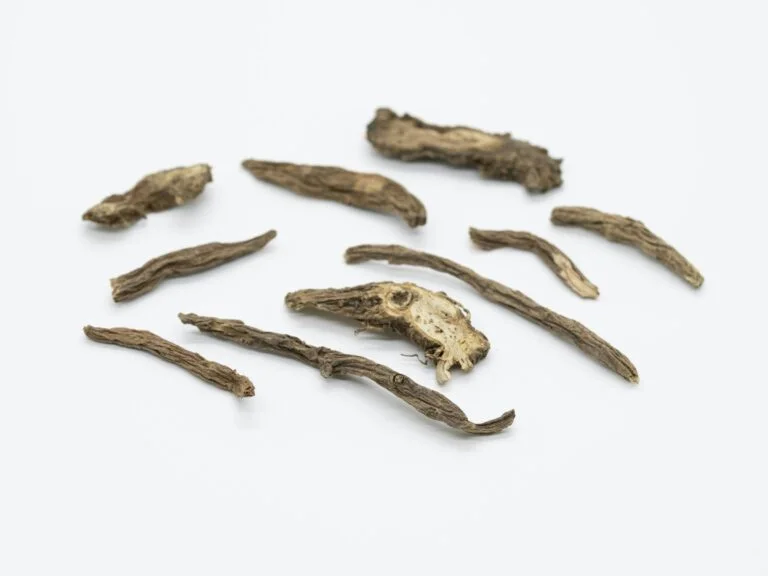
Psyllium husk is the outer coating of the seeds of Plantago ovata, a plant grown mainly in India. It is mostly soluble, gel-forming fibre, so it holds water in the gut. You can buy it as whole husk, finer husk powder or capsules, and as ispaghula husk, the licensed bulk-forming laxative in Fybogel.
| Psyllium husk fact | The detail |
|---|---|
| Source | Seed coats of Plantago ovata (blond psyllium) |
| Other names | Ispaghula husk, isabgol, psyllium seed husk |
| Type of fibre | Mostly soluble, forms a gel in water |
| UK fibre advice | 30g a day for adults; the average adult eats about 16g |
| Amounts used in trials | About 10g a day, split into 2 or 3 doses, for 4 weeks or more |
| Fybogel sachet | 3.5g ispaghula husk, 1 sachet twice a day for adults |
| Water | At least 150ml with each dose (NHS advice for Fybogel) |
| Medicines | Take them more than an hour before or after psyllium (NHS) |
| GB health claims | None authorised for psyllium |
| UK status | Sold as a food supplement, and as a licensed medicine (ispaghula husk) |
If you want to raise your fibre from food first, see our high fibre foods list, which shows grams per portion for everyday foods.
Psyllium husk benefits: what the evidence shows
Psyllium has the strongest evidence of any fibre supplement for chronic constipation, with trials showing more frequent, softer stools at doses above 10g a day taken for at least 4 weeks. It also lowers LDL cholesterol slightly. Blood sugar effects are seen mainly in people whose blood sugar is already raised, and it doesn’t reliably help weight loss.
| What was studied | What studies found | How strong |
|---|---|---|
| Chronic constipation | 16 trials: 66% responded to fibre vs 41% on control; psyllium was one of two fibres with clear effects; more wind with fibre | Review, moderate |
| IBS | 14 trials: soluble fibre such as ispaghula helped symptoms; bran did not | Review, moderate |
| LDL cholesterol | 28 trials, about 10g a day: LDL fell by 0.33 mmol/L on average | Review, moderate |
| Blood sugar | 35 trials: little or no change in people with normal blood sugar; bigger falls in people with type 2 diabetes (review run by Procter and Gamble, which makes Metamucil) | Review, industry funded |
| Weight | 22 trials: no significant effect on body weight, BMI or waist size | Review, no effect |
NICE’s IBS guideline says that if more fibre is advised, it should be soluble fibre such as ispaghula powder, or oats, rather than insoluble fibre such as bran. Our IBS guide covers the full NICE approach, and foods that help constipation compares psyllium with kiwi and prunes, which did as well in some trials.
Does psyllium have an authorised health claim?
No. There is no authorised health claim for psyllium in Great Britain, so products can’t legally say it lowers cholesterol or keeps you regular. Other fibres do have claims: oat and barley beta-glucans contribute to the maintenance of normal blood cholesterol levels, and wheat bran fibre contributes to an acceleration of intestinal transit. A psyllium product can still be labelled “high fibre”, which is a nutrition claim.
How much psyllium husk should you take a day?
Most adults start with about 3 to 5g of psyllium husk once a day in a full glass of water, then build up over 1 to 2 weeks. Trials for constipation and cholesterol mostly used about 10g a day, split into 2 or 3 doses. Fybogel’s adult dose is one 3.5g sachet twice a day, which is 7g.
| Form | Psyllium per serving | What to know |
|---|---|---|
| Whole husk | Check grams on the label | Light and fluffy, so a spoonful weighs less than powder |
| Husk powder | Check grams on the label | Denser and thickens faster; drink it straight away |
| Capsules | Often 500mg each (e.g. Holland and Barrett: 6 capsules = 3g, checked November 2026) | You need many capsules to reach trial amounts; still drink a full glass of water |
| Fybogel sachet | 3.5g ispaghula husk | Licensed medicine for constipation |
Psyllium counts towards your 30g of fibre a day, so if you already eat plenty of beans, oats, fruit and vegetables you may need less. Spoon sizes vary a lot between husk and powder, so go by the grams on your pack rather than teaspoons.
How to take psyllium husk safely
Always mix psyllium husk into at least 150ml of water or another drink, stir and drink it straight away, then keep drinking fluids through the day. Never swallow the powder dry. Taken with too little water, psyllium can swell and block the throat, gullet or bowel.
- Water with every dose: at least 150ml, the NHS amount for Fybogel. Capsules need a full glass too.
- After a meal or snack: the NHS suggests taking Fybogel after food.
- Not just before bed: take the evening dose at least an hour before bed.
- Build up slowly: a sudden jump in fibre is the main cause of wind and bloating.
- Don’t breathe in the powder: inhaled psyllium dust can rarely cause an allergic reaction.
Choking and blockages are rare, but case reports describe the gullet blocking when psyllium was taken with too little water, especially in people who have trouble swallowing. If psyllium seems to stick in your throat, or you get chest pain or can’t swallow after taking it, get urgent medical help.
Psyllium husk and medicines
Psyllium can change how other medicines, vitamins and supplements are absorbed. The NHS advises taking any other medicine or supplement more than an hour before or after Fybogel. We suggest leaving 2 hours where you can, and asking a pharmacist about medicines where timing matters.
The NHS says to tell your pharmacist or doctor before starting if you take:
- lithium, for mood problems
- carbamazepine, for epilepsy and mood problems
- digoxin, a heart medicine
- insulin or any other diabetes medicine, as your dose may need adjusting
- mesalazine, for bowel disease
- pain medicines that cause constipation, such as codeine
iThis isn’t a full list. If you take thyroid tablets, the contraceptive pill or any medicine where steady levels matter, check the timing with your pharmacist. Only take two types of laxative together if a doctor or pharmacist recommends it.
Psyllium husk side effects and who should avoid it
The common side effects of psyllium husk are wind and bloating, which often ease within a few days as your gut adjusts. Rarely, psyllium causes an allergic reaction. Anyone with swallowing problems, signs of a bowel blockage or a weak bowel should check with a doctor before taking it.
iCheck with a doctor or pharmacist first if you have:
- difficulty swallowing or any throat problems
- tummy pain with feeling or being sick, which could be signs of a blockage
- muscle weakness of the bowel (colonic atony)
- phenylketonuria, as some flavoured sachets contain aspartame
- had an allergic reaction to psyllium or ispaghula before
The NHS says most adults can take Fybogel, including during pregnancy and breastfeeding, and children under 6 should only have it if a doctor prescribes it. Call 999 if your lips, mouth, throat or tongue swell, or your throat feels tight. See a GP if constipation hasn’t improved after 3 days of taking it, or if you notice blood in your poo or a change in your bowel habits. Our guide to signs of poor gut health explains which symptoms need checking.
Psyllium husk vs Fybogel: what’s the difference?
Psyllium husk and Fybogel contain the same fibre. Fybogel is ispaghula husk, another name for psyllium husk, sold as a licensed medicine for constipation in measured 3.5g sachets. Plain psyllium husk is sold as a food supplement, usually cheaper per gram, but it can’t make medicinal claims and its dose is up to you.
| How they differ | Psyllium husk supplement | Fybogel |
|---|---|---|
| Fibre | Psyllium (Plantago ovata) husk | Ispaghula husk (the same thing) |
| UK status | Food supplement | Licensed pharmacy medicine |
| Dose | Varies by brand | 3.5g sachet twice a day (adults) |
| Extras | Often none | Flavours and sweeteners in some versions |
iIf you want a measured, licensed product for constipation, ask a pharmacist about ispaghula husk. Our supplements for digestion guide ranks psyllium against peppermint oil and probiotics.
Psyllium vs other fibre supplements
Psyllium forms a thicker gel than most fibres and holds on to water through the gut, which is why it softens hard stools. Inulin is fermented quickly by gut bacteria, so it tends to cause more wind. Chia and ground flaxseed add fibre as food. Magnesium citrate works differently, by drawing water into the bowel.
| Option | How it works | Good to know |
|---|---|---|
| Psyllium husk | Gel-forming soluble fibre | Best trial evidence for constipation |
| Inulin | Fermented prebiotic fibre | More likely to cause wind at higher doses |
| Chia seeds, flaxseed | Whole-food fibre plus fats | Useful, but less fibre per spoon than psyllium |
| Oats | Beta-glucan fibre | Oat beta-glucans have an authorised cholesterol claim |
| Magnesium citrate | Draws water into the bowel | A different mechanism; not fibre |
See chia seeds benefits, magnesium citrate and magnesium for constipation for more. For bloating rather than constipation, read magnesium for bloating and our gut health guide. If cholesterol is your focus, see does stress cause high cholesterol?
Next step
Magnesium Glycinate Sleep Complex
Food first: aim for 30g of fibre a day, and use psyllium with plenty of water if you need a top-up. For tiredness, Evopure’s Magnesium Glycinate Sleep Complex gives 290mg of magnesium (77% NRV) per 4.75g serving in a berry drink. Magnesium contributes to a reduction of tiredness and fatigue. Take it at least an hour, ideally 2 hours, apart from psyllium.
Add Magnesium Glycinate Sleep Complex to bag
Subscribe and save 25% on your first order, then 20%. New to Evopure? Join our emails for 20% off a one-off first order. Free UK delivery over £45. If you take any regular medicines, check with your GP or pharmacist first. We don’t recommend our products during pregnancy or breastfeeding.
Subscribe £22.49One-off £29.99
View productPrefer CBD? Our Broad Spectrum CBD Capsules are made with inulin, a plant fibre. The FSA advises healthy adults to take no more than 10mg of CBD a day: one 10mg capsule gives 10mg. Adults only.
The FSA’s 10mg a day figure is precautionary advice rather than a legal limit, set while longer-term safety research continues. At Evopure we think it is a very cautious figure, and many adults use more. If you go above it, increase slowly, and check with your GP or pharmacist first if you take any medication.
Our Reishi Mushroom Adaptogenic Complex is a cacao drink with 0.5g reishi and 0.5g maca per 8g serving, and contains a little natural caffeine from cacao.
Sources 11
- NHS. How and when to take Fybogel, Taking Fybogel with other medicines and Who can and cannot take Fybogel.
- NHS. How to get more fibre into your diet.
- NICE (2008, updated 2017). Irritable bowel syndrome in adults: diagnosis and management (CG61).
- Department of Health and Social Care. Great Britain nutrition and health claims (NHC) register. GOV.UK.
- van der Schoot A et al (2022). The effect of fiber supplementation on chronic constipation in adults: an updated systematic review and meta-analysis. American Journal of Clinical Nutrition.
- Moayyedi P et al (2014). The effect of fiber supplementation on irritable bowel syndrome: a systematic review and meta-analysis. American Journal of Gastroenterology.
- Jovanovski E et al (2018). Effect of psyllium (Plantago ovata) fiber on LDL cholesterol and alternative lipid targets. American Journal of Clinical Nutrition.
- Gibb RD et al (2015). Psyllium fiber improves glycemic control proportional to loss of glycemic control. American Journal of Clinical Nutrition. Authors employed by Procter and Gamble.
- Darooghegi Mofrad M et al (2020). The effects of psyllium supplementation on body weight, body mass index and waist circumference in adults. Critical Reviews in Food Science and Nutrition.
- Shin S et al (2022). Acute esophageal obstruction after ingestion of psyllium seed husk powder: a case report. World Journal of Clinical Cases.
- FSA. Cannabidiol (CBD) guidance.
This guide is general information, not medical advice. Evopure doesn’t sell psyllium husk.