Last updated: November 2026
SCM muscle pain is an ache or tightness in the sternocleidomastoid, the strap muscle running from behind your ear to your collarbone. It often refers pain to the head, ear, eye or jaw and can make you dizzy. Most cases come from posture, phone use or sleep position and ease within a few weeks with heat, gentle stretches and movement.
Below: where the SCM is, the symptoms it causes, what sets it off, how to ease it at home, how trapezius pain differs, and the red flags that need a doctor.
Need help now? Call 999 if neck pain comes with a high temperature, a severe headache, a rash that doesn’t fade under a glass or bright lights hurting your eyes, or with sudden face drooping, arm weakness, slurred speech or sudden dizziness. See all the red flags.
What is the SCM muscle?
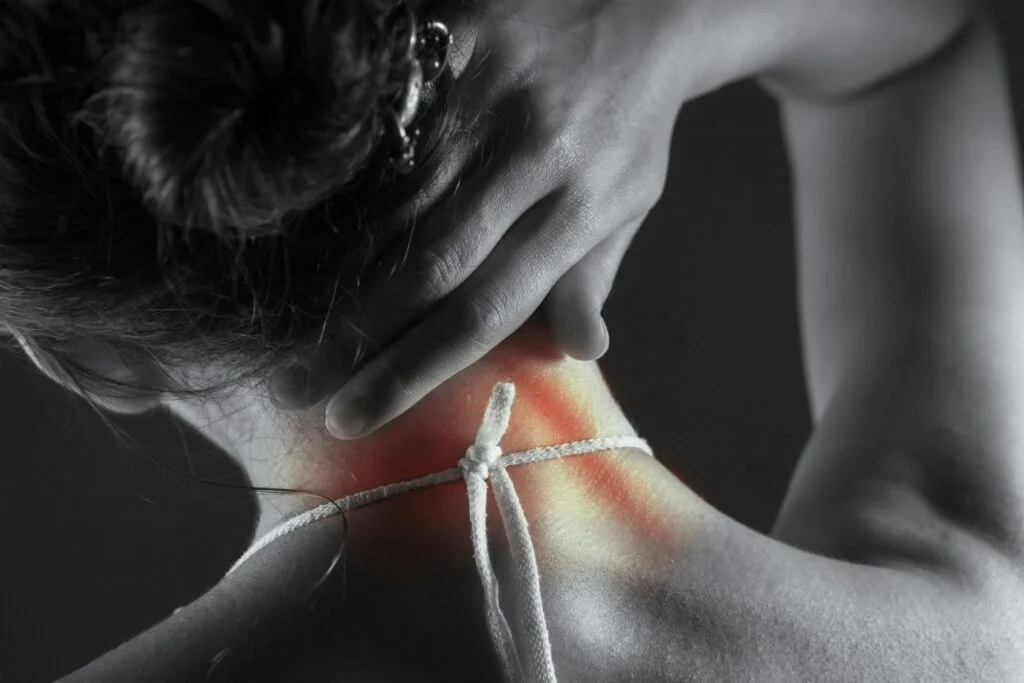
The sternocleidomastoid (SCM) is the largest muscle at the front of your neck, one on each side. It starts with two heads, one on the breastbone (sternum) and one on the collarbone (clavicle), and runs up to the bony bump behind your ear (the mastoid process). You can see it stand out when you turn your head to one side.
It turns and tilts your head, bends your neck forward, keeps your head steady and helps lift your chest when you breathe in hard. Because it works all day, small strains add up.
Our pick
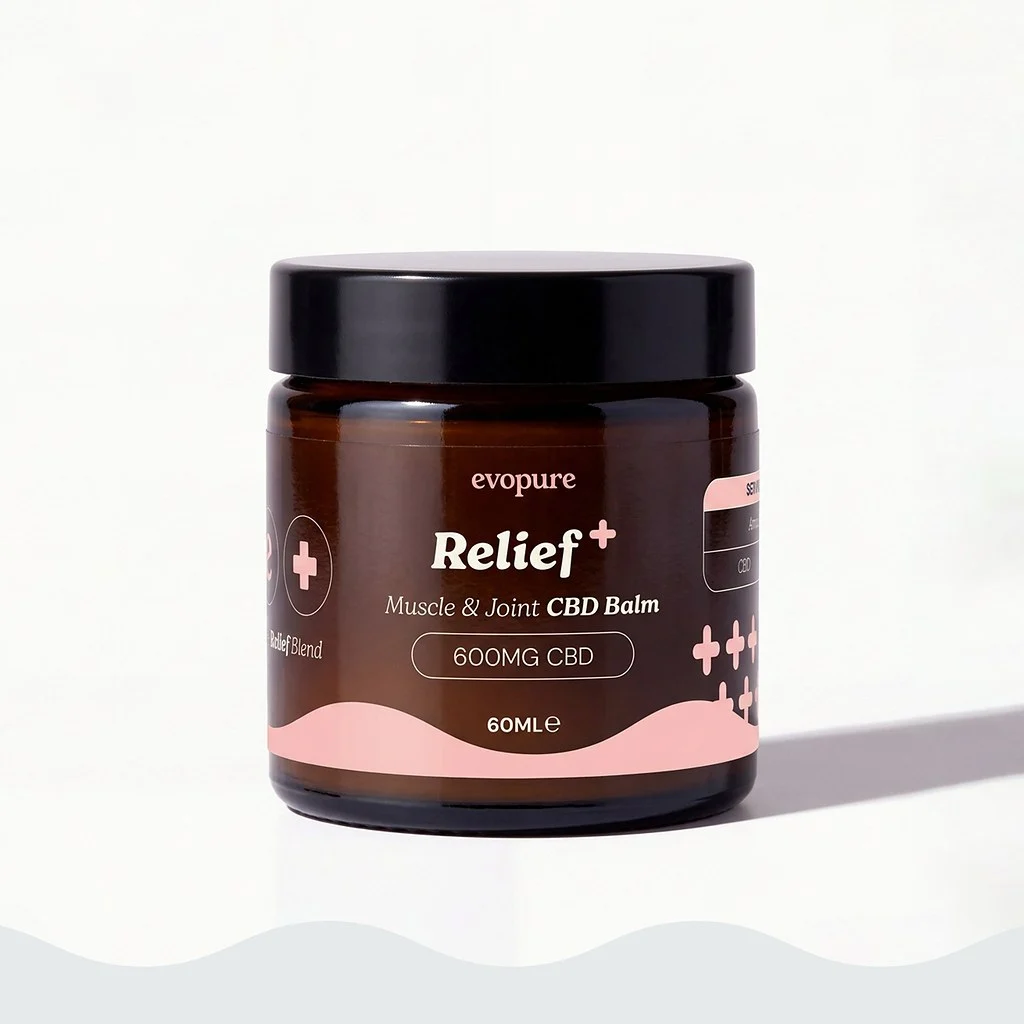
CBD Balm Muscle & Joint Support
Some people like a massage balm as part of a gentle neck routine. Evopure’s CBD Balm, Muscle and Joint Support is a cooling, non-greasy balm with 20mg of CBD per 2ml serving (600mg per tub), peppermint, eucalyptus and juniper. It is a cosmetic for massage, not a treatment for pain.
Add CBD Balm to bag See ingredients and reviews
Keep it away from your eyes and broken skin. The product description mentions wintergreen, which is related to aspirin: if you’re allergic to aspirin or take a blood thinner, ask a pharmacist first. Adults only. Subscribe and save 25% on your first order, then 20%. New to Evopure? Join our emails for 20% off a one-off first order. Free UK delivery over £45.
Subscribe £29.99One-off £39.99
View productSCM pain symptoms
SCM pain symptoms usually start as a dull or sharp ache along the side or front of the neck that gets worse when you turn or tilt your head. Cleveland Clinic lists referred pain to the forehead, eyes, cheek, ears, sinuses and throat, plus headache, dizziness, nausea and blurred or watery eyes.
- Head: headaches around the temple, forehead or behind the eye. A 2025 study of 60 adults linked tender spots in the SCM with headaches. See what your headache location can mean and headache behind the eyes.
- Ear and face: an ache around the ear, cheek or sinuses, sometimes alongside jaw pain or teeth grinding.
- Dizziness: some people feel light-headed when moving their head. Dizziness has many causes: see vertigo, anxiety and dizziness and tinnitus.
What causes SCM muscle pain?
The NHS lists poor posture, sleeping in an awkward position and injuries such as whiplash among the common causes of neck pain, and all of them load the SCM. Most SCM pain is a strain or tension from everyday habits rather than damage.
| Cause | Why it strains the SCM | Easy fix |
|---|---|---|
| Phone and laptop use | Your head pokes forward and down for long spells | Raise the screen to eye level; break every 30 to 60 minutes |
| Desk work | Craning towards the screen holds the muscle short | Sit back, screen an arm’s length away (see posture) |
| Sleeping on your front | Your head is twisted to one side for hours | Sleep on your back or side with a low, firm pillow |
| Whiplash or a fall | A sudden jolt overstretches the neck muscles | Painkillers, keep gently moving; see the red flags |
| Stress and shallow breathing | The SCM helps lift your chest when you breathe from the top of your lungs | Slow breathing from your belly; progressive muscle relaxation |
After whiplash, one study found about twice as many tender trigger points in the neck muscles as in ordinary neck pain (6.7 vs 3.3). For stress tension, see stress symptoms.
How to relieve SCM muscle pain at home
To relieve SCM muscle pain, keep your neck gently moving, use heat or cold, and take paracetamol or ibuprofen (or ibuprofen gel) if you need it, as the NHS advises for neck pain. A hot water bottle wrapped in a towel for 20 minutes, 2 to 3 times a day, is the NHS heat routine.
- Cold instead: frozen peas in a tea towel for 5 minutes, up to 3 times a day. See hot water bottle safety.
- Keep moving: no neck collar unless a doctor advises it, and don’t hold one position for long.
- Pillow and position: a low, firm pillow, your head level with your body, and no front sleeping. See the best sleeping positions.
- Gentle SCM stretch: sit tall, drop the shoulder on the sore side, tilt your ear towards the other shoulder, then turn your chin slightly up and away until you feel a mild stretch at the front of the neck. Hold for 20 to 30 seconds, breathing slowly, 2 to 3 times. Stop if it makes you dizzy.
- Chin tucks: glide your head straight back as if making a double chin, hold for 2 seconds, repeat 10 times.
- Gentle self-massage: lightly pinch and roll the muscle between your thumb and fingers, working down from behind the ear. Never press hard on the front of the neck where you can feel a pulse.
iAsk a pharmacist which painkiller suits you. In many areas you can refer yourself to NHS physiotherapy without a GP. Our stiff neck guide has a full 5-minute routine, and muscle knots covers self-massage in more detail.
How long does SCM pain last?
Most SCM pain from posture or sleeping awkwardly settles within a few weeks: the NHS says most neck pain only lasts a few weeks. After whiplash, the NHS says symptoms usually improve within 2 to 3 months, though some people have them for longer.
Trapezius muscle pain: how it differs and what helps
Trapezius muscle pain is felt at the back of the neck and across the top of the shoulders, while SCM pain is felt at the side and front of the neck and often refers into the head, ear or face. Trapezius pain is common in desk workers, and in a Danish trial of 42 women it fell by 42 to 49% after 10 weeks of neck and shoulder strength training.
| How they differ | SCM | Trapezius |
|---|---|---|
| Where it sits | Side and front of the neck, ear to collarbone | Back of the neck, top of the shoulders, down between the shoulder blades |
| Where you feel it | Side of the neck, temple, forehead, eye, ear, jaw | Top of the shoulder, back of the neck, back of the head |
| Typical triggers | Head turned or poking forward, front sleeping, whiplash | Shoulders hunched at a desk, heavy bags, stress, repetitive arm work |
| What helps most | Heat, side-tilt stretch, posture breaks | Heat, shoulder rolls, strengthening (shrugs, rows) once it settles |
In that trial only the strength group improved; general cycling didn’t help. So once the worst has passed, light shrugs, rows and lateral raises are worth more than stretching alone, and a physio can set the level. If the ache spreads between your shoulder blades, see upper back pain, and for pain that sits mainly in the joint, see shoulder pain. Tight shoulders often go hand in hand with tension headaches.
Red flags: when to get help
Call 999 or go to A&E if neck pain or stiffness comes with:
- a high temperature, a severe headache, bright lights hurting your eyes, or a rash that doesn’t fade when you press a glass on it (possible meningitis)
- a face drooping on one side, weakness in one arm, slurred speech, or sudden dizziness or a sudden severe headache (possible stroke: act FAST)
Do not drive yourself to A&E.
Ask for an urgent GP appointment or call 111 if, after an injury such as whiplash, you have severe pain despite painkillers, pins and needles on one or both sides of the body, weakness in your arms or legs, trouble walking or sitting upright, or an electric-shock feeling in your neck and back (NHS).
iSee a GP if the pain hasn’t gone after a few weeks, painkillers aren’t helping, you have pins and needles or a cold arm, or you notice a swelling on the side of your neck that doesn’t go down within 2 weeks. Also see pins and needles.
Where our products fit (honestly)
No balm or supplement is a treatment for SCM or trapezius pain, and CBD isn’t a treatment for neck pain. Movement, heat, sleep and proper advice come first.
- CBD Balm, Muscle and Joint Support: 20mg of CBD per 2ml serving with peppermint, eucalyptus and juniper. Some people like it for a gentle self-massage after a warm shower: see our CBD balm guide and CBD balm vs Tiger Balm.
- Magnesium Glycinate Sleep Complex: a berry evening drink with 290mg of magnesium (77% NRV) per 4.75g, plus glycine and L-theanine. Magnesium contributes to normal muscle function. More in magnesium for muscle pain.
- Flow CBD Oil with Ashwagandha and Maca: a daytime oil with 35mg ashwagandha root extract and 35mg maca root extract per half pipette. Not for pregnancy or breastfeeding, thyroid, autoimmune or liver conditions, or with sedatives, thyroid or immunosuppressant medicines: see ashwagandha side effects.
The FSA advises healthy adults to take no more than 10mg of CBD a day: about 0.2ml of the 500mg (0.1ml of the 1,000mg) gives 10mg. Adults only.
The FSA’s 10mg a day figure is precautionary advice rather than a legal limit, set while longer-term safety research continues. At Evopure we think it is a very cautious figure, and many adults use more. If you go above it, increase slowly, and check with your GP or pharmacist first if you take any medication.
iIf you take any regular medicines, check with your GP or pharmacist first. We don’t recommend our products during pregnancy or breastfeeding.
Next step
Keep moving, add heat and posture breaks, and if you like a massage routine, try the CBD Balm. For the evening, the Magnesium Glycinate Sleep Complex gives 290mg of magnesium per serving.
Add CBD Balm to bag Add Magnesium Glycinate Sleep Complex to bag
Subscribe and save 25% on your first order, then 20%. New to Evopure? Join our emails for 20% off a one-off first order. Free UK delivery over £45. Adults only.
Sources 9
- NHS. Neck pain.
- NHS. Whiplash.
- NHS. Meningitis.
- NHS. Stroke symptoms.
- NHS. Lumps.
- Cleveland Clinic. Sternocleidomastoid (SCM) muscle.
- Devadiga D et al (2025). Association between sternocleidomastoid and upper trapezius muscle trigger points and headaches. J Manipulative Physiol Ther (PMID 41217317).
- Castaldo M et al (2014). Myofascial trigger points in patients with whiplash-associated disorders and mechanical neck pain. Pain Med (PMID 24641263).
- Andersen LL et al (2008). Effect of physical training on function of chronically painful muscles: a randomized controlled trial. J Appl Physiol (PMID 18948442).
This guide is general information, not medical advice. Evopure makes the CBD Balm, Magnesium Glycinate Sleep Complex and Flow CBD Oil.