Last updated: November 2026
Most adults need 7 to 9 hours of sleep a night, the NHS says, and most people over 65 need 7 to 8. Teenagers need 8 to 10 hours and school-age children 9 to 11. Your own number is the amount that lets you wake reasonably refreshed and stay alert all day without leaning on caffeine.
Below: how much sleep you need by age, whether women need more sleep than men, natural short sleepers (the rare people who thrive on 6 hours or less), signs you’re short of sleep, whether you can sleep too much, how to find your own number and why quality matters as much as hours. Checked against NHS guidance and the research in November 2026.
How much sleep do I need by age?
The NHS says adults need 7 to 9 hours and children 9 to 13 hours. For a fuller breakdown, the most widely used figures come from an expert panel convened by the US National Sleep Foundation, which reviewed the research in 2015:
| Age | Recommended sleep | Source |
|---|---|---|
| Newborns (0 to 3 months) | 14 to 17 hours, including naps | National Sleep Foundation |
| Babies (4 to 11 months) | 12 to 15 hours, including naps | National Sleep Foundation |
| Toddlers (1 to 2 years) | 11 to 14 hours | National Sleep Foundation |
| Pre-school (3 to 5 years) | 10 to 13 hours | National Sleep Foundation |
| School age (6 to 13 years) | 9 to 11 hours | National Sleep Foundation; NHS says 9 to 13 for children |
| Teenagers (14 to 17 years) | 8 to 10 hours | National Sleep Foundation |
| Adults (18 to 64 years) | 7 to 9 hours | NHS and National Sleep Foundation |
| Over 65s | 7 to 8 hours | National Sleep Foundation |
These are ranges, not targets. The National Sleep Foundation says an extra hour or two either side may suit some people, but straying far from the range can be a sign of a health problem. For a worry about a child’s sleep, talk to your GP or health visitor.
How many hours of sleep do I need a week? At 7 to 9 hours a night, that’s 49 to 63 hours a week. One short night is fine. A run of short nights builds sleep debt, which a single lie-in doesn’t fully repay.
Later life brings lighter, more broken sleep rather than a much smaller need: see sleep as you get older. To turn your hours into a bedtime, use our sleep calculator or the chart in the best time to sleep and wake up.
Our pick
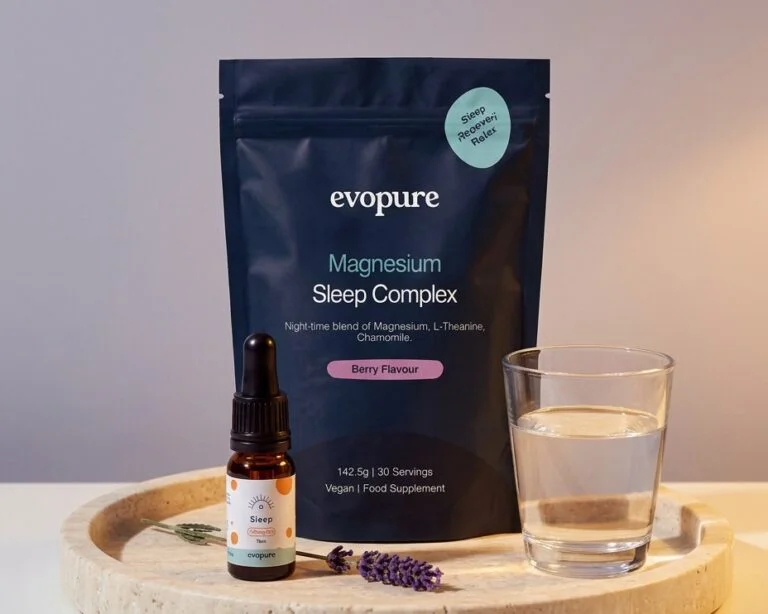
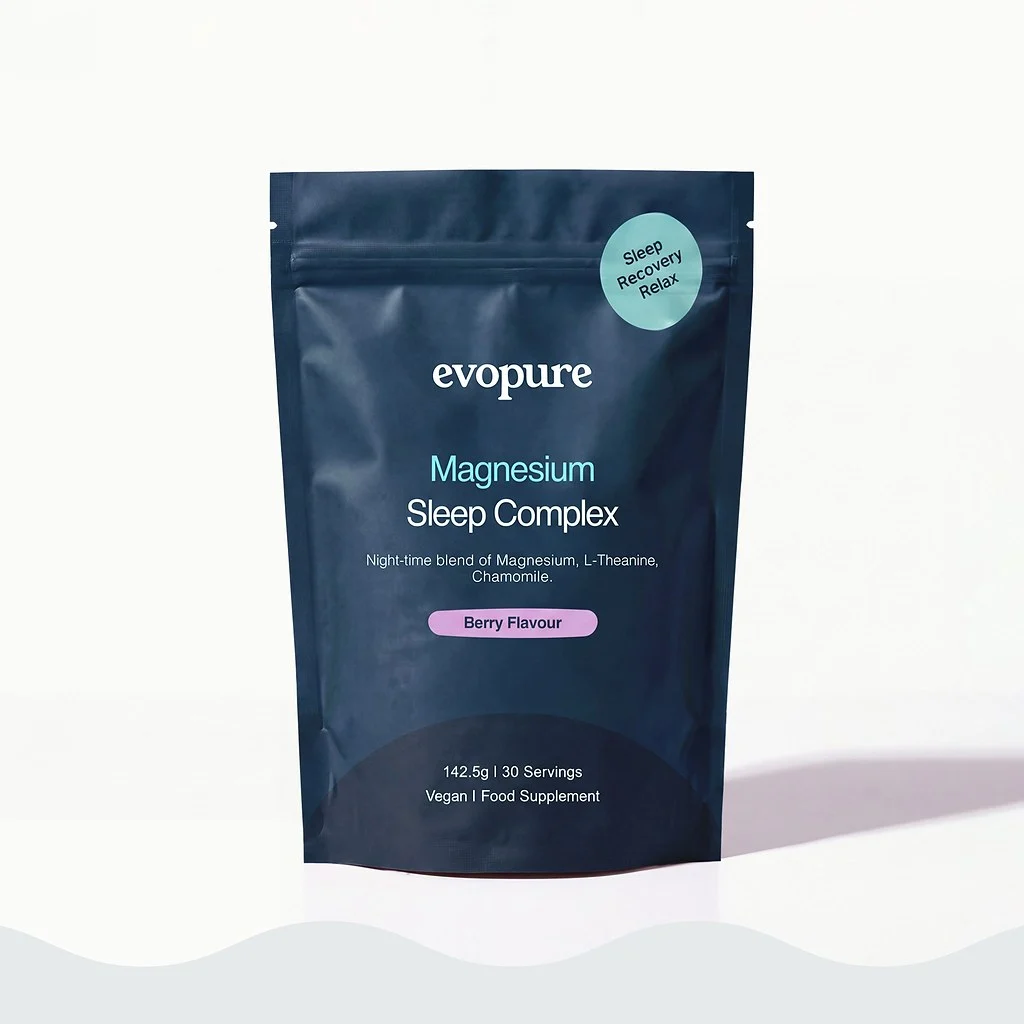
Magnesium Glycinate Sleep Complex
Magnesium Glycinate Sleep Complex is a berry drink powder for your evening wind-down, with 290mg of magnesium (77% NRV) per 4.75g serving from bisglycinate and citrate, plus glycine and L-theanine. Magnesium contributes to a reduction of tiredness and fatigue.
Add Magnesium Glycinate Sleep Complex to bag See ingredients and reviews
Vegan and made in the UK. Free UK delivery over £45, 14-day returns on unopened items.
Subscribe £22.49One-off £29.99
View productIs 7 hours enough, or do I need 8?
For many adults 7 hours is enough: it’s the bottom of the NHS range. Others genuinely need 8 or 9. The difference between people is real, so the right question is not “how many hours should I get?” but “how do I feel on the hours I get?”
Six hours is a different story. In a well-known lab study, healthy adults kept to 6 hours in bed for 14 nights built up thinking and reaction-time problems that kept getting worse, yet their sleepiness ratings barely rose after the first few days. Short sleep can feel normal while your performance slides. Our sleep calculator goes through 5, 6, 7, 8 and 9 hours one by one, and sleep deprivation covers the effects.
Do women need more sleep than men?
The honest answer is that the evidence is mixed. There’s no official advice telling women to sleep longer: the NHS gives the same 7 to 9 hours for all adults. What the research does show is that women’s sleep is more often disrupted, so many women need more time in bed to get the same amount of good sleep.
- Women sleep slightly longer on average. A large US time-use study found women slept a little more than men at most stages of life. The researchers said the gap was small and much of it was explained by work and family responsibilities.
- Women have more insomnia. A meta-analysis of 29 studies covering more than 1.2 million people found women were about 41% more likely than men to have insomnia, and the gap grew with age.
- Hormones play a part. A 2016 review found women typically report poorer quality and more disrupted sleep across different stages of life, and that sex hormones appear to be involved. The authors also said this research is still in its infancy, partly because women have long been under-represented in sleep studies.
You may have seen the claim that women need about 20 minutes more sleep than men. We couldn’t find a published study that measured this, so treat the figure with caution.
Periods, pregnancy and menopause
| Life stage | What can disturb sleep | Read more |
|---|---|---|
| Before and during a period | Hormone changes, cramps, feeling tired | Insomnia before a period |
| Pregnancy | The NHS says tiredness is common, especially in the first 12 weeks; later, lying down gets uncomfortable and loo trips increase | Your midwife or GP |
| Perimenopause and menopause | The NHS lists sleep problems, which may be worse with night sweats | Perimenopause and sleep |
If your sleep is broken, aim for 7 to 9 hours asleep, which may mean going to bed a little earlier. If tiredness clusters around your cycle, see why you feel tired on your period.
Natural short sleepers: can some people thrive on 6 hours or less?
Yes, but very few. Familial natural short sleep is a rare, inherited trait: people sleep around 4 to 6 hours a night all their lives, wake without an alarm and feel fully rested. It runs in families, which is how scientists found it.
- DEC2 (also called BHLHE41), 2009. Ying-Hui Fu’s team at the University of California, San Francisco (UCSF) found a mutation in this gene in a family of natural short sleepers. In their study, people with the mutation averaged 6.25 hours of sleep a night, against just over 8 hours for family members without it. Mice given the same mutation slept less too.
- Another BHLHE41 variant, 2014. A separate team found a different variant in one of a pair of twins. That twin slept less, needed less recovery sleep and made fewer mistakes during sleep deprivation than the other.
- ADRB1, 2019. The UCSF team found a mutation in a second gene, ADRB1, in a family who needed fewer hours than most. Mice with the mutation also slept less.
The same scientists stress how rare these mutations are. As Fu put it in a UCSF news release: “Today, most people are chronically sleep deprived.” In other words, if you sleep 5 or 6 hours, you are far more likely to be short of sleep than a natural short sleeper.
| Sign | Natural short sleeper | Short of sleep |
|---|---|---|
| Waking up | Without an alarm, feeling fresh | Needs an alarm, groggy |
| Weekends and holidays | Sleeps about the same | Lies in for hours |
| Afternoons | Alert | Slumps, reaches for caffeine |
| How long | Since childhood, often like a parent | Started with a job, children or late screens |
Can you train yourself to become a short sleeper? There’s no good evidence you can. The trait is genetic, and the lab studies of people kept to 6 hours show the costs build up even when people feel fine. For waking earlier without losing sleep, see how to wake up early.
Signs you’re not getting enough sleep
The NHS’s simple test: you probably don’t get enough sleep if you’re constantly tired during the day. Other common signs:
- you can’t get up without an alarm, or you hit snooze again and again
- you sleep for hours longer at weekends
- you nod off in front of the television, on the sofa or as a passenger
- you need caffeine to get through the afternoon
- you feel irritable or find it hard to concentrate (both on the NHS list of insomnia symptoms)
If you get 7 to 9 hours and still feel like this, the problem may be the quality of your sleep, not the length. The NHS lists loud snoring, gasping or choking noises in your sleep and feeling very tired during the day among the signs of sleep apnoea. Other health causes of tiredness are worth ruling out too: see why you wake up tired and why am I always tired?
Can you sleep too much?
Yes. Regularly needing more than 9 or 10 hours, and still waking unrefreshed, is worth looking into. A review of 16 studies following more than 1.3 million people found that both short and long sleepers had a higher risk of dying during the study: about 12% higher for short sleep and 30% higher for long sleep.
That doesn’t prove long sleep is harmful in itself. Long sleep is often a marker of something else, such as an illness, low mood, sleep apnoea or a medicine side effect. A long lie-in after a hard week is normal. A new, lasting need for much more sleep is a reason to see your GP. Our guide to oversleeping covers the causes.
How to work out how much sleep you need
- Use a week off. Go to bed when you feel sleepy and wake without an alarm. The first few nights are usually long while you repay sleep debt. After that, your nightly sleep settles close to your natural need. A Japanese lab study found the ideal amount differs between people, and that just 1 hour of hidden sleep debt took about four days to recover.
- Keep a simple sleep diary. Note when you went to bed, roughly when you fell asleep, when you woke and how you felt at 3pm. Two weeks is enough to see a pattern. A sleep tracker can help, but treat its numbers as estimates.
- Fix your wake-up time. Count back your number of hours, plus about 15 minutes to drop off, to set your bedtime. Keep the same wake-up time at weekends where you can: see how to fix your sleep schedule.
- Adjust in 15-minute steps. If you still need an alarm to drag you up after a fortnight, go to bed 15 minutes earlier and try again.
Shift workers face a harder version of this: see sleep and shift work. When the clocks change, give yourself a few days to adjust: see how to cope when the clocks go back.
Sleep quality vs quantity: which matters more?
Both. Hours in bed don’t tell the whole story if your sleep is broken. An expert panel convened by the National Sleep Foundation agreed on these signs of good sleep quality:
| Measure | Adults | Over 65s |
|---|---|---|
| Time to fall asleep | 30 minutes or less | 30 minutes or less |
| Waking in the night | Once or less | Twice or less |
| Total time awake after first falling asleep | 20 minutes or less | 30 minutes or less |
| Time in bed spent asleep | Most of it (about 7 of 8 hours) | Most of it (about 7 of 8 hours) |
A full night also cycles through deep sleep and REM sleep; our guides explain what each stage does.
NHS Every Mind Matters suggests going to bed and getting up at similar times, cutting down on tea, coffee and other caffeine, avoiding alcohol and nicotine for 1 to 2 hours before bed, putting phones and tablets away for an hour before bed and being active during the day. Our sleep hygiene guide covers each habit, and how to stay asleep helps if you wake in the night.
Where our products fit
No supplement adds hours to your night: those come from your routine. What our products can do is give your wind-down a regular cue.
- Magnesium Glycinate Sleep Complex is a berry-flavoured drink powder with 290mg of magnesium (77% NRV) per 4.75g serving from magnesium bisglycinate and citrate, plus glycine, L-theanine, and oat straw, hops, chamomile and passionflower extracts. Magnesium contributes to a reduction of tiredness and fatigue and to normal psychological function. See magnesium for sleep for what the research says, and how much magnesium a day for the NHS amounts.
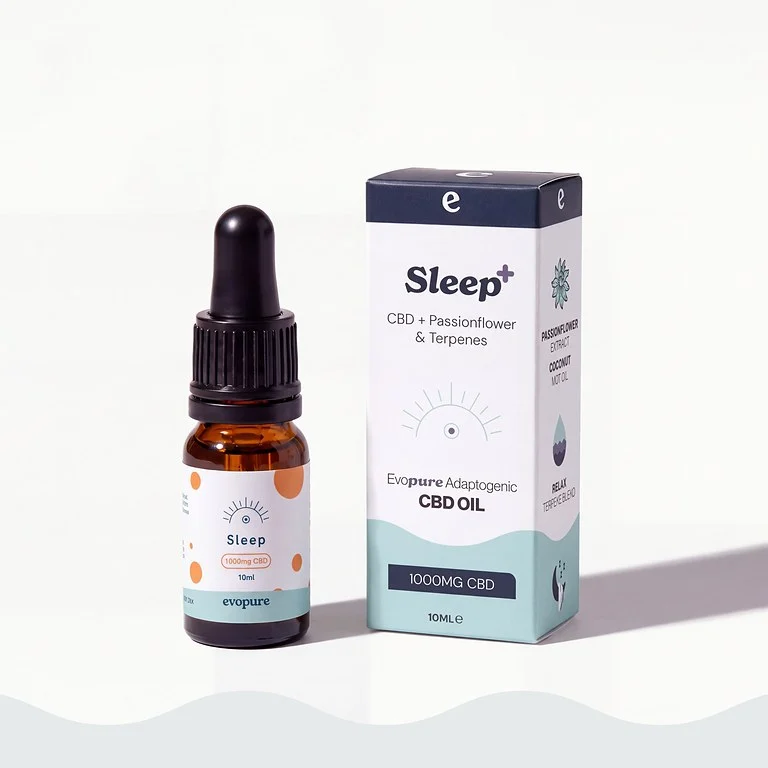
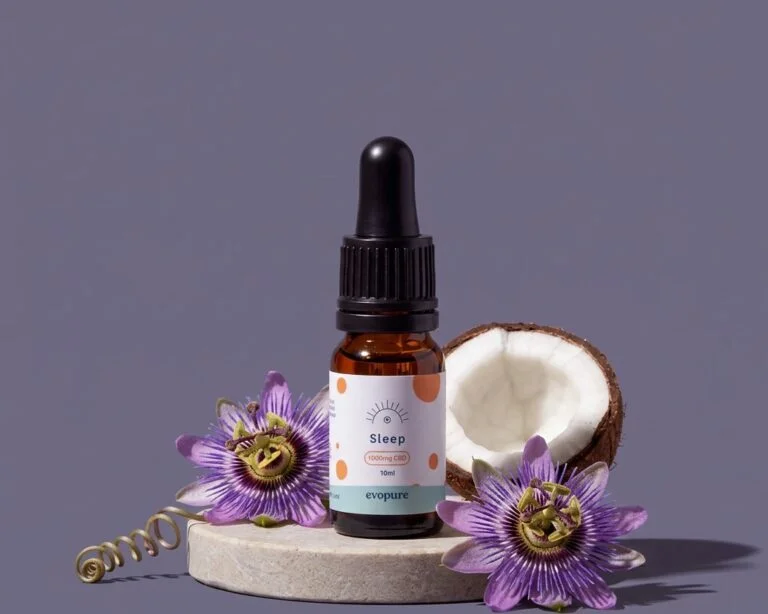
- Sleep CBD Oil is our evening oil: broad spectrum CBD with 70mg of passionflower extract per half pipette and a night-time terpene blend. On the 500mg bottle, half a pipette (0.35ml) gives 17.5mg of CBD, and about 0.2ml gives 10mg. CBD isn’t a treatment for insomnia, and the research on CBD and sleep is still limited: see CBD for sleep.
- Reishi Mushroom Adaptogenic Complex is a reishi hot chocolate: per 8g serving (2 teaspoons), 0.5g reishi, 0.5g maca and 0.3g cinnamon with cacao. It contains a little natural caffeine from the cacao, so have it earlier in the evening (our caffeine in hot chocolate guide has the numbers). Reishi has no authorised health claims.
The FSA’s 10mg a day figure is precautionary advice rather than a legal limit, set while longer-term safety research continues. At Evopure we think it is a very cautious figure, and many adults use more. If you go above it, increase slowly, and check with your GP or pharmacist first if you take any medication.
If you take any regular medicines, check with your GP or pharmacist first. We don’t recommend our products during pregnancy or breastfeeding. All three are vegan, made in the UK and for adults (18+) only. Our CBD oils are broad spectrum with 0% THC, made in the UK from US-grown hemp and on the FSA public list, with batch lab reports on request from our lab testing page. For other options ranked by evidence, see natural sleep aids.
When to see a GP
See a GP if:
- you always feel very tired during the day, or nod off without meaning to
- you snore loudly, or someone has seen you stop breathing, gasp or choke in your sleep
- you’ve had trouble sleeping for months, or changing your sleep habits hasn’t helped
- poor sleep is making it hard to cope with daily life
- you suddenly need much more sleep than you used to and still wake unrefreshed
A GP will look for the cause first. For long-term insomnia, the NHS says you may be offered cognitive behavioural therapy (CBT), face to face or as an online self-help programme. Take a partner along if they have noticed snoring or pauses in your breathing.
Sources 17
- NHS. Insomnia.
- NHS. Sleep apnoea.
- NHS. Tiredness in pregnancy.
- NHS. Symptoms of menopause and perimenopause.
- NHS Every Mind Matters. How to fall asleep faster and sleep better.
- National Sleep Foundation. How many hours of sleep do you really need? and What is sleep quality?
- Hirshkowitz M et al. National Sleep Foundation’s sleep time duration recommendations: methodology and results summary. Sleep Health, 2015. PMID 29073412.
- Ohayon M et al. National Sleep Foundation’s sleep quality recommendations: first report. Sleep Health, 2017. PMID 28346153.
- Burgard SA, Ailshire JA. Gender and time for sleep among U.S. adults. American Sociological Review, 2013. PMID 25237206.
- Zhang B, Wing YK. Sex differences in insomnia: a meta-analysis. Sleep, 2006. PMID 16453985.
- Mong JA, Cusmano DM. Sex differences in sleep: impact of biological sex and sex steroids. Philosophical Transactions of the Royal Society B, 2016. PMID 26833831.
- He Y et al. The transcriptional repressor DEC2 regulates sleep length in mammals. Science, 2009. PMID 19679812.
- Pellegrino R et al. A novel BHLHE41 variant is associated with short sleep and resistance to sleep deprivation in humans. Sleep, 2014. PMID 25083013.
- Shi G et al. A rare mutation of β1-adrenergic receptor affects sleep/wake behaviors. Neuron, 2019. PMID 31473062.
- Van Dongen HP et al. The cumulative cost of additional wakefulness: dose-response effects on neurobehavioral functions and sleep physiology from chronic sleep restriction and total sleep deprivation. Sleep, 2003. PMID 12683469.
- Cappuccio FP et al. Sleep duration and all-cause mortality: a systematic review and meta-analysis of prospective studies. Sleep, 2010. PMID 20469800.
- Kitamura S et al. Estimating individual optimal sleep duration and potential sleep debt. Scientific Reports, 2016. PMID 27775095.
This guide is general information, not medical advice. Evopure makes the Magnesium Glycinate Sleep Complex, Sleep CBD Oil and Reishi Mushroom Adaptogenic Complex.