Last updated: October 2026
Older adults don’t need more magnesium than younger adults: UK guidance stays at 300mg a day for men and 270mg for women at 65, 75 and beyond. But absorption tends to fall with age and average intakes run a little short, so food comes first, then a modest, gentle supplement if needed (checked October 2026).
How much magnesium do older adults need?
The NHS gives 300mg a day for men and 270mg for women. UK government tables keep the same figures for ages 65 to 74 and 75 and over. It covers food, drink and supplements together.
| Age | Men | Women |
|---|---|---|
| 51 to 64 | 300mg a day | 270mg a day |
| 65 to 74 | 300mg a day | 270mg a day |
| 75 and over | 300mg a day | 270mg a day |
| From supplements | 400mg or less | 400mg or less |
How much magnesium should a 60 or 70 year old woman take? 270mg a day in total, mostly from food. If your diet is light on wholegrains, nuts, seeds and greens, a supplement of around 100 to 150mg usually fills the gap. A man of the same age needs 300mg.
Why do some sites say 420mg or 320mg? Those are US figures for over 50s. The NHS says 400mg a day or less from supplements is unlikely to cause harm. For every age group, see how much magnesium per day.

Our pick
Magnesium Glycinate Sleep Complex
Magnesium Glycinate Sleep Complex is a berry drink powder, not a tablet, with 148mg of magnesium a serving from bisglycinate and citrate. Magnesium contributes to a reduction of tiredness and fatigue and to normal muscle function. Easy to stir into a drink if you’d rather not swallow more pills.
Add Magnesium Glycinate Sleep Complex to bag See ingredients and reviews
Vegan and made in the UK. Free UK delivery over £45, 14-day returns on unopened items.
Subscribe £22.49One-off £29.99
View productAre older adults low in magnesium?
Many fall a little short, according to the National Diet and Nutrition Survey (2019 to 2023):
| Group | Average from food | % of target | Below the minimum |
|---|---|---|---|
| Men 65 to 74 | 280mg | 93% | 11% |
| Women 65 to 74 | 241mg | 89% | 9% |
| Men 75 and over | 272mg | 91% | 18% |
| Women 75 and over | 231mg | 86% | 13% |
“Below the minimum” means less than the Lower Reference Nutrient Intake (190mg for men, 150mg for women), which is enough for only a small minority. So almost 1 in 5 men over 75 is very likely getting too little.
Why magnesium matters more with age
A 2021 review by geriatric specialists describes three changes with ageing: people eat less magnesium, the gut absorbs less and the kidneys lose more. Two more factors:
- Long-term medicines. Some can lower magnesium (see medicines below).
- Alcohol. A review found regular drinking can make the kidneys pass two to three times more magnesium.
iThe review notes that a mild shortfall usually causes no clear symptoms, and vague ones such as tiredness or poor sleep are easy to put down to age. Your GP can check your level with a blood test. See signs of magnesium deficiency.
What magnesium does, and what it doesn’t
The main authorised GB health claims for magnesium:
- Magnesium contributes to a reduction of tiredness and fatigue.
- Magnesium contributes to normal muscle function.
- Magnesium contributes to the maintenance of normal bones.
- Magnesium contributes to normal psychological function.
For bones, see magnesium and bone health, magnesium and vitamin D and vitamin D in winter, as magnesium works alongside calcium and vitamin D.
What the research says for older adults:
- Sleep. A 2021 review of three small trials in 151 older adults found people fell asleep about 17 minutes sooner on magnesium than on a placebo. Total sleep time didn’t change significantly and the evidence was low quality. Magnesium has no authorised sleep claim. See sleep as you get older and magnesium for sleep.
- Night cramps. A 2020 Cochrane review concluded that magnesium is unlikely to make a meaningful difference to ordinary muscle cramps in older adults. See leg cramps at night for what else to try.
Food first
The NHS says most people can get enough from a varied, balanced diet, with spinach, nuts and wholemeal bread among good sources. Easy wins:
- a handful of almonds, cashews or pumpkin seeds as a snack
- wholemeal bread or porridge oats instead of white bread or sugary cereal
- beans or lentils added to soups and stews
- spinach or other leafy greens with your main meal
Our list of foods high in magnesium ranks 25 UK foods by mg per portion.
Best magnesium for older adults
Choose one that is well absorbed, kind to your stomach and easy to take daily. In a 60-day University of Reading trial, citrate and an amino acid chelate (glycinate’s family) were absorbed better than oxide.
| Form | Absorption | Stomach | Worth knowing |
|---|---|---|---|
| Glycinate (bisglycinate) | Good | Usually gentle | A good first choice for most older adults |
| Citrate | Good | Can loosen stools | Some people use it for constipation |
| Oxide | Poor | Most likely to upset | Cheap and high on the label, but little is absorbed |
| Threonate | Less studied | Little data | Usually costs more |
Which magnesium is best for older women? The same as for men: glycinate first, at a modest amount. See magnesium for women, magnesium for menopause, magnesium for men and all 12 types of magnesium.
What to look for on the label
- Elemental magnesium per serving. “500mg magnesium glycinate” holds only about 70mg of actual magnesium.
- A modest dose. 100 to 200mg a day tops up most diets. Count multivitamins and magnesium-containing indigestion remedies or laxatives too.
- A format you’ll actually take. If you already take several tablets, a drink powder can be easier. See magnesium powder vs tablets and our wider guide to the best magnesium supplement in the UK.
- Start low. Begin with part of a serving, then build up. See when to take magnesium.
Where our products fit
Our Magnesium Glycinate Sleep Complex is a berry drink powder with magnesium bisglycinate and citrate (148mg of magnesium a serving), glycine, L-theanine and four herbal extracts, including chamomile. The directions suggest starting with a third of a scoop and building up to one 5g scoop in a drink, about 30 minutes before bed. Magnesium contributes to normal psychological function.
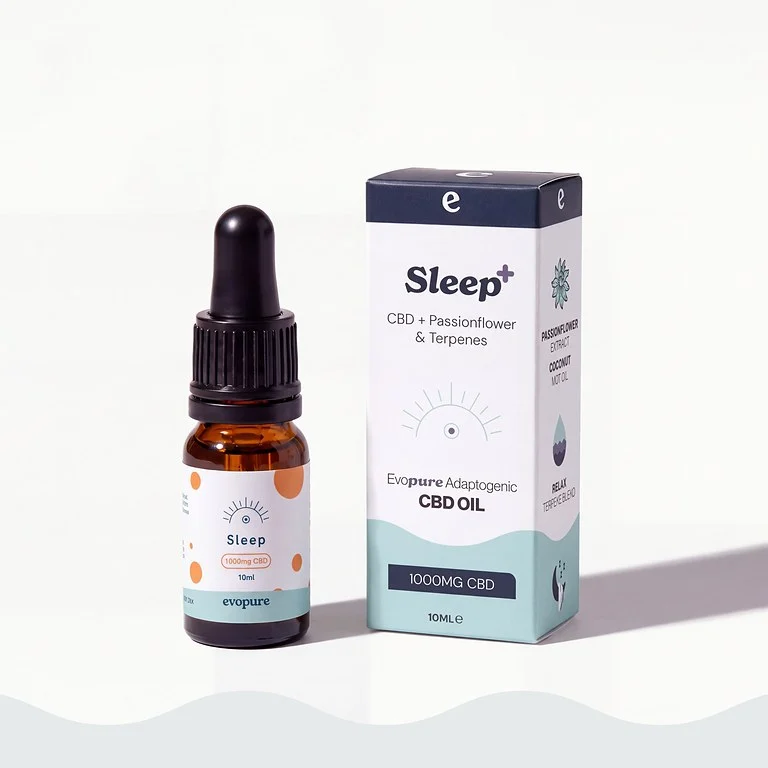
Reishi Cacao is a hot chocolate with reishi mushroom and cacao. It contains a little natural caffeine, so have it earlier in the day. Sleep CBD Oil is broad spectrum CBD with passion flower extract. If you take any regular medicines, check with your GP or pharmacist first, and read CBD oil for older adults before you start.
The FSA’s 10mg a day figure is precautionary advice rather than a legal limit, set while longer-term safety research continues. At Evopure we think it is a very cautious figure, and many adults use more. If you go above it, increase slowly, and check with your GP or pharmacist first if you take any medication.
All three are vegan, UK-made and for adults (18+). Our CBD oils are broad spectrum, 0% THC and third-party lab tested (reports on request via lab testing). These are food supplements, not medicines.
Is magnesium safe for older people? Kidneys and side effects
The NHS says 400mg a day or less from supplements is unlikely to cause harm. The most common side effect is diarrhoea: if it happens, take less, take it with food or split the dose.
Kidneys. Healthy kidneys pass out magnesium you don’t need. If they don’t work fully, magnesium can build up in the blood, which can be serious. The NHS says chronic kidney disease is often linked with getting older and usually has no early symptoms. If you have kidney disease or reduced kidney function, don’t take a magnesium supplement unless your GP or kidney team says so.
A case review on magnesium overload also flags age and magnesium-containing indigestion remedies and laxatives as risk factors. Our guide to magnesium side effects lists the signs of too much.
Medicines and magnesium
The UK medicines regulator (MHRA) warns that taking heartburn medicines called proton pump inhibitors, such as omeprazole or lansoprazole, for a long time can lower magnesium, and it flags some water tablets (diuretics) too.
iIf you take any regular medicines, ask your pharmacist before adding magnesium. They can check whether your medicines affect magnesium and whether doses need spacing apart (see our medicines timing guide). Don’t stop or change a prescribed medicine without speaking to your GP.
When to see your GP
See a GP if:
- you have muscle twitches, tremors, vomiting, tiredness or loss of appetite, especially on a long-term proton pump inhibitor (the MHRA’s list)
- you have kidney disease and are thinking about any supplement
- you feel tired all the time for weeks, or cramps keep you awake
- you get diarrhoea that doesn’t settle after stopping a supplement
Call 999 or go to A&E for chest pain, a racing or very slow heartbeat, trouble breathing, fainting or sudden confusion.
Powders and shots are easier for some people than tablets: see our guide to the best magnesium drinks in the UK.
Sources 11
- NHS. Vitamins and minerals: others (magnesium).
- NHS. Chronic kidney disease.
- Office for Health Improvement and Disparities. National Diet and Nutrition Survey 2019 to 2023 (chapter 5 tables 5.26 and 5.41).
- MHRA. Proton pump inhibitors in long-term use: reports of hypomagnesaemia.
- Department of Health and Social Care. Great Britain nutrition and health claims (NHC) register.
- Barbagallo M, Veronese N, Dominguez LJ. Magnesium in aging, health and diseases. Nutrients, 2021. PMID 33573164.
- Walker AF et al. Mg citrate found more bioavailable than other Mg preparations in a randomised, double-blind study. Magnesium Research, 2003. PMID 14596323.
- Mah J, Pitre T. Oral magnesium supplementation for insomnia in older adults. BMC Complementary Medicine and Therapies, 2021. PMID 33865376.
- Garrison SR et al. Magnesium for skeletal muscle cramps. Cochrane Database of Systematic Reviews, 2020. PMID 32956536.
- Romani AM. Magnesium homeostasis and alcohol consumption. Magnesium Research, 2008. PMID 19271417.
- Fung MC et al. Hypermagnesemia: elderly over-the-counter drug users at risk. Archives of Family Medicine, 1995. PMID 7620603.
This guide is general information, not medical advice. Evopure makes the Magnesium Glycinate Sleep Complex, Reishi Mushroom Adaptogenic Complex and Sleep CBD Oil.