
Last updated: October 2026
Progressive muscle relaxation (PMR) is a simple technique where you tense one muscle group for about 5 seconds, then let it go for 10 to 20 seconds, working from your feet up to your face. A full session takes 10 to 15 minutes. Trials link regular practice to better sleep quality and lower anxiety.
Below: how to do it, a full script you can read or record, how to use it for sleep and anxiety, what the research really shows, and who should take care.
What is progressive muscle relaxation?
PMR grew out of Edmund Jacobson’s work on “progressive relaxation”. The idea is that you can’t easily tell a muscle to relax, but you can tense it on purpose and then let go. The contrast teaches you what real release feels like, so over time you spot tension (a clenched jaw, raised shoulders) and drop it sooner.
It sits alongside other body-based calming tools such as box breathing, yoga nidra and mindfulness. Many people find it easier than meditation because it gives the mind something physical to do.
How to do progressive muscle relaxation
- Get comfortable. Lie on your back or sit in a chair with your feet flat. Loosen tight clothing. Close your eyes if you like.
- Tense at about half effort. Firm, not straining. It should never hurt.
- Hold for about 5 seconds. Keep breathing; don’t hold your breath.
- Release all at once and rest for 10 to 20 seconds. Notice the warmth and heaviness.
- Move on in order, feet to face. Skip any area that is injured or sore.
Progressive muscle relaxation script (about 12 minutes)
Read this slowly, or record it on your phone in a calm voice and play it back. Each step is: tense for a count of five, then let go and rest for three or four slow breaths.
“Settle into your position. Breathe in through your nose and slowly out through your mouth. Let the floor or the chair take your weight. Now we’ll work through the body, one area at a time.”
- Feet. Gently curl your toes under. Hold, two, three, four, five. And let go. Feel your feet soften and spread.
- Calves. Draw your toes up towards your knees (not pointed away, which can trigger cramp). Hold. Release, and notice the backs of your legs grow heavy.
- Thighs. Press your knees together and tighten the fronts of your thighs. Hold. Let go completely.
- Buttocks and hips. Squeeze. Hold. Release, and let your hips sink down.
- Stomach. Gently draw your tummy in. Hold. Let it go and let your breath fill your belly.
- Hands. Make two fists. Hold. Open your hands and let your fingers fall loose.
- Arms. Bend your elbows and tighten your upper arms. Hold. Lower them and let them rest by your sides.
- Shoulders. Lift them up towards your ears. Hold. Let them drop. Feel the space between your shoulders and ears.
- Neck. Gently press the back of your head into the pillow or tip your chin slightly down. Hold. Release.
- Jaw. Bite your back teeth together lightly. Hold. Let your jaw hang slack, lips just apart, tongue resting.
- Eyes and forehead. Screw up your eyes and raise your eyebrows. Hold. Let your whole face smooth out.
- Whole body. Take one slow breath in and, as you breathe out, let your entire body go heavy.
“Stay here for a minute. If you notice tension anywhere, breathe towards it and let it go. When you’re ready, wriggle your fingers and toes, and open your eyes. Or, if you’re in bed, just let yourself drift.”
Progressive muscle relaxation for sleep
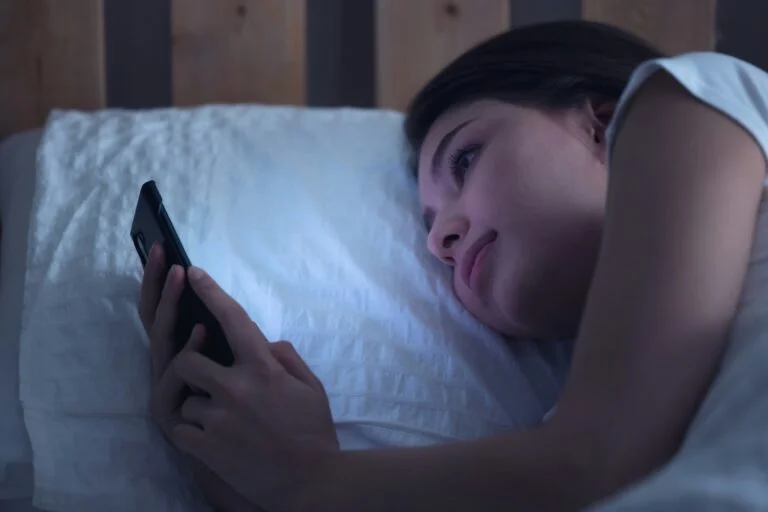
Do the script lying in bed with the lights out, and skip the closing “open your eyes” line. If you’re still awake at the end, start again from your feet. Keep the tension light at night so you don’t wake yourself up.
The sleep research is encouraging. A 2026 meta-analysis of 31 randomised trials (2,277 people) found PMR improved sleep quality scores by about 3.8 points on the Pittsburgh Sleep Quality Index. A second 2026 review of 14 trials (957 adults) also found a large effect, though the benefit was only clear in adults under 55. Both reviews flagged very mixed results between studies, many of them small and in hospital patients.
PMR works best as part of a wider routine: see sleep hygiene habits and how to fall asleep fast. If poor sleep has lasted months, read our insomnia guide and speak to your GP.
Progressive muscle relaxation for anxiety
Anxiety shows up in the body as tight shoulders, a clenched jaw and shallow breathing. PMR gives you a way to turn that down on purpose, which is why it suits anxiety at night and racing thoughts before sleep.
The same 31-trial review found a large drop in anxiety scores, and an older meta-analysis of relaxation training found a medium effect overall. NICE guidance lists applied relaxation, a structured therapy built on these skills, as one option for generalised anxiety disorder, usually 12 to 15 weekly one-hour sessions with a trained therapist.
So it is a genuinely useful skill, but not a replacement for treatment. If anxiety affects daily life, see our guide on how to deal with anxiety and talk to your GP. For a calmer body more generally, nervous system regulation and the vagus nerve guides cover other tools.
How long and how often?
| Version | Time | When to use it |
|---|---|---|
| Full script (12 areas) | 10 to 15 minutes | Daily for the first 2 weeks, ideally at the same time |
| Short version (4 groups: legs, stomach, arms and shoulders, face) | About 5 minutes | Once the full version feels familiar |
| Release only (no tensing) | 1 to 2 minutes | At your desk, on a train or before a stressful moment |
You’ll often feel calmer after one session: in a small trial, a single 20-minute recorded session raised relaxation compared with a control group. The bigger payoff comes from practice, as noticing and dropping tension becomes automatic. For more quick wins, see how to relieve stress.
Who should take care
- Injuries or pain: skip that area, or just do the “release” part. Check with a physio if you’ve had recent surgery or a back or neck injury.
- Cramps: if your calves cramp, pull your toes up rather than pointing them, and use less effort. See leg cramps at night.
- Pregnancy: skip the stomach step, do it sitting or lying on your side if lying flat is uncomfortable, and ask your midwife or GP if unsure.
- Jaw or headache trouble: go gently on the jaw and neck steps. Our guides to teeth grinding and tension headaches have more.
- Heart or blood pressure conditions: keep the tension light and keep breathing, and check with your GP first.
Building it into your evening routine
Pair PMR with a fixed wind-down: screens off, lights low, then the script in bed. Some people also take our Magnesium Glycinate Sleep Complex as part of that routine. It provides 148mg of magnesium per serving, as bisglycinate and citrate, with L-theanine and chamomile.
Magnesium contributes to normal muscle function and the normal functioning of the nervous system. Read more in magnesium for cramps. We don’t recommend our products during pregnancy or breastfeeding, and they are for adults only.
FAQs
What is progressive muscle relaxation?
A relaxation technique where you tense each muscle group for about 5 seconds, then release it for 10 to 20 seconds, working through the body from feet to face.
How long does progressive muscle relaxation take?
A full session takes 10 to 15 minutes. Once you know it well, a short version takes about 5 minutes and a release-only version 1 to 2 minutes.
Can I do progressive muscle relaxation in bed?
Yes. Lying in bed with the lights off is a good way to use it for sleep. Keep the tension light and simply drift off if you get sleepy.
Does progressive muscle relaxation work for anxiety?
Trials show it can lower anxiety scores, and NICE lists applied relaxation as an option for generalised anxiety disorder. It is a helpful skill but not a replacement for seeing your GP.
Is progressive muscle relaxation safe for everyone?
It is gentle and safe for most people. Skip injured areas, use less effort if you get cramps, and check with your GP, physio or midwife if you are pregnant or have a heart condition.
Can children do progressive muscle relaxation?
Yes, with simpler language and shorter holds, for example pretending to squeeze a lemon in each hand. Keep it playful and never let it hurt.
Sources
- Donato KO et al (2026). Progressive muscle relaxation technique improves sleep quality and mental health: a systematic review and meta-analysis of randomized controlled trials. Journal of Psychosomatic Research.
- Li K et al (2026). The effects of progressive muscle relaxation on sleep quality in adults: a systematic review and meta-analysis. Frontiers in Public Health.
- Manzoni GM et al (2008). Relaxation training for anxiety: a ten-years systematic review with meta-analysis. BMC Psychiatry.
- Toussaint L et al (2021). Effectiveness of progressive muscle relaxation, deep breathing, and guided imagery in promoting states of relaxation. Evidence-Based Complementary and Alternative Medicine.
- NICE. Generalised anxiety disorder and panic disorder in adults: management (CG113).
- NHS. Breathing exercises for stress.
This guide is general information, not medical advice. Evopure makes the Magnesium Glycinate Sleep Complex.