














Last updated: 19 November 2026
Can you take magnesium with amitriptyline? Most people can. The BNF lists no interaction between magnesium and amitriptyline, and no official source sets a time gap between them. The NHS says there isn’t enough information on supplements with amitriptyline, so tell your pharmacist before you start, especially if you have kidney or heart problems or take other regular medicines.
Checked against the BNF, the NHS medicines pages, the amitriptyline product information and PubMed on 19 November 2026. This is general information, not medical advice. Never stop amitriptyline suddenly or swap it for a supplement.
What the BNF and NHS say
The BNF, the reference UK doctors and pharmacists use, keeps interaction lists for magnesium, antacids (many contain magnesium) and amitriptyline. Checked on 19 November 2026:
| Source | Magnesium or antacid entry | What it means for you |
|---|---|---|
| BNF magnesium list (38 interactions) | No amitriptyline entry | No documented interaction |
| BNF antacid list (73 interactions) | No amitriptyline entry | No documented interaction |
| BNF amitriptyline list (335 interactions) | No magnesium or antacid entry | No documented interaction |
| Amitriptyline product information | No magnesium supplement or antacid entry | No documented interaction |
Two general notes on the BNF’s magnesium page apply to everyone. It says magnesium antacids “and other oral magnesium preparations” should preferably not be taken at the same time as other drugs, because they might impair absorption, and that some manufacturers suggest separating them by several hours. It also says magnesium antacids might damage enteric coatings on some tablets.
The NHS amitriptyline pages say there isn’t enough information to say complementary medicines and herbal remedies are safe with amitriptyline, and ask you to tell your doctor or pharmacist about any vitamins or supplements. We found no study of magnesium supplements and amitriptyline taken together.
Does amitriptyline lower magnesium?
Not as far as the sources show. The NHS and the UK product information (Amitriptyline 10mg tablets, revised 6 October 2026) don’t list low magnesium as a side effect. They do list low sodium: the NHS says call a doctor or 111 for a headache with confusion, weakness or muscle cramps.
Magnesium levels still matter for another reason. The product information says amitriptyline has been linked with heart rhythm changes, and that low magnesium, like low or high potassium, raises that risk. That is a point for your doctor, who can check your blood, not a reason to self-treat.
Low magnesium is more likely to come from other tablets:
- Water tablets (diuretics). The MHRA names diuretics among medicines that may cause low magnesium, and the amitriptyline product information advises caution with diuretics that lower potassium, such as furosemide. See magnesium and blood pressure medication.
- Long-term indigestion tablets. The MHRA says proton pump inhibitors such as omeprazole can cause low magnesium, mostly after a year or more. See magnesium and omeprazole.
iIf you are worried your magnesium is low, ask your GP whether to add it to your next blood test.
Timing magnesium around amitriptyline
No source sets a gap between magnesium and amitriptyline, so we won’t invent one. Here is what the sources do say:
- Amitriptyline is usually taken once a day, in the evening or before bed because it can make you sleepy, the NHS says, with or without food.
- The BNF’s general advice is that oral magnesium preparations are preferably not taken at the same time as other medicines. A simple routine that follows this: amitriptyline in the evening and magnesium earlier in the day, or as your pharmacist suggests.
- Other medicines come first. If you also take gabapentin, the BNF says to take it 2 hours after antacids. Levothyroxine, some antibiotics and alendronic acid also have set gaps.
Our hub on what not to take with magnesium lists every set gap, and the best time to take magnesium covers building a routine.
Constipation and indigestion remedies
The NHS lists constipation among the common side effects of amitriptyline. Its advice is more fibre, plenty of water and regular exercise, then to talk to your pharmacist or doctor if that doesn’t help. A magnesium supplement isn’t a treatment for it, and we don’t claim it is.
Two magnesium points to know:
- Too much can upset your stomach. The NHS says more than 400mg of magnesium a day for a short time can cause diarrhoea, and 400mg or less a day from supplements is unlikely to cause harm.
- Indigestion remedies count. Many antacids contain magnesium. Add them up with any supplement, and keep the BNF’s advice not to take them at the same time as other medicines.
More on diet: foods that help constipation.
Drowsiness and herbal ingredients
The NHS lists feeling sleepy, tired or dizzy among the common side effects of amitriptyline, and says not to drive, cycle or use machinery if it makes you sleepy. Magnesium itself isn’t listed as adding to this. See does magnesium make you sleepy?
The ingredients that matter are the extras. Many magnesium “sleep” blends, including ours, add herbal extracts such as chamomile, passionflower and hops, or L-theanine. The NHS says there isn’t enough information to say herbal remedies are safe with amitriptyline, and it says don’t take St John’s wort with it at all. Show any label to your pharmacist.
Alcohol: the NHS says it may make you sleepy on amitriptyline and it’s best to stop until you see how the medicine affects you. See magnesium and alcohol.
Never stop amitriptyline suddenly. The NHS says this can cause extra side effects, and your doctor will usually lower the dose over several weeks.
Other medicines taken with amitriptyline
The NHS says amitriptyline is used for nerve pain, long-lasting pain, migraine prevention and, at higher doses, depression. What the BNF magnesium and antacid lists show for medicines often taken with it:
- Gabapentin. On the BNF antacid list: antacids reduce its absorption, so take gabapentin 2 hours after them. See magnesium and gabapentin.
- Pregabalin, codeine, co-codamol and tramadol. Not on either list. See magnesium and painkillers.
- Sertraline, citalopram and other antidepressants. Not on either list. See magnesium and antidepressants. For duloxetine or venlafaxine, see magnesium and venlafaxine or duloxetine.
- Propranolol, also used to prevent migraine. Not on either list. See magnesium and propranolol.
- Sumatriptan and other triptans, for migraine attacks. Not on either list. See magnesium and sumatriptan.
Taking it to prevent migraine? Magnesium for migraines covers what the research does and doesn’t show. Any change to treatment is for your GP.
Who should check with a GP or pharmacist first
The NHS asks you to tell your doctor before starting amitriptyline if you have a heart problem or liver or kidney problems. The BNF advises caution with magnesium supplements in kidney impairment, because of the risk of too much magnesium in the blood, and avoiding them when kidney function is very low.
Ask your GP or pharmacist before adding magnesium if you:
- have kidney disease, or have been told your kidney results (eGFR or creatinine) are lower than normal
- have a heart rhythm problem, or have been told your magnesium, potassium or sodium is low
- also take a water tablet, a PPI such as omeprazole, gabapentin or several other regular medicines
- are thinking of a product with herbal extracts
- are pregnant, trying for a baby or breastfeeding
Get help straight away if you’ve taken more amitriptyline than prescribed: the NHS says contact 111. Call a doctor or 111 now for a fast or irregular heartbeat, and 999 for a fit or severe chest pain.
Over 60? It is worth asking about your kidney results. See magnesium for older adults.
Magnesium glycinate vs citrate vs oxide on amitriptyline
No form has been studied with amitriptyline, and the BNF lists none of them with it. The practical differences are your stomach and the extras.
| Form | What to know on amitriptyline |
|---|---|
| Magnesium glycinate (bisglycinate) | Magnesium bound to glycine. No BNF entry |
| Magnesium citrate | Magnesium bound to citric acid. No BNF entry |
| Magnesium oxide | No BNF entry with amitriptyline |
| Magnesium antacids | Count towards your total. Not at the same time as other medicines |
Adults need 300mg (men) or 270mg (women) a day in total, mostly from food, the NHS says. More on each form: magnesium glycinate, magnesium citrate and magnesium oxide.
Where Evopure fits
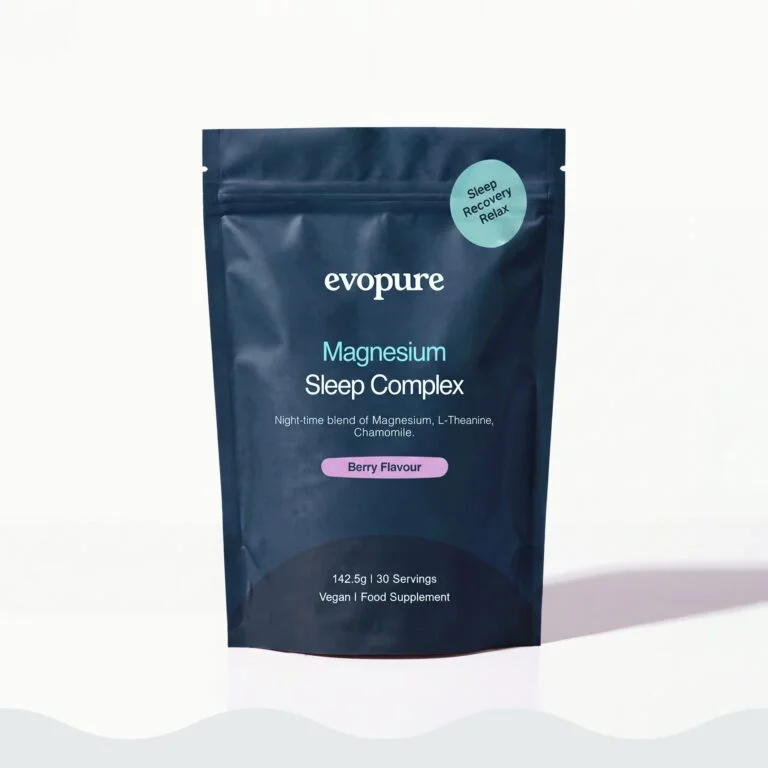
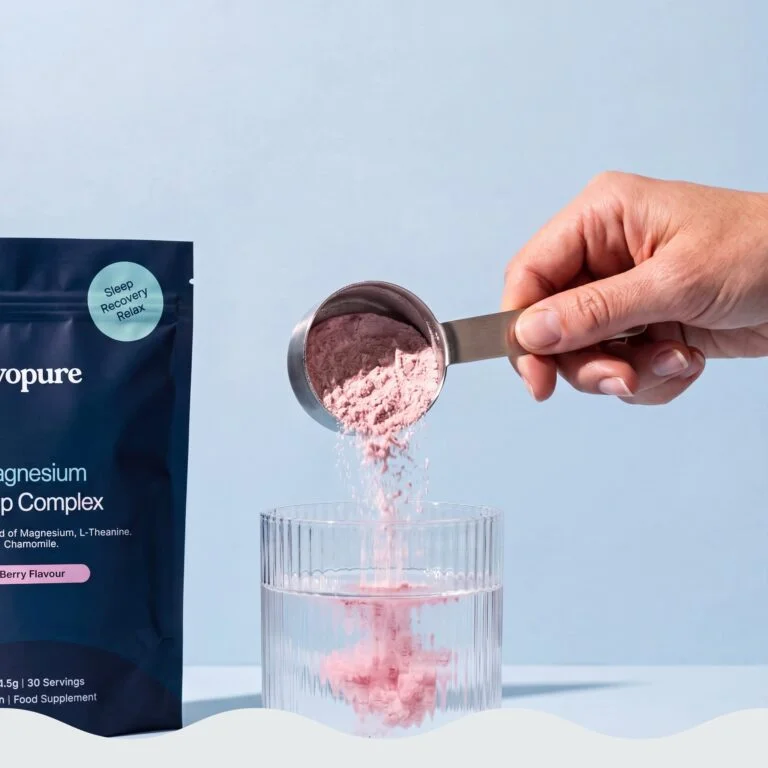
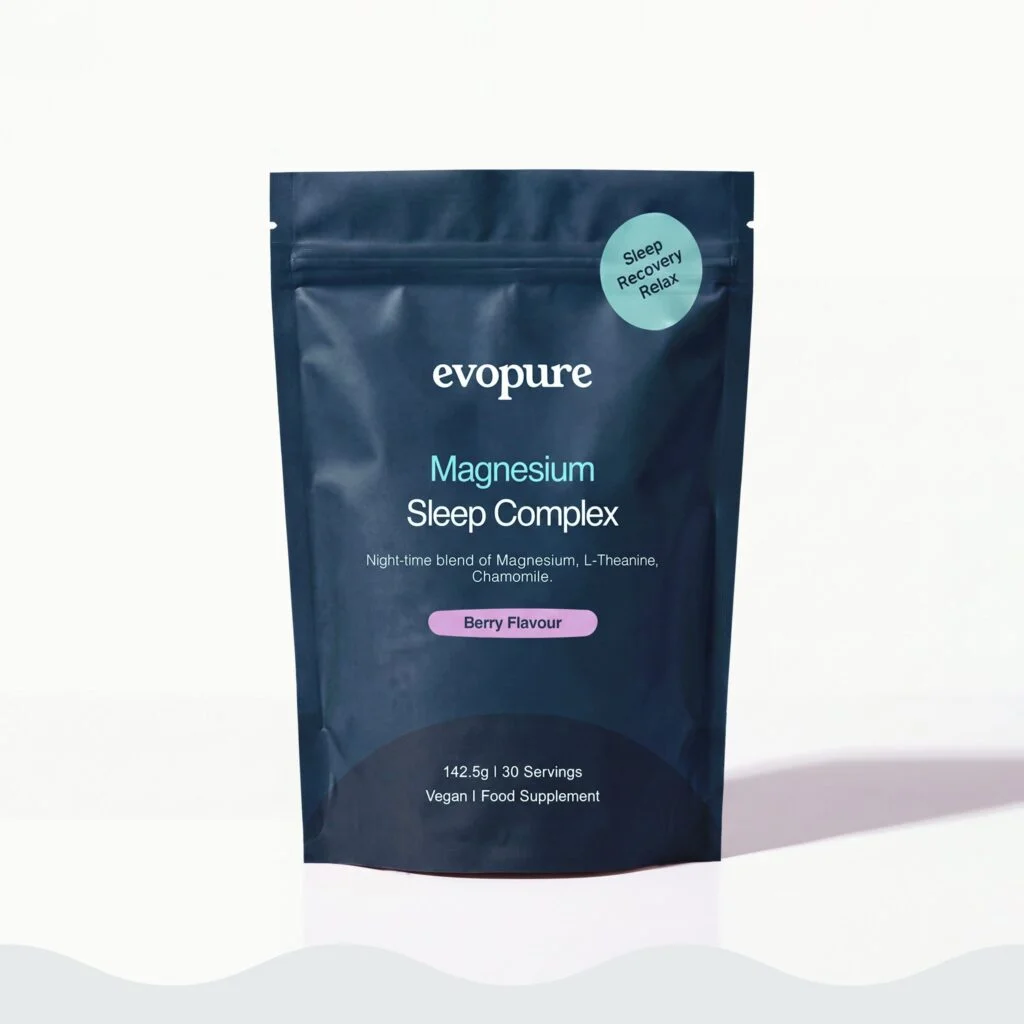
None of our products changes how amitriptyline works or does anything for the conditions it treats, and we don’t claim they do. If your pharmacist is happy for you to add a magnesium supplement, our Magnesium Glycinate Sleep Complex is a berry drink powder with 290mg of magnesium (77% NRV) per 4.75g serving, from magnesium bisglycinate and citrate. To be upfront: it also contains glycine, L-theanine and extracts of chamomile, passionflower, hops and oat straw, so show the label to your pharmacist, as amitriptyline already makes some people drowsy.
Our pick, once your pharmacist is happy
Magnesium Glycinate Sleep Complex
Magnesium Glycinate Sleep Complex. Magnesium contributes to a reduction of tiredness and fatigue and to normal functioning of the nervous system. A berry drink you can take at the same time each day, apart from your amitriptyline.
Add Magnesium Glycinate Sleep Complex to bag See ingredients and reviews
Rated 4.7 out of 5 from 15 ratings on the product page (checked 19 November 2026). We make it, so we’re not neutral. Vegan and made in the UK. Subscribe and save 25% on your first order, then 20%. New to Evopure? Join our emails for 20% off a one-off first order. Free UK delivery over £40. Adults only. We don’t recommend our products during pregnancy or breastfeeding.
Subscribe £17.99One-off £29.99
View productWhy only one product? Our Reishi hot chocolate contains a little natural caffeine and its pack says it isn’t for people taking medication. The FSA advises people on any medication not to take CBD unless under medical direction: read CBD and amitriptyline first. Prefer plain magnesium with no herbs? Ask your pharmacist for a single-ingredient product.
How much is sensible? See how much magnesium per day and magnesium side effects.
Sources 6
- BNF (NICE). Magnesium interactions, antacids interactions and amitriptyline interactions. Checked 19 November 2026.
- BNF (NICE). Magnesium glycerophosphate (renal impairment). Checked 19 November 2026.
- emc. Amitriptyline 10 mg film-coated tablets: summary of product characteristics (sections 4.4, 4.5 and 4.8). Revised 6 October 2026; checked 19 November 2026.
- NHS. Amitriptyline for pain and migraine (reviewed 14 August 2023) and amitriptyline for depression (reviewed 28 February 2025). Checked 19 November 2026.
- NHS. Vitamins and minerals: others (magnesium). Reviewed 3 August 2020; checked 19 November 2026.
- MHRA (GOV.UK). Proton pump inhibitors in long-term use: reports of hypomagnesaemia. Drug Safety Update; checked 19 November 2026.
General information, not medical advice. Evopure makes food supplements and is not connected with the makers of any medicine named here.