Last updated: 18 November 2026
Yes, most healthy adults can take magnesium and creatine together. We found no known interaction between them, and they don’t need spacing apart. Studies use 3 to 5g of creatine a day, and the NHS says 400mg or less of magnesium a day from supplements is unlikely to cause harm. Check with a GP first if you have kidney disease.
Below: how much of each, morning or night, magnesium glycinate with creatine, mixing them in one drink, combined products and their label maths, kidneys and who should check first. Facts checked 18 November 2026.
Can you take magnesium and creatine together?
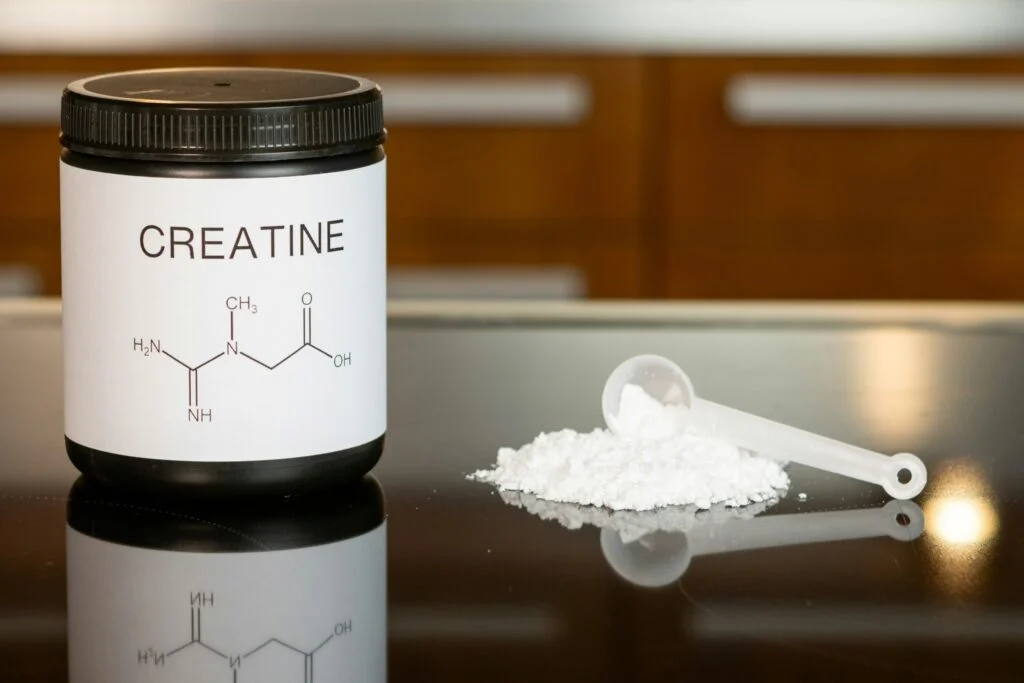
For most healthy adults, yes. Creatine is a food supplement, not a medicine, and we found no reported interaction between creatine and magnesium in the NHS guidance and research reviews we checked. They are different things: magnesium is an essential mineral you need every day, while creatine is a compound your body makes from amino acids and also gets from meat and fish.
| Question | Magnesium | Creatine |
|---|---|---|
| What it is | An essential mineral | A compound made in the body and found in meat and fish |
| UK daily guide | NHS: 300mg (men) or 270mg (women); 400mg or less from supplements | No NHS daily amount; studies typically use 3 to 5g a day |
| Authorised claims | Several, including tiredness and fatigue | Two, for adults who exercise (see our creatine guide) |
| Spacing needed? | No gap is set between the two | |
Taking both doesn’t change the usual rules for each. Magnesium still needs spacing from some medicines (see below), and creatine still needs the kidney check if that applies to you.
Our pick for the magnesium half
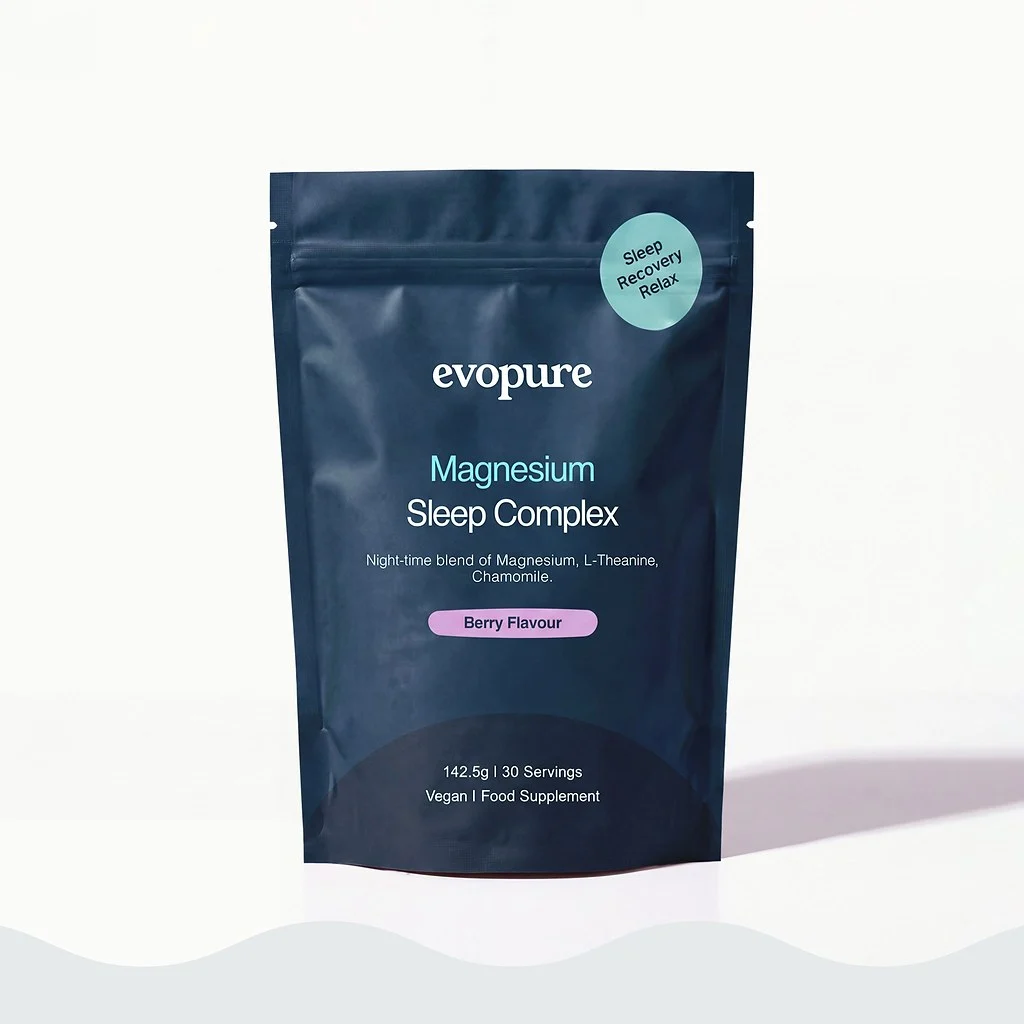
Magnesium Glycinate Sleep Complex
Evopure’s Magnesium Glycinate Sleep Complex is a berry drink powder with 290mg of magnesium (77% NRV) per 4.75g serving, from magnesium bisglycinate and citrate, plus glycine and L-theanine. Magnesium contributes to a reduction of tiredness and fatigue. We don’t sell creatine.
Add Magnesium Glycinate Sleep Complex to bag See ingredients and reviews
Rated 4.7 from 15 reviews. We make it, so we’re not neutral. Vegan and made in the UK. Have kidney disease or take regular medicines? Check with your GP or pharmacist first. Free UK delivery over £40. Subscribe and save 25% on your first order, then 20%. New to Evopure? Join our emails for 20% off a one-off first order.
Subscribe £22.49One-off £29.99
View productHow much magnesium and creatine to take
Magnesium: the NHS says adults aged 19 to 64 need 300mg a day (men) or 270mg a day (women), mostly from food such as spinach, nuts and wholemeal bread. If you take a supplement, the NHS says 400mg or less a day from supplements is unlikely to cause any harm, and that high doses can cause diarrhoea. Count every product that contains magnesium, including combined creatine blends and multivitamins. More in how much magnesium per day.
Creatine: there is no NHS daily amount. A 2021 review of common questions about creatine describes 3 to 5g a day (or 0.1g per kg of body weight) as the usual recommended dose, and asks whether a loading phase is needed; some people start with a higher “loading” amount for about a week, but it isn’t required. A 2017 review by Germany’s food safety institute (BfR) noted that several authorities concluded 3g a day is unlikely to pose safety concerns for healthy adults, excluding pregnant and breastfeeding women.
| Supplement | Typical amount | UK guide or limit |
|---|---|---|
| Magnesium | Varies by product (our drink: 290mg) | 400mg or less a day from supplements (NHS) |
| Creatine monohydrate | 3 to 5g a day | No NHS figure; 3g a day reviewed as unlikely to pose concerns in healthy adults |
Protein and fluids are separate questions: see how much protein do I need and our guide to electrolytes.
Morning or before bed?
Either works, and you don’t need a gap between them. For creatine, a 2021 review on timing found no settled agreement on the best time of day, and taking it consistently every day is what most guidance stresses. For magnesium, there is no single best time either: see the best time to take magnesium.
A simple routine many people use:
- Creatine: at the same time each day, often with breakfast or a meal around training
- Magnesium: in the evening. Our drink’s label suggests one scoop about 30 minutes before bed, in water, a hot drink or a smoothie
Splitting them like this also makes it easy to keep magnesium away from medicines it shouldn’t be taken with, such as some antibiotics, levothyroxine and bone medicines like alendronic acid. Our guide to what not to take with magnesium covers the gaps.
Magnesium glycinate and creatine
Magnesium glycinate (also sold as bisglycinate) is magnesium bound to the amino acid glycine. We found nothing to suggest it behaves differently with creatine from other forms of magnesium, so the same answer applies: they can be taken together, within the 400mg supplement guide.
When comparing labels, look for the elemental magnesium figure, not the weight of the compound. For example, 1,000mg of magnesium bisglycinate provides far less than 1,000mg of magnesium. See magnesium glycinate, glycinate vs bisglycinate and the best magnesium glycinate in the UK.
Can you mix them in one drink?
Creatine monohydrate is a tasteless white powder, so people often stir it into whatever they already drink. Our Magnesium Glycinate Sleep Complex label says to dissolve one 4.75g scoop in water, a hot drink or a smoothie. The label doesn’t cover adding other powders, and we haven’t tested it with creatine, so we can’t tell you how the two behave in one glass.
The simplest option is two separate drinks: creatine in the morning in water or a smoothie, and the berry magnesium drink in the evening. If you do mix them, stir well and drink it straight away.
Creatine and magnesium combined products
Several UK brands now sell creatine with magnesium in one powder. We checked one label at source on 18 November 2026:
- fourfive Creatine and Magnesium: a lemon powder with 5g creatine monohydrate and 1,250mg magnesium bisglycinate per 9g serving, which fourfive lists as 250mg of magnesium (67% NRV).
- Ancient + Brave True Creatine+: creatine with added taurine, magnesium and vitamin D3 (see our Ancient + Brave guide). Check the pack for the magnesium amount.
- Magnesium creatine chelate: a compound of the two sold as a form of creatine. A 2022 systematic review found few studies on alternative forms of creatine and said creatine monohydrate remains the most studied form, and the 2017 BfR review found limited safety data on the chelate.
Label maths: one serving of a blend with 250mg of magnesium plus one serving of our drink (290mg) adds up to 540mg of magnesium from supplements, which is over the NHS 400mg guide. If you use a creatine and magnesium blend, you probably don’t need a separate magnesium supplement as well. If you prefer our drink, a plain creatine monohydrate keeps the sums simple.
Kidneys and who should check first
A 2021 review of creatine research (Antonio and colleagues) found no evidence of kidney harm in healthy adults at the usual doses. Creatine can raise the creatinine level in a blood test, which doctors use to estimate kidney function, so tell your GP or practice nurse you take it before a kidney blood test.
Check with your GP or pharmacist before taking either if you:
- have kidney disease or reduced kidney function: only take magnesium supplements if your doctor advises it, and ask before starting creatine
- take medicines that can affect the kidneys, such as regular anti-inflammatory painkillers or water tablets
- take antibiotics, levothyroxine or a bone medicine such as alendronic acid, which need spacing from magnesium
- are pregnant or breastfeeding: we don’t recommend our products then
- are under 18: our products are for adults only
Our drink also contains chamomile, passionflower, hops, oat straw and L-theanine. If you take regular medicines, show the label to your pharmacist. More in magnesium glycinate side effects and magnesium side effects, and for the evidence on magnesium with L-theanine, see magnesium and L-theanine.
Where Evopure fits
We make magnesium, not creatine. Our Magnesium Glycinate Sleep Complex is a berry drink powder with 290mg of magnesium (77% NRV) per 4.75g serving, from 1,000mg magnesium bisglycinate and 900mg magnesium citrate, plus 500mg glycine, 100mg L-theanine, oat straw, hops, chamomile and passionflower. Magnesium contributes to normal muscle function and to a reduction of tiredness and fatigue. The other ingredients are listed as ingredients only. It is vegan and made in the UK, and it doesn’t make creatine work any differently.
Why only one product? It’s the only one of ours with magnesium; our CBD oils and Reishi Cacao have nothing to do with a creatine routine.
For more on creatine itself, see our creatine guide and creatine for women. For magnesium, see magnesium for men, magnesium for energy, supplements for men over 40 and supplements for women over 40.
Next step
Magnesium Glycinate Sleep Complex
keep your creatine as it is and add the magnesium in the evening. Our Magnesium Glycinate Sleep Complex gives 290mg of magnesium per berry drink, within the NHS 400mg supplement guide on its own. Magnesium contributes to a reduction of tiredness and fatigue.
Add Magnesium Glycinate Sleep Complex to bag See ingredients and reviews
Subscribe and save 25% on your first order, then 20%. New to Evopure? Join our emails for 20% off a one-off first order. Free UK delivery over £40. Adults only.
Subscribe £22.49One-off £29.99
View productSources 9
- NHS. Vitamins and minerals: others (magnesium). Reviewed 3 August 2020; checked 18 November 2026.
- Department of Health and Social Care. Great Britain nutrition and health claims (NHC) register. Checked 18 November 2026.
- Kreider RB et al (2017). International Society of Sports Nutrition position stand: safety and efficacy of creatine supplementation in exercise, sport, and medicine. J Int Soc Sports Nutr. PMID 28615996.
- Antonio J et al (2021). Common questions and misconceptions about creatine supplementation: what does the scientific evidence really show? J Int Soc Sports Nutr. PMID 33557850.
- Antonio J et al (2025). Part II. Common questions and misconceptions about creatine supplementation. J Int Soc Sports Nutr. PMID 39720835.
- Ribeiro F et al (2021). Timing of creatine supplementation around exercise: a real concern? Nutrients. PMID 34445003.
- Andres S et al (2017). Creatine and creatine forms intended for sports nutrition. Mol Nutr Food Res (German Federal Institute for Risk Assessment). PMID 28019093.
- Fazio C et al (2022). Efficacy of alternative forms of creatine supplementation: a systematic review. J Strength Cond Res. PMID 36000773.
- fourfive. Creatine and Magnesium product page. Checked 18 November 2026.