Last updated: November 2026
Stress is a reaction to pressure you can usually name, such as a deadline, money worries or a hard week, and it tends to ease once that pressure passes. Anxiety is worry or fear about what might happen, and it can carry on without a clear trigger or after the cause has gone. Both cause similar physical symptoms.
Wednesday 4 November 2026 is National Stress Awareness Day (see our Stress Awareness Week guide). Below: a side-by-side table, a quick self-check, where burnout and depression fit, and what helps each.
What is the difference between stress and anxiety?
The NHS describes stress as “usually a reaction to mental or emotional pressure”. Mind calls it how we react when we feel under pressure or threatened. The British Heart Foundation adds that stress is likely to be short-term and linked to a trigger, such as a job interview or a busy day at work.
Anxiety is about what might happen. Mind describes it as what we feel when we’re worried about something that might happen, now or in the future. Everyone feels it at times; it becomes a problem when it is strong, hard to control, out of proportion or goes on for months.
| How they differ | Stress | Anxiety |
|---|---|---|
| What it is | A reaction to pressure you can usually name | Worry or fear about what might happen |
| Cause | A trigger: work, money, a move, an illness | Can have no clear trigger, or feel out of proportion |
| How long it lasts | Usually eases when the pressure passes | Can carry on after the cause has gone, sometimes for months |
| Typical feelings | Under pressure, overwhelmed, irritable | Dread, on edge, unable to relax, expecting the worst |
| Physical signs | Headaches, tense muscles, stomach upset, faster heartbeat | Much the same, plus restlessness, dizziness and trouble sleeping |
| What helps | Dealing with or sharing the cause, breaks, exercise, sleep | Talking therapies such as CBT, breathing, exercise, facing what you avoid |
| When to get help | You’re struggling to cope or self-help isn’t working | It affects daily life, causes distress or comes with panic attacks |
Because the body’s fight or flight response drives both, the physical side can feel identical: a racing heart, tight shoulders, an upset stomach. Our guides to stress symptoms and anxiety symptoms list each in full, and fight or flight explains why the body reacts this way.
Our pick
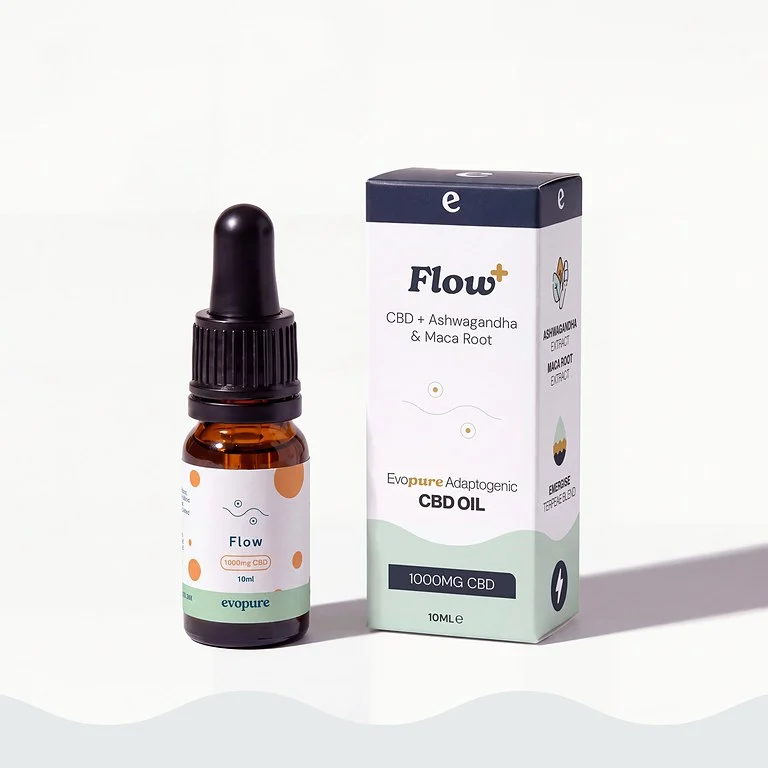
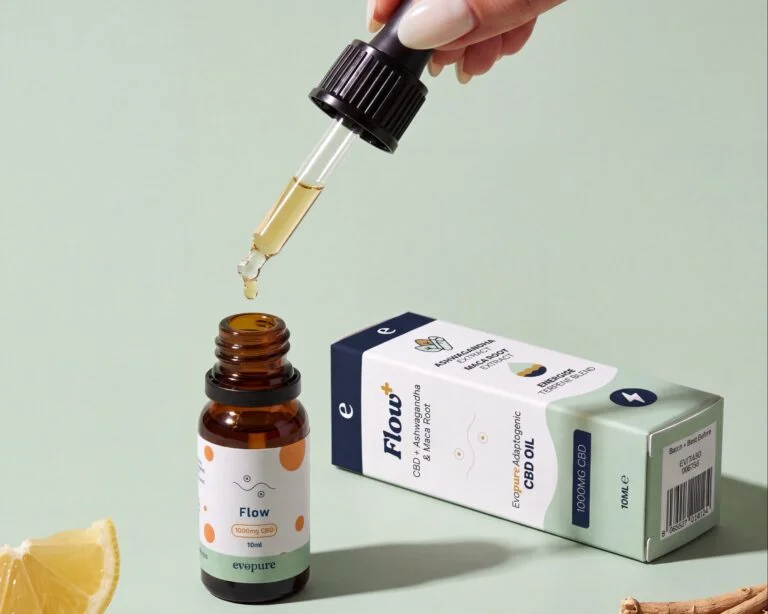
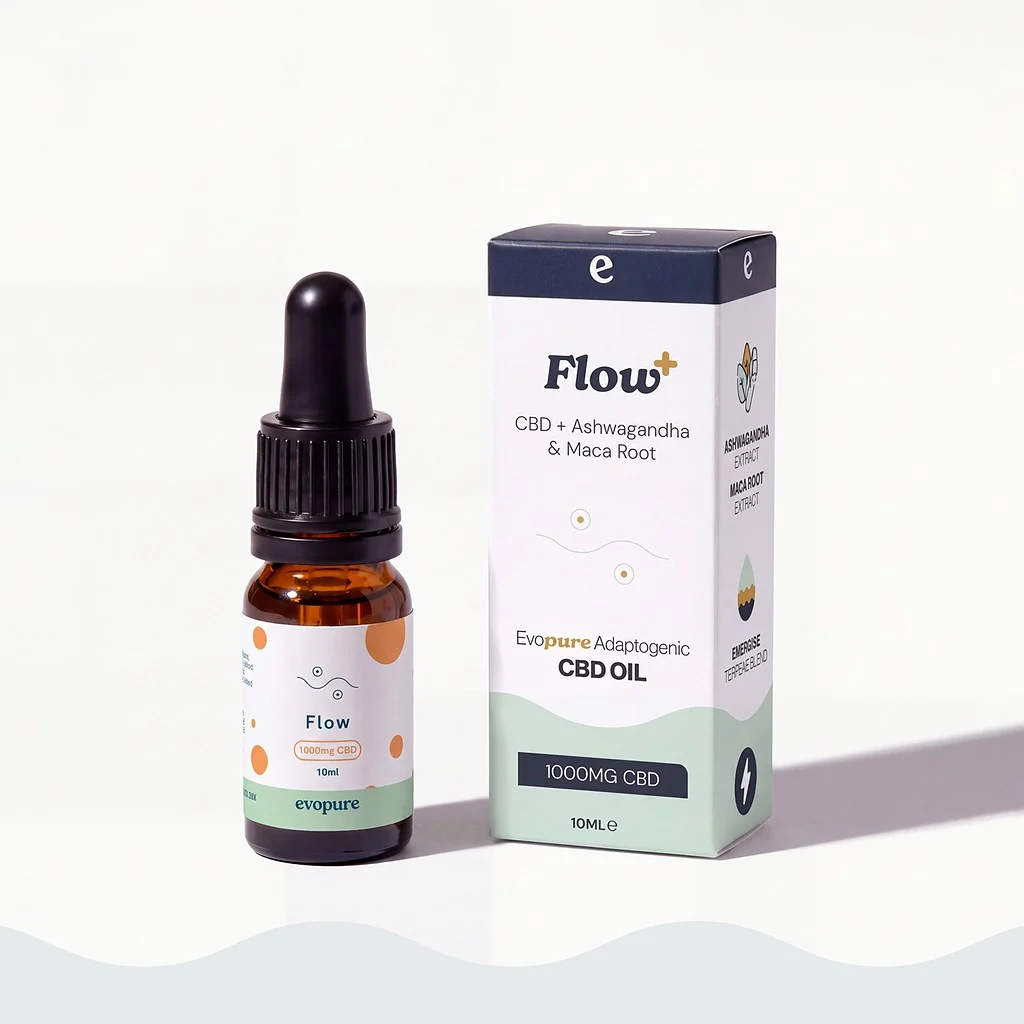
for daytime, Flow CBD Oil is broad spectrum CBD with 35mg ashwagandha root extract and 35mg maca root extract per half pipette, in coconut MCT oil. Because it contains ashwagandha, it isn’t for anyone with a thyroid, liver or autoimmune condition, and don’t take it alongside another ashwagandha product. For evenings, Magnesium Glycinate Sleep Complex is a berry drink with 290mg of magnesium (77% NRV) per 4.75g serving from bisglycinate and citrate, plus glycine and L-theanine. Magnesium contributes to normal psychological function.
Add Flow CBD Oil 500mg to bag or choose another strength
Add Magnesium Glycinate Sleep Complex to bag See ingredients and reviews
Both are vegan and made in the UK, for adults only. Flow has 0% THC, is on the FSA public list (validated) and has batch reports on our lab testing page. Free UK delivery over £45, 14-day returns on unopened items.
Is it stress or anxiety? A quick self-check
These questions are not a diagnosis, and plenty of people have both at once.
- Can you name what’s putting you under pressure?
- Would most of the feeling lift if that one thing were sorted?
- Do you worry even when things are going well, or about lots of different things?
- Has the worry been there most days for weeks or months?
- Are you avoiding places, people or tasks because of how they make you feel?
- Is it getting in the way of work, sleep, relationships or things you used to enjoy?
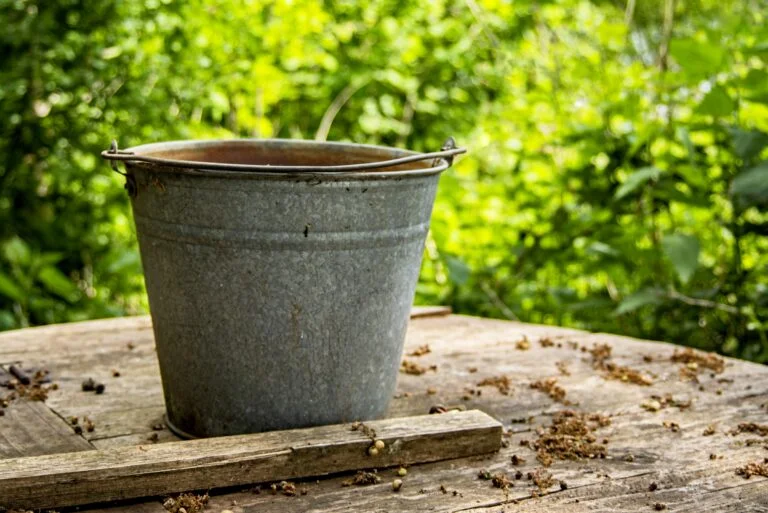
Yes to the first two and no to the rest sounds more like stress. Yes to questions 3 to 6 leans towards anxiety: the NHS says to see a GP if you have felt anxious a lot of the time for at least 6 months, or if anxiety is affecting your daily life. To measure the stress side, try the Holmes and Rahe stress scale or draw your own stress bucket.
Can stress turn into anxiety?
It can. Mind says stress isn’t normally considered a mental health problem, but lots of stress can lead to one, such as anxiety or depression. The British Heart Foundation also notes that anxiety can be caused by stress, and describes anxiety as a longer-term feeling that usually doesn’t go away quickly.
It isn’t automatic, though, and many people go through long spells of stress without it. Signs that stress is tipping over include worry that carries on after the event has ended, panic attacks and starting to avoid things. Dealing with stress early helps: see 15 ways to relieve stress, and if it’s mostly work, stress at work.
Stress, anxiety or burnout?
The World Health Organization describes burnout as the result of chronic workplace stress that hasn’t been successfully managed. It is not a medical condition, and it has three parts: exhaustion, feeling distant or cynical about your job, and getting less done.
The simplest way to tell them apart: stress feels like too much, anxiety feels like fear of what might happen, and burnout feels like nothing left. Our burnout guide covers the stages and recovery, and being signed off work with stress explains how a fit note works if you need time off.
Stress, anxiety or depression?
The NHS says depression is more than feeling unhappy for a few days: people feel persistently sad for weeks or months and lose interest in things they used to enjoy. It often overlaps with anxiety. If you think you may be depressed, don’t delay seeing a GP. Our guide to low mood explains the difference between a rough patch and depression.
What helps stress and what helps anxiety?
The basics are the same for both. The NHS suggests:
- Talking to a friend, family member or health professional.
- Breathing exercises: breathe in gently through your nose for a count of 5, out through your mouth for 5, and repeat for at least 5 minutes.
- Regular exercise, such as walking, swimming or yoga.
- Enough sleep: see our sleep hygiene guide.
- Less caffeine from coffee, tea, cola and energy drinks. See does caffeine cause anxiety?
- Not using alcohol, cigarettes, gambling or drugs to cope.
Extra steps for stress
Because stress has a cause, work on that cause: break big jobs into smaller ones, plan ahead for busy days, ask for help and let go of what you can’t change.
Extra steps for anxiety
Avoiding what scares you tends to make anxiety grow, so the NHS advises not avoiding situations that make you anxious. A GP will usually suggest talking therapies such as cognitive behavioural therapy (CBT) before medicines. For in-the-moment calm, try grounding techniques or box breathing, and see how to deal with anxiety for a fuller plan. If anxiety hides behind a busy, successful life, read high-functioning anxiety.
Supplements and your daily routine
No supplement treats stress or anxiety, and none replaces talking, sleep and movement. Some adults like one as part of their routine.
- Flow CBD Oil: broad spectrum CBD with ashwagandha and maca for the daytime (see the ashwagandha caution above). For what CBD studies have and haven’t found, see does CBD help with anxiety?
- Magnesium Glycinate Sleep Complex: 290mg of magnesium per 4.75g serving, with glycine, L-theanine, chamomile and passionflower, as an evening drink. Magnesium contributes to normal psychological function and to a reduction of tiredness and fatigue. See magnesium and anxiety for the research.
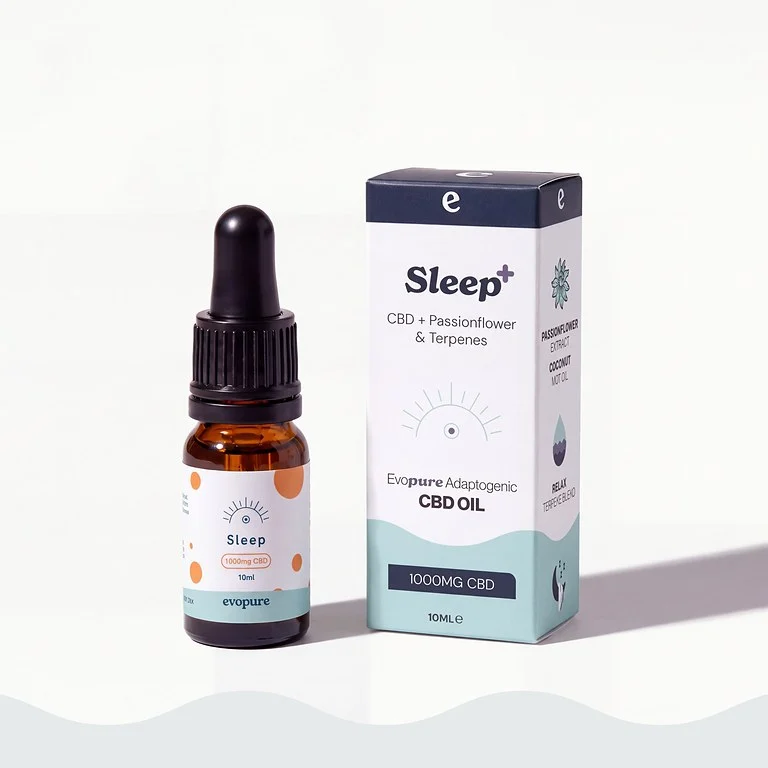
- Sleep CBD Oil: broad spectrum CBD with 70mg passionflower extract per half pipette, for a wind-down routine at night.
The FSA’s 10mg a day figure is precautionary advice rather than a legal limit, set while longer-term safety research continues. At Evopure we think it is a very cautious figure, and many adults use more. If you go above it, increase slowly, and check with your GP or pharmacist first if you take any medication.
iOn our 500mg oils, 10mg of CBD is 0.2ml, a little over half of a half pipette. If you take any regular medicines, check with your GP or pharmacist first. We don’t recommend our products during pregnancy or breastfeeding. For adults (18+) only.
When to get help
See a GP if you’re struggling to cope with stress, if what you’re trying isn’t helping, or if anxiety is affecting your daily life or causing you distress. Don’t put physical symptoms down to stress or anxiety without a check: call 999 for chest pain that feels heavy or tight or spreads to your arm, jaw or back.
Where to get help
- Your GP: for advice, a referral or treatment.
- NHS Talking Therapies (England): if you’re 18 or over (16 or over in some areas), you can refer yourself without seeing a GP. It may be able to help with stress too, as well as anxiety and depression.
- NHS 111: if you need help urgently but it isn’t an emergency, call 111 and choose the mental health option.
- Samaritans: call 116 123, free, day or night.
- Shout: text SHOUT to 85258, free and 24/7.
- 999 or A&E: in an emergency, or if someone’s life is at risk.
Related guides
- Anxiety can also focus on one fear, such as being apart from someone you love: see separation anxiety in adults.
- Doctors sometimes use a questionnaire to tell them apart; our guide to the Hospital Anxiety and Depression Scale (HADS) explains how one common form is scored.
- If stress is the issue and you are looking at CBD, see the best CBD oil for stress.
Sources 10
- NHS. Stress.
- NHS. Generalised anxiety disorder (GAD).
- NHS Every Mind Matters. Anxiety.
- NHS. Breathing exercises for stress.
- NHS. Depression in adults.
- Mind. About stress and Understanding anxiety.
- British Heart Foundation. Stress and your heart health.
- World Health Organization. Burn-out an “occupational phenomenon”.
- NHS. Find an NHS Talking Therapies service and where to get urgent help for mental health.
- Samaritans. Contact Samaritans. Shout. Get help.
This guide is general information, not medical advice. Evopure makes Flow CBD Oil, Sleep CBD Oil and the Magnesium Glycinate Sleep Complex.