









Last updated: October 2026
Sciatica is pain from an irritated or compressed sciatic nerve, most often caused by a slipped disc. It usually means pain, tingling or numbness in your bottom and down the back of one leg. The NHS says it usually gets better within a few weeks to a few months. Keeping active, gentle exercise and heat help most.
Go to A&E or call 999 if you have numbness around your genitals or bottom, or new bladder or bowel problems. See all the red flags.
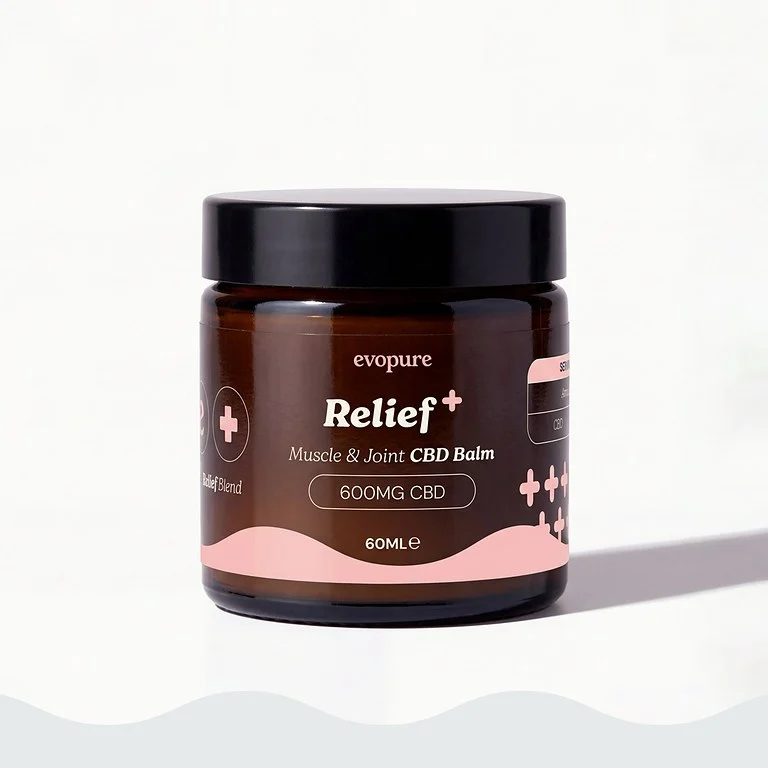
For your stretching routine: our CBD Balm, Muscle and Joint Support is a massage balm with broad spectrum CBD, peppermint, eucalyptus and juniper. It feels cooling and non-greasy, and some people like to work it into the lower back and buttock before or after their exercises. It isn’t a treatment for sciatica. Vegan, made in the UK, third-party lab tested and 0% THC. For adults only.
What is sciatica?
Your sciatic nerve runs from your lower back, through the buttock and down the back of each leg to your feet. Sciatica is the name for the symptoms you get when something presses on or rubs against it, usually where its roots leave the spine.
Nobody knows exactly how common it is. A review of 23 studies found estimates from 1.2% to 43% of people, mainly because studies defined sciatica so differently.
The NHS makes a useful point: you probably don’t have sciatica if you only have back pain. If your pain stays in your back, our lower back pain guide is the better place to start.
What causes sciatica?
The NHS lists four main causes:
- A slipped disc, when the soft cushion between two bones in your spine bulges out and presses on a nerve. This is the most common cause and becomes more likely as you get older.
- Spinal stenosis, a narrowing of the part of your spine where the nerves pass through.
- Spondylolisthesis, when one of the bones in your spine slips out of position.
- A back injury.
Piriformis syndrome: the debated cause
The piriformis is a small muscle deep in the buttock, right next to the sciatic nerve. Piriformis syndrome is the idea that it can squeeze the nerve. A 2010 systematic review called it controversial, and a 2018 update found the typical features were buttock pain, pain made worse by sitting and tenderness deep in the buttock, but that the tests used to diagnose it haven’t been proven accurate.
Things that raise your risk
- Smoking: a meta-analysis of 28 studies found current smokers had about 46% higher odds of sciatica. Former smokers had only slightly raised odds.
- Weight: a meta-analysis of 26 studies linked overweight and obesity to sciatica in men and women.
- Age, lifting and sitting: the NHS links slipped discs to ageing, lifting the wrong way, sitting or driving for long periods, and being inactive.
Sciatica symptoms
The NHS says symptoms usually affect your bottom and the back of one leg, often down to your foot and toes. You may feel:
- a sharp, burning pain down the back of the leg
- tingling, like pins and needles
- numbness
- weakness
Symptoms can start suddenly or slowly, and the pain is often worse when you move, sneeze or cough. Any back pain is usually milder than the leg pain. Sciatica in both legs is a red flag: see when to call 999.
Sciatica symptoms in women
The symptoms are the same in women and men, but a few things are worth knowing:
- Recovery may be slower. In a Dutch trial of 283 people with sciatica from a slipped disc, 28% of women had an unsatisfactory result at one year, compared with 11% of men.
- In pregnancy, it may be pelvic girdle pain. Pregnancy-related pelvic girdle pain (PGP) can cause pain across the lower back and spreading into the thighs. The NHS says it isn’t harmful to your baby. Call your midwife or GP if it’s hard to move around or turn over in bed. Our SI joint pain guide covers PGP.
- Leg pain that comes and goes with your periods is worth mentioning to a GP. Rarely, endometriosis can affect the sciatic nerve itself.
Sciatica vs back pain, SI joint pain and hip pain
These overlap, so use this as a rough guide, not a diagnosis.
| Problem | Where it usually hurts | Typical clues |
|---|---|---|
| Sciatica | Bottom and back of one leg, often to the foot | Burning pain, pins and needles, numbness or weakness; leg pain worse than back pain |
| Lower back pain | Across the lower back | Ache, stiffness or spasm; no nerve symptoms in the leg |
| SI joint pain | One side, over the dimple at the back of the pelvis | Often a clear start, such as a fall or pregnancy; worse standing on one leg |
| Hip joint pain | Groin, front or outside of the hip | Pain walking or crossing your legs; stiffness |
For more, see our guides to SI joint pain and hip pain.
Is sciatica hereditary?
Partly, but genes are a smaller part of the story than you might think. A study of 9,365 pairs of Finnish twins estimated that genes explained about 21% of the risk of sciatica, with environmental factors accounting for more than 80%.
Genes matter more for how your discs age. A UK study of 326 twins estimated the heritability of lumbar disc degeneration on MRI at 74%. So you may inherit discs that wear a little faster, but smoking, weight, staying active and lifting safely still matter most.
How long does sciatica last, and is it curable?
For most people, sciatica gets better on its own. The NHS says it usually improves within a few weeks to a few months, but it can last longer and can come back. NICE calls it chronic once it has lasted 3 months.
- In a UK study of 609 people who saw their GP with back-related leg pain, just over half had improved meaningfully after 12 months. Those who expected their problem to last a long time were less likely to improve.
- In a Dutch trial of 283 people with severe sciatica, early surgery eased leg pain faster than waiting. After a year, about 95% in both groups felt they had recovered.
- A 2023 BMJ review of 24 trials found disc surgery reduced leg pain more than non-surgical care at first, but the difference was negligible by 12 months.
So there’s no single cure, but most people recover, usually without surgery.
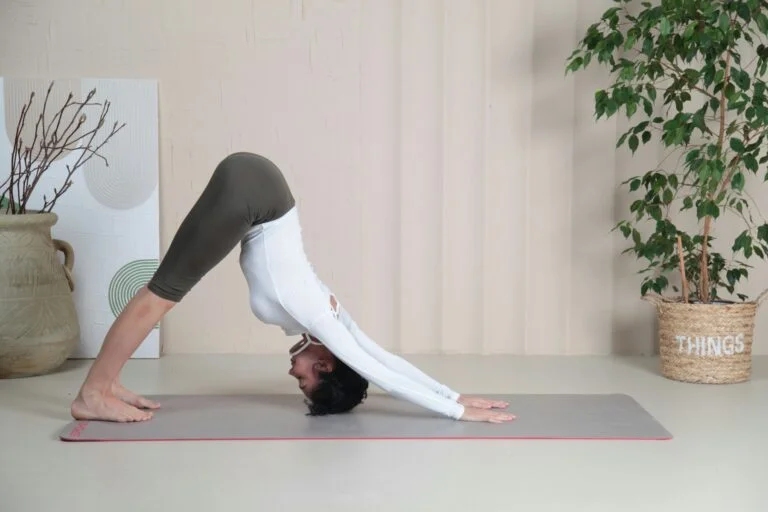
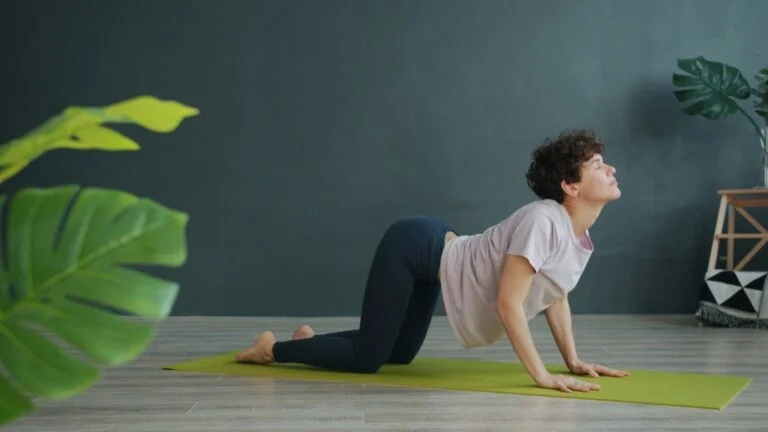
6 gentle sciatica exercises, including the piriformis stretch
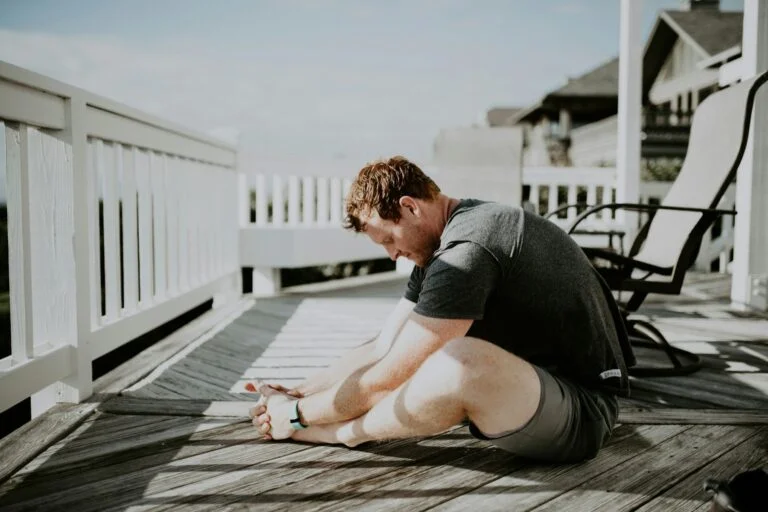
The NHS recommends regular exercises for sciatica: its sciatica exercise video is a good start. These are common physio exercises. Start with a few slow repetitions.
- Knee-to-chest. Lie on your back, knees bent. Draw one knee towards your chest, hands behind your thigh. Hold for 20 to 30 seconds, then swap.
- Lying piriformis stretch (figure-4). Lie on your back, knees bent, and rest your right ankle on your left knee. Draw your left thigh gently towards you until you feel a stretch deep in the right buttock. Hold for 20 to 30 seconds, then swap.
- Seated piriformis stretch. Sit tall, rest one ankle on the opposite knee and lean forward slowly from the hips. Handy at a desk.
- Pelvic tilt. Lie on your back, knees bent, and gently flatten your lower back into the floor. Hold for a few seconds, then relax.
- Glute bridge. Lie on your back, knees bent. Squeeze your buttocks and lift your hips into a straight line, hold for 3 to 5 seconds and lower.
- Sciatic nerve glide (nerve flossing), with caution. Sit tall. Slowly straighten one knee while looking up, then bend it as you bring your chin down, 5 to 10 times. A 2023 review of 8 small trials found adding nerve mobilisation to usual care may help short term. It moves the nerve directly, so it’s best learned from a physio.
The pain rule: stop if pain, tingling or numbness spreads further down your leg or gets worse, and ask a GP or physio. If you’re pregnant or have recently given birth, the NHS advises getting advice first. Walking counts too: see how many steps a day. For a tight buttock, our muscle knots guide covers self-massage.
Sciatica treatment in the UK
What you can do yourself
- Keep moving. The NHS says don’t sit or lie down for long periods: even if moving hurts, it isn’t harmful.
- Heat. The NHS suggests heat packs on the painful areas. See our hot water bottle safety guide.
- Sitting and sleeping: get up regularly and avoid slumping (see posture and desk set-up). Many people find side-lying with a pillow between the knees comfortable: see the best sleeping position.
Painkillers: what the NHS and NICE say
- The NHS says paracetamol is unlikely to help, and it isn’t clear how much NSAIDs such as ibuprofen help. Ask a pharmacist what suits you.
- NICE’s guideline NG59 says doctors should not offer gabapentinoids (gabapentin or pregabalin), other antiepileptics, oral steroids or benzodiazepines for sciatica, as there’s no overall evidence of benefit and there is evidence of harm.
- NICE says not to offer opioids for chronic sciatica.
Already taking one of these? Don’t stop suddenly. Some cause withdrawal symptoms, so talk to your GP or pharmacist first.
Physiotherapy
NICE suggests a group exercise programme, and manual therapy (manipulation, mobilisation or massage) only as part of a package that includes exercise. In many parts of England you can refer yourself to NHS physio without seeing a GP. Going private? “Physiotherapist” is a protected title, so check the HCPC register. NICE says not to offer belts or corsets, traction, acupuncture or TENS for back pain with or without sciatica.
Chiropractors and osteopaths
These are manual therapies, so NICE’s advice applies: only alongside exercise. By law, chiropractors must be registered with the General Chiropractic Council and osteopaths with the General Osteopathic Council, and both registers can be searched by postcode. The NHS says they may not be safe if you take blood thinners, have very weak bones or joints, or have a nerve condition such as peripheral neuropathy.
Injections and surgery
If pain is severe and other treatment hasn’t helped, a GP may refer you to a specialist. NICE says to consider epidural injections of local anaesthetic and steroid for acute and severe sciatica, and decompression surgery when non-surgical treatment hasn’t worked and your scan matches your symptoms. The NHS also lists radiofrequency denervation. Scans aren’t routine: NICE says not to routinely offer imaging outside specialist settings.
Is sciatica a disability?
It depends on how it affects you, not the diagnosis. This is general information, not legal or benefits advice.
The Equality Act 2010 (England, Scotland and Wales) covers a physical or mental impairment with a substantial and long-term negative effect on your ability to do normal daily activities. Gov.uk says substantial means more than minor or trivial, and long-term means 12 months or more, with special rules for conditions that come and go. Sciatica that settles within months won’t usually qualify. Long-lasting or recurring sciatica that seriously limits daily life might.
Personal Independence Payment (PIP) depends on how hard you find everyday tasks or getting around, with difficulties expected to last at least 12 months. You need to be 16 or over and usually under State Pension age. In Scotland, you apply for Adult Disability Payment instead. Citizens Advice can help with a claim.
Red flags: when to call 999
Go to A&E or call 999 if you have:
- sciatica on both sides
- weakness or numbness in both legs that’s severe or getting worse
- numbness around or under your genitals, or around your bottom (anus)
- difficulty starting to pee, can’t pee, or can’t control when you pee, and this isn’t normal for you
- you don’t notice when you need to poo, or can’t control when you poo, and this isn’t normal for you
The NHS says these could be signs of a serious back problem that needs hospital treatment as soon as possible, such as cauda equina syndrome. Don’t drive yourself: ask someone to drive you or call 999, and bring any medicines you take.
Back pain after a serious accident also needs A&E. Not sure how urgent it is? Call NHS 111.
When to see a GP or physio
The NHS says see a GP if your sciatica hasn’t improved after a few weeks of home treatment, is getting worse or is stopping you doing normal activities. See one too if you have back pain with a very high temperature, feel hot, cold or shivery, have unexplained weight loss or a swelling in your back, or the pain is worse at night.
Pain higher up? See upper back pain. Aches in several joints? Try our joint pain guide.
Where our products fit (honestly)
No balm or supplement treats sciatica, and nothing replaces movement, exercise and proper medical advice.
Our CBD Balm, Muscle and Joint Support is a cooling massage balm with broad spectrum CBD, peppermint, eucalyptus and juniper, which some people use as part of a massage around their stretches. It is a cosmetic, not a medicine: see our CBD balm guide. For what the research says about CBD itself, read our CBD for sciatica guide.
Our Magnesium Glycinate Sleep Complex is an evening drink with magnesium bisglycinate and citrate, glycine and L-theanine. Magnesium contributes to normal muscle function. See magnesium for muscle pain.
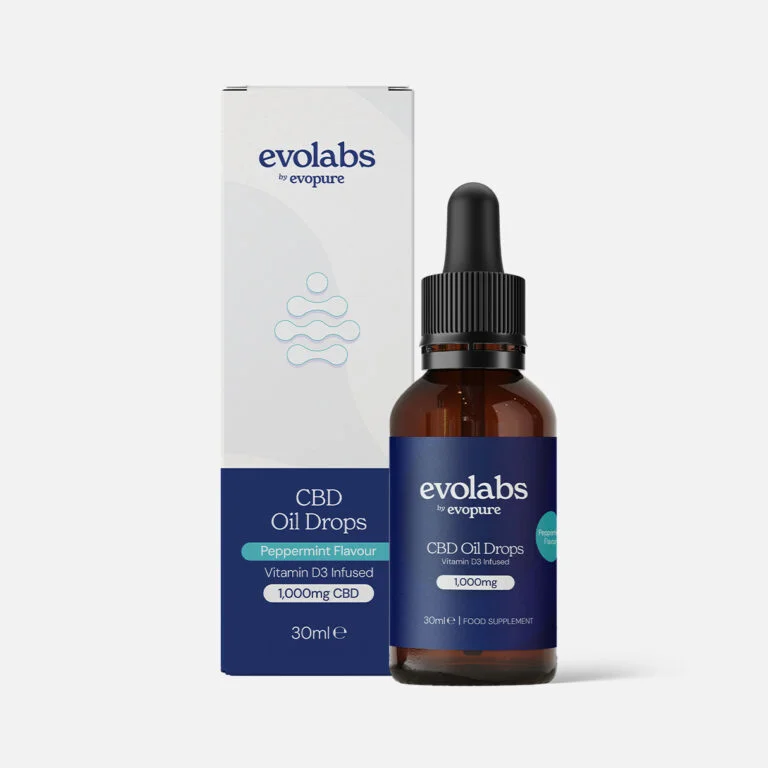
If you also take CBD by mouth, keep the FSA’s advice in mind. The FSA’s 10mg a day figure is precautionary advice rather than a legal limit, set while longer-term safety research continues. At Evopure we think it is a very cautious figure, and many adults use more. If you go above it, increase slowly, and check with your GP or pharmacist first if you take any medication.
Our products are for adults (18+) only. We don’t recommend our products during pregnancy or breastfeeding. If you take prescribed medicines, check with your GP or pharmacist before adding a supplement.
FAQs
What is sciatica and what causes it?
Sciatica is pain, tingling, numbness or weakness from an irritated or compressed sciatic nerve, felt in the bottom and down the back of one leg. A slipped disc is the most common cause.
Is sciatica curable?
There’s no single cure, but most people recover. The NHS says it usually gets better within a few weeks to a few months, though it can last longer or come back.
How long does sciatica last?
Usually a few weeks to a few months. Sciatica lasting 3 months or more is called chronic. See a GP if it isn’t improving after a few weeks.
Is sciatica a disability in the UK?
It can be. Under the Equality Act 2010, a condition counts if it has a substantial and long-term (12 months or more) effect on normal daily activities. PIP depends on how hard you find everyday tasks.
Is sciatica hereditary?
Only partly. A large twin study estimated genes explain about 21% of sciatica risk. Genes play a bigger role in disc wear, but smoking, weight and activity still matter most.
What is the best stretch for sciatica?
There’s no single best one. Knee-to-chest and the piriformis (figure-4) stretch are common starting points. Stop any stretch that sends symptoms further down your leg.
Should I see a chiropractor for sciatica?
NICE says manual therapy should only be used alongside exercise. If you choose a chiropractor, check they’re on the General Chiropractic Council register.
Sources
- NHS. Sciatica and Exercises for sciatica problems.
- NHS. Slipped disc.
- NHS. Pelvic pain in pregnancy.
- NHS. Get NHS help for back or joint problems.
- NHS. Herbal medicines and complementary therapies.
- NICE. Low back pain and sciatica in over 16s: assessment and management (NG59). 2016, updated 2020 and 2026.
- GOV.UK. Definition of disability under the Equality Act 2010.
- GOV.UK. Personal Independence Payment (PIP) and PIP eligibility.
- Health and Care Professions Council. Professions and protected titles.
- General Chiropractic Council. Patient portal. General Osteopathic Council. Search the register.
- Konstantinou K, Dunn KM. Sciatica: review of epidemiological studies and prevalence estimates. Spine, 2008. PMID 18923325.
- Konstantinou K, et al. Prognosis of sciatica and back-related leg pain in primary care: the ATLAS cohort. Spine J, 2018. PMID 29174459.
- Peul WC, et al. Surgery versus prolonged conservative treatment for sciatica. N Engl J Med, 2007. PMID 17538084.
- Peul WC, et al. Influence of gender and other prognostic factors on outcome of sciatica. Pain, 2008. PMID 18241991.
- Liu C, et al. Surgical versus non-surgical treatment for sciatica: systematic review and meta-analysis of randomised controlled trials. BMJ, 2023. PMID 37076169.
- Hopayian K, et al. The clinical features of the piriformis syndrome: a systematic review. Eur Spine J, 2010. PMID 20596735.
- Hopayian K, Danielyan A. Four symptoms define the piriformis syndrome: an updated systematic review of its clinical features. Eur J Orthop Surg Traumatol, 2018. PMID 28836092.
- Heikkilä JK, et al. Genetic and environmental factors in sciatica: evidence from a nationwide panel of 9365 adult twin pairs. Ann Med, 1989. PMID 2605032.
- Sambrook PN, et al. Genetic influences on cervical and lumbar disc degeneration: a magnetic resonance imaging study in twins. Arthritis Rheum, 1999. PMID 10025932.
- Shiri R, Falah-Hassani K. The effect of smoking on the risk of sciatica: a meta-analysis. Am J Med, 2016. PMID 26403480.
- Shiri R, et al. Obesity as a risk factor for sciatica: a meta-analysis. Am J Epidemiol, 2014. PMID 24569641.
- Peacock M, et al. Neural mobilization in low back and radicular pain: a systematic review. J Man Manip Ther, 2023. PMID 35583521.
- Mannan K, et al. Cyclical sciatica: endometriosis of the sciatic nerve. J Bone Joint Surg Br, 2008. PMID 18160509.
This guide is general information, not medical, legal or benefits advice. If you’re worried about sciatica, speak to a GP, pharmacist or physiotherapist. Evopure makes the CBD Balm, Muscle and Joint Support and the Magnesium Glycinate Sleep Complex.