






Last updated: October 2026
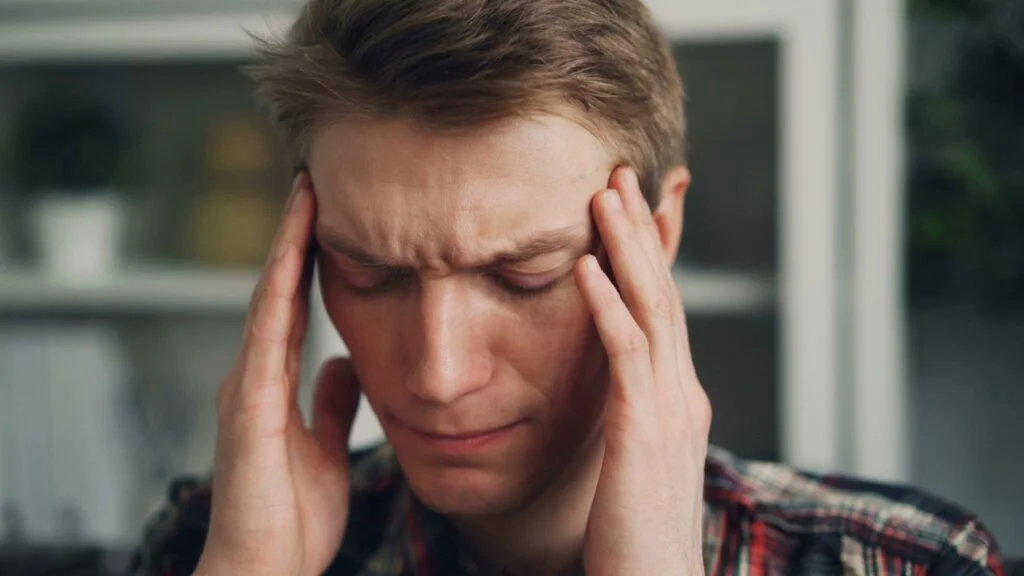
A migraine is more than a bad headache: it’s a moderate to severe throbbing pain, often on one side, usually with feeling sick and sensitivity to light and sound. Up to 1 in 3 people also get aura. To ease one fast, take painkillers early and rest somewhere dark and quiet. Call 999 for a sudden, extremely painful headache.
Below: headache vs migraine, symptoms and stages, types, a fast-relief plan, medicines, triggers, prevention, supplements, where to get help and the red flags.
Need help now? Call 999 if a headache came on suddenly and is extremely painful, or comes with weakness or numbness on one side of your body or face, problems speaking or remembering, loss of vision or double vision, drowsiness or confusion, a fit, a very high temperature with signs of meningitis, or follows a recent head injury. Don’t drive yourself to A&E. See all the red flags.
Headache vs migraine: what’s the difference?
Migraine is a long-term condition with repeated attacks, and the headache is only one part of an attack. Most people are comparing it with a tension headache, the most common type. This table uses the features NICE gives doctors.
| Tension headache | Migraine | |
|---|---|---|
| How bad | Mild to moderate | Moderate to severe |
| Where | Both sides, like a tight band | Often one side, but can be both |
| Feels like | Pressing or tightening | Throbbing or pulsing |
| Moving about | Doesn’t make it worse | Makes it worse, so you may need to stop and lie down |
| Other symptoms | Usually none | Feeling or being sick, sensitivity to light, sound and often smells |
| Warning signs | None | Early symptoms hours or up to 2 days before; aura in up to 1 in 3 people |
| How long | 30 minutes to several days, sometimes constant | Usually 4 hours to 3 days |
A simple test: if a headache stops your day, makes you feel sick and makes light hurt, it’s more likely to be a migraine. You can get both, so a GP is the person to confirm it. For pain behind your eyes, see headache behind the eyes; for cluster headaches, see our tension vs migraine vs cluster table.
How common is it? The Migraine Trust says about 1 in 7 people have migraine, around 10 million in the UK. It’s most common between 25 and 55, two to three times more common in women, and more likely if a close relative has it.
Migraine symptoms and the four stages
The NHS lists three main symptoms of a migraine attack:
- a throbbing headache, which can be severe, is often on one side and can be worse when you move
- feeling or being sick
- being very sensitive to light and sound
Attacks tend to follow stages. Not everyone gets every stage, and they can overlap.
| Stage | When | What you might notice |
|---|---|---|
| 1. Prodrome (warning stage) | Hours or up to 2 days before the pain | Tiredness and yawning, food cravings (often sweet), thirst, mood changes, a stiff neck, poor concentration, peeing more |
| 2. Aura (up to 1 in 3 people) | Usually just before the headache; lasts 5 to 60 minutes | Zigzag lines, flashing lights or blind spots, pins and needles or numbness, difficulty speaking, dizziness |
| 3. Headache (main attack) | Usually 4 hours to 3 days in total | Throbbing pain, often one-sided, worse with movement; nausea or vomiting; sensitivity to light, sound and smell |
| 4. Postdrome (recovery) | Hours to days after | Feeling drained or “hungover”, poor concentration, low mood, still sensitive to light |
Aura develops gradually over at least 5 minutes and goes away completely. The NHS says aura shouldn’t last longer than 1 hour. You can also get aura with no headache at all, sometimes called silent migraine.
Spotting the prodrome gives you a head start to get medicine, food and water ready.
Types of migraine
- Migraine without aura. The most common type: the headache and other symptoms, with no aura beforehand.
- Migraine with aura. Visual, sensory or speech symptoms, usually before the headache. You can have some attacks with aura and some without.
- Chronic migraine. Headache on 15 or more days a month, with migraine features on at least 8 of them, for more than 3 months. Fewer than 15 days a month is called episodic migraine.
- Menstrual migraine. Attacks mainly between 2 days before and 3 days after your period starts, in at least 2 out of 3 cycles. The NHS says these are often longer and more severe. Hormone swings in the run-up to the menopause can also bring more attacks; see perimenopause symptoms and PMS symptoms.
- Vestibular migraine. Vertigo (a spinning or swaying feeling), dizziness or unsteadiness are the main symptoms, usually with other migraine symptoms. Other causes of dizziness are covered in anxiety dizziness.
- Hemiplegic migraine. A rare type with temporary weakness on one side of the body. Weakness always needs urgent checking, especially the first time (see red flags).
How to get rid of a migraine fast
There’s no 2-minute cure, but acting early makes the biggest difference. This plan follows NHS, NICE and Migraine Trust advice for adults.
- Take a painkiller as soon as the headache starts. Ibuprofen, aspirin or paracetamol, following the pack. Don’t wait to see if it gets worse: painkillers and triptans work best while the pain is still mild. No aspirin for under-16s.
- If you’ve been prescribed a triptan, take it at the same time. NICE recommends a triptan with ibuprofen-type painkillers or paracetamol as the first-choice combination. More on triptans below.
- Deal with the sickness. Anti-sickness medicine can help even if you don’t feel sick yet. Ask a pharmacist or GP what suits you.
- Lie down somewhere dark and quiet. Sleep can sometimes end an attack. Sunglasses, an eye mask or earplugs help if you can’t get away.
- Try cold on your head, or warmth on your neck. An ice pack wrapped in a cloth or a cooling headband helps some people with the pain. A heat pack can ease neck and shoulder tension.
- Sip fluids and eat something light when you can. Dehydration and an empty stomach can make an attack worse.
- Slow your breathing. Simple relaxation, like box breathing, can help you cope.
What about caffeine? Some people find a cup of tea or coffee helps during an attack, while for others caffeine is a trigger. Some pharmacy painkillers already contain caffeine, so check the label to avoid doubling up.
Without medicine? Steps 4 to 7 are the drug-free options. They help many people cope, but they work best alongside early medicine.
Migraine medicines: painkillers, triptans and gepants
Painkillers
Ibuprofen, aspirin and paracetamol are the first step. A Cochrane review of 13 trials with 4,222 people found that aspirin 900mg or 1,000mg worked better than a placebo for migraine, and about as well as a 50mg dose of sumatriptan for pain relief at 2 hours. NICE tells doctors not to offer opioids such as codeine for migraine.
Triptans
Triptans (such as sumatriptan, rizatriptan, zolmitriptan and naratriptan) are made for migraine attacks. They come as tablets, melt-in-the-mouth wafers, nasal sprays and injections. A Cochrane review of 61 trials with 37,250 people found sumatriptan tablets beat placebo on every measure, with better results when taken early, during mild pain.
- From a pharmacy: if you’ve already been diagnosed with migraine, you can buy some sumatriptan tablets from a pharmacy without a prescription after a chat with the pharmacist.
- How to take them: take one dose when the headache starts. The NHS says you can take a second dose if symptoms come back (wait at least 2 hours for tablets or nasal spray), but not if the first dose didn’t help. Check the leaflet for the 24-hour limit.
- Who can take them: the NHS says most adults up to 65 can take sumatriptan. Sumatriptan may not be suitable if you’ve had a heart attack, stroke or TIA, or have high blood pressure, heart, liver or kidney problems or circulation problems. It can also interact with some antidepressants (SSRIs and SNRIs), lithium and St John’s wort, so tell the pharmacist or GP about everything you take.
Gepants
Gepants (rimegepant and atogepant) are newer tablets that block CGRP, a protein involved in migraine. NICE recommends them for attacks in adults if at least 2 triptans haven’t worked well enough, or if triptans aren’t suitable and other painkillers haven’t helped.
Don’t take painkillers too often
The NHS advises not taking painkillers for migraine on more than 2 days a week, because this can cause more headaches and make migraine harder to treat. NICE tells doctors to look for medication overuse headache if headaches started or got worse while someone was taking simple painkillers on 15 or more days a month, or triptans, opioids or combination painkillers on 10 or more days a month, for 3 months or more. It’s treated by stopping the overused medicines for at least a month, with your GP’s support. We explain more in painkillers and rebound headaches.
Migraine triggers
The Migraine Trust explains that it’s often a combination of things, rather than one trigger, that pushes you over your “threshold” for an attack. A change in routine is a common theme.
| Trigger | What to try |
|---|---|
| Stress, and the “let-down” after stress (weekend or holiday attacks) | A daily wind-down. See how to relieve stress |
| Too little sleep, or a lie-in | Regular bed and wake times, even at weekends. See sleep hygiene |
| Skipped or late meals | Regular meals; carry a snack when travelling |
| Not drinking enough | The Migraine Trust suggests 6 to 8 glasses of fluid a day. See how much water should I drink? |
| Caffeine: too much, or stopping suddenly | Cut down gradually. See caffeine withdrawal |
| Alcohol (red wine is the most often reported) | Notice whether it’s the drink, the amount or the late night. See alcohol and sleep |
| Hormones: periods, perimenopause | Track attacks against your cycle and talk to a GP |
| Bright or flickering light, noise, strong smells | Sunglasses, quieter spaces; but these can also be early symptoms |
| Long spells at a screen | Regular breaks, lower brightness, good lighting |
| Weather changes | You can’t control it, but you can have medicine to hand |
| Hard exercise you’re not used to | Build up gradually; regular, moderate exercise is helpful for most people |
Trigger or warning sign? Some “triggers” are really prodrome symptoms. Craving chocolate in the warning stage can make chocolate look like the cause. The Migraine Trust says the evidence for food triggers is weak, so don’t cut out foods unless you’re sure.
Keep a headache diary. Note each attack’s date, length, severity and symptoms, the medicine you took, and your sleep, meals, caffeine, alcohol, stress and cycle. NICE suggests at least 8 weeks. The Migraine Trust has a free headache diary template; take it to your GP.
How to prevent migraines
Everyday habits
The NHS suggests these steps to manage migraine:
- eat meals at regular times
- get plenty of sleep
- stay well hydrated and limit caffeine and alcohol
- get regular exercise and try to keep to a healthy weight
- manage stress and avoid triggers you know about
The NHS also lists relaxation techniques and CBT for prevention.
Preventive medicines
The Migraine Trust says preventive medicine may be worth discussing if you have 4 or more migraine days a month, if attacks have a big impact on your life, if attack medicines aren’t helping, or if you’re taking them on more than 2 days a week. Choosing one is a GP or specialist decision based on your health, other medicines and plans for pregnancy.
| Medicine | What it is | Good to know |
|---|---|---|
| Propranolol | Beta blocker | One of NICE’s three first options. Not suitable if you have asthma or COPD |
| Topiramate | Epilepsy medicine | One of NICE’s three first options. Since June 2024 the MHRA says it must not be used for migraine in pregnancy, and women who could become pregnant can only take it under a Pregnancy Prevention Programme with highly effective contraception |
| Amitriptyline | Tricyclic antidepressant | One of NICE’s three first options |
| Candesartan | Blood pressure medicine | Listed by The Migraine Trust as another option; not recommended in pregnancy or if planning one |
| CGRP antibodies (erenumab, fremanezumab, galcanezumab, eptinezumab) | Injections or a drip, made for migraine | NICE: for adults with at least 4 migraine days a month after 3 other preventives haven’t worked or aren’t suitable. Usually via a specialist |
| Gepants (atogepant, rimegepant) | Tablets, made for migraine | Same NICE conditions as CGRP antibodies |
| Botox injections | Injections every 3 months | NICE: for chronic migraine only, after 3 preventives haven’t worked and medication overuse has been dealt with |
The Migraine Trust says preventives can take up to 8 weeks to show an effect, so give each one about 3 months. If propranolol, topiramate and amitriptyline haven’t worked or aren’t suitable, NICE says a course of up to 10 acupuncture sessions over 5 to 8 weeks can be considered.
Migraine and contraception. If you get migraine with aura, tell whoever prescribes your contraception. NICE advises against routinely offering combined hormonal contraception, such as the combined pill, to women and girls who have migraine with aura.
Supplements: riboflavin, magnesium and CBD
- Riboflavin (vitamin B2). The only supplement in NICE’s migraine guideline. NICE says 400mg once a day may reduce how often migraines happen and how bad they are for some people, and the NHS lists vitamin B2 among ways to prevent attacks. That’s far more than you’d get from food. See B vitamins.
- Magnesium. There’s some trial evidence for prevention, but it isn’t in NICE’s guideline, and the doses used in trials are often higher than the NHS’s guide of 400mg or less a day from supplements. We cover the trials, doses and safety in magnesium for migraines.
- Coenzyme Q10 is the other supplement The Migraine Trust lists for migraine.
- CBD. CBD isn’t a treatment for migraine, and there are no good trials of CBD on its own. See what the research says on CBD and migraines.
Check with a pharmacist or GP before starting a supplement if you take regular medicine, and track it in your headache diary.
Where Evopure fits (honestly)
We don’t make a migraine treatment, and none of our products treats or prevents migraine. Our Magnesium Glycinate Sleep Complex is a caffeine-free evening drink with magnesium bisglycinate and citrate, glycine and L-theanine. Magnesium contributes to normal psychological function and to a reduction of tiredness and fatigue. Its 148mg of magnesium per serving is well below the doses used in migraine trials. Our products are for adults only. We don’t recommend our products during pregnancy or breastfeeding, and if you take any medication, check with your GP or pharmacist first.
Where to get help
- A pharmacist can advise on painkillers, anti-sickness medicine and pharmacy sumatriptan if you’ve been diagnosed with migraine.
- Your GP. The NHS says to see a GP if your attacks are severe, getting worse or lasting longer than usual, happen more than once a week, are hard to control, or regularly come around your period. Take your headache diary. If treatments aren’t working, a GP can refer you to a specialist headache clinic.
- The National Migraine Centre is a UK charity running a specialist headache clinic with video and phone appointments across the UK. You don’t need a GP referral, but you do need to be registered with a UK GP. It gets no NHS funding, so appointments are paid for by fees or donations; check its funding page for current costs.
- The Migraine Trust runs a free helpline on 0808 802 0066 (10am to 4pm, Monday to Friday), plus online chat and factsheets on treatment, work and your rights.
The Migraine Trust notes migraine may count as a disability at work when it has a substantial effect on day-to-day life.
When to get urgent help
Call 999 if you have a headache and:
- it came on suddenly and is extremely painful
- you can’t move, or have weakness in the arm or leg on one side of your body or one side of your face
- you have problems speaking or remembering things
- you lose your vision, or have blurred or double vision
- you feel drowsy or confused, or have a fit
- you have a very high temperature and symptoms of meningitis, such as a stiff neck or a rash
- you’ve recently had a head injury
Don’t drive yourself to A&E. If you’re not sure whether weakness or speech problems are aura or something more serious, treat it as an emergency.
Ask for an urgent GP appointment or call 111 if a migraine attack has lasted longer than 72 hours, aura lasts longer than 1 hour, or you’re pregnant or have just had a baby. NICE also advises further checks for unusual aura, such as weakness, double vision, vision loss in only one eye, poor balance or reduced consciousness, and for any big change in your usual headaches.
For other headache patterns, see waking up with a headache.
FAQs
What’s the difference between a headache and a migraine?
A migraine is a moderate to severe throbbing headache, often on one side, that gets worse when you move and usually comes with feeling sick and sensitivity to light and sound. A tension headache is a milder, pressing ache on both sides that doesn’t stop you carrying on.
How do I get rid of a migraine fast?
Take ibuprofen, aspirin or paracetamol as soon as the headache starts, plus a triptan if you’ve been prescribed one. Then rest in a dark, quiet room, try a cold pack on your head, and sip fluids. Medicine works best taken early.
How long does a migraine last?
Usually between 4 hours and 3 days. Early symptoms can start up to 2 days before the pain, and you may feel drained for hours or days afterwards. Get urgent advice if an attack lasts longer than 72 hours.
What triggers migraines?
Common triggers include stress, poor or irregular sleep, skipped meals, not drinking enough, too much caffeine or stopping it suddenly, alcohol, periods and bright lights. Often it’s a combination. A headache diary helps you spot yours.
Can I buy migraine tablets over the counter in the UK?
Yes. Ibuprofen, aspirin and paracetamol are widely available, and if you’ve been diagnosed with migraine you can buy some sumatriptan tablets from a pharmacy after speaking to the pharmacist. Other triptans and preventive medicines need a prescription.
When should I worry about a migraine?
Call 999 for a sudden, extremely painful headache, or one with weakness on one side, problems speaking, vision loss, confusion, a fit, a high temperature with a stiff neck, or after a head injury. See a GP if attacks are getting worse or more frequent.
Do migraines go away with age?
Often they ease. The NHS says most people find their attacks slowly get better as they get older, and in women migraine often improves after the menopause.
Sources
- NHS. Migraine.
- NHS. Sumatriptan.
- NICE (2012, updated 2025). Headaches in over 12s: diagnosis and management (CG150).
- MHRA (2024). Topiramate (Topamax): introduction of new safety measures, including a Pregnancy Prevention Programme.
- The Migraine Trust. What is migraine?, Stages of a migraine attack, Migraine attack triggers, Coping with a migraine attack and Preventive medicines for migraine.
- Kirthi V et al (2013). Aspirin with or without an antiemetic for acute migraine headaches in adults. Cochrane Database of Systematic Reviews.
- Derry CJ et al (2012). Sumatriptan (oral route of administration) for acute migraine attacks in adults. Cochrane Database of Systematic Reviews.
- National Migraine Centre. Specialist migraine clinic.
This guide is general information, not medical advice. Always follow the leaflet that comes with your medicine and ask a pharmacist or GP if you’re unsure. Evopure makes the Magnesium Glycinate Sleep Complex.