
Last updated: October 2026
A banana before bed is a good light snack if you’re hungry, but it isn’t a proven sleep aid. In the only trial of a bedtime banana, just seven people with insomnia rated their sleep better after six weeks. A medium banana has only about 10mg of tryptophan and 32mg of magnesium.
Below: what’s actually in a banana, what the research shows, whether banana tea works, the best time to eat one, better bedtime pairings and who should be careful.
Quick answer: if you’re peckish in the evening, a small banana with a spoon of natural yoghurt or nut butter, eaten 30 to 60 minutes before bed, is a sensible snack. Just don’t expect it to work like a sleeping pill. A regular wake-up time and a calm last hour do far more.
What’s in a banana?
Bananas turn up on every “foods that help you sleep” list because they contain tryptophan, magnesium, potassium and vitamin B6. Here’s how much a medium banana (about 118g without the skin) really provides, compared with the UK nutrient reference values (NRVs) used on food labels.
| Medium banana | Amount | % of daily reference |
|---|---|---|
| Energy | 105kcal | 5% |
| Carbohydrate | 27g | 10% |
| of which sugars | 14.4g | 16% |
| Fibre | 3.1g | 10% of the 30g a day adults should aim for |
| Vitamin B6 | 0.43mg | 31% |
| Potassium | 423mg | 21% |
| Vitamin C | 10mg | 13% |
| Magnesium | 32mg | 9% |
| Tryptophan | About 10mg | No reference value |
So a banana is a genuinely good source of vitamin B6 and potassium, and counts as one of your 5 A Day. It is not a big source of magnesium: the NHS says adults need about 270mg (women) to 300mg (men) a day, so you’d need eight or nine bananas to get there. Nuts, seeds and beans contain far more; see our foods high in magnesium list.
The tryptophan is smaller still: our tryptophan guide shows two eggs contain roughly 15 times as much.
Do bananas help you sleep? What the evidence says
The one bedtime banana trial
A 2024 Turkish study gave 21 adults with diagnosed insomnia either a banana at bedtime, a glass of whole milk at bedtime, or nothing extra, for six weeks. People in the banana group rated their sleep quality clearly better at the end, and better than the no-snack group. But each group had only seven people, volunteers chose their own group, and the overnight sleep-lab recordings didn’t show a clear change for the banana group.
Bananas and melatonin
In a 2013 Thai study, 12 healthy men ate two bananas and their blood melatonin rose from about 32 to 140 pg/mL two hours later. Orange and pineapple juice did the same. Nobody’s sleep was measured, so we don’t know whether that rise makes any difference at bedtime.
Tryptophan: far too little
Tryptophan is the building block your body uses to make serotonin and then melatonin. A 2022 review found tryptophan supplements mainly reduced time awake in the night at doses of 1g (1,000mg) or more. A banana has about 10mg, so you’d need nearly 100 of them.
Carbohydrates: timing matters
Carbohydrate-rich meals can raise the level of tryptophan in the blood. In a small Australian study, 12 healthy men fell asleep in about 9 minutes after a large high-carb rice meal eaten four hours before bed, against about 17.5 minutes after a lower-GI rice meal. The same meal eaten one hour before bed worked less well. A banana is a much smaller carbohydrate load than that meal.
The bigger picture favours whole fruit. In a study of more than 50,000 postmenopausal women, diets high in added sugar and refined grains were linked with more insomnia, while eating more whole fruit and vegetables was linked with less. A smaller US study found more fibre in the day went with deeper sleep, and more sugar with more night-time waking. Both are links, not proof.
Magnesium and potassium
A 2026 review of 12 randomised trials of magnesium supplements for sleep found inconsistent results and low certainty, and concluded the evidence doesn’t support magnesium as a routine insomnia treatment. Those trials used supplement doses, many times what one banana provides. Read the detail in magnesium for sleep.
Our honest verdict: there is one tiny, non-randomised trial suggesting a bedtime banana might help people with insomnia feel they sleep better. The nutrients in a single banana are too small to explain much on their own. A banana is a healthy, cheap snack to try, but the evidence is weak.
Banana tea and banana peel tea: does it work?
The TikTok version: wash a banana, cut off the ends, simmer it whole in its skin, then drink the water before bed, sometimes with cinnamon. The idea is that the peel releases magnesium and potassium into the water.
We searched PubMed and found no human studies of banana tea or banana peel tea and sleep. Nobody has measured how much magnesium or tryptophan ends up in the mug. Some potassium does pass from food into cooking water, which is why kidney diets tell people to throw boiling water away.
Our take: a warm, caffeine-free drink is a perfectly nice wind-down ritual, and that alone may help you relax. But you’ll get more from eating the banana than from drinking the water it was boiled in. If you like a bedtime brew, the herbal teas in our best tea for sleep guide have more research behind them. We looked at a similar trend in lettuce water for sleep.
Best time to eat a banana before bed
- 30 to 60 minutes before bed is a sensible window for a small snack. The banana trial gave it “at bedtime”, and there’s no study comparing timings for bananas.
- Keep it small. The NHS advises against a big meal late at night if you struggle to sleep. One banana, or half a large one with a topping, is plenty.
- Got reflux? The NHS advises not eating within 3 to 4 hours of bed. Have your banana after dinner instead.
- Brush afterwards. Bananas are sweet, and the NHS says brushing last thing before bed is important.
Our eating before bed guide covers what and when to eat in more detail, and the sleep calculator works out a bedtime that fits your alarm.
Better bedtime pairings
A banana on its own is mostly carbohydrate. Adding a little protein or fat makes it more filling, so you’re less likely to wake up hungry.
- Banana and natural yoghurt or a glass of milk. In the same 2024 trial, the milk group slept longer on the sleep-lab recordings, and a 2025 review of four trials linked milk and dairy with better self-rated sleep.
- Banana with a spoon of peanut or almond butter. Adds protein, and nuts are a good source of magnesium.
- Sliced banana on a small bowl of porridge made with milk, if you’ve had an early dinner.
- Banana and a handful of walnuts or pumpkin seeds for a little crunch and some extra magnesium.
Our foods that help you sleep guide ranks other snacks by the strength of their evidence.
Banana vs kiwi vs tart cherry vs warm milk
| Bedtime snack | Best human evidence | Our take |
|---|---|---|
| Banana | One trial: 7 people with insomnia, not randomised, better self-rated sleep after 6 weeks | Weak evidence, good snack |
| Kiwi | 24 adults ate 2 kiwis an hour before bed for 4 weeks and fell asleep about 35% faster, with no comparison group | Early but promising |
| Tart cherry juice | Placebo-controlled: 20 adults slept longer and had more melatonin after a week | Best controlled evidence; watch the sugar |
| Warm milk | A review of 4 trials found better self-rated sleep; in the 2024 trial, the milk group slept longer | Limited, but more than banana |
If you’d like something warm and chocolatey instead, see our healthy hot chocolate guide, which covers the caffeine in cocoa.
Who should be careful
- Kidney disease. Bananas are a higher-potassium fruit. Not everyone with kidney disease needs to cut potassium, but if your kidney team has told you to, follow their advice, and that includes banana tea.
- Reflux or heartburn. The NHS advises not eating within 3 to 4 hours of bed if you get heartburn, so have your banana straight after dinner. See acid reflux at night.
- Diabetes. Diabetes UK says you can eat bananas. A large banana counts as one and a half portions of fruit and has about 30g of carbohydrate, so a small banana, or half a large one with yoghurt or nuts, may suit you better. Ask your diabetes team if you take insulin.
- Watching your weight. A medium banana is about 105kcal, around 5% of the 2,000kcal daily reference intake, so it fits easily into most days.
A banana as part of your wind-down
Food is one small piece of better sleep. A consistent wake-up time, a dark, cool bedroom and no caffeine late in the day matter more. If you’re lying awake most nights, our guide to why you can’t sleep runs through the common causes.
Some people pair their evening snack with a drink. Our Magnesium Glycinate Sleep Complex is a berry-flavoured powder with magnesium bisglycinate and citrate, glycine, L-theanine, chamomile, passionflower, hops and oat straw. One serving gives 148mg of magnesium, about as much as four and a half bananas. Magnesium contributes to a reduction of tiredness and fatigue and to normal psychological function. Our magnesium glycinate guide explains the form.
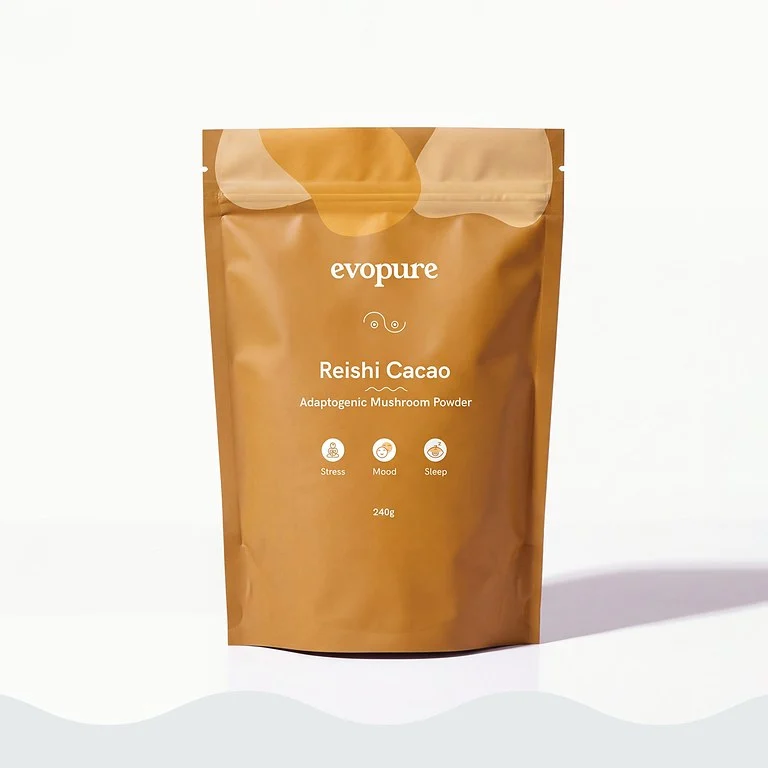
Our Reishi Mushroom Adaptogenic Complex is a reishi hot chocolate made with cacao, maca and coconut milk powder. Cacao contains a little natural caffeine, so have it earlier in the evening if you’re sensitive. Our products are for adults only, and we don’t recommend our products during pregnancy or breastfeeding.
When to see a GP
Most adults need 7 to 9 hours of sleep. The NHS suggests seeing a GP if changing your sleep habits hasn’t helped, if poor sleep has lasted for months, or if it’s making daily life hard to cope with. A GP may offer cognitive behavioural therapy (CBT), face to face or online; sleeping pills are now rarely prescribed. Read more in our insomnia guide.
FAQs
Is it good to eat a banana before bed?
For most people, yes, as a light snack if you’re hungry. A medium banana is about 105kcal and a good source of vitamin B6 and potassium. It isn’t a proven sleep aid: the only bedtime banana trial was tiny and not randomised.
Do bananas make you sleepy?
Not noticeably. A banana contains about 10mg of tryptophan and 32mg of magnesium, far below the amounts used in sleep studies. In one small study, eating two bananas raised blood melatonin, but sleep wasn’t measured.
How long before bed should I eat a banana?
About 30 to 60 minutes before bed is sensible for a small snack. If you get reflux, leave 3 to 4 hours between eating and lying down, and brush your teeth afterwards.
Does banana tea help you sleep?
There are no human studies of banana tea or banana peel tea for sleep. A warm, caffeine-free drink can be a relaxing ritual, but eating the banana gives you more of its nutrients than drinking the water.
Will eating a banana at night make me gain weight?
A medium banana has about 105kcal, around 5% of an adult’s 2,000kcal daily reference intake, so one banana fits easily into most diets.
Do bananas stop leg cramps at night?
There’s no good evidence. The NHS doesn’t list low potassium among the usual causes of leg cramps and suggests regular calf stretches. See a GP if cramps disturb your sleep or last longer than 10 minutes.
Is a banana or kiwi better for sleep?
Kiwi has slightly more research behind it: small studies of two kiwis an hour before bed for four weeks. Bananas have one tiny bedtime trial. Both make a good light bedtime snack.
Sources
- Keser MG et al. (2024). Bedtime banana and milk intake on sleep and biochemical parameters. Asia Pac J Clin Nutr.
- Sae-Teaw M et al. (2013). Serum melatonin levels and antioxidant capacities after consumption of pineapple, orange, or banana by healthy male volunteers. J Pineal Res.
- Sutanto CN et al. (2022). The impact of tryptophan supplementation on sleep quality: a systematic review, meta-analysis, and meta-regression. Nutr Rev.
- Afaghi A et al. (2007). High-glycemic-index carbohydrate meals shorten sleep onset. Am J Clin Nutr.
- Gangwisch JE et al. (2020). High glycemic index and glycemic load diets as risk factors for insomnia: analyses from the Women’s Health Initiative. Am J Clin Nutr.
- St-Onge MP et al. (2016). Fiber and saturated fat are associated with sleep arousals and slow wave sleep. J Clin Sleep Med.
- Lopresti AL et al. (2026). Magnesium supplementation for sleep in adults: a systematic review of randomized controlled trials. J Diet Suppl.
- Lin HH et al. (2011). Effect of kiwifruit consumption on sleep quality in adults with sleep problems. Asia Pac J Clin Nutr.
- Howatson G et al. (2012). Effect of tart cherry juice (Prunus cerasus) on melatonin levels and enhanced sleep quality. Eur J Nutr.
- Peres AP et al. (2025). The consumption of milk or dairy products and sleep quality: a systematic review and meta-analysis. Cureus.
- USDA. FoodData Central: Bananas, raw (FDC ID 173944).
- Regulation (EU) No 1169/2011 as retained in UK law. Annex XIII: reference intakes and nutrient reference values.
- NHS. Vitamins and minerals: others (magnesium, potassium).
- NHS. Vitamin B (including B6).
- NHS. How to get more fibre into your diet.
- NHS. 5 A Day portion sizes.
- NHS. Insomnia.
- NHS. Heartburn and acid reflux.
- NHS. How to keep your teeth clean.
- NHS. Leg cramps.
- North Bristol NHS Trust. Potassium in food.
- Hull University Teaching Hospitals NHS Trust. Guide to a low potassium diet.
- Diabetes UK. Fruit, vegetables and diabetes.
This guide is general information, not medical advice. Evopure makes the Magnesium Glycinate Sleep Complex and the Reishi Mushroom Adaptogenic Complex.