


Last updated: November 2026
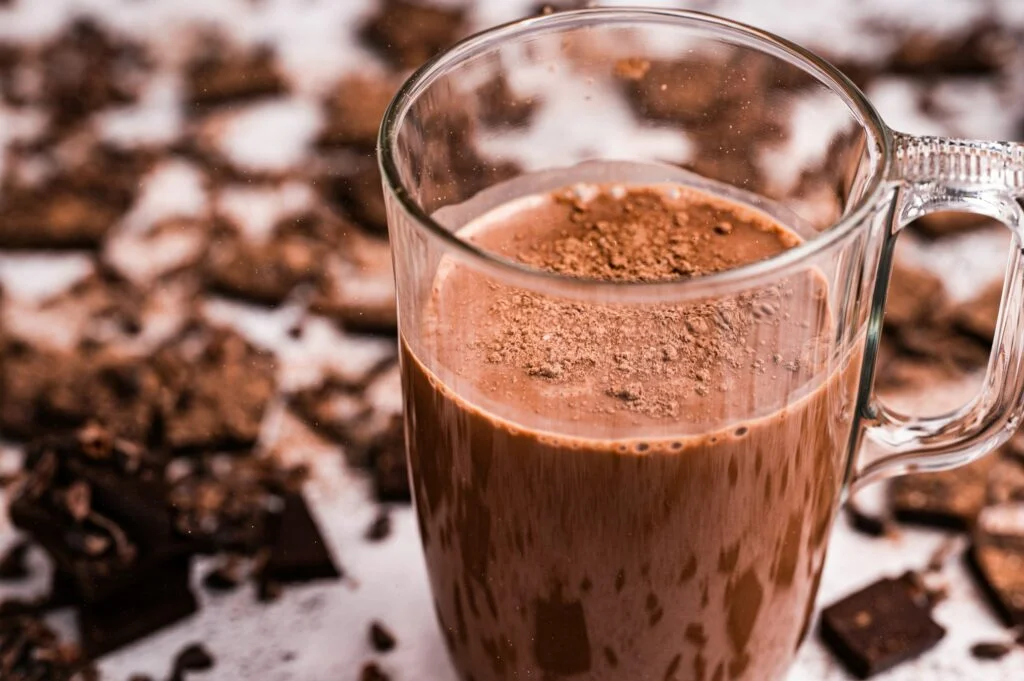
Sugar-free hot chocolate is a drink with no more than 0.5g of sugars per 100ml as made, under UK labelling rules. Most get their sweetness from stevia, sucralose or polyols such as erythritol instead. The simplest no-added-sugar version is homemade: unsweetened cocoa and warm milk, with a little stevia if you like (checked November 2026).
For the bigger picture on cocoa, milk and bedtime, see our healthy hot chocolate guide.
What does “sugar free” mean on a UK label?
Sugar claims are set by law, and a pack can only use a claim if the product meets its rule. Claims apply to the drink as made following the pack instructions, not to the dry powder.
| Wording on the pack | What it has to mean |
|---|---|
| Sugar free | No more than 0.5g of sugars per 100g or 100ml |
| Low sugar | No more than 2.5g of sugars per 100ml for a drink (5g per 100g for a solid) |
| Reduced sugar | At least 30% less sugar than a similar product |
| No added sugars | No added sugars and no other food added for its sweetness; if sugar is naturally there, the pack must say “contains naturally occurring sugars” |
| Low calorie | No more than 20 kcal per 100ml for a drink |
Two more lines are required by law when sweeteners are used: “with sweetener(s)” next to the product name, or “with sugar(s) and sweetener(s)” when it has both. So a “reduced sugar” hot chocolate can still contain plenty of sugar, and a “no added sugar” one made with milk will still contain milk’s own natural sugar.
Wording such as “99% sugar free” or “naturally sweetened” isn’t one of the listed claims, so go by the sugars figure in the nutrition table instead.
Our pick
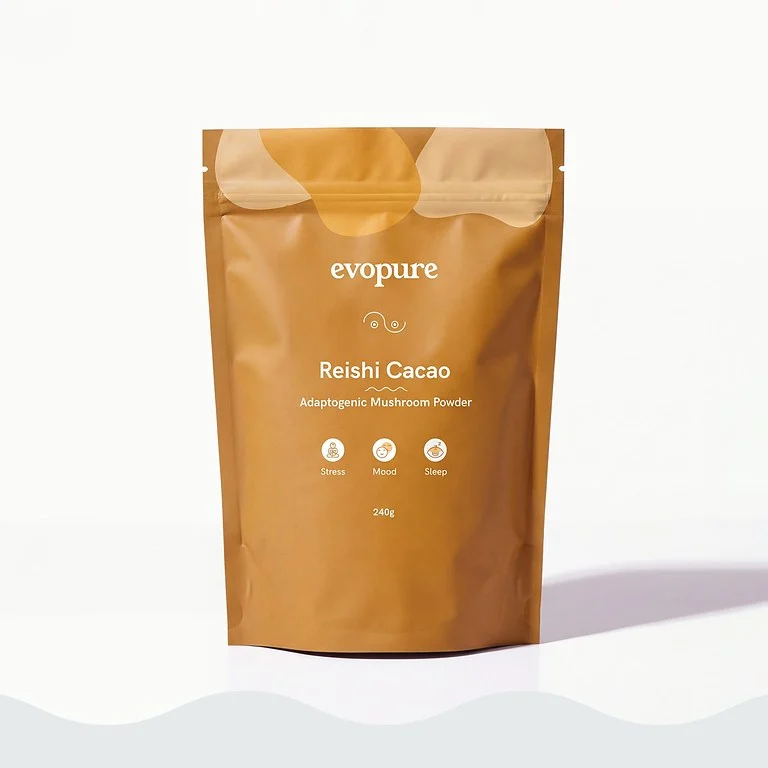
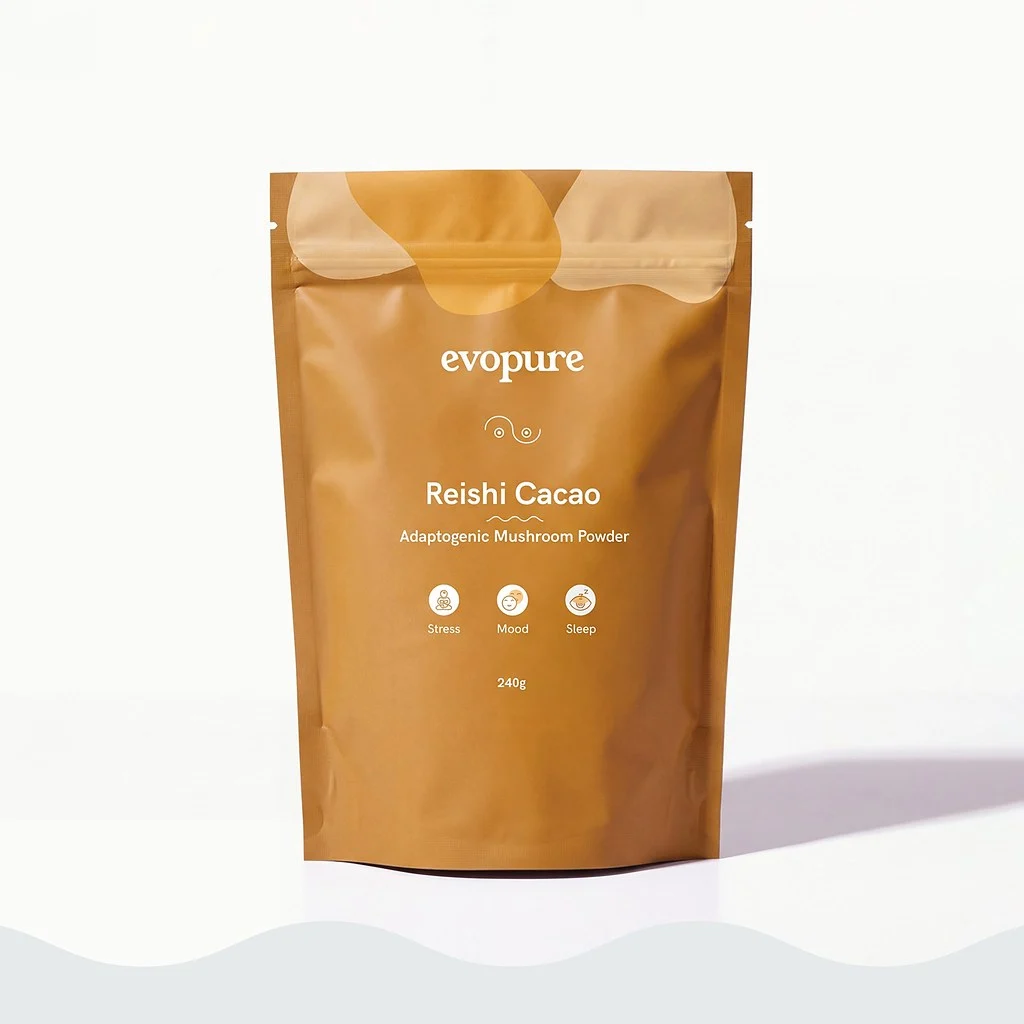
Reishi Mushroom Adaptogenic Complex
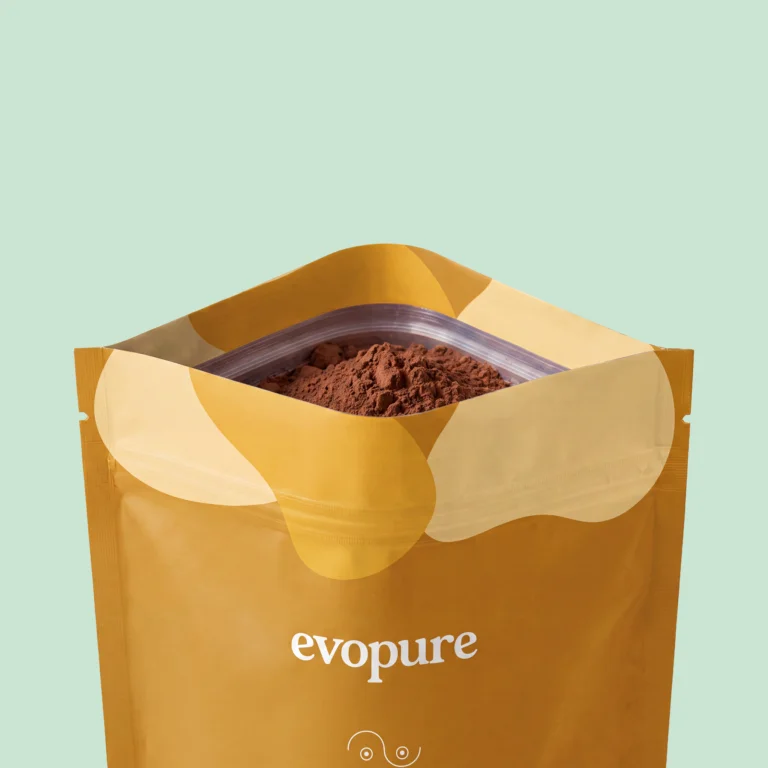
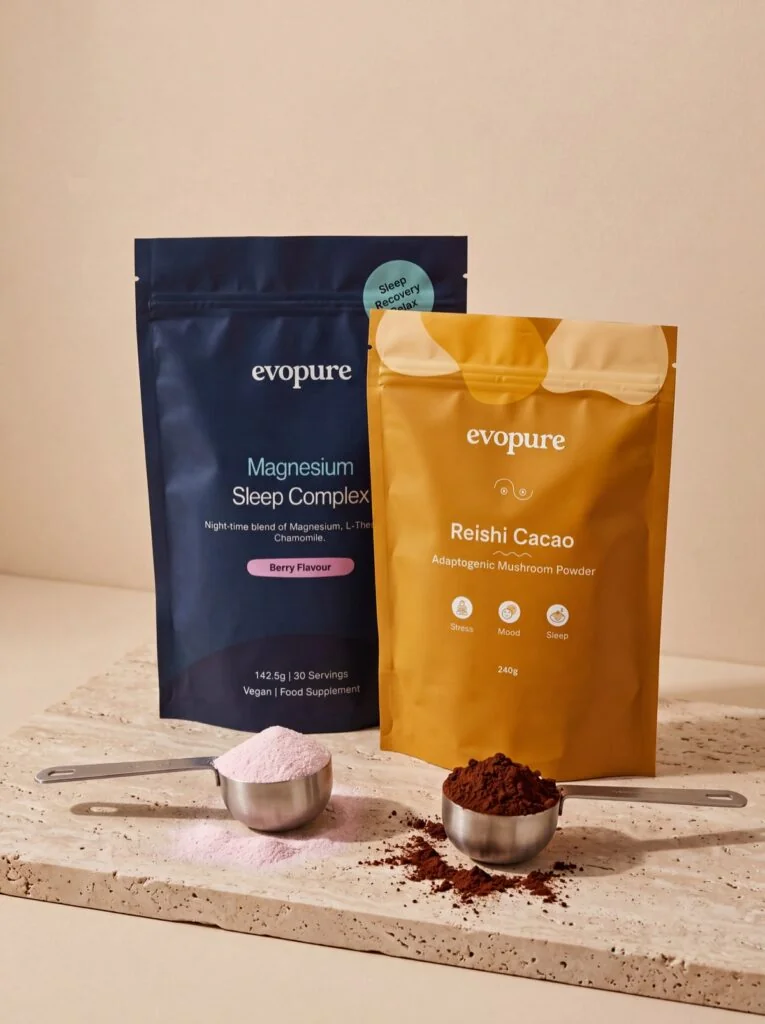
Reishi Cacao isn’t sugar free (it’s sweetened with coconut sugar and a little stevia), but if you want a cosy evening mug with a difference, it’s a hot chocolate powder made with cocoa, reishi mushroom, maca and cinnamon. It contains a little natural caffeine from the cocoa, so it suits earlier in the evening.
Add Reishi Cacao to bag See ingredients and reviews
Vegan and made in the UK. Subscribe and save 25% on your first order, then 20%. New to Evopure? Join our emails for 20% off a one-off first order. Free UK delivery over £45, 14-day returns on unopened items.
Subscribe £22.49One-off £29.99
View productLow calorie hot chocolate
Low calorie hot chocolate is mostly about the milk. Under UK rules, a drink labelled “low calorie” has no more than 20 kcal per 100ml, or about 50 kcal in a 250ml mug. Light instant sachets made with hot water are usually about 40 kcal a mug (UK supermarket labels, checked November 2026). Made with milk, a mug has more.
Homemade figures from the UK government’s food composition data (CoFID), for 250ml plus 5g of unsweetened cocoa (about 2 level teaspoons):
| Mug made with | About kcal per mug |
|---|---|
| Hot water | 15 |
| Unsweetened soya drink | 85 |
| Skimmed milk | 105 |
| Semi-skimmed milk | 135 |
| Whole milk | 180 |
A level teaspoon of sugar adds about 16 kcal; stevia adds almost none. Our Reishi Cacao is cocoa with reishi, maca and cinnamon, sweetened with coconut sugar and stevia, so it isn’t sugar free; for a lighter mug, make it with water or an unsweetened plant milk.
Which sweeteners are used in sugar-free hot chocolate?
Sweeteners used in GB food and drink are safety assessed before they’re allowed. The ones you’ll see on hot chocolate fall into two groups.
Intense sweeteners (no or almost no calories)
- Stevia (steviol glycosides, E960). Made from the stevia plant.
- Sucralose (E955). A very sweet sweetener used in small amounts.
- Aspartame (E951) and acesulfame K (E950). Aspartame isn’t suitable for people with phenylketonuria (PKU), so packs that contain it must say it contains a source of phenylalanine.
Polyols, or sugar alcohols (some calories)
- Erythritol (E968), xylitol (E967), sorbitol (E420) and maltitol. These add bulk and sweetness, so they’re common in sugar-free chocolate drops, spoons and powders.
- The tummy warning. Polyols can have a laxative effect in large amounts, with bloating, wind and diarrhoea. If a product is more than 10% added polyols, the label must say “excessive consumption may produce laxative effects”. If you have IBS or a sensitive gut, start with a small mug.
Research is still moving. In 2023 the WHO advised against using non-sugar sweeteners for weight control (a conditional recommendation that excludes people with diabetes), and an observational study linked higher blood erythritol with heart events in people already at risk. Neither changes UK approval, but treat a sweetened mug as a swap, not a health drink.
What to check on the label
- Sugars per 100ml as made. 0.5g or less is sugar free; 2.5g or less is low sugar. Check the per-serving figure too, and whether the column assumes water or milk.
- The sweetener. Look for “with sweetener(s)” and the names or E numbers in the ingredients. Coconut sugar, honey, syrups and dates are still sugars.
- A polyol warning. The laxative line tells you the product is more than 10% polyols.
- Cocoa content. More cocoa usually means a richer drink with less room for fillers. See cocoa powder vs hot chocolate powder.
- Milk or water. Powders made for water often contain milk powder; see our dairy-free hot chocolate guide.
- Calories. Sugar free doesn’t mean low calorie, especially once you add milk.
- Caffeine. Sugar-free hot chocolate still contains cocoa, so it still has a little caffeine. Our caffeine in hot chocolate guide has the amounts per mug.
How to make sugar-free hot chocolate at home
Plain cocoa powder has no added sugar, so you choose the sweetener and how much.
Ingredients (one mug)
- 250ml milk, or an unsweetened plant milk
- 1 to 2 heaped teaspoons of unsweetened cocoa powder
- A few drops of liquid stevia, or a pinch of stevia powder, to taste (optional)
- A drop of vanilla extract and a pinch of cinnamon (optional)
Method
- Put the cocoa in your mug and stir in a splash of the cold milk to make a smooth paste. This stops lumps.
- Warm the rest of the milk gently in a pan or the microwave until steaming, not boiling.
- Pour it onto the paste, stirring or whisking as you go.
- Taste, then add stevia a drop at a time. Cocoa is bitter on its own, and a little sweetener goes a long way.
Made with dairy milk, this mug has no added sugar but it isn’t sugar free: milk has its own natural sugar (lactose). That sugar shows in the “total sugars” figure on labels, but the NHS doesn’t count it towards the free sugars limit. For a mug that’s closer to sugar free, use an unsweetened plant milk and check its label.
For more twists (spiced, orange, mint and a rich dark mug), see our hot chocolate recipes, or set up a hot chocolate station with sugar-free toppings such as cinnamon, grated 100% dark chocolate or a few raspberries.
Sugar-free hot chocolate in UK supermarkets
True sugar-free options are less common than reduced-sugar ones. Most fall into one of these types.
| Type | Often sweetened with | Worth knowing |
|---|---|---|
| “Light” or reduced-sugar instant sachets | Sugar plus sucralose or stevia | Made with water; lower sugar, rarely sugar free |
| Sugar-free drinking chocolate powders | Erythritol and stevia | Check for the polyol warning |
| Sugar-free chocolate spoons, flakes or drops | Polyols such as maltitol or erythritol | Rich, but the most likely to upset your tummy |
| Unsweetened cocoa or 100% chocolate | Nothing | You add your own sweetener, or none |
Is sugar-free hot chocolate healthy?
It can be a useful swap. The NHS advises adults to have no more than 30g of free sugars a day, and a sweet mug or two can use up a big part of that. Swapping to a sugar-free or no-added-sugar mug cuts that sugar out.
A few caveats:
- It isn’t automatically low calorie. Diabetes UK points out that products labelled sugar free aren’t necessarily low calorie. Milk, cream and toppings add up.
- Diabetes. Diabetes UK doesn’t recommend a sugar-free diet or “diabetic” foods, but cutting back on sugar can help with blood glucose. If you use insulin and count carbohydrates, ask your healthcare team how to count polyols. Our post on sugar cravings has practical ways to cut back.
- Weight. The WHO doesn’t advise relying on sweeteners for weight control, so a sugar-free mug works best as part of an overall lower-sugar routine.
- Cocoa itself. Our dark chocolate benefits guide covers what the cocoa studies show.
If you like a warm drink before bed, our guide to eating before bed and our bedtime routine for adults are worth a read too.
Is Evopure’s Reishi Cacao sugar free?
No. We’d rather be clear: our Reishi Mushroom Adaptogenic Complex (Reishi Cacao) is a hot chocolate powder, not a sugar-free one. The pack lists cocoa powder, coconut sugar, reishi mushroom, maca root, cinnamon and stevia, with 0.5g of reishi, 0.5g of maca and 0.3g of cinnamon in each 8g serving (about 2 teaspoons). The pack gives about 26 kcal per serving before milk. Coconut sugar is still a sugar, so if you’re keeping a close eye on sugar, the homemade recipe above is the better choice.
It’s vegan, and it contains a little natural caffeine from the cocoa, so we’d have it in the afternoon or early evening. Reishi has no authorised health claims, so it’s a hot chocolate to enjoy, not a remedy. It’s for adults (18+), and we don’t recommend our products during pregnancy or breastfeeding. The pack also says it isn’t for people taking medication, so check with your GP or pharmacist first if you take any regular medicines. For how it compares with other brands, see our mushroom hot chocolate guide and reishi cacao.
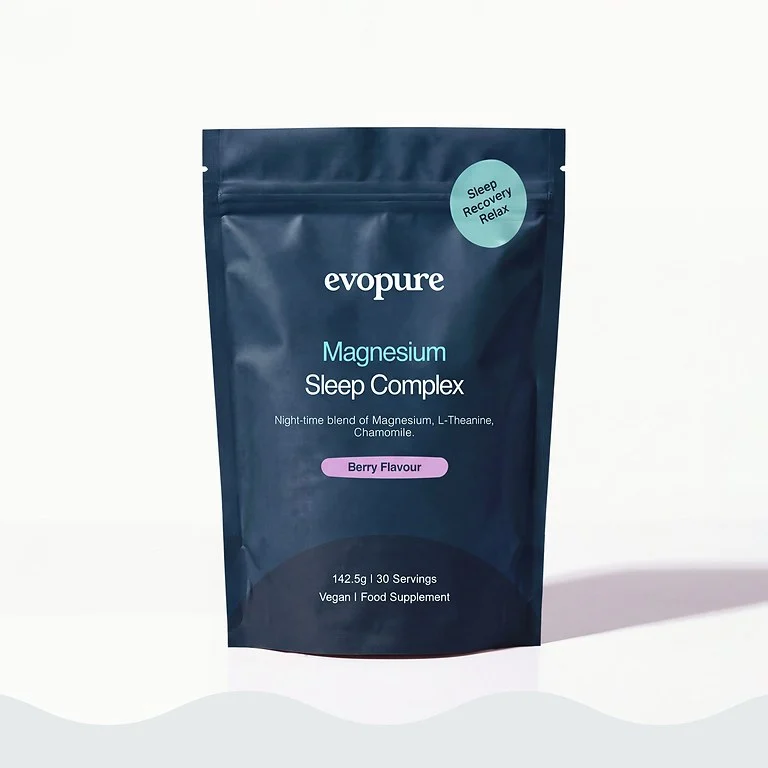
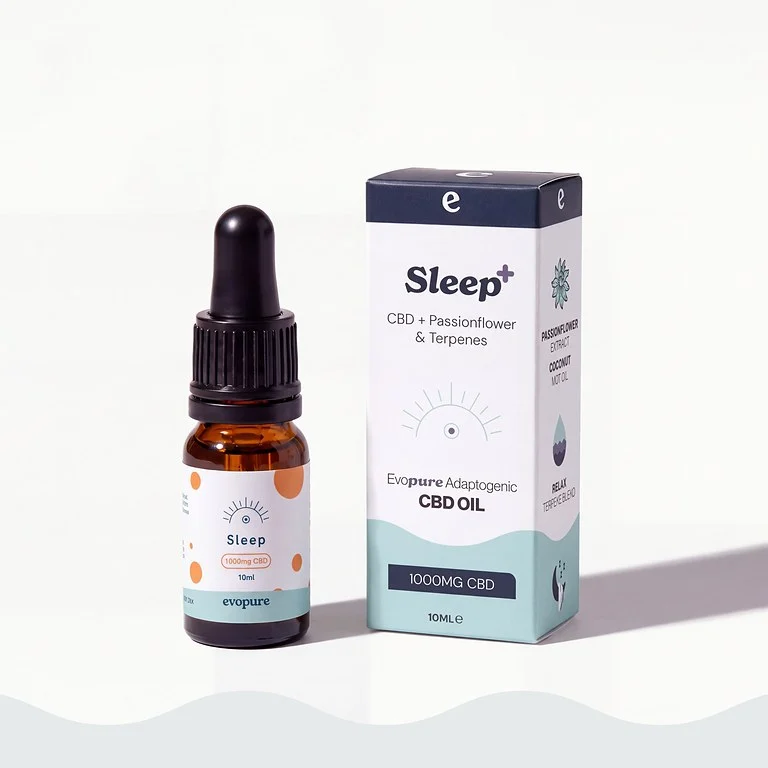
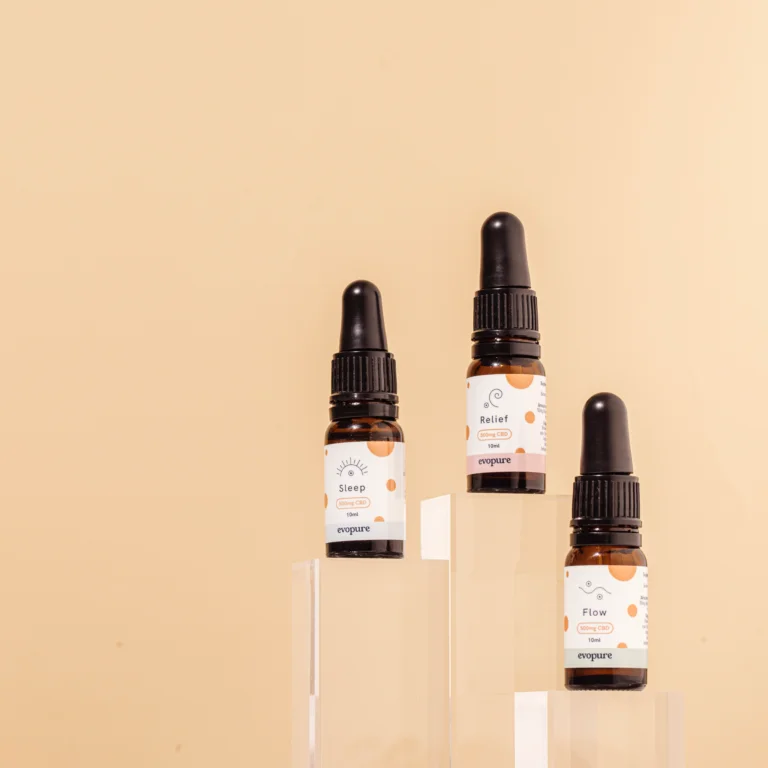
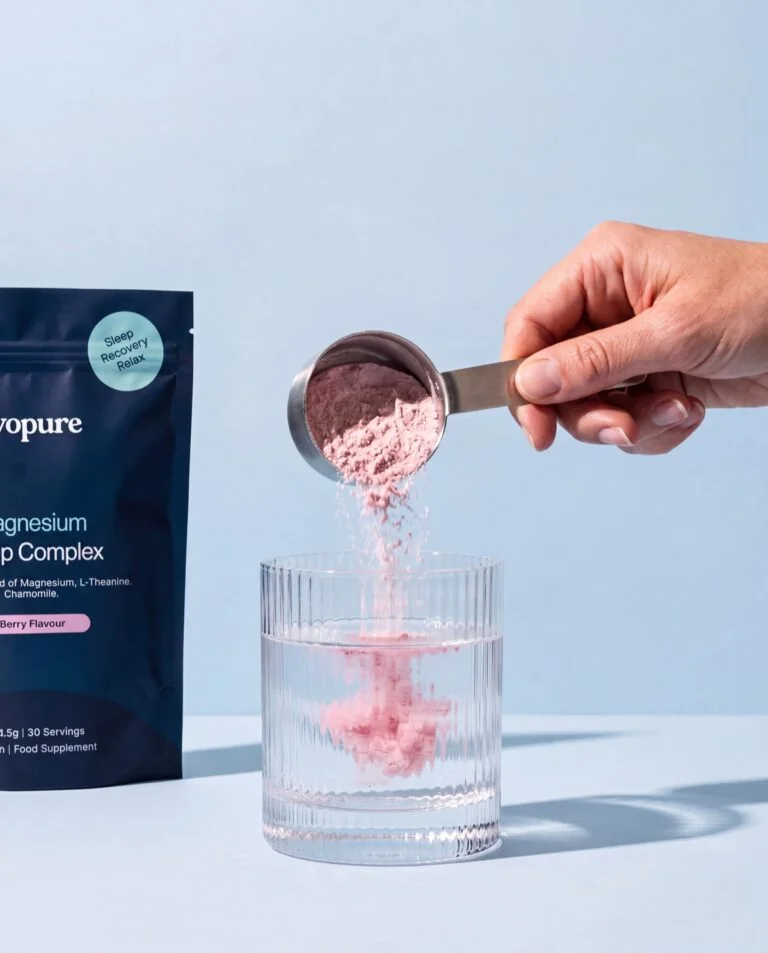
If you’d rather keep your evening mug plain, our Magnesium Glycinate Sleep Complex is a berry-flavoured drink powder sweetened with stevia rather than sugar, with magnesium bisglycinate and citrate in a 4.75g scoop. Magnesium contributes to a reduction of tiredness and fatigue. Some people also like Sleep CBD Oil, CBD with passion flower, as part of a wind-down routine.
The FSA advises healthy adults to take no more than 10mg of CBD a day: about 0.2ml of the 500mg (0.1ml of the 1,000mg) gives 10mg. Adults only.
The FSA’s 10mg a day figure is precautionary advice rather than a legal limit, set while longer-term safety research continues. At Evopure we think it is a very cautious figure, and many adults use more. If you go above it, increase slowly, and check with your GP or pharmacist first if you take any medication.
Next step
Reishi Mushroom Adaptogenic Complex
For a cosy mug with a difference, try our Reishi Cacao: per 8g serving (2 teaspoons), 0.5g reishi, 0.5g maca and 0.3g cinnamon with cocoa, coconut sugar and stevia. It contains a little natural caffeine from the cocoa.
Add Reishi Cacao to bag See ingredients and reviews
Subscribe and save 25% on your first order, then 20%. New to Evopure? Join our emails for 20% off a one-off first order. Free UK delivery over £45. Adults only. If you take any regular medicines, check with your GP or pharmacist first. We don’t recommend our products during pregnancy or breastfeeding.
Subscribe £22.49One-off £29.99
View productSources 9
- legislation.gov.uk. Regulation (EC) No 1924/2006, Annex: nutrition claims and conditions (sugar free, low sugar, reduced, no added sugars, low energy).
- legislation.gov.uk. Regulation (EC) No 1924/2006, Article 5 (claims refer to the food as prepared).
- legislation.gov.uk. Regulation (EU) No 1169/2011, Annex III (sweetener and polyol label wording).
- UK government (gov.uk). McCance and Widdowson’s composition of foods integrated dataset (CoFID) 2021 (milk, soya drink, cocoa powder and sugar).
- NHS. Are sweeteners safe?
- NHS. Sugar: the facts.
- Diabetes UK. Sugar, sweeteners and diabetes.
- World Health Organization (2023). WHO advises not to use non-sugar sweeteners for weight control.
- Witkowski M et al. (2023). The artificial sweetener erythritol and cardiovascular event risk. Nature Medicine. PMID 36849732.
General information, not medical advice. Evopure makes the Reishi Mushroom Adaptogenic Complex, Magnesium Glycinate Sleep Complex and Sleep CBD Oil.