Last updated: November 2026
A handheld sleep aid device is a small gadget you hold or keep by the bed to help you wind down. Most sold online send a weak electrical current (microcurrent) through your palm; others pace your breathing with light or vibration. No handheld microcurrent device has good independent sleep trials, and the NHS-recommended help for insomnia is CBT-I.
Below: the main types, what the research says, who shouldn’t use them, what to check before you buy and the free options that have stronger evidence. Checked against NICE, MHRA and NHS guidance and the published studies in November 2026.
What is a handheld sleep aid device?
Most “handheld sleep aid devices” on Amazon, TikTok Shop and other marketplaces are small, rechargeable, egg or pebble shaped gadgets that you hold in your hand in bed. They say they use microcurrent or “CES” (cranial electrotherapy stimulation) to relax you. Many are unbranded, with near-identical listings under different seller names.
The name also covers other gadgets: light metronomes such as Dodow, which pace your breathing with a glow on the ceiling, breathing coaches that swell and shrink in your hand, and small white noise machines. They work in quite different ways, so it’s worth knowing which one you’re looking at.

Our pick
Magnesium Glycinate Sleep Complex
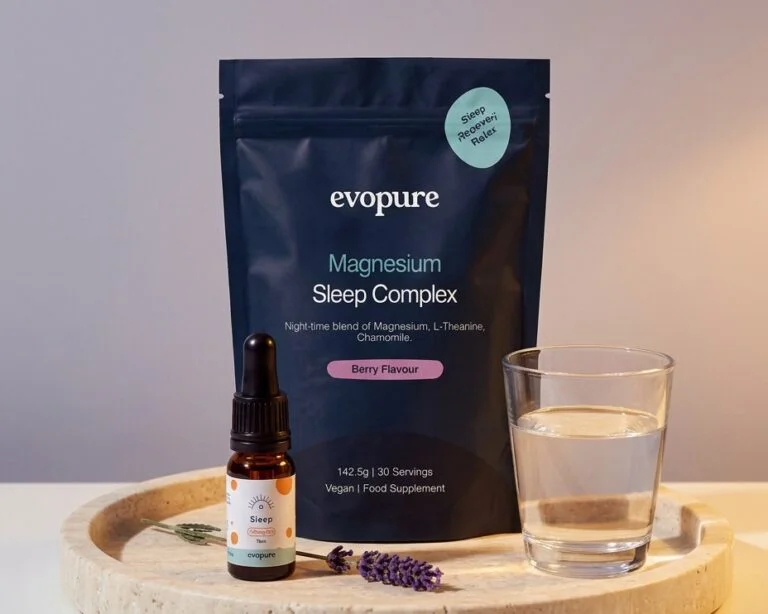
Magnesium Glycinate Sleep Complex is a berry drink powder for your evening wind-down, with 290mg of magnesium (77% NRV) per 4.75g serving from bisglycinate and citrate, plus glycine and L-theanine. Magnesium contributes to a reduction of tiredness and fatigue. It’s a food supplement for your routine, not a device or a treatment for insomnia.
Add Magnesium Glycinate Sleep Complex to bag See ingredients and reviews
Vegan and made in the UK. Free UK delivery over £45, 14-day returns on unopened items.
Subscribe £22.49One-off £29.99
View productTypes of sleep aid device compared
There are four main types. Only one, clinical CES, has been through a NICE review, and that was for anxiety, not sleep.
| Type | How it works | Evidence for sleep | Good to know |
|---|---|---|---|
| Palm microcurrent gadgets | A weak current through the hand | No independent trials found | Often cheap, unbranded, with medical-sounding claims |
| Clinical CES (ear clips) | Current through clips on the earlobes | Inconclusive in reviews | NICE says not enough evidence for routine NHS use in anxiety |
| Breathing pacers | Light, vibration or a shape that swells to slow your breathing | Small studies, some promising | No current through the body |
| White or pink noise | Steady sound masks noise | Very low quality evidence | Keep the volume low |
For sound, see brown noise vs white noise and music for sleep. For gadgets that measure rather than help sleep, see do sleep trackers work?
Do handheld sleep aid devices work?
For the cheap palm microcurrent gadgets, there’s no good evidence either way: we found no independent sleep trials of them. Research on CES uses clinical devices with clips on the earlobes, and even there the results for insomnia are mixed. Breathing pacers have a little more support, from small studies.
- CES for insomnia. A 2018 systematic review in the Annals of Internal Medicine found 26 randomised trials of CES. The few insomnia trials were “inconclusive or conflicting”, and the authors judged the evidence insufficient for insomnia. They found low-strength evidence that CES doesn’t cause serious side effects.
- NICE’s view. NICE looked at Alpha-Stim AID, a clinical ear-clip CES device, for anxiety disorders in 2021. It said the device shows promise but there isn’t enough good-quality evidence for routine NHS use. NICE did not assess it for insomnia.
- Newer studies. A 2026 UK study of 60 adults using Alpha-Stim at home for 21 days reported better sleep quality, but it had no comparison group, so it can’t separate the device from the placebo effect or time.
- Feedback and breathing devices. In an 80-person UK trial with a placebo group, SleepCogni, a handheld device that uses vibration, light and sound, improved insomnia scores more than the placebo device, though the average change fell short of the level counted as clinically meaningful. A 39-person pilot of the moonbird breathing pacer found self-rated sleep improved; some authors worked for the company.
The likely honest answer: a device that gets you breathing slowly and gives a racing mind something to focus on may help some people to settle. That’s also what free techniques like 4-7-8 breathing do.
Are handheld sleep aid devices safe? Who should avoid them
Light, sound and breathing devices carry little risk for most adults. Devices that pass a current through your body need more care. NICE notes that a clinical CES device may affect implanted pacemakers and defibrillators, and that the safety of cranial electrotherapy hasn’t been established in pregnancy.
- Don’t use a microcurrent device if you have a pacemaker, implanted defibrillator or other implanted electronic device, unless your cardiologist says it’s fine.
- Pregnancy: avoid electrical devices; ask your midwife or GP about sleep problems.
- Epilepsy: ask your GP before using any electrical device, and before using a flashing or pulsing light device if you have photosensitive epilepsy.
- Children: these gadgets are made for adults. For a child’s sleep, talk to your GP or health visitor.
- Driving: NICE notes the Alpha-Stim instructions say not to drive or use machinery during treatment, and sometimes for several hours after.
Some searches for handheld sleep aids are for baby soothers such as the SnuzCloud, which plays pink noise or a heartbeat sound with a night light for 20 minutes. That’s a separate product type: for babies, follow your health visitor’s safer sleep advice.
iLong-lasting insomnia, loud snoring with gasping, or low mood are reasons to see a GP rather than buy a gadget: see insomnia and sleep apnoea.
What to check before you buy a sleep aid device
Check who makes it, what marking it carries and how you can return it. If a gadget is sold to treat insomnia or anxiety, it counts as a medical device in the UK, so it should carry a UKCA or CE mark and be registered with the MHRA. Many cheap listings use medical wording without any of this.
- A named maker with a UK or EU address, not just a marketplace seller name.
- UKCA or CE marking on the device and box, plus clear instructions in English with a list of who shouldn’t use it.
- Real evidence. Ask for the published study on that device, not “clinically proven” wording or star ratings.
- Returns. Buying online from a UK trader usually gives you 14 days to cancel. Check that before you pay.
- Charging safety. Use the supplied cable, don’t charge it under your pillow, and stop if it gets hot.
You can report a problem with a medical device to the MHRA through the Yellow Card scheme.
What works better for insomnia than a device?
The NHS’s first choice for long-term insomnia is cognitive behavioural therapy for insomnia (CBT-I). NICE recommends the digital CBT-I course Sleepio for insomnia, and some areas offer it free on the NHS. CBT-I has far stronger evidence than any gadget.
- Fix your timings: the same wake-up time every day, and bed only when sleepy. See sleep hygiene.
- Slow your breathing for free: 4-7-8 breathing, box breathing or progressive muscle relaxation.
- Calm a busy mind: see anxiety at night and how to fall asleep fast.
- Build a wind-down: a bedtime routine gives your brain the same cue every night.
For supplements and remedies ranked by evidence, see natural sleep aids in the UK.
Where our products fit
Our products aren’t devices and won’t do what a device claims to. They’re food supplements for an evening routine.
- Magnesium Glycinate Sleep Complex is a berry drink powder with 290mg of magnesium (77% NRV) per 4.75g serving, plus glycine, L-theanine, and oat straw, hops, chamomile and passionflower extracts. Magnesium contributes to a reduction of tiredness and fatigue. See magnesium for sleep for the research.
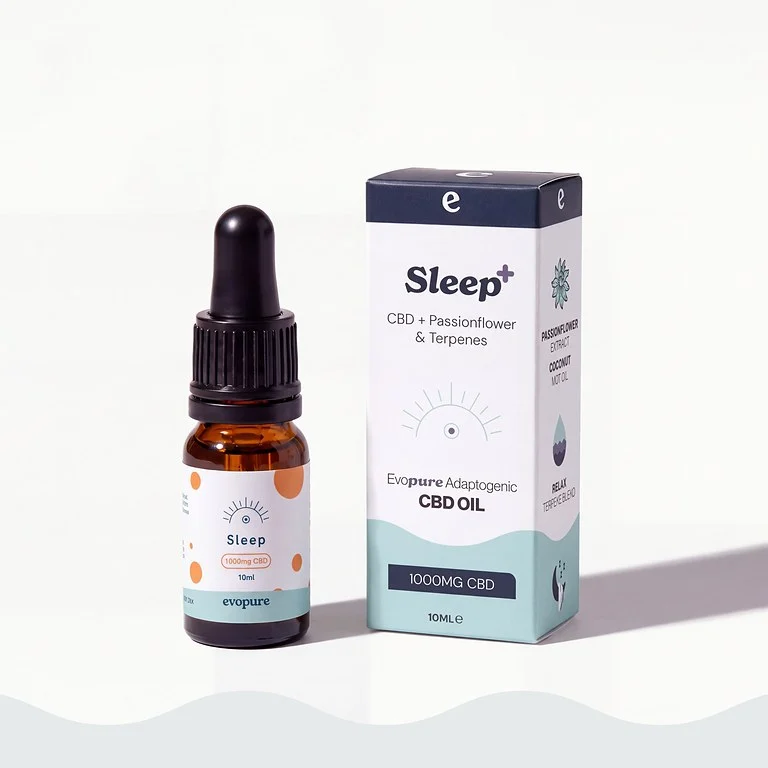
- Sleep CBD Oil is our evening oil: broad spectrum CBD with 70mg of passionflower extract per half pipette. On the 500mg bottle, half a pipette (0.35ml) gives 17.5mg of CBD, and about 0.2ml gives 10mg. CBD isn’t a treatment for insomnia: see CBD for sleep.
- Reishi Mushroom Adaptogenic Complex is a reishi hot chocolate: per 8g serving, 0.5g reishi, 0.5g maca and 0.3g cinnamon with cacao. It contains a little natural caffeine, so have it earlier in the evening.
The FSA’s 10mg a day figure is precautionary advice rather than a legal limit, set while longer-term safety research continues. At Evopure we think it is a very cautious figure, and many adults use more. If you go above it, increase slowly, and check with your GP or pharmacist first if you take any medication.
If you take any regular medicines, check with your GP or pharmacist first. We don’t recommend our products during pregnancy or breastfeeding. All three are vegan, made in the UK and for adults (18+) only. Our CBD oils are on the FSA public list, with batch lab reports on request from our lab testing page.
Sources 9
- NHS. Insomnia.
- NICE. Alpha-Stim AID for anxiety disorders (HTG570), 2021.
- NICE. Sleepio to treat insomnia and insomnia symptoms (MTG70), 2022.
- MHRA. Regulating medical devices in the UK.
- Shekelle PG et al. Benefits and harms of cranial electrical stimulation for chronic painful conditions, depression, anxiety, and insomnia: a systematic review. Annals of Internal Medicine, 2018. PMID 29435567.
- da Silva KM et al. Real-world evaluation of at-home cranial electrotherapy stimulation (CES). Journal of Affective Disorders, 2026. PMID 41365439.
- Ypsilanti A et al. Novel active-feedback device improves sleep quality in insomnia disorder: a randomized placebo-controlled trial. Frontiers in Sleep, 2025. PMID 41425185.
- Vermeylen S et al. Evaluation of a tactile breath pacer for sleep problems: a mixed method pilot study. Frontiers in Digital Health, 2022. PMID 36274653.
- Riedy SM et al. Noise as a sleep aid: a systematic review. Sleep Medicine Reviews, 2021. PMID 33007706.
This guide is general information, not medical advice. Evopure doesn’t make or sell sleep devices. Evopure makes the Magnesium Glycinate Sleep Complex, Sleep CBD Oil and Reishi Mushroom Adaptogenic Complex.