

Last updated: October 2026
Spirulina is a dried blue-green alga (a cyanobacterium) that is more than half protein. Trials suggest it can modestly lower blood pressure and cholesterol, but a typical 3 to 5g dose adds only a little nutrition, its “B12” is mostly an inactive form, and quality varies. Choose tested products, and avoid it with PKU or an autoimmune condition.
Below: what spirulina is, the real nutrition in a daily dose, the B12 myth, what the research shows for each claim, spirulina vs chlorella, contamination, who should avoid it and how much to take.
Quick facts: 5g of dried spirulina has around 15 calories, 2.9g protein and 1.4mg iron. Its vitamin B12 is mostly pseudovitamin B12, which your body can’t use. Trials have mostly used 1 to 8g a day. It isn’t suitable for people with phenylketonuria (PKU), and is best avoided with autoimmune conditions, in pregnancy and for children.
What is spirulina?
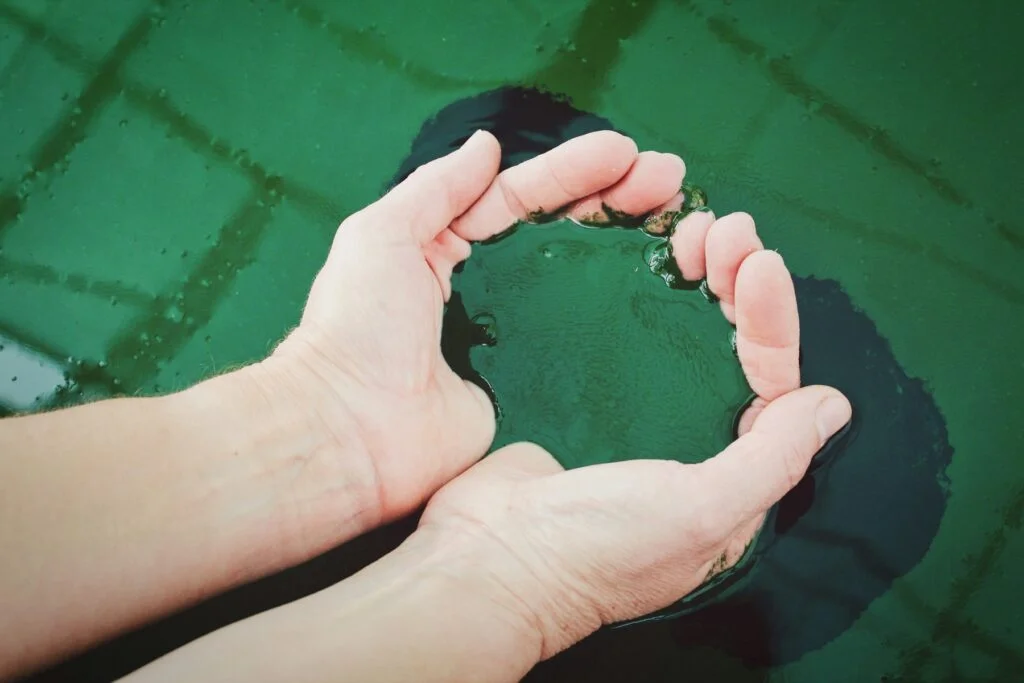
Spirulina isn’t a plant or a seaweed. It’s a cyanobacterium, often called a blue-green alga, from the species Arthrospira platensis and Arthrospira maxima (scientists now also use the name Limnospira). It is farmed, often in open ponds, and sold dried as a powder, tablets or capsules.
“Blue spirulina” is different. It’s phycocyanin, the blue protein pigment extracted from spirulina, and is mainly used as a natural food colouring. It doesn’t carry the full nutrient profile of whole spirulina.
If you’ve come here from our sea moss guide, the two are often sold together, but sea moss is a red seaweed with very different risks (mainly iodine).
Spirulina nutrition per 3g and 5g
Spirulina is often called the most nutrient-dense food on Earth, and per 100g it is impressive: about 57g of protein and 28mg of iron. But nobody eats 100g. These figures are for dried spirulina from the US Department of Agriculture’s FoodData Central database, at the doses people actually take. The last column compares 5g with the reference intakes used on UK food labels.
| Nutrient | Per 3g | Per 5g | 5g vs UK label reference |
|---|---|---|---|
| Energy | 9 kcal | 15 kcal | n/a |
| Protein | 1.7g | 2.9g | 6% of 50g |
| Iron | 0.9mg | 1.4mg | 10% of 14mg |
| Thiamin (B1) | 0.07mg | 0.12mg | 11% of 1.1mg |
| Riboflavin (B2) | 0.11mg | 0.18mg | 13% of 1.4mg |
| Niacin (B3) | 0.38mg | 0.64mg | 4% of 16mg |
| Copper | 0.18mg | 0.31mg | 31% of 1mg |
| Vitamin B12 (active) | 0 | 0 | See below |
Beta-carotene varies widely. France’s food safety agency ANSES estimates that 5g of spirulina can provide 7 to 8.5mg of beta-carotene, which is above the 7mg a day it considers the maximum from supplements. The USDA’s analysed sample contained far less, which shows how much products differ.
The honest take: a few grams of spirulina is a small top-up, not a meal replacement. 2.9g of protein is about 6% of the daily reference intake, and an analysis of 15 microalgae powders found nutrient levels “differ strongly between and within species”, with one spirulina label claiming 60 to 70 times more calcium, magnesium and iron than was actually in the powder.
If you’re low in iron, food and, where needed, prescribed tablets will do far more. See our iron-rich foods list and iron tablets guide.
Does spirulina contain vitamin B12? The vegan myth
Spirulina is still widely sold as a vegan source of B12. It isn’t a reliable one.
Older lab tests used bacteria to measure B12, and those bacteria also respond to B12 look-alikes. When Japanese researchers tested spirulina tablets with a method that only picks up forms humans can use, the bacterial method had overestimated B12 by six to nine times. Of the B12-like compounds that did bind, 83% was pseudovitamin B12, which is inactive in humans, and only 17% was true vitamin B12.
That’s why ANSES says spirulina is not a reliable source of B12 for vegans, and why the USDA database lists its B12 as zero. The NHS advises that vegan sources of B12 are limited and a supplement may be needed, alongside fortified foods such as breakfast cereals, unsweetened soya drinks and yeast extract.
If you’re vegan, take a B12 supplement or eat fortified foods every day. Our vitamin B12 supplements guide covers the best form and dose, and B12 deficiency symptoms covers the warning signs.
Spirulina benefits: evidence by claim
There’s more research on spirulina than on most “superfoods”, but most trials are small, short and run in people with a health condition. Here’s an honest summary.
| Claim | What the research shows | Evidence |
|---|---|---|
| Blood pressure | A 2025 meta-analysis found blood pressure about 4/3 mmHg lower, mainly in people with raised readings. | Moderate |
| Cholesterol | Several reviews show lower LDL and triglycerides, but a stricter 2025 review found no significant effect. | Low to moderate, mixed |
| Blood sugar | Lower fasting glucose in type 2 diabetes trials, but no change in HbA1c. | Low |
| Weight loss | About 1.6kg more weight loss in small trials. Limited effect on body fat. | Low, small effect |
| Energy and fatigue | One small trial in men found less fatigue. A cycling trial found no performance gain. | Very limited |
| Hay fever (allergic rhinitis) | Two small trials reported fewer nasal symptoms. | Low |
| “Detox” | One trial in people with chronic arsenic poisoning. Nothing in healthy people. | None for healthy people |
None of these are approved health claims. The Great Britain nutrition and health claims register (checked October 2026) has no authorised claims for spirulina or chlorella.
Spirulina, cholesterol and blood pressure
Blood pressure is the most consistent finding. A 2025 GRADE-assessed meta-analysis found systolic pressure 4.4 mmHg lower and diastolic 2.8 mmHg lower with spirulina, rated moderate quality. The effect held mainly in people with high blood pressure, people who were overweight, those over 50 and in trials lasting over 8 weeks. An earlier review of 5 trials used doses from 1 to 8g a day.
Cholesterol is less clear than many websites suggest. A 2023 meta-analysis of 20 trials (1,076 people) found lower total and LDL cholesterol and triglycerides, and slightly higher HDL. But a 2025 review of 9 spirulina trials found no significant effect on blood fats, and called the blood pressure effect small and of uncertain clinical importance.
Spirulina is not a substitute for blood pressure or cholesterol medicine. For food-based options with evidence, see our beetroot juice and omega 3 guides.
Spirulina, blood sugar and weight loss
Blood sugar. A 2021 meta-analysis of 8 trials in people with type 2 diabetes found fasting blood glucose about 1 mmol/L lower with spirulina. There was no significant change in HbA1c, the three-month marker doctors use, or in blood sugar after meals. If you have diabetes, talk to your GP before adding any supplement. See also berberine, which has a similar mixed picture.
Weight. A 2019 meta-analysis of 5 trials found people lost about 1.6kg more with spirulina, and a little more if they had obesity. A larger 2025 review of 23 studies found a small effect on weight but concluded its overall impact on body composition is limited. It’s not a fat burner.
Does spirulina give you energy?
It’s the most common reason people buy it, and one of the least tested. In a small trial, men taking 3g a day reported less mental and physical fatigue and did slightly more exercise than on placebo. But in a 2024 crossover trial, 6g a day for 14 days raised haemoglobin by 3.4% without improving any measure of cycling performance, and an 8-week trial in people with ulcerative colitis found no change in fatigue scores.
If you’re tired all the time, the cause matters more than a green powder. Low iron, low B12, poor sleep and thyroid problems are common culprits. Start with why am I always tired? and iron deficiency symptoms, then see our evidence ranking of the best supplements for energy and natural energy boosters.
Spirulina vs chlorella
They’re often sold together, but they’re quite different organisms.
| Spirulina | Chlorella | |
|---|---|---|
| What it is | A cyanobacterium (blue-green alga) | A single-celled green microalga |
| Digestion | Eaten as whole dried powder | A tough cell wall that limits how much your gut can break down |
| Vitamin B12 | Mostly inactive pseudovitamin B12 | Some tablets contain active B12, but levels ranged from under 0.1 to about 415µg per 100g across 19 products |
| Blood pressure and cholesterol | Small fall in diastolic blood pressure | Neutral effect in the same 2025 review |
| Contaminants | Microcystins from other algae in open ponds; metals and medicine residues in some products | Metals and medicine residues in some products |
Neither is a reliable B12 source, because you can’t tell from the label how much active B12 a chlorella product contains. A 2025 study of 52 spirulina and chlorella products found all were within EU limits for toxic metals, but detected residues of medicines, including caffeine and the antibiotic metronidazole, and raised concerns about aluminium. If you want a green boost, matcha and green tea have more human research, and chia seeds give far more fibre per spoonful.
Contamination: microcystins and heavy metals
Spirulina is often farmed in open ponds, where other cyanobacteria can grow alongside it. Some, such as Microcystis, make microcystins, toxins that damage the liver.
- A 2023 study found microcystins in all 5 retail spirulina products tested, at levels that could take consumers over recommended daily limits, plus bacteria such as Bacillus cereus.
- A 2022 Belgian study found microcystins in 9 of 35 algae supplements, with 3 above a proposed limit of 1µg per gram.
- An earlier Italian study of 17 brands found spirulina-only products were clean, while products made from another alga, Aphanizomenon flos-aquae (sold as Klamath or AFA algae), were contaminated, with up to 50-fold differences between batches of the same brand.
ANSES has warned that spirulina can be contaminated by cyanotoxins, bacteria and metals such as lead, mercury and arsenic, has called for a microcystin limit for spirulina supplements, and advises buying only from traceable suppliers. Heavy metals are a second issue: in the analysis of 15 powders, none exceeded EU limits for cadmium, mercury or lead, but one spirulina powder contained 799µg of arsenic per 100g, more than ten times a 70µg guideline used for organic certification.
What to look for: a named manufacturer, a batch number, and a certificate of analysis that includes microcystins and heavy metals. Be wary of blends with AFA or “wild-harvested” algae.
Spirulina side effects and who should avoid it
Good-quality spirulina is generally well tolerated. In 2011 the US Pharmacopeia reviewed trials and 31 adverse event reports and gave spirulina a Class A safety rating. Reported side effects include diarrhoea, bloating, upset stomach, wind, headache and flushing. Rare reports include allergic reactions and muscle or liver damage.
- Phenylketonuria (PKU). Spirulina contains phenylalanine (about 0.14g in 5g) and ANSES advises against it.
- Autoimmune conditions such as lupus, rheumatoid arthritis, MS or pemphigus, and anyone on immunosuppressant medicines, including after a transplant. Doctors have reported flares of autoimmune skin and muscle disease that started after taking spirulina-containing supplements. Ask your specialist first.
- Pregnancy and breastfeeding. There’s no good safety data, and contamination is a bigger concern. Avoid it unless your midwife or GP says otherwise.
- Children. Toxin limits are set per kg of body weight, so a contaminated product is a bigger risk for a small child. Don’t give spirulina to children without a GP’s advice.
- Allergies. ANSES also advises caution for people prone to allergies.
- Liver problems. US liver-injury experts say liver damage from spirulina itself must be very rare, if it happens at all, but microcystin-contaminated products are a known risk. If you have liver disease, check with your doctor.
- Medicines. Lab work suggests spirulina may slow two liver enzymes (CYP1A2 and CYP2E1) that break down some drugs, though the clinical relevance isn’t known. If you take regular medicines, including blood thinners, ask your pharmacist first.
Stop taking it and see a GP if you get yellowing skin or eyes, dark urine, muscle pain or a rash. Call 999 if your lips, tongue or throat swell or you struggle to breathe.
How much spirulina should you take a day?
There’s no official UK amount. Trials have mostly used 1 to 8g a day. ANSES says spirulina doesn’t seem to pose a health risk at low doses, with studies in adults using up to several grams a day.
- Start with 1g a day (weigh it or use the scoop provided) and build up to 3g over a week or two if your stomach is happy.
- Don’t go above 5g a day. At that dose, beta-carotene alone may exceed the 7mg ANSES considers the maximum from supplements.
- Count grams, not tablets. Tablet sizes vary, so check the label.
- There’s no evidence that timing matters. Take it with food if it upsets your stomach, and stir powder into a smoothie, yoghurt or juice to soften the taste.
If you’re comparing all-in-one options, see our guide to multivitamins, which give measured doses of the nutrients spirulina only offers in small, variable amounts.
Where our range fits
We don’t sell spirulina. If tiredness is why you’re looking, our Magnesium Glycinate Sleep Complex is a berry-flavoured evening drink with magnesium bisglycinate and citrate (148mg magnesium per serving), glycine and L-theanine. Magnesium contributes to a reduction of tiredness and fatigue. See magnesium for energy.
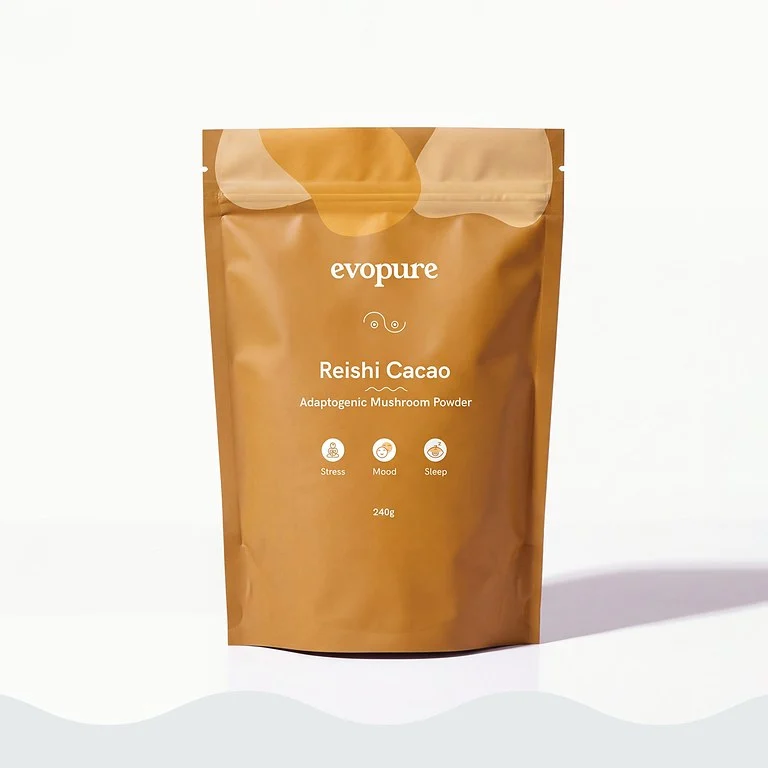
Our Reishi Mushroom Adaptogenic Complex is a reishi hot chocolate powder made with reishi mushroom extract, cacao, maca and coconut milk powder. Cacao naturally contains a little caffeine. Read more about reishi and healthy hot chocolate.
Both are vegan, made in the UK and for adults only. We don’t recommend our products during pregnancy or breastfeeding.
FAQs
What does spirulina do for your body?
Spirulina adds a little protein, iron, copper and some B vitamins. Trials suggest it can modestly lower blood pressure, and possibly cholesterol and fasting blood sugar, but most studies are small and short. At 3 to 5g a day the nutritional contribution is modest.
Is it safe to take spirulina every day?
For most healthy adults, a few grams a day of a tested, good-quality product appears safe, and trials have used up to 8g a day for weeks to months. Avoid it if you have PKU, and check with a doctor if you have an autoimmune condition, liver disease, take regular medicines, or are pregnant or breastfeeding.
Is spirulina a good source of vitamin B12 for vegans?
No. Most of the B12 in spirulina is pseudovitamin B12, which is inactive in humans. Vegans should rely on a B12 supplement or fortified foods, as the NHS advises.
Which is better, spirulina or chlorella?
Neither is clearly better. Spirulina has more research on blood pressure, while chlorella showed a neutral effect on blood pressure and cholesterol in a 2025 review. Chlorella has a tough cell wall, and its active B12 content varies hugely between products.
Does spirulina help you lose weight?
Only slightly. A 2019 review of small trials found about 1.6kg more weight loss, and a 2025 review concluded its effect on body composition is limited. It works best, if at all, alongside diet and exercise.
Is spirulina bad for your liver?
Liver injury from spirulina itself appears very rare. The bigger risk is contamination with microcystins, liver toxins made by other algae that can grow in the same ponds. Buy from a traceable supplier that tests for microcystins.
What is blue spirulina?
Blue spirulina is phycocyanin, the blue pigment extracted from spirulina. It’s mainly used as a natural food colouring and doesn’t contain the full range of nutrients found in whole spirulina.
Sources
- US Department of Agriculture. FoodData Central (SR Legacy entry 170495, seaweed, spirulina, dried). Retained Regulation (EU) No 1169/2011. Annex XIII: reference intakes. DHSC. Great Britain nutrition and health claims register.
- ANSES (2017). Food supplements containing spirulina: the importance of choosing trustworthy supply channels. NHS. The vegan diet.
- Watanabe F et al (1999). Pseudovitamin B12 is the predominant cobamide of an algal health food, spirulina tablets. Bito T et al (2016). Characterization and quantitation of vitamin B12 compounds in various Chlorella supplements.
- Shiri H et al (2025). The effect of spirulina supplementation on blood pressure in adults: a GRADE-assessed systematic review and meta-analysis. Machowiec P et al (2021). Effect of spirulina supplementation on systolic and diastolic blood pressure.
- Rahnama I et al (2023). The effect of spirulina supplementation on lipid profile: GRADE-assessed systematic review and dose-response meta-analysis. Pinto-Leite M et al (2025). The role of Chlorella and Spirulina as adjuvants of cardiovascular risk factor control.
- Hatami E et al (2021). The effect of spirulina on type 2 diabetes: a systematic review and meta-analysis. Moradi S et al (2019). Effects of spirulina supplementation on obesity. Fu Z et al (2025). Effects of spirulina supplementation alone or with exercise on cardiometabolic health in overweight and obese adults.
- Johnson M et al (2016). Spirulina supplementation on indices of mental and physical fatigue in men. Ali Y et al (2024). Fourteen-days spirulina supplementation increases hemoglobin, but does not provide ergogenic benefit. Moradi S et al (2021). Spirulina supplementation in patients with ulcerative colitis.
- Cingi C et al (2008). The effects of spirulina on allergic rhinitis. Nourollahian M et al (2020). Clinical comparison of spirulina platensis and cetirizine for allergic rhinitis. Misbahuddin M et al (2006). Spirulina extract plus zinc in patients of chronic arsenic poisoning.
- Rhoades J et al (2023). Microbiota and cyanotoxin content of retail spirulina supplements. Van Hassel WHR et al (2022). Cyanotoxins in algal food supplements from the Belgium market. Vichi S et al (2012). Contamination by Microcystis and microcystins of blue-green algae food supplements on the Italian market. Sandgruber F et al (2021). Variability in macro- and micronutrients of 15 commercially available microalgae powders. Sochacka M et al (2025). Spirulina and Chlorella dietary supplements: are they a source solely of valuable nutrients?
- Marles RJ et al (2011). United States Pharmacopeia safety evaluation of spirulina. LiverTox. Spirulina. LactMed. Spirulina. Lee AN, Werth VP (2004). Activation of autoimmunity following use of immunostimulatory herbal supplements. Memorial Sloan Kettering. Blue-green algae.
- Lopes PA et al (2022). A lab protocol to disrupt Chlorella vulgaris cell wall. D’Ascoli M et al (2025). Phycocyanin extraction from Limnospira spp.: natural blue color for the food industry.
This guide is general information, not medical advice. If you have PKU, an autoimmune or liver condition, diabetes or high blood pressure, are pregnant or breastfeeding, or take regular medicines, speak to your GP or pharmacist before taking spirulina. Evopure makes the Magnesium Glycinate Sleep Complex and the Reishi Mushroom Adaptogenic Complex. We don’t sell spirulina or chlorella.