
Last updated: October 2026
Dark chocolate’s best-supported benefit is a small drop in blood pressure from cocoa flavanols, about 2mmHg in short trials. Links with lower type 2 diabetes risk and better mood come mainly from observational studies. It also provides magnesium, iron and fibre, but it’s high in calories and sugar, so a small portion of 70% or more works best.
Below: the evidence claim by claim, how much to eat, how to choose a bar, dark vs milk chocolate in numbers, caffeine, heavy metals and who should be careful (including your dog).
Dark chocolate in 30 seconds: 25g of 70 to 85% dark chocolate has about 150 calories, 6g of sugar, 57mg of magnesium and around 20mg of caffeine. Enjoy a small portion as a treat rather than a health food. Never share it with dogs: the theobromine in dark chocolate is toxic to them.
What’s in dark chocolate?
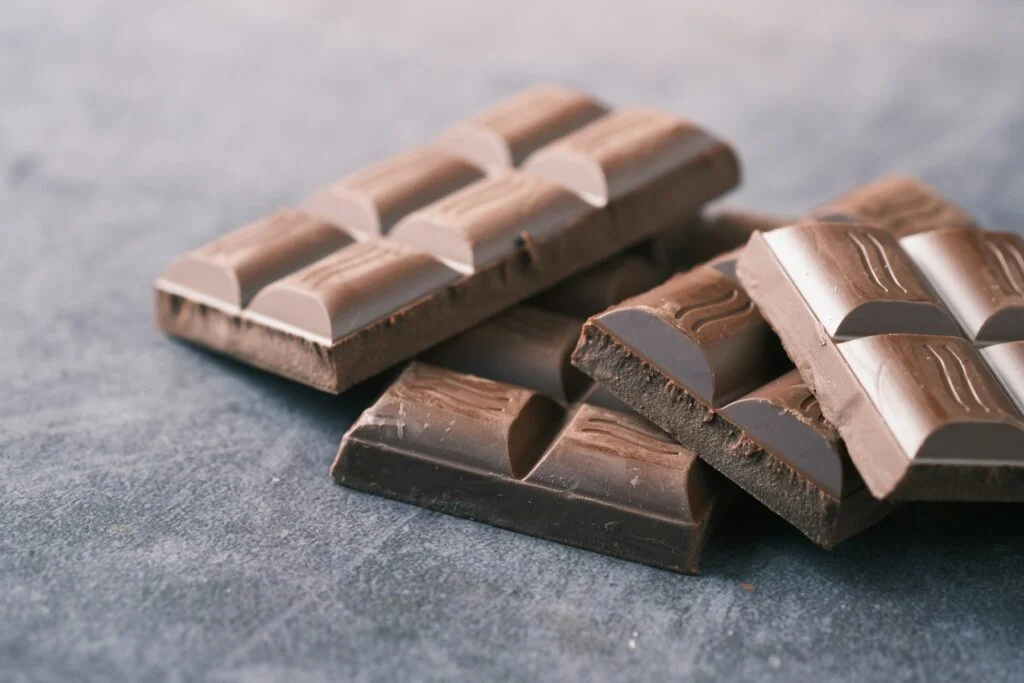
Dark chocolate is made from cocoa solids, cocoa butter and sugar, usually with no milk. The percentage on the wrapper is the total cocoa content (solids plus butter), and the rest is mostly sugar. Four things matter for your health:
- Flavanols. Plant compounds in the cocoa bean, including epicatechin. Most of the heart research is about these.
- Theobromine and caffeine. Two related stimulants. Dark chocolate has far more theobromine than caffeine.
- Minerals and fibre. Per 100g, 70 to 85% dark chocolate contains about 228mg of magnesium, 11.9mg of iron and 10.9g of fibre in US lab data.
- Fat, sugar and calories. The same 100g has about 598 calories, 43g of fat (24g saturated) and 24g of sugar.
That magnesium figure is why chocolate cravings and magnesium often get linked online. A 25g portion gives about 57mg, roughly a fifth of the 270mg a day the NHS says women need (300mg for men). Nuts, seeds, beans and leafy greens give you magnesium without the sugar; see our UK list of foods high in magnesium and signs of magnesium deficiency.
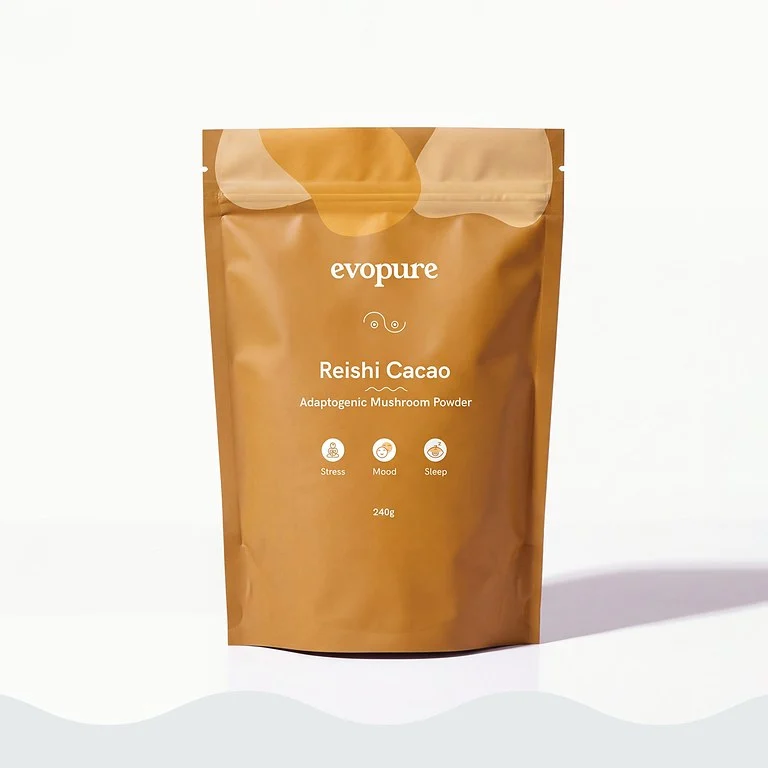
If you’re topping up with a supplement, our Magnesium Glycinate Sleep Complex provides 148mg of elemental magnesium per serving from magnesium bisglycinate and citrate, with L-theanine and botanicals. Magnesium contributes to a reduction of tiredness and fatigue. And if it’s the comfort of chocolate you’re after in the evening, our Reishi Mushroom Adaptogenic Complex is a warm cacao drink made with reishi mushroom extract, organic cacao, maca, coconut milk powder and coconut sugar. It’s vegan and made in the UK. Cacao contains a little natural caffeine, so it isn’t caffeine-free.
Dark chocolate benefits: evidence by claim
Much of the hype comes from small, short trials, often of specially made high-flavanol cocoa drinks or capsules rather than shop-bought bars, and some funded by the cocoa industry. Here’s an honest summary.
| Claim | What the research shows | Strength |
|---|---|---|
| Blood pressure | About 2mmHg lower in trials lasting 2 to 18 weeks, mainly in healthy adults | Moderate, short-term |
| Heart attacks and strokes | A large 3.6-year trial of cocoa extract found no significant drop in total cardiovascular events | Not proven |
| Blood sugar and type 2 diabetes | Insulin resistance improved in short trials; regular dark chocolate eaters had lower diabetes risk in US cohorts | Promising, mostly observational |
| Mood | Dark chocolate eaters reported fewer depressive symptoms in one large survey | Weak, cause unclear |
| Brain and memory | Benefits in a small trial of older adults with mild memory problems; no effect in a large three-year trial | Mixed |
| Skin | Less UV redness after 12 weeks of a high-flavanol cocoa drink in one small trial | Early |
Heart health and blood pressure
A Cochrane review pooled 35 trials with 1,804 mainly healthy adults who had flavanol-rich chocolate or cocoa for two to 18 weeks. Blood pressure fell by about 2mmHg on average compared with low-flavanol products, a small effect. The trials used anywhere from 30 to 1,218mg of flavanols a day. Short trials also show better blood vessel widening (flow-mediated dilatation) after cocoa.
The biggest test so far, COSMOS, gave 21,442 older US adults a cocoa extract with 500mg of flavanols a day, or a placebo, for a median of 3.6 years. Total cardiovascular events were 10% lower, but that wasn’t statistically significant. Deaths from cardiovascular disease were lower, a secondary finding that needs confirming. Remember these were capsules, with no sugar or calories attached.
The official GB health claim for cocoa flavanols
In Great Britain, only one health claim is authorised for cocoa: “Cocoa flavanols help maintain the elasticity of blood vessels, which contributes to normal blood flow.” It can be used only for cocoa drinks or dark chocolate that provide at least 200mg of cocoa flavanols a day, and the label must say so. Most chocolate isn’t tested or labelled for flavanols, so you can’t assume an ordinary bar reaches that amount.
Blood sugar and type 2 diabetes
A review of 42 short trials found chocolate or cocoa improved insulin resistance, mostly by lowering insulin levels. In three large US cohorts followed for decades, people eating five or more servings of dark chocolate a week had a 21% lower risk of type 2 diabetes than those who rarely ate it. Milk chocolate showed no such link and was associated with weight gain. These are associations, and dark chocolate eaters may differ in other ways. If you have diabetes, chocolate still counts towards your carbohydrate and sugar intake.
Mood
In a survey of 13,626 US adults, the few who reported dark chocolate in two 24-hour food recalls had lower odds of clinically relevant depressive symptoms. It was a single snapshot, so it can’t show whether chocolate lifts mood or happier people simply eat it. Chocolate isn’t a treatment for depression. For what does help, see low mood vs depression, food and mood and how to boost serotonin and dopamine naturally.
Brain and memory
An eight-week Italian trial in 90 older adults with mild cognitive impairment found those given a high or medium flavanol cocoa drink did better on some thinking tests than the low-flavanol group. But COSMOS-Mind, which gave 2,262 older adults cocoa extract (500mg of flavanols a day) for three years, found no effect on overall thinking. For foods with better evidence, see brain foods.
Skin
In one small German trial, women drank a high-flavanol cocoa drink (326mg of flavanols a day) or a low-flavanol version for 12 weeks. Skin redness after UV light was 25% lower in the high-flavanol group, with better hydration and less roughness. It used a special drink, not chocolate. Chocolate is no substitute for sunscreen.
How much dark chocolate should you eat a day?
There’s no official UK amount. The NHS counts chocolate among the free-sugar foods most of us should cut down on, and adults should have no more than 30g of free sugars a day. A small portion of around 20 to 30g of 70% or darker chocolate fits a balanced diet without many calories:
- 25g of 70 to 85% is about 150 calories and 6g of sugar, a fifth of the daily free sugar limit.
- Trials used 1.4 to 105g of cocoa products a day, and many used high-flavanol drinks you can’t buy in a shop, so there’s no proven “dose” of chocolate.
- Timing: because of the caffeine and theobromine, earlier in the day suits light sleepers better than straight after dinner. See eating before bed.
If you find a couple of squares turns into the whole bar, our guides to sugar cravings and emotional eating may help.
70%, 85% or 90%? How to choose a healthier dark chocolate
A higher percentage means more cocoa and less sugar. But flavanols sit in the non-fat cocoa solids, not the cocoa butter, and a US survey found non-fat cocoa solids were the main factor behind how many polyphenols and antioxidants a product had. Processing matters too: in natural cocoa powders, flavanols averaged 34.6mg per gram, against just 3.9mg per gram in heavily alkalised (“Dutch processed”) powders.
- Pick 70% or higher. Sugar falls from about 48g per 100g at 45 to 59% cocoa to 24g at 70 to 85%.
- Read the ingredients. They’re listed in order of weight, so cocoa mass or cocoa solids should come first and sugar further down.
- Look for “processed with alkali”. It usually means less flavanol and a milder taste.
- Keep it simple. Caramel, biscuit and fondant fillings add sugar and calories.
- Start at 70% and work up if 85% or 90% tastes too bitter at first.
Prefer your cocoa in a mug? See healthy hot chocolate for a lower-sugar recipe, ceremonial cacao for the less processed option, and reishi cacao benefits for how mushrooms and cacao pair up.
Dark vs milk chocolate: what’s the difference?
Gram for gram, 70 to 85% dark chocolate has a few more calories and more fat than milk chocolate, but less than half the sugar and three to five times the magnesium, iron and fibre. Figures for a 25g portion, from US Department of Agriculture lab data:
| Per 25g | Dark 70 to 85% | Dark 45 to 59% | Milk chocolate |
|---|---|---|---|
| Calories | 150 | 137 | 134 |
| Sugar | 6g | 12g | 12.9g |
| Saturated fat | 6.1g | 4.6g | 4.6g |
| Fibre | 2.7g | 1.8g | 0.9g |
| Magnesium | 57mg | 37mg | 16mg |
| Iron | 3mg | 2mg | 0.6mg |
| Caffeine | 20mg | 11mg | 5mg |
| Theobromine | 200mg | 123mg | 51mg |
Bars vary by brand and recipe, so check the label. White chocolate contains cocoa butter but no cocoa solids, so it has no flavanols, theobromine or meaningful caffeine.
Does dark chocolate have caffeine?
Yes, a little. The NHS uses less than 25mg of caffeine for a 50g bar of plain dark chocolate and less than 10mg for the same size of milk chocolate, against 75mg in a cup of tea and 100mg in a cup of instant coffee. Very dark bars can have more: in US lab data, 70 to 85% chocolate averaged 80mg per 100g, so 50g would be about 40mg.
Dark chocolate also has around ten times as much theobromine as caffeine (about 200mg in 25g of 70 to 85%). Theobromine is a similar substance to caffeine, and together they’re why a big bar late at night can keep some people awake. EFSA says single doses of 100mg of caffeine close to bedtime may affect sleep in some adults, and up to 400mg a day from all sources is fine for most healthy adults.
For how long caffeine stays in your system, see how long caffeine lasts. If it leaves you jittery, read does caffeine cause anxiety?
Lead and cadmium in dark chocolate: should you worry?
Cocoa can carry traces of heavy metals, and a US study tested 72 dark chocolate and cocoa products bought between 2014 and 2022. Measured against California’s very strict daily limits, 43% of products exceeded the lead level and 35% the cadmium level per serving, though median levels were below those limits. Nearly all (70 of 72) were within US federal guidance levels for lead, and products labelled organic were more likely to be higher in both metals.
The UK picture is more reassuring. GB law caps cadmium in chocolate by cocoa content: 0.30mg/kg below 50% cocoa solids and 0.80mg/kg at 50% or more. Food Standards Scotland reported that all 31 dark chocolate samples taken by local councils between 2013 and 2025 were satisfactory for cadmium. There’s no legal limit for lead in chocolate, but the 28 samples tested for it had between zero and 0.08mg/kg, judged satisfactory.
Sensible steps: keep to a small portion rather than a whole bar a day, vary your brands, and go easier on cocoa powder smoothies and dark chocolate snacks for young children.
Dark chocolate side effects and who should be careful
- Pregnancy. The NHS advises no more than 200mg of caffeine a day, from all sources. A 50g bar of dark chocolate fits, but count tea, coffee and cola too. We don’t recommend our products during pregnancy or breastfeeding.
- Heartburn and reflux. The NHS lists chocolate among foods that can cause or worsen heartburn. If it bothers you, avoid it in the evening; see acid reflux at night.
- Weight and blood sugar. 25g is about 150 calories, and it counts towards your carbohydrate intake if you have diabetes.
- Dogs and other pets. PDSA warns that theobromine is toxic to dogs, cats and rabbits, and the darker the chocolate, the more dangerous it is. Cocoa powder is worst. If your dog eats chocolate, keep the wrapper and call your vet straight away; don’t wait for symptoms.
If you take regular medication and eat a lot of chocolate or cocoa, ask your pharmacist whether the caffeine could matter.
FAQs
Is dark chocolate good for you?
In small amounts, it can be part of a healthy diet. Its flavanols lowered blood pressure slightly in trials, and it provides magnesium, iron and fibre. It’s still high in calories, fat and sugar, so treat it as a treat, not a health food.
How much dark chocolate should I eat a day?
There’s no official amount. Around 20 to 30g of 70% or darker chocolate is a sensible portion. 25g of 70 to 85% chocolate has about 150 calories and 6g of sugar.
Is 70% or 85% dark chocolate better?
85% has less sugar and usually more cocoa solids, so it’s the better choice if you enjoy the taste. 70% is a good starting point. Avoid bars “processed with alkali” if you’re after flavanols.
Does dark chocolate have caffeine?
Yes. The NHS uses less than 25mg for a 50g bar of plain dark chocolate, though very dark bars can contain more. It also contains theobromine, a related stimulant.
Is dark chocolate good for weight loss?
No food causes weight loss on its own, and dark chocolate is calorie-dense. In large US cohorts, eating more milk chocolate was linked with weight gain, while dark chocolate wasn’t. Keep portions small.
Is dark chocolate high in magnesium?
Yes, for a sweet food. 25g of 70 to 85% dark chocolate has about 57mg, roughly a fifth of a woman’s daily need. Nuts, seeds and greens give magnesium without the sugar.
Can I eat dark chocolate when pregnant?
Yes, in moderation. The NHS advises no more than 200mg of caffeine a day in pregnancy, and a 50g bar of plain dark chocolate has less than 25mg. Count it alongside tea, coffee and cola.
Sources
- NHS. Foods to avoid in pregnancy (caffeine).
- NHS. Vitamins and minerals: magnesium.
- NHS. Sugar: the facts.
- NHS. How to read food labels.
- NHS. Heartburn and acid reflux.
- EFSA. Caffeine.
- Department of Health and Social Care. Great Britain nutrition and health claims (NHC) register.
- Food Standards Scotland. Levels of lead and cadmium in supermarket chocolate products.
- PDSA. Chocolate poisoning in dogs.
- US Department of Agriculture. FoodData Central: chocolate, dark, 70 to 85% cacao solids (FDC ID 170273); dark, 45 to 59% (170271); milk chocolate (167587).
- Ried K et al. (2017). Effect of cocoa on blood pressure. Cochrane Database Syst Rev.
- Hooper L et al. (2012). Effects of chocolate, cocoa, and flavan-3-ols on cardiovascular health. Am J Clin Nutr.
- Sesso HD et al. (2022). Effect of cocoa flavanol supplementation for the prevention of cardiovascular disease events: the COSMOS trial. Am J Clin Nutr.
- Liu B et al. (2024). Chocolate intake and risk of type 2 diabetes: prospective cohort studies. BMJ.
- Jackson SE et al. (2019). Is there a relationship between chocolate consumption and symptoms of depression? Depress Anxiety.
- Desideri G et al. (2012). Cocoa flavanol consumption in elderly subjects with mild cognitive impairment: the CoCoA study. Hypertension.
- Baker LD et al. (2023). Effects of cocoa extract and a multivitamin on cognitive function (COSMOS-Mind). Alzheimers Dement.
- Heinrich U et al. (2006). Long-term ingestion of high flavanol cocoa provides photoprotection against UV-induced erythema. J Nutr.
- Miller KB et al. (2006). Antioxidant activity and polyphenol and procyanidin contents of commercially available cocoa and chocolate products. J Agric Food Chem.
- Miller KB et al. (2008). Impact of alkalization on the antioxidant and flavanol content of commercial cocoa powders. J Agric Food Chem.
- Hands JM et al. (2024). A multi-year heavy metal analysis of 72 dark chocolate and cocoa products in the USA. Front Nutr.
This guide is general information, not medical advice. Evopure makes the Reishi Mushroom Adaptogenic Complex and the Magnesium Glycinate Sleep Complex.