Last updated: October 2026
Vitamin C is a water-soluble vitamin your body can’t store, so you need some every day. The NHS says adults aged 19 to 64 need 40mg a day, which most people get easily from food: two kiwi fruit or an 80g portion of red pepper covers it. Taking more than 1,000mg a day can upset your stomach.
Below: what vitamin C does, how much you need, the best UK food sources per portion, whether it helps colds, vitamin C and iron, deficiency and scurvy, how much is too much, and the best time to take it.
40mg or 80mg? The NHS figure of 40mg a day is what adults need. The 80mg you see on food and supplement labels is the nutrient reference value (NRV), a single labelling figure used to work out the “% NRV” on packs. Neither is a target to beat, and far higher doses are not better.
What does vitamin C do?
Vitamin C, also called ascorbic acid, is found mainly in fruit and vegetables, and a long-term lack of it leads to scurvy. It has more authorised health claims than most nutrients.
These are the authorised health claims for vitamin C in Great Britain, worded as they appear on the government register:
- Vitamin C contributes to the normal function of the immune system.
- Vitamin C contributes to the reduction of tiredness and fatigue.
- Vitamin C contributes to normal collagen formation for the normal function of skin, blood vessels, bones, cartilage, gums and teeth.
- Vitamin C contributes to normal energy-yielding metabolism.
- Vitamin C contributes to normal psychological function.
- Vitamin C contributes to normal functioning of the nervous system.
- Vitamin C contributes to the protection of cells from oxidative stress.
- Vitamin C contributes to the regeneration of the reduced form of vitamin E.
- Vitamin C increases iron absorption.
The key word is “normal”: getting enough keeps these systems working as they should, but extra on top of an adequate diet won’t supercharge them. If you feel run down all the time, see why am I always tired? and why you feel more tired in winter.
Vitamin C for skin
Collagen gives skin, gums and blood vessels their structure, and your body needs vitamin C to make it. That’s why bleeding gums and easy bruising are signs of scurvy. Face serums are a separate skincare topic; eating more vitamin C than you need won’t give you extra collagen.
How much vitamin C do you need a day?
The NHS says adults aged 19 to 64 need 40mg of vitamin C a day, men and women alike, and that you should be able to get it all from your diet. It can’t be stored in the body, so you need some every day.
Some people need a little more or find it harder to get enough:
- Smokers. The NHS notes that smoking reduces how much vitamin C your body gets from food.
- Pregnancy and breastfeeding. The body needs more vitamin C at these times. Speak to your GP or midwife before taking any supplement.
- People who eat very little, for example during treatment that causes sickness, with an eating disorder, or with an alcohol or drug dependency.
- Older people who find it hard to shop for or eat fresh food.
Best food sources of vitamin C (UK portions)
The NHS lists citrus fruit and orange juice, peppers, strawberries, blackcurrants, broccoli, Brussels sprouts and potatoes as good sources. The figures below are worked out from the UK government’s food composition data (McCance and Widdowson’s), using the NHS 5 A Day adult portion of 80g unless stated. Fruit figures are for the edible flesh.
| Food | Portion | Vitamin C (approx) |
|---|---|---|
| Blackcurrants, raw | 80g | 160mg |
| Red pepper, raw | 80g | 101mg |
| Yellow pepper, raw | 80g | 97mg |
| Spring greens, boiled | 80g (4 heaped tablespoons) | 62mg |
| Orange juice, chilled | 150ml small glass | 60mg |
| Kiwi fruit | 80g (2 kiwi fruit) | 57mg |
| Papaya | 80g (1 slice) | 54mg |
| Broccoli, steamed | 80g (2 spears) | 48mg |
| Strawberries | 80g (7 strawberries) | 46mg |
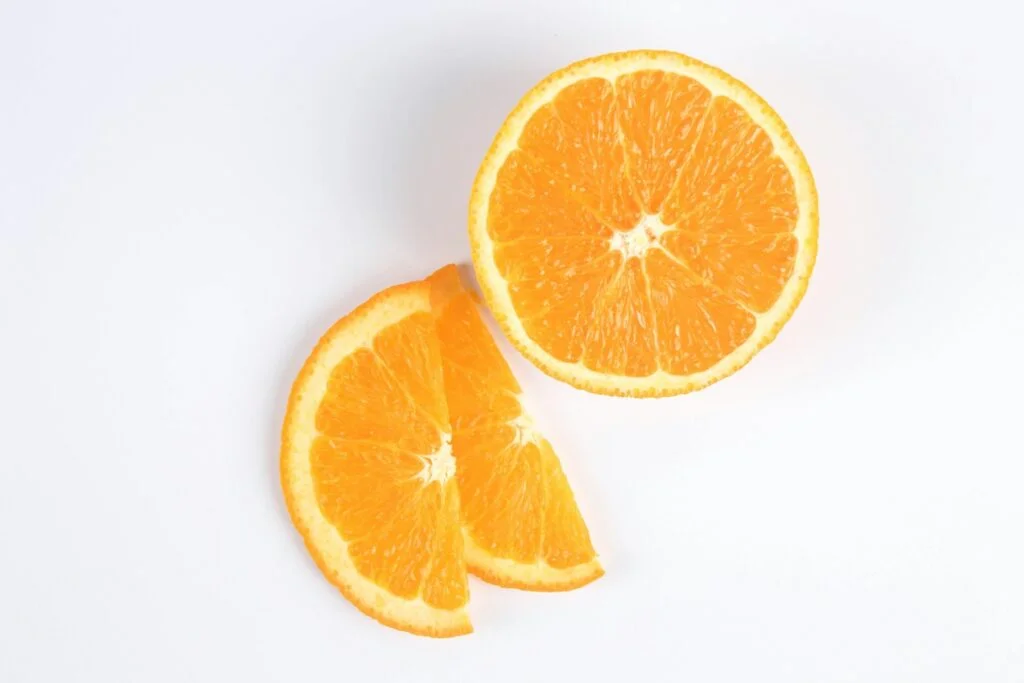
| Orange | 80g | 42mg |
| Pineapple | 80g (1 large slice) | 42mg |
| Satsumas and clementines | 80g (2 satsumas) | 34mg |
| Brussels sprouts, boiled | 80g | 32mg |
| Cauliflower, boiled | 80g (8 florets) | 24mg |
| Mango, ripe | 80g (2 slices) | 21mg |
| Tomato, raw | 80g (1 medium tomato) | 18mg |
| Peas, frozen, boiled | 80g (3 heaped tablespoons) | 10mg |
| Potatoes, boiled | 100g | 9mg |
Real amounts vary with variety, ripeness and storage, so treat these as a guide. The NHS counts one medium orange, or two satsumas, as a portion.
Kiwi is an easy win, and it has had attention for sleep too: see kiwi for sleep. Fruit and veg also bring fibre for your gut health.
Cooking cuts vitamin C
Vitamin C dissolves in water and breaks down with heat. The same UK data shows how much is lost: raw broccoli has about 79mg per 100g, steamed broccoli 60mg and boiled broccoli 44mg. Raw Brussels sprouts have about 115mg per 100g, boiled ones about 40mg. To keep more of it:
- Eat some fruit and veg raw, such as peppers, tomatoes and berries.
- Steam or microwave vegetables rather than boiling them, and don’t overcook.
- Use as little water as you can, and cook veg just before you eat it.
- Frozen fruit and veg still count and are handy in winter.
Does vitamin C help colds?
Not in the way most people hope. The best summary of the evidence is a Cochrane review of placebo-controlled trials that used at least 200mg of vitamin C a day.
- Prevention: in 29 trial comparisons with 11,306 people, taking vitamin C every day did not reduce how often people caught colds in the general population.
- The exception: in five trials with 598 marathon runners, skiers and soldiers on subarctic exercises, people taking vitamin C had about half the risk of a cold.
- Duration: in people already taking it regularly, colds were about 8% shorter in adults and 14% shorter in children. For a week-long cold, 8% is roughly half a day.
- Starting when you feel ill: taking vitamin C once a cold had started showed no consistent effect on how long it lasted or how bad it was.
The reviewers concluded routine vitamin C supplements aren’t justified to prevent colds in the general population, though people could test for themselves whether it helps, as it’s cheap and safe at sensible doses.
What does help is rest, fluids and time. See cold or flu: how to tell the difference, how to sleep with a cold and what actually supports your immune system.
Vitamin C and iron absorption
This is one of vitamin C’s most useful jobs, and an authorised claim: vitamin C increases iron absorption. It matters most for the non-haem iron in plant foods such as beans, lentils, fortified cereals and dark green vegetables, which the body absorbs less well than the haem iron in meat and fish.
Researchers think vitamin C works in two ways: it stops iron forming compounds your gut can’t absorb, and it converts iron into the form gut cells take up more easily. The NHS also says drinking orange juice after taking an iron tablet may help your body absorb the iron.
How to pair vitamin C with iron
- Have the vitamin C in the same meal as the iron: orange juice with fortified cereal, or peppers in a bean chilli.
- Keep tea and coffee away from iron-rich meals: the NHS says large amounts make iron harder to absorb.
See our full lists of iron-rich foods and the signs of iron deficiency. If you think you’re low in iron, ask your GP for a blood test before taking iron tablets.
Haemochromatosis: if you have this condition, where the body absorbs too much iron, the NHS advises avoiding iron and vitamin C supplements, as they may be harmful for people with high iron levels. The NHS still advises eating a healthy, balanced diet.
Vitamin C deficiency and scurvy
Scurvy is severe vitamin C deficiency. The NHS says it’s rare in the UK because most people get enough vitamin C in their diet, and even people who don’t eat very healthily all the time aren’t usually at risk. It happens after a long period with very little fruit or veg.
Symptoms of scurvy can include:
- feeling very tired and weak all the time
- feeling irritable and sad all the time
- joint, muscle or leg pain
- swollen, bleeding gums, and sometimes teeth falling out
- red or blue spots on the skin, usually on the legs and feet (less noticeable on brown or black skin)
- skin that bruises easily, and wounds that heal slowly or reopen
Tiredness on its own is not a sign of scurvy. See a GP if you’re in an at-risk group and have these symptoms, and contact NHS 111 or ask for an urgent appointment if you have easy bruising, bleeding gums, joint swelling, a high temperature or yellowing skin or eyes.
Scurvy is usually easy to treat. The NHS says mild cases often improve by adding vitamin C to your diet, a GP may recommend supplements for a while, and most people feel better within days.
How much vitamin C is too much?
The NHS says taking more than 1,000mg of vitamin C a day can cause stomach pain, diarrhoea and flatulence, and that these symptoms should go once you stop the supplements. The Department of Health and Social Care advice is that less than 1,000mg a day from supplements is unlikely to cause any harm.
Big doses are also wasteful. In a hospital study of healthy volunteers, a single 200mg dose was fully absorbed, but at single doses of 500mg and above, less was absorbed and the extra was passed in urine. The researchers found no evident value in daily doses above 400mg. Many 1,000mg tablets give you around 25 times what an adult needs.
Safety: who should be careful
- Kidney stones. In a US study of about 197,000 people followed for over 11 years, men taking 1,000mg or more of vitamin C supplements a day had about a 19% higher risk of kidney stones. There was no link in women, and no link with vitamin C from food. If you’ve had kidney stones or have kidney disease, check with your GP first.
- Haemochromatosis or high iron. Avoid vitamin C supplements, as the NHS advises (see above).
- Medicines and treatment. If you take regular medication, or are having cancer treatment, ask your GP or pharmacist before starting a vitamin C supplement, especially at high doses.
- Pregnancy and breastfeeding. Speak to your GP or midwife before taking any supplement.
Check labels too: vitamin C turns up in multivitamins, fizzy cold drinks and immune blends, so the total adds up.
Do you need a vitamin C supplement?
For most people, no. The NHS says you should be able to get all the vitamin C you need from a varied and balanced diet. Two portions from the table above usually cover it.
A supplement may be worth discussing with a GP or pharmacist if you eat very little fruit and veg, have a restricted diet because of illness or treatment, or have been told you’re low. If you do take one, a modest dose is plenty; large doses are poorly absorbed and above 1,000mg a day you risk stomach upsets.
The winter vitamin the NHS does recommend: vitamin D
Vitamin C is easy to get from food in winter, but vitamin D isn’t. The NHS says that between October and early March we don’t make enough vitamin D from sunlight, and everyone should consider taking a daily supplement containing 10 micrograms of vitamin D during autumn and winter. See vitamin D in winter, the best time to take vitamin D and winter wellness.
If you already use CBD oil, our Evolabs Mint CBD Oil with vitamin D3 adds 5 micrograms of vegan, algae-based vitamin D3 per half pipette to broad spectrum CBD. Vitamin D contributes to the normal function of the immune system. It does not contain vitamin C, the CBD itself has no authorised health claims, and we don’t claim it supports your immunity. Read why we added algae-based D3 to our mint oil.
The FSA’s 10mg a day figure is precautionary advice rather than a legal limit, set while longer-term safety research continues. At Evopure we think it is a very cautious figure, and many adults use more. If you go above it, increase slowly, and check with your GP or pharmacist first if you take any medication.
Our Magnesium Glycinate Sleep Complex is a caffeine-free evening drink; magnesium contributes to the reduction of tiredness and fatigue. It doesn’t contain vitamin C either. See the best supplements for energy.
Our products are for adults (18+) only. We don’t recommend our products during pregnancy or breastfeeding.
Best time to take vitamin C
There’s no best time of day. Vitamin C is water-soluble, so there’s no need to take it with a fatty meal. What matters more is how you take it:
- With an iron-rich meal if you want the iron benefit. Vitamin C helps the iron in the same meal, not food you eat hours later.
- With food if supplements upset your stomach.
- Little and often if you take more than about 200mg. Smaller amounts are absorbed better than one big dose.
- From food first. A piece of fruit at breakfast and veg with your evening meal spreads your vitamin C across the day naturally.
Zinc lozenges are the other classic cold remedy: see what the evidence says about zinc for colds.
FAQs
How much vitamin C do I need a day in the UK?
The NHS says adults aged 19 to 64 need 40mg a day, and that you should be able to get it all from your diet. The 80mg on labels is a labelling reference value, not a daily target.
Is 1,000mg of vitamin C a day too much?
The NHS says more than 1,000mg a day can cause stomach pain, diarrhoea and wind, and less than 1,000mg a day from supplements is unlikely to cause harm. Most adults need only 40mg, so 1,000mg is far more than you need.
Does vitamin C stop you getting a cold?
Not for most people. A Cochrane review found daily vitamin C didn’t reduce how often people caught colds, though colds were about 8% shorter in adults who took it regularly. Starting it once a cold began showed no consistent effect.
Which food has the most vitamin C?
Among everyday UK foods, blackcurrants, red and yellow peppers, spring greens, kiwi fruit, strawberries, broccoli and citrus fruit are some of the richest. An 80g portion of raw red pepper has about 100mg.
Should I take vitamin C with iron?
Vitamin C increases iron absorption, so having it in the same meal as iron-rich food or an iron tablet can help. Avoid vitamin C supplements if you have haemochromatosis.
Can you get scurvy in the UK?
Yes, but the NHS says it’s rare. It’s more likely if you eat no fresh fruit or veg for a long time, eat very little, smoke or have a long-term alcohol or drug dependency.
When is the best time to take vitamin C?
Any time of day suits. Take it with food if it upsets your stomach, with an iron-rich meal for the iron benefit, and split larger amounts through the day.
Sources
- NHS. Vitamins and minerals: vitamin C.
- NHS. Scurvy.
- NHS. Haemochromatosis.
- NHS. Iron deficiency anaemia.
- NHS. Vitamins and minerals: vitamin D.
- NHS. 5 A Day portion sizes.
- GOV.UK. McCance and Widdowson’s Composition of Foods Integrated Dataset.
- GOV.UK. Great Britain nutrition and health claims (NHC) register.
- Legislation.gov.uk. Regulation 1169/2011, Annex XIII: reference intakes.
- Hemilä H, Chalker E. Vitamin C for preventing and treating the common cold. Cochrane Database Syst Rev, 2013.
- Hallberg L et al. The role of vitamin C in iron absorption. Int J Vitam Nutr Res Suppl, 1989.
- Levine M et al. Vitamin C pharmacokinetics in healthy volunteers: evidence for a recommended dietary allowance. Proc Natl Acad Sci USA, 1996.
- Ferraro PM et al. Total, dietary, and supplemental vitamin C intake and risk of incident kidney stones. Am J Kidney Dis, 2016.
This guide is general information, not medical advice. Evopure makes the Evolabs Mint CBD Oil with vitamin D3 and the Magnesium Glycinate Sleep Complex. Evopure does not sell a vitamin C product, and neither product contains vitamin C.