Last updated: 17 November 2026
Yes, most people can take magnesium with paracetamol, ibuprofen, naproxen or co-codamol. The BNF lists no interaction between magnesium and any of them. It does say magnesium preparations are best not taken at the same time as other medicines, and that antacids reduce the absorption of high-dose aspirin, so leaving about 2 hours between them is a sensible habit.
iChecked against the BNF, the NHS medicines pages and PubMed on 17 November 2026. This is general information, not medical advice. If you take a painkiller every day or have kidney problems, ask your pharmacist before adding magnesium.
What the BNF and NHS say
The BNF, the reference UK doctors and pharmacists use, has a list of medicines that interact with magnesium. No everyday painkiller is on it. Its antacid list (many indigestion remedies contain magnesium) has one painkiller entry: high-dose aspirin. Here is what we found for each, checked on 17 November 2026:
| Painkiller | BNF entry with magnesium or antacids | What it means for you |
|---|---|---|
| Paracetamol | None | No known clash. Keep to the dose on the pack |
| Ibuprofen | None | No known clash. A gap is a cautious habit |
| Naproxen and diclofenac | None, but see the coating note below | Keep 2 hours from gastro-resistant tablets |
| Co-codamol, codeine and dihydrocodeine | None | Tell your pharmacist about supplements with herbs |
| Aspirin | Antacids decrease the absorption of high-dose aspirin | Keep a 2 hour gap. Low-dose aspirin has its own checks |
Two general notes from the BNF’s magnesium page matter more than any single entry. First, it says magnesium antacids “and other oral magnesium preparations” should preferably not be taken at the same time as other drugs, because they might impair absorption. Second, it says magnesium antacids might damage enteric coatings, the coatings that stop some tablets dissolving in the stomach. That is why a 2 hour gap is the simple, safe default for almost every tablet you take.
iThe NHS pages for ibuprofen, naproxen, paracetamol and aspirin all say some medicines, remedies and supplements may not mix well, and ask you to check with a pharmacist. None of them names magnesium.
Can you take magnesium with ibuprofen?
Yes. There is no BNF interaction between magnesium and ibuprofen. The research that exists is about magnesium hydroxide, the antacid form, not the glycinate or citrate in most supplements:
- A 1991 Finnish study gave six healthy volunteers 400mg of ibuprofen with or without 850mg of magnesium hydroxide. With the antacid, ibuprofen reached the blood faster (the peak level was 31% higher and came about half an hour sooner), but the total amount absorbed did not change.
- A 2004 follow-up gave 20 healthy men 2,400mg of ibuprofen a day for 5 days, either as plain tablets or tablets that also contained magnesium hydroxide. More of the men on the combined tablets had small erosions in the stomach lining (13 against 5 in one part of the stomach). The authors advised against long-term use of magnesium hydroxide with high-dose ibuprofen.
Neither study tested a magnesium supplement, and the 2004 dose is twice the NHS’s daily limit for ibuprofen you buy yourself. Still, ibuprofen can irritate the stomach on its own, so we’d keep the two apart rather than taking them in one go.
The NHS says adults can take 200mg to 400mg of ibuprofen up to 3 times a day, at least 4 hours apart, with no more than 1,200mg in 24 hours unless a doctor advises more. Swallow it with water, ideally with or after food, use the smallest dose for the shortest time, and don’t take it for more than 10 days without speaking to a doctor. Our guide to ibuprofen and CBD after exercise covers what the trials found for each.
Ibuprofen and your kidneys. The NHS lists a kidney problem as a possible serious side effect of ibuprofen and says it may not be suitable if you have a kidney condition. The BNF also flags a higher risk of kidney damage when anti-inflammatories are combined with some other medicines, for example ibuprofen or naproxen with aspirin. Your kidneys are what clear extra magnesium from the body, so if you have kidney disease, ask your GP before taking magnesium alongside an anti-inflammatory.
How long after ibuprofen can you take magnesium? No official gap exists. Leaving about 2 hours either way follows the BNF’s general advice for oral magnesium and keeps any antacid-type effect out of the picture.
Can you take magnesium with paracetamol?
Yes. The BNF lists no interaction between paracetamol and magnesium or antacids, and paracetamol can be taken with or without food, according to the NHS. If you take them at the same time by mistake, there is no reason to worry.
The real paracetamol risk is taking too much by accident. The NHS says adults should take no more than 8 standard 500mg tablets in 24 hours, with at least 4 hours between doses, and that people who weigh under 50kg may need a lower dose. Many cold and flu remedies and co-codamol also contain paracetamol, so check every label. Our guide to cold and flu tablets lists which ones do.
Magnesium with co-codamol and codeine
The BNF lists no interaction between codeine or dihydrocodeine and magnesium. Two NHS points are still worth knowing.
- Herbal ingredients. The NHS co-codamol page says there isn’t enough information to say herbal remedies and supplements are safe with it, because they aren’t tested in the same way as medicines. Many evening magnesium drinks, including ours, contain herbal extracts such as chamomile, passionflower and hops. Show the label to your pharmacist first.
- Drowsiness. Feeling sleepy and dizzy are common side effects of co-codamol. The NHS says not to drive, cycle or use machinery if you feel this way, and not to drink alcohol. See does codeine make you tired?
Constipation is the other common side effect. The NHS suggests more fibre and plenty of water. Some laxatives a pharmacist might suggest contain magnesium, such as magnesium hydroxide, so count them towards your magnesium for the day and don’t double up without asking. More in magnesium for constipation and foods that help constipation.
Thinking about CBD with an opioid painkiller? That is a different question with more to check: see CBD and painkillers.
Magnesium with naproxen and diclofenac
The BNF lists no magnesium or antacid interaction for naproxen or diclofenac. In the 1991 study above, magnesium hydroxide made no significant difference to how diclofenac was absorbed.
The catch is the tablet coating. Naproxen and diclofenac are often prescribed as gastro-resistant (enteric-coated) tablets, which the NHS says you should swallow whole without chewing or crushing. The BNF warns that magnesium antacids might damage enteric coatings, so keep any magnesium at least 2 hours away from these tablets.
If you take naproxen or diclofenac regularly, you may also be on a stomach-protecting tablet such as omeprazole or lansoprazole. Long-term use of these can lower magnesium levels, which is a separate issue your GP checks with a blood test, not something to fix yourself. See magnesium and omeprazole.
Magnesium with aspirin
This is the one painkiller with a BNF antacid entry: antacids decrease the absorption of high-dose aspirin, the 300mg tablets used for pain. The manufacturer makes no specific recommendation, so a 2 hour gap is the sensible answer.
Low-dose aspirin (usually 75mg) is different. It is taken every day to prevent blood clots, not for pain, and some brands are enteric-coated, so the coating note above applies. If you take low-dose aspirin, never stop it to make room for a supplement, and ask your pharmacist about timing. Our guide to magnesium and blood thinners covers aspirin alongside apixaban, rivaroxaban and warfarin.
Also worth knowing: the BNF says aspirin with ibuprofen or naproxen increases the risk of bleeding, so don’t add an anti-inflammatory to low-dose aspirin without advice.
How far apart to take them
Two hours is the simple rule. Most people find it easiest to take painkillers through the day and keep magnesium for the evening:
| Time | What | Gap |
|---|---|---|
| 8am | Painkiller dose, with breakfast if it is ibuprofen or naproxen | Morning dose |
| 2pm | Painkiller dose if needed | At least 4 hours after the first |
| 7pm | Magnesium supplement | 5 hours after the last dose |
| Bedtime | Painkiller dose if needed | At least 2 hours after the magnesium |
If you take other medicines that need a gap from magnesium, such as levothyroxine, some antibiotics or bone tablets like alendronic acid, those gaps are longer and come first. Our hub on what not to take with magnesium lists them all, and the best time to take magnesium covers timing in general.
Who should check with a GP or pharmacist first
Ask before adding magnesium to a painkiller if you:
- have kidney disease or reduced kidney function. The NHS says ibuprofen may not be suitable with a kidney condition, and your kidneys also clear extra magnesium, so both need care.
- take ibuprofen, naproxen or diclofenac most days, or have had a stomach ulcer.
- take low-dose aspirin, a blood thinner, or several regular medicines.
- have a heart or liver condition, which the NHS says may make ibuprofen unsuitable.
- take co-codamol, tramadol or other medicines that make you drowsy and want a product with herbal extracts.
- are pregnant, trying to get pregnant or breastfeeding.
Get urgent advice from NHS 111 if you have taken more paracetamol than the packet or leaflet says, because too much can damage your liver, as the NHS explains. Call 111 too if you think you’re having a serious side effect from ibuprofen; the NHS lists vomiting blood or black, sticky, tar-like poo as possible signs of stomach bleeding.
iPainkillers you need for more than a few weeks, or pain that keeps coming back, need a GP’s view rather than more supplements. Over 60? See magnesium for older adults for the other checks worth doing, and magnesium side effects for what too much looks like.
Where Evopure fits
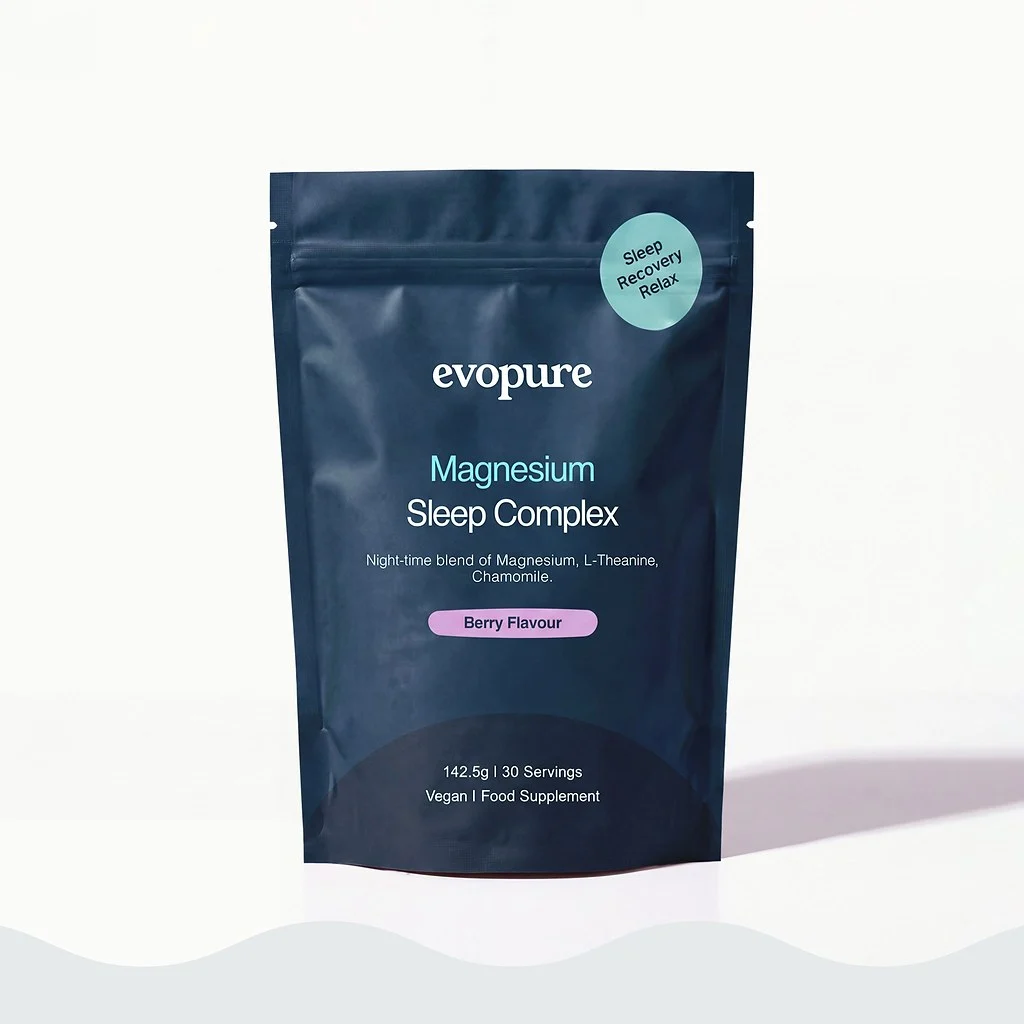
None of our products changes how a painkiller works, and we don’t claim they do. If you’d like a magnesium supplement alongside your painkillers, our Magnesium Glycinate Sleep Complex is a berry drink powder with 290mg of magnesium (77% NRV) per 4.75g serving, from magnesium bisglycinate and citrate. It isn’t an antacid. To be upfront: it also contains glycine, L-theanine and extracts of chamomile, passionflower, hops and oat straw, so if you take co-codamol or another medicine that makes you drowsy, show the label to your pharmacist first.
Our pick, taken 2 hours away from your painkillers
Magnesium Glycinate Sleep Complex
Magnesium Glycinate Sleep Complex. Magnesium contributes to a reduction of tiredness and fatigue. An evening drink is easy to keep apart from daytime tablets.
Add Magnesium Glycinate Sleep Complex to bag See ingredients and reviews
Rated 4.7 out of 5 from 15 ratings on the product page (via Lipscore, checked 17 November 2026). We make it, so we’re not neutral. Vegan and made in the UK. Free UK delivery over £40.
Subscribe £22.49One-off £29.99
View productWhy only one product? Our Reishi hot chocolate pack says it isn’t for people taking medication, and the FSA advises people on any medication not to take CBD unless under medical direction (see CBD and painkillers). Would you rather have plain magnesium with no herbs? Ask your pharmacist for a single-ingredient product: that’s a fair choice too. Comparing forms? See magnesium citrate, magnesium oxide and magnesium glycinate side effects.
How much is sensible? The NHS says adults need 300mg (men) or 270mg (women) of magnesium a day, and that 400mg or less a day from supplements is unlikely to cause harm. Higher doses can cause diarrhoea. Painkillers don’t change how much you need. See how much magnesium per day.
Next step
Magnesium Glycinate Sleep Complex
Keep your painkillers in the day and your magnesium in the evening, with at least 2 hours between them. The Magnesium Glycinate Sleep Complex gives 290mg of magnesium per serving as a berry drink. Magnesium contributes to a reduction of tiredness and fatigue.
Add Magnesium Glycinate Sleep Complex to bag See ingredients and reviews
Subscribe and save 25% on your first order, then 20%. New to Evopure? Join our emails for 20% off a one-off first order. Free UK delivery over £40. Adults only. We don’t recommend our products during pregnancy or breastfeeding.
Subscribe £22.49One-off £29.99
View productTaking other medicines too? Our guide to what not to take with magnesium lists every medicine that needs a gap from magnesium.
Sources 9
- BNF (NICE). Magnesium interactions and antacids interactions. Checked 17 November 2026.
- BNF (NICE). Ibuprofen, naproxen, paracetamol, codeine and aspirin interactions. Checked 17 November 2026.
- NHS. Ibuprofen for adults (reviewed 27 August 2025) and paracetamol for adults (reviewed 24 March 2026).
- NHS. Naproxen (reviewed 25 June 2026) and aspirin (reviewed 3 July 2026).
- NHS. Taking co-codamol with other medicines and herbal supplements and side effects of co-codamol (reviewed 30 October 2023).
- NHS. Vitamins and minerals: others (magnesium).
- Neuvonen PJ. The effect of magnesium hydroxide on the oral absorption of ibuprofen, ketoprofen and diclofenac. Br J Clin Pharmacol, 1991.
- Mäenpää J et al. Magnesium hydroxide in ibuprofen tablet reduces the gastric mucosal tolerability of ibuprofen. J Clin Gastroenterol, 2004.
- FSA (gov.uk). Cannabidiol (CBD) guidance.