Last updated: 12 November 2026
Shortness of breath from anxiety usually comes on with worry or panic, often while you’re resting, and feels like you can’t take a full, satisfying breath. It tends to come with a racing heart, tingling or dizziness, and eases within minutes as you calm down. Only a doctor can rule out heart or lung causes, so get new breathlessness checked.
iBelow: the emergency signs, how anxiety breathlessness typically behaves compared with heart and lung causes, why it happens, an NHS breathing exercise, and when to see a GP.
Call 999 or go to A&E now if you or someone else:
- has severe difficulty breathing: gasping, choking or unable to get words out or speak in full sentences
- has a chest that feels tight or heavy, or pain that spreads to the arms, back, neck or jaw
- has lips or skin turning very pale, blue or grey (on brown or black skin this can be easier to see on the lips, tongue or gums)
- suddenly feels confused, or collapses
Call NHS 111 or use 111 online if you’re more short of breath than usual, you feel or are being sick, you’re coughing up blood, you have pain or swelling in one leg, or you have heart palpitations. Don’t assume it’s anxiety until a doctor has checked you.
How to tell if shortness of breath is from anxiety
Shortness of breath is more likely to be from anxiety when it starts with worry or panic, happens at rest, comes with tingling, dizziness or a racing heart, and settles within minutes as you calm down. It’s less likely to be anxiety if it worsens with activity or lying flat, or comes with chest heaviness, a cough or swollen ankles.
iThese are patterns, not a diagnosis. Anxiety and a heart or lung problem can happen together, and people with asthma often have anxious breathing too. If you’ve never had breathlessness checked, or it has changed, see a doctor before putting it down to nerves.
| Clue | More typical of anxiety | Get checked |
|---|---|---|
| When it starts | With worry, panic or a stressful thought, often at rest | With exercise, stairs or normal activities |
| How it feels | Can’t get a satisfying breath; sighing or yawning a lot | Gasping, wheezing, can’t finish a sentence |
| Lying down | Often no different, or worse when you lie awake worrying | Worse when lying flat or waking you up breathless |
| Other symptoms | Tingling fingers or lips, dizziness, racing heart, dread | Heavy chest, cough, coughing blood, swollen ankles, a swollen leg |
| How long | Eases within minutes as you calm down | Lasts, keeps getting worse or keeps coming back |
What anxiety breathlessness feels like
People describe it in different ways:
- not being able to take a deep breath, or the breath never feeling “full”
- a need to sigh or yawn over and over (see why am I yawning so much?)
- tightness across the chest (see anxiety chest pain)
- a choking feeling or a lump in your throat
- fast, shallow breathing high in the chest
- tingling or pins and needles in your fingers or around your mouth, and feeling light-headed (see anxiety dizziness)
The NHS lists shortness of breath, a choking sensation, chest pain and tingling in your fingers among the symptoms of a panic attack. Noticing your breathing can make you more anxious, which makes the breathing feel worse, so it can turn into a loop.
Why anxiety makes you feel short of breath
Anxiety switches on the fight or flight response. Adrenaline speeds up your heart and your breathing, ready for action. If there’s nothing to run from, you can end up breathing more than your body needs, often fast and from the top of your chest. This is called over-breathing, or hyperventilating.
Over-breathing upsets the balance of gases in your blood, which can cause the tingling, light-headedness and chest tightness that come with it. Oddly, it makes you feel as if you’re not getting enough air, so you try to breathe harder.
When this pattern sticks around, doctors call it a breathing pattern disorder or dysfunctional breathing. NHS hospital leaflets list anxiety, stress, worry and fear among its causes, alongside conditions such as asthma, and describe symptoms such as being unable to take a deep breath, sighing, yawning and a feeling of not enough air. A specialist respiratory physiotherapist can teach you to retrain your breathing, so ask your GP about a referral if it keeps happening.
Other causes of shortness of breath
The NHS lists asthma, a chest infection, being overweight, smoking and a panic attack as common causes of shortness of breath, and COPD, heart failure, idiopathic pulmonary fibrosis and lung cancer as more serious ones. Some clues that point away from anxiety:
| Possible cause | Clues | What to do |
|---|---|---|
| Asthma | Wheeze, cough, tight chest, often at night or with triggers like cold air | See a GP; use your reliever inhaler as your plan says |
| Chest infection | Cough with mucus, high temperature, feeling unwell | 111 if you’re struggling to breathe; GP if it isn’t improving |
| Heart problems | Breathless with activity or lying flat, swollen ankles, tiredness | See a GP; 999 for chest pain or heaviness |
| Blood clot in the lung | Sudden breathlessness, sharp chest pain, coughing blood, a painful swollen leg | Call 999 or go to A&E |
| COPD | Long-term cough and breathlessness, usually in smokers or ex-smokers over 35 | See a GP for breathing tests |
| Anaemia | Tiredness, pale skin, breathless with effort | See a GP for a blood test |
iIf your breathlessness gets worse with normal activities or when you lie down, comes with swollen ankles, or you’ve been coughing for 3 weeks or more, the NHS says to see a GP. Heart rhythm symptoms are covered in heart palpitations.
An NHS breathing exercise for anxiety
Once serious causes have been ruled out, slow breathing is the main self-help tool. This is the NHS breathing exercise for stress. You can do it standing, sitting in a chair that supports your back, or lying down, with loose clothing:
- Let your breath flow as deep down into your belly as is comfortable, without forcing it.
- Breathe in gently through your nose, counting steadily from 1 to 5 if that helps (you may not reach 5 at first).
- Without pausing or holding your breath, let it flow out gently through your mouth, counting from 1 to 5 again.
- Keep going for at least 5 minutes.
Rest a hand on your belly so you can feel it rise and fall rather than your shoulders lifting. Practise when you’re calm, so it’s easier to use when you’re not. If counting makes you more anxious, just breathe out a little longer than you breathe in.
Other techniques: our step-by-step guide to breathing exercises for anxiety compares 5 of them, or go straight to box breathing, 4-7-8 breathing and our wider guide to breathwork. If your mind is racing, grounding techniques such as 5-4-3-2-1 can help bring you back to the room. If you have a lung or heart condition, ask your GP or nurse which exercises suit you.
What to do if breathlessness comes with panic
The NHS says most panic attacks last between 5 and 20 minutes. During one:
- stay where you are if you can
- breathe slowly and deeply, using the exercise above
- remind yourself that the attack will pass and the feelings aren’t harmful
- focus on something you can see, hear or touch
If the breathlessness doesn’t ease as the panic settles, or any of the 999 signs at the top of this page appear, call 999. More steps are in how to stop a panic attack, and if it tends to happen in bed, see anxiety at night.
When to see a GP
- You’ve had breathlessness that hasn’t been checked, even if you think it’s anxiety.
- It keeps coming back, is getting worse or is changing.
- You’re having panic attacks or worry most days.
- It gets worse with activity or lying down, or comes with swollen ankles or a cough lasting 3 weeks or more.
Your GP may listen to your chest, check your oxygen level and pulse, and arrange tests such as a blood test, an ECG or breathing tests. Once other causes are ruled out, they can talk to you about anxiety treatment. In England, adults can also refer themselves to NHS talking therapies without seeing a GP first. For an overview of the signs, see anxiety symptoms, and for a step-by-step plan, how to deal with anxiety.
If you feel you can’t cope or keep yourself safe, call 111 and choose the mental health option, call Samaritans free on 116 123, or call 999.
Next step
CBD Capsules Broad Spectrum
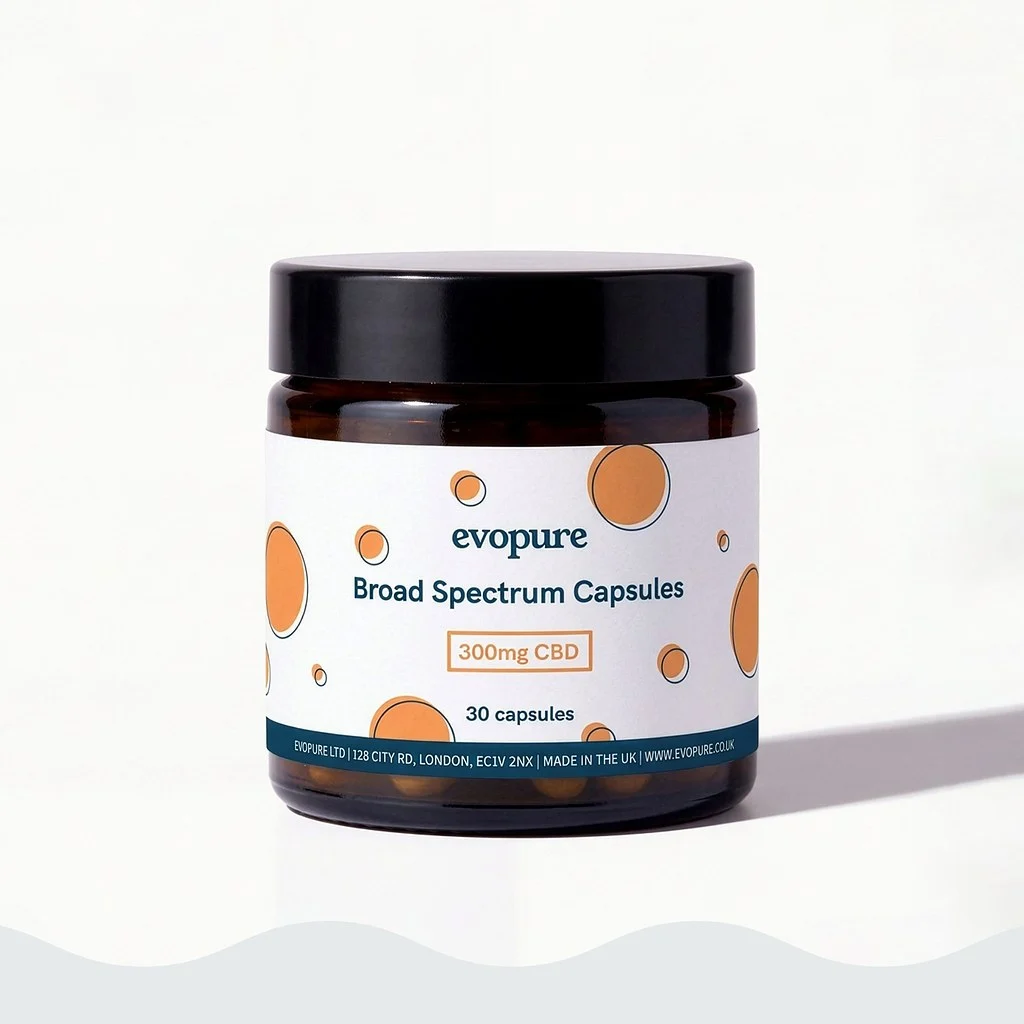
once a doctor has checked your breathing, some people like a simple measured routine for busy days. Evopure’s Broad Spectrum CBD Capsules give one 10mg capsule, vegan, 0% THC and third-party lab tested (rated 4.7 from 125 reviews). CBD isn’t a treatment for anxiety or breathlessness.
Add Broad Spectrum CBD Capsules 10mg to bag or choose another strength
Subscribe and save 25% on your first order, then 20%. New to Evopure? Join our emails for 20% off a one-off first order. Free UK delivery over £40. The FSA advises healthy adults to take no more than 10mg of CBD a day: one 10mg capsule gives 10mg. Adults only. If you take any regular medicines, including inhalers, heart or anxiety medicines, check with your GP or pharmacist first. We don’t recommend our products during pregnancy or breastfeeding.
Subscribe from £18.74One-off from £24.99
View productThe FSA’s 10mg a day figure is precautionary advice rather than a legal limit, set while longer-term safety research continues. At Evopure we think it is a very cautious figure, and many adults use more. If you go above it, increase slowly, and check with your GP or pharmacist first if you take any medication.
Sources 5
- NHS. Shortness of breath.
- NHS. Panic disorder and Generalised anxiety disorder (GAD).
- NHS. Breathing exercises for stress.
- NHS. Find NHS talking therapies for anxiety and depression.
- Cambridge University Hospitals NHS Foundation Trust. Breathing pattern disorders: an overview.
iThis guide is general information, not medical advice. If you’re worried about your breathing, speak to your GP, call 111, or call 999 in an emergency. Evopure makes CBD oils and capsules.