


Last updated: October 2026
A lump in your throat with anxiety is usually globus sensation: a feeling of something stuck when nothing is there. It’s very common and not serious, and is often triggered by stress tightening the throat muscles. It tends to ease when you eat. See a GP if swallowing hurts, food sticks, your voice changes or you lose weight.
Below: what globus feels like, why anxiety causes it, other common triggers, how to tell it apart from a real swallowing problem, the red flags, what helps and how long it lasts.
What does a lump in the throat from anxiety feel like?
Doctors call it globus sensation, or globus pharyngeus. NHS hospital leaflets describe it as the feeling of a lump in the throat where no real lump exists. People describe it as:
- a lump, ball or “frog” in the throat
- tightness, pressure or a squeezing feeling, usually in the middle at the front of the neck
- something stuck that you can’t swallow away or cough up
- a feeling that moves up and down a little
- mucus you can’t clear, or a slightly husky voice
Two things are typical. First, it’s usually most noticeable when you swallow your own saliva, and it often eases or disappears while you’re eating and drinking. Second, it comes and goes: worse on stressful or tiring days, gone altogether for a while at other times.
It’s also very common. A review in an Australian GP journal estimates that up to 45% of people have it at some point in their lives, and a survey of 3,006 adults in China found a lifetime rate of 21.5%. It’s one of the more common physical symptoms of anxiety, alongside chest pain, a churning stomach and dizziness.
Why does anxiety cause a lump in your throat?
Most ENT specialists now think globus comes from muscle tension in the throat. The muscle usually blamed is the cricopharyngeus, a ring of muscle at the top of the food pipe that acts like a valve. It has to relax for you to swallow.
- Stress tightens muscles. When you’re anxious, your body’s fight or flight response raises muscle tension everywhere, including the neck, jaw and throat. If the cricopharyngeus doesn’t relax fully, swallowing saliva feels awkward. Food triggers stronger swallowing reflexes, which is why eating often feels normal.
- Holding back tears. That “choked up” feeling when you try not to cry is the same tightening. NHS leaflets say that letting yourself cry can ease it.
- The worry loop. Once you notice the lump, you check it by swallowing, worry it might be something serious, get more tense, and the feeling grows. This is especially common with health anxiety.
The link with anxiety shows up in research too. In the Chinese survey, anxiety was reported by 39.8% of people with globus compared with 22.3% of those without it, and poor sleep was also more common. Globus used to be called “globus hystericus”, but that name is outdated: it’s a real physical sensation, not something you’re imagining.
Other causes: reflux, mucus and throat clearing
Stress is rarely the only factor. NHS leaflets list several triggers that often work together:
- Acid reflux, including “silent” reflux. Laryngopharyngeal reflux (LPR) brings stomach contents up into the throat, often without heartburn. It’s commonly linked with throat clearing, voice change and globus. See acid reflux at night.
- Post-nasal drip. Mucus running down the back of the throat from a cold, allergy or catarrh makes you swallow more and irritates the lining.
- Frequent throat clearing. It gives brief relief but irritates the throat and keeps the feeling going.
- Tiredness and voice strain. It’s often worse at the end of a long day of talking.
- Smoking, which irritates the throat and increases stomach acid.
- Neck and jaw tension, including neck problems such as cervical spondylosis. See jaw pain.
Globus feels like discomfort rather than pain. If your throat is actually sore, see sore throat remedies.
Globus or a swallowing problem?
The key difference is that with globus, swallowing food and drink works normally. A true swallowing problem (dysphagia) is different and always needs checking.
| Globus sensation | Swallowing problem (dysphagia) | |
|---|---|---|
| Main feeling | Lump or tightness, with nothing actually there | Food or drink really sticks or goes down the wrong way |
| When eating | Usually better or gone | Worse, especially with solid food |
| Swallowing saliva | Often when it’s most noticeable | Not the main issue |
| Coughing or choking on food | No | Common |
| Pain | Discomfort rather than pain | Can be painful |
| Where | Middle of the throat, may move | Often fixed, sometimes on one side or in the chest |
| Pattern | Comes and goes, worse with stress | Constant or steadily getting worse |
| Weight | No change | Weight loss is possible |
When to see a GP
Globus on its own is not dangerous. Long-term studies are reassuring: in one that followed 74 people for an average of 7 years and 7 months, none developed cancer of the throat or food pipe. But a GP should always check new or changing throat symptoms. Ask for an urgent GP appointment or contact NHS 111 if you have a lump feeling with any of these:
- pain when swallowing, or food or drink that sticks or comes back up
- coughing or choking when you eat or drink
- losing weight without trying
- a hoarse or changed voice that doesn’t go away
- a lump or swelling you can see or feel in your neck
- the feeling is always on one side, is there all the time, or keeps getting worse
- earache that doesn’t go away
- coughing up blood, or black poo
Call 999 or go to A&E if you’re struggling to breathe, gasping or choking. If anxiety is the main problem, a GP can also help with that directly. See how to deal with anxiety.
How to get rid of a lump in your throat from anxiety
NHS speech and language therapy leaflets recommend simple steps that often work, though they can take a few months if you’ve had it a long time.
- Reassurance. Many people find that understanding what globus is, and being checked by a doctor, is enough on its own. Try not to keep testing it by swallowing.
- Sip water often. Swallowing a sip of water helps relax the throat. The Hull leaflet suggests 1.5 to 2 litres a day, sipped through the day.
- Swap throat clearing for a swallow. When you feel the urge, swallow or take a sip instead. If the urge is strong, yawn or sniff and then blow out slowly through pursed lips. East Kent’s leaflet says the habit can be broken in 3 or 4 days.
- Relax your throat and jaw. Yawn widely and often; do a firm “hard” swallow; and try exaggerated chewing, as if chewing toffee that gets bigger with every chew. Gentle shoulder shrugs and neck stretches help too (skip these if you have a neck or spine problem, unless a physiotherapist says otherwise).
- Slow tummy breathing. Hand on your tummy, shoulders down, breathe in slowly so your tummy rises, then breathe out gently. Our breathwork guide and box breathing explain more. If a lump feeling comes with a racing heart and panic, see how to stop a panic attack.
- Treat reflux. Cut back on alcohol, caffeine, spicy, fatty and acidic foods, and leave 2 to 3 hours between your last meal and bed. Ask a pharmacist or GP about reflux medicine if you have heartburn or indigestion.
- Let feelings out. If you feel tearful, let yourself cry rather than holding it in.
- Look after the anxiety. Regular exercise, rest and time to unwind all help. See how to calm down and nervous system regulation. If you’re registered with a GP, you can usually refer yourself to NHS Talking Therapies without seeing a GP first.
If it doesn’t settle, your GP can refer you to an ENT (ear, nose and throat) clinic or a speech and language therapist. Therapists use throat relaxation, posture and breathing work, and help with throat clearing. A review published in 2024 found that all five studies of this approach reported improvement, but the studies were small, so the evidence isn’t strong yet.
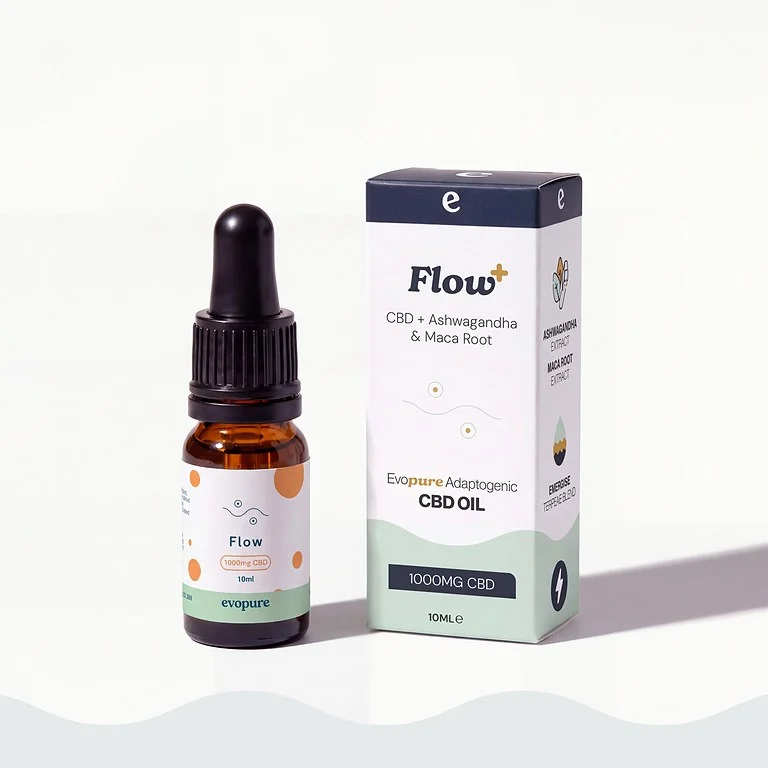
Where we fit in. A calming evening routine won’t remove globus, but it can help you wind down. Our Magnesium Glycinate Sleep Complex is a berry-flavoured drink with magnesium bisglycinate and citrate, L-theanine, chamomile and passionflower. Magnesium contributes to normal psychological function. Some adults also take our Flow CBD Oil, with ashwagandha and maca, as part of their day. Neither product is a treatment for globus, and CBD isn’t a treatment for anxiety. The FSA’s 10mg a day figure is precautionary advice rather than a legal limit, set while longer-term safety research continues. At Evopure we think it is a very cautious figure, and many adults use more. If you go above it, increase slowly, and check with your GP or pharmacist first if you take any medication. We don’t recommend our products during pregnancy or breastfeeding.
How long does a lump in the throat from anxiety last?
It varies a lot from person to person. For many people it comes and goes with stress and tiredness, and for some it lingers for months or longer. What the research and NHS leaflets say:
- In the 7-year follow-up study, 55% of people had no symptoms at the end and 45% still had some, but none had developed anything serious.
- NHS leaflets say the self-help steps above often clear it completely, but can take some months to work if you’ve had it a long time.
If the feeling keeps returning, notice when it happens. If it lines up with stress, poor sleep or late meals, that gives you something to work on. If your symptoms change, go back to your GP and ask to be rechecked.
FAQs
Can anxiety cause a lump in your throat?
Yes. Anxiety and stress raise muscle tension, including in the throat, which can cause globus sensation: a feeling of a lump with nothing actually there. Nearly everyone with globus finds it is worse when they are stressed or anxious.
How do I get rid of a lump in my throat from anxiety?
Sip water often, swallow instead of clearing your throat, yawn and do relaxed chewing movements, loosen your neck and shoulders, and practise slow tummy breathing. Treat any reflux. If it doesn’t settle, a GP can refer you to a speech and language therapist.
How long does a lump in the throat from anxiety last?
It varies. It often comes and goes with stress, and for some people it lasts months or longer. In one long-term study, 55% of people were symptom-free after about 7 years, and none had developed anything serious.
How do I know if it’s globus or something serious?
Globus is usually central, comes and goes, and eases when you eat. See a GP urgently if swallowing hurts, food sticks, you lose weight, your voice stays hoarse, you can feel a lump in your neck, or the feeling is on one side and getting worse.
Can acid reflux cause a lump in the throat?
Yes. Reflux, including silent reflux without heartburn, is one of the most common triggers for globus, often alongside throat clearing and a hoarse voice. It frequently happens together with stress. A pharmacist or GP can advise on treatment.
Why does the lump feel worse when I swallow saliva?
With globus, the muscle at the top of the food pipe may not relax fully. Swallowing saliva makes you notice it, while food triggers stronger swallowing reflexes that help the muscle relax, so eating often feels normal.
Sources
- Royal Berkshire NHS Foundation Trust, ENT Department (2025). Globus: a feeling of a lump in the throat.
- Hull University Teaching Hospitals NHS Trust. Globus sensation.
- West Suffolk NHS Foundation Trust, Speech and Language Therapy (2026). Globus sensation (globus pharyngeus).
- East Kent Hospitals University NHS Foundation Trust. Globus sensation.
- NHS. Swallowing problems (dysphagia).
- NHS. Laryngeal cancer: symptoms and Oesophageal cancer: symptoms.
- Chen FJ, Park JH (2024). An approach to globus pharyngeus. Australian Journal of General Practice.
- Tang B et al (2016). Epidemiology of globus symptoms and associated psychological factors in China. Journal of Digestive Diseases.
- Rowley H et al (1995). The natural history of globus pharyngeus. Laryngoscope.
- Ruckart KW et al (2024). Efficacy of speech-language pathology interventions for globus pharyngeus: a scoping review. Journal of Voice.
This guide is general information, not medical advice. Evopure makes the Magnesium Glycinate Sleep Complex and Flow CBD Oil.