Last updated: November 2026
If you’re still tired after 8 hours of sleep, the cause is usually sleep quality, not the amount. Common reasons are sleep apnoea, alcohol or late caffeine, waking in the night, an irregular body clock, low iron, B12 or vitamin D, thyroid problems, depression and some medicines. The NHS says see a GP if it lasts a few weeks.
A blood test rules out the medical causes; most of the rest are habits you can change in a fortnight.

Our pick
Magnesium Glycinate Sleep Complex
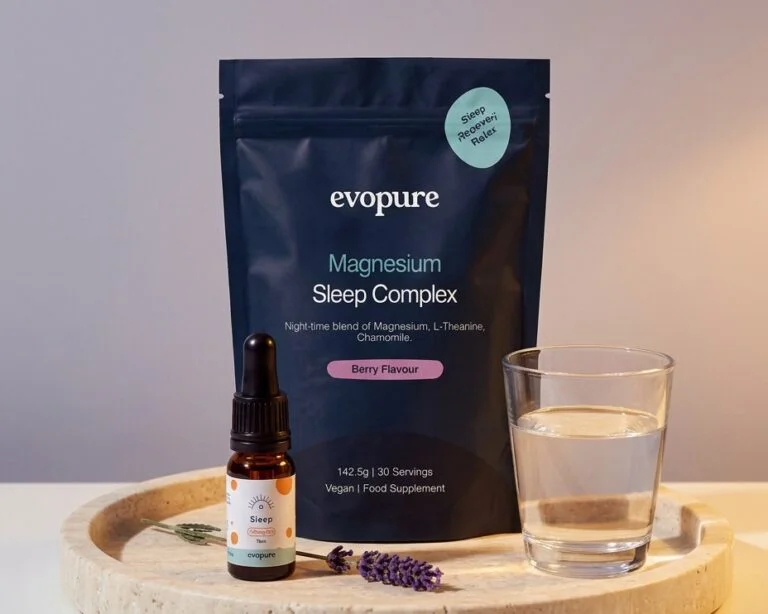
Magnesium Glycinate Sleep Complex is an evening berry drink with 290mg of magnesium (77% NRV) per 4.75g serving, from bisglycinate and citrate, plus 500mg glycine and 100mg L-theanine. Magnesium contributes to a reduction of tiredness and fatigue. It won’t fix sleep apnoea or low iron, so rule those out first.
Add Magnesium Glycinate Sleep Complex to bag See ingredients and reviews
Subscribe and save 25% on your first order, then 20%. New to Evopure? Join our emails for 20% off a one-off first order. Free UK delivery over £45. If you take any regular medicines, check with your GP or pharmacist first. We don’t recommend our products during pregnancy or breastfeeding.
Subscribe £22.49One-off £29.99
View productIs 8 hours of sleep enough? Why you can still wake up tired
For most adults 8 hours is plenty: the NHS suggests aiming for 6 to 9 hours at regular times. If you still feel exhausted, those hours aren’t turning into deep, unbroken sleep. Breathing pauses, alcohol, caffeine, noise or loo trips can break sleep up without you remembering. Time in bed isn’t time asleep either: a slow start and a spell awake at 3am can turn 8 hours into 6 and a half. See how much sleep you need.
| Cause | Clues | What helps |
|---|---|---|
| Sleep apnoea | Loud snoring, gasping, morning headaches | See a GP |
| Evening alcohol | Waking at 3am or 4am | Alcohol-free nights |
| Afternoon caffeine | Slow to drop off, light sleep | Stop 6 hours before bed |
| Night waking | Loo trips, heat, noise, pain | Fix the trigger |
| Irregular body clock | Late weekends, shifts | Same wake time daily |
| Low iron or B12 | Pale, breathless, tingling | Blood test first |
| Thyroid or diabetes | Weight change, thirst, feeling cold | Blood test first |
| Depression or stress | Low mood, worry | Talk to your GP |
| Medicines | New or changed tablet | Ask your pharmacist |
Could it be sleep apnoea?
Sleep apnoea is a common reason for waking exhausted after a full night. Your breathing stops and starts as you sleep, waking you briefly many times without you knowing. The NHS lists loud snoring, gasping, snorting or choking noises and waking a lot, with daytime tiredness, poor concentration and morning headaches.
The STOP-BANG questionnaire gives one point for each yes:
- Snoring loudly
- Tired or sleepy in the daytime
- Observed: someone has seen you stop breathing or gasp
- Pressure: high blood pressure
- BMI over 35
- Age over 50
- Neck: collar 16 inches (40cm) or more
- Gender: male
On its scoring, 0 to 2 is low risk, 3 to 4 intermediate and 5 to 8 high. It is a screening tool, not a diagnosis: take a score of 3 or more to your GP. Testing is usually done at home, and a CPAP machine is free on the NHS if you need one. Already on CPAP and still tired? The NHS says it works best used every night, so tell your sleep clinic if the mask leaks or you take it off. See our sleep apnoea guide and how to stop snoring.
If you nod off in the day, gov.uk says not to drive until the sleepiness is under control.
Why am I still tired after 8 hours of sleep and coffee?
Coffee can be part of the problem. In a 2013 study, 400mg of caffeine taken 6 hours before bed still disrupted sleep compared with a placebo, and the authors advise avoiding substantial caffeine for at least 6 hours before bed. Caffeine also only masks tiredness, so the dip feels worse when it wears off.
Alcohol helps you drop off, then disrupts the second half of the night, and moderate or high amounts cut total REM sleep, a 2013 review found. Hence waking at 4am and feeling flat. See how long caffeine lasts and alcohol and sleep.
Night waking and an irregular body clock
Short wakings you don’t remember still break up deep sleep. Common triggers are needing the loo (see waking up to pee at night), a warm room or hot flushes (best temperature for sleep), noise or a restless partner, and simply getting older (sleep as you get older). Waking at the same time each night? Read why you wake up at 3am.
Groggy only for the first part of the morning? That is normal sleep inertia: see why you wake up tired. Late weekends and lie-ins also leave you jet-lagged at home, so Monday’s alarm goes off in your body’s night. The NHS advice is to stick to the same sleep times: see our 7-day sleep schedule reset and sleep debt.
Low iron, B12, thyroid, mood and medicines
If your sleep looks fine, a medical cause becomes more likely. The NHS lists iron deficiency anaemia (no energy, palpitations, breathlessness, pale skin), diabetes (thirst, peeing more, weight loss) and an overactive thyroid. NICE adds an underactive thyroid, low B12, folate or vitamin D, and coeliac disease. See iron deficiency, B12 deficiency, vitamin D deficiency and underactive thyroid. Don’t start iron tablets on a hunch: get a blood test first.
Depression is the most common cause GPs find: a review of 26 studies quoted by NICE put it at 18.5% of cases, against 2.8% for anaemia. If you’ve lost interest in things, say so. See low mood vs depression.
Medicines matter too. The NHS lists tiredness as a common side effect of beta blockers and “feeling more tired or weaker than usual” for statins. Read do statins make you tired?, do beta blockers make you tired? and does Mounjaro make you tired? Never stop a prescribed medicine without your GP.
When to see a GP, and the checks they may do
iThe NHS says see a GP if you’ve been tired for a few weeks and don’t know why, it affects daily life, or you also have weight loss, mood changes or someone has heard you gasp or choke in your sleep. NICE guidance suggests a GP may arrange, depending on your symptoms:
| Test | What it looks for |
|---|---|
| Full blood count and ferritin | Anaemia, low iron stores |
| Thyroid function | Under or overactive thyroid |
| HbA1c | Diabetes |
| ESR and CRP | Inflammation or infection |
| Kidney and liver function | Kidney or liver problems |
| Coeliac antibody test | Coeliac disease |
| Vitamin D, B12, folate | If you’re at risk |
Normal results are useful too: they point back to sleep quality, mood and routine.
What helps: a two-week reset
- Fix your wake-up time 7 days a week.
- Stop caffeine 6 hours before bed (no later than 5pm for an 11pm bedtime).
- Have several alcohol-free nights a week.
- Keep the bedroom cool, dark and quiet and put screens away for the last hour, as the NHS suggests.
- Move every day and eat regular meals. See how to boost energy naturally.
- Keep a sleep diary (bedtime, wakings, drinks) to take to your GP if you’re no better.
More causes, from heavy eyes to the clocks going back, are in why am I always tired?
Supplements for tiredness: what’s worth trying
Iron, magnesium, vitamin B12, B6, B2, niacin, pantothenic acid, folate and vitamin C have authorised GB claims that they contribute to a reduction of tiredness and fatigue. They help most if you’re short of them. See the best supplements for energy and the best magnesium for sleep.
Our Magnesium Glycinate Sleep Complex gives 290mg of magnesium (77% NRV) per 4.75g, with glycine, L-theanine and oat straw, hops, chamomile and passionflower extracts. The Reishi Mushroom Adaptogenic Complex is a reishi hot chocolate (0.5g reishi, 0.5g maca, 0.3g cinnamon per 8g) with a little natural caffeine, so have it by early evening.
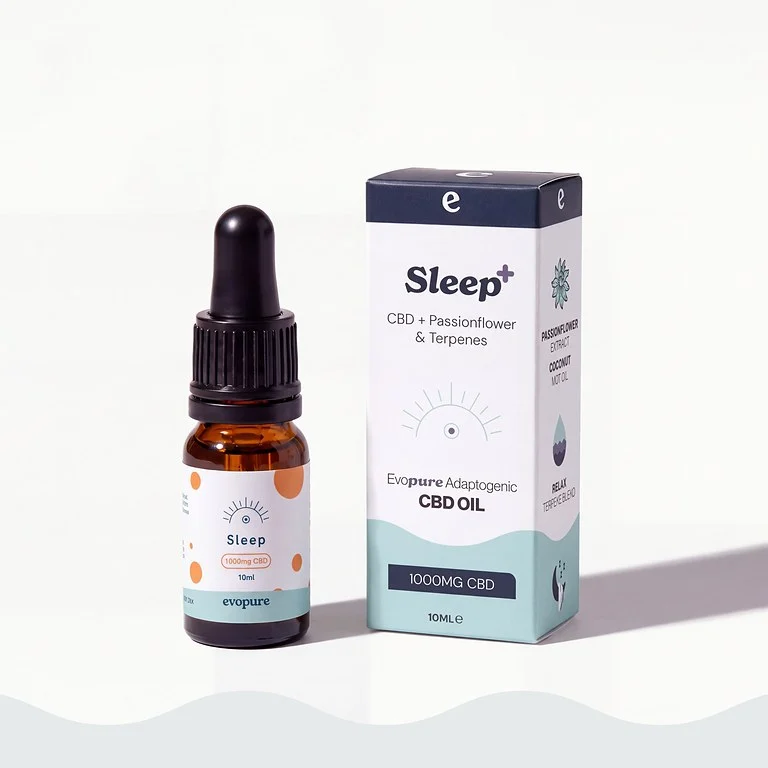
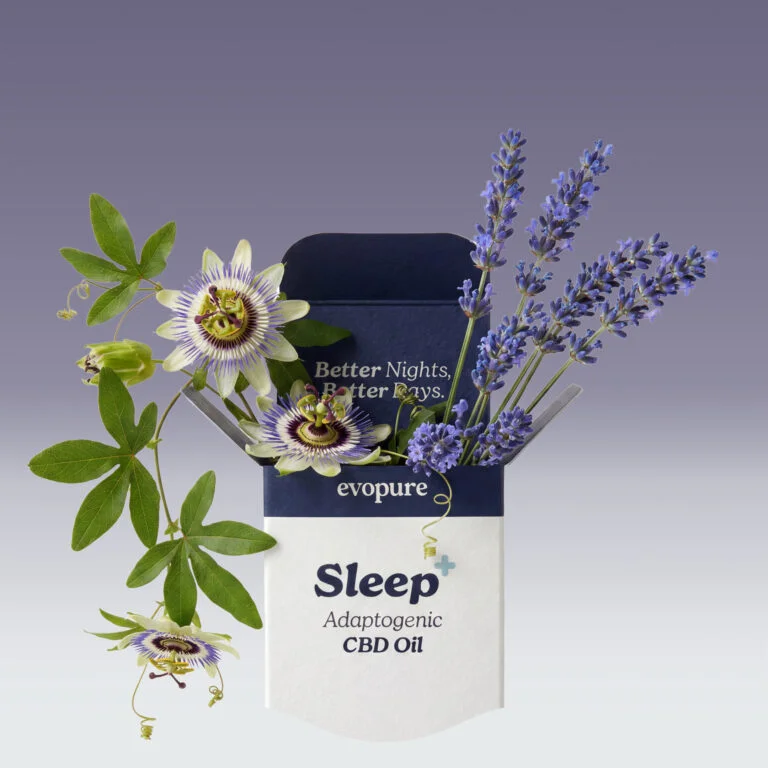
For adults who don’t take regular medicines, our Sleep CBD Oil is broad spectrum CBD with 70mg passionflower extract per half pipette and a Relax terpene blend, made in the UK from US-grown hemp. CBD isn’t a treatment for tiredness or sleep problems; some adults like it as part of a wind-down routine. The FSA advises healthy adults to take no more than 10mg of CBD a day: about 0.2ml of the 500mg (0.1ml of the 1,000mg) gives 10mg. The FSA’s 10mg a day figure is precautionary advice rather than a legal limit, set while longer-term safety research continues. At Evopure we think it is a very cautious figure, and many adults use more. If you go above it, increase slowly, and check with your GP or pharmacist first if you take any medication. Adults only.
iIf you take any regular medicines, check with your GP or pharmacist first. We don’t recommend our products during pregnancy or breastfeeding. All three are vegan, made in the UK and for adults (18+) only.
Next step
Magnesium Glycinate Sleep Complex
Rule out the medical causes, give your nights two weeks of fixed wake times, earlier caffeine and fewer drinks, and add the Magnesium Glycinate Sleep Complex as your evening drink: 290mg of magnesium (77% NRV) per 4.75g. Magnesium contributes to a reduction of tiredness and fatigue.
Add Magnesium Glycinate Sleep Complex to bag See ingredients and reviews
Subscribe and save 25% on your first order, then 20%. New to Evopure? Join our emails for 20% off a one-off first order. Free UK delivery over £45. If you take any regular medicines, check with your GP or pharmacist first. We don’t recommend our products during pregnancy or breastfeeding.
Subscribe £22.49One-off £29.99
View productSources 6
- NHS. Tiredness and fatigue and Sleep apnoea.
- NICE CKS. Tiredness/fatigue in adults (revised June 2025).
- Chung F, et al. STOP questionnaire: a tool to screen patients for obstructive sleep apnea. Anesthesiology. 2008. PMID 18431116. Scoring: stopbang.ca.
- Drake C, et al. Caffeine effects on sleep taken 0, 3, or 6 hours before going to bed. J Clin Sleep Med. 2013. PMID 24235903.
- Ebrahim IO, et al. Alcohol and sleep I: effects on normal sleep. Alcohol Clin Exp Res. 2013. PMID 23347102.
- gov.uk. Excessive sleepiness and driving. FSA (gov.uk). CBD guidance.
General information, not medical advice. Evopure makes the Magnesium Glycinate Sleep Complex, Reishi Mushroom Adaptogenic Complex and Sleep CBD Oil mentioned here.