Last updated: October 2026
Black seed oil comes from Nigella sativa seeds (black cumin or kalonji) and contains thymoquinone. Small trials suggest modest effects on blood pressure, cholesterol and blood sugar, and early studies look at skin and hair. It isn’t a cure-all. Patch test it first, and ask your GP if you take medicines, are pregnant or have surgery planned.
Below: what black seed oil is, what the research really shows (with honest ratings), how to use it on skin, hair and by mouth, side effects and medicine interactions, and how it compares with castor oil and olive oil.
What is black seed oil?
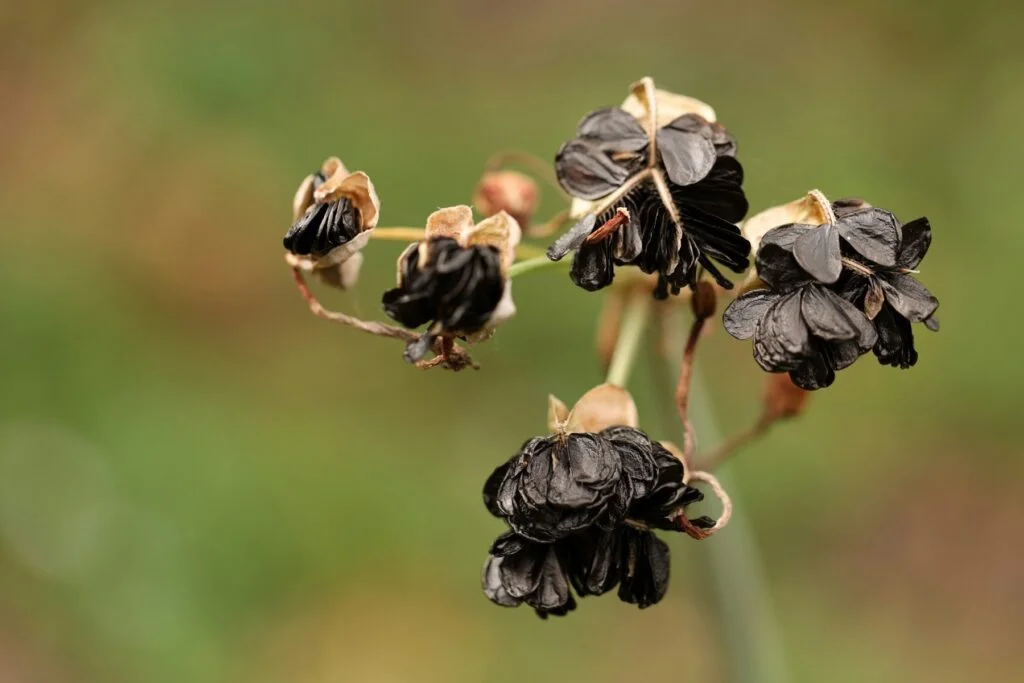
Black seed oil is pressed from the seeds of Nigella sativa, a small flowering plant. The seeds have been used in cooking in the Middle East and Asia for around three thousand years, and UK shops often sell them as nigella seeds or kalonji.
The seeds contain many compounds, but researchers focus most on thymoquinone, an antioxidant. One catch: levels vary widely with the crop, the variety and how the oil is extracted, so one bottle may not match the oil used in a study.
Black seed oil vs black cumin seed oil vs cumin
Black seed oil and black cumin seed oil are the same thing, from Nigella sativa (also called black caraway). It isn’t the cumin in your spice rack: ordinary cumin is a different plant, Cuminum cyminum, so it won’t give you the same compounds.
Black seed oil benefits: what the research shows
Black seed is well studied for a traditional herb, but most human trials are small and short, and results vary a lot. Here’s where the evidence stands.
| Area | What studies found | Our rating |
|---|---|---|
| Blood pressure | A review of 11 trials (860 people) found falls of about 3mmHg systolic and 3mmHg diastolic compared with placebo over around 8 weeks. A trial in older adults with high blood pressure found no clear difference. | Some evidence, small effect |
| Cholesterol | A review of 34 trials (2,278 people) found lower total cholesterol, LDL and triglycerides, and higher HDL. Results differed a lot between trials. | Some evidence, mixed quality |
| Blood sugar | A review of 30 trials found lower fasting blood sugar and HbA1c, but no clear effect on insulin. Results varied widely. | Some evidence, mixed quality |
| Weight | A review of 13 trials (875 people) found about 1.8kg more weight loss than placebo, with no clear change in waist size. | Limited, small effect |
| Hair | We couldn’t find a good quality trial of black seed oil alone for hair growth. Claims rest on blends, lab and animal work. | Very limited |
| Skin | Small trials in hand eczema (60 people) and acne (60 people), plus a review of 14 trials across several skin conditions. | Early but promising |
| Asthma | One trial in 80 adults found better asthma control scores after 4 weeks as an add-on to usual treatment. Lung function didn’t change significantly. | Limited |
A 2025 review pooling 82 trials (over 5,000 people) concluded that black seed could be a promising add-on for heart health risk factors such as blood pressure, blood fats and blood sugar. It also found lower levels of some inflammation markers, such as CRP. But changes in blood markers aren’t the same as treating a condition, and none of this is a reason to change prescribed medicine. See also our guides to berberine, mushrooms for inflammation and turmeric.
Black seed is often linked to immunity and digestion too, but there’s little human research there. The basics in our guides to your immune system and gut health will do more than any single seed.
Black seed oil for hair and hair growth
Hair growth is one of the most searched uses, especially on TikTok, but the evidence is thinnest here. We couldn’t find a well-designed trial of black seed oil on its own for hair loss. Studies quoted online usually test blends of several oils, or are lab and animal studies.
If you enjoy it as a scalp oil, keep your expectations realistic and patch test first. If your hair is shedding more than usual, the cause matters far more than the oil. Our guide to stress and hair loss explains what to look for, and CBD for hair looks at another popular plant oil. See a GP if hair loss is sudden, patchy or comes with other symptoms.
Black seed oil for skin and face
Skin is where the small trials look most interesting:
- Hand eczema. In a 4-week trial of 60 people, a Nigella ointment improved hand eczema more than a plain moisturiser, and about as much as a steroid cream (betamethasone).
- Acne. In a 60-person trial, a black seed gel standardised for thymoquinone, used twice a day for 2 months, reduced spots compared with a placebo gel.
- Other skin conditions. A 2022 review of 14 trials covered conditions including psoriasis, vitiligo and warts. The authors called the results encouraging but said more research is needed.
Note that these trials used prepared ointments and gels, not oil straight from the bottle. Black seed oil can also cause allergic skin reactions (see side effects below), so a patch test matters, especially on your face. For more on skin, see CBD oil for skin, CBD and eczema and stress acne.
How to use black seed oil
By mouth
There is no official UK dose. In trials, daily amounts ranged from 200mg to 4,600mg, taken for 1 to 48 weeks. For example, the asthma trial used 500mg capsules of oil twice a day, and a blood pressure trial in older adults used 300mg of seed extract twice a day. These are study doses, not recommendations: follow the label on your product and don’t take more than it suggests.
On skin and hair
- Patch test first. Dab a little on your inner forearm and wait 48 hours. Don’t use it if you see redness, itching or swelling.
- Use a small amount on clean skin or massaged into the scalp, and wash it out of your hair later.
- Avoid broken skin and your eyes, and stop straight away if your skin reacts.
Capsules vs oil
Capsules give a measured dose with no taste. The oil has a strong, bitter, peppery flavour but is more flexible: stir it into honey or food, or use it on skin. Quality varies between brands, so choose one that shares independent lab test results. Our guide to carrier oils explains why the oil itself matters.
Side effects and who should avoid it
Common side effects
By mouth, side effects in trials were mostly mild and digestive. In one trial of older adults, 16% reported indigestion, 8% nausea and 5% constipation. If it upsets your stomach, stop taking it.
On the skin, black seed oil can cause allergic contact dermatitis: an itchy, red rash. Several case reports describe this, and thymoquinone itself has been identified as a cause. Rarely, more serious whole-body reactions have been reported after using the oil on the skin.
Medicine interactions
- Blood thinners. Lab work found thymoquinone can interfere with warfarin, and there is a case report of a large bruise in a man taking black seed oil with two antiplatelet medicines during chemotherapy.
- Blood pressure and diabetes medicines. Because trials suggest black seed can lower blood pressure and blood sugar a little, it could add to the effect of these medicines.
- Other medicines. Black seed may affect liver enzymes (CYP3A4 and CYP2D6) that process many medicines.
The NHS advises always checking with a pharmacist before taking a herbal remedy if you already take other medicines. If you have surgery planned, tell your surgical team you take black seed and ask whether to stop it beforehand, as it may affect bleeding, blood pressure and blood sugar.
Pregnancy, breastfeeding and children
Sprinkling nigella seeds on food is different from taking concentrated oil or capsules. The NHS says herbal medicines shouldn’t be taken in pregnancy or while breastfeeding, and there’s no data on black seed passing into breast milk or on its safety for babies. The NHS also says herbal medicines aren’t recommended for children, because not enough is known about their safety. Speak to your GP, midwife or pharmacist first.
Black seed oil vs castor oil vs olive oil for hair and skin
All three are popular in natural hair and skincare. The honest answer is that good evidence is limited for all of them.
| Black seed oil | Castor oil | Olive oil | |
|---|---|---|---|
| Hair | No good trials of the oil alone | A review found weak evidence for shinier hair and no strong evidence for growth | Little research |
| Skin | Small trials of prepared gels and ointments for eczema and acne | Little good research | In a study of adult volunteers, 4 weeks on the forearm weakened the skin barrier and caused mild redness |
| Watch out for | Allergic skin reactions: patch test | Very thick; one case of severely matted long hair after use | May not suit dry skin or eczema |
| Taken by mouth? | Yes, as a supplement | Not as a supplement: it’s a strong laxative | Yes, as a food |
Comparing it with fish oil or oregano oil? They’re different products for different jobs, so one isn’t a swap for the other.
Other plant oils in our range
Evopure doesn’t sell black seed oil, but if you like plant oils, two of our products are built around broad spectrum CBD. Our CBD Balm, Muscle and Joint Support combines CBD with peppermint, eucalyptus and juniper in a cooling, non-greasy balm for massaging into skin; patch test it as you would any new skin product. Our Broad Spectrum CBD Oil is simply CBD in MCT oil, with nothing else added, and it’s 0% THC.
The FSA’s 10mg a day figure is precautionary advice rather than a legal limit, set while longer-term safety research continues. At Evopure we think it is a very cautious figure, and many adults use more. If you go above it, increase slowly, and check with your GP or pharmacist first if you take any medication.
Our products are for adults (18+) only. We don’t recommend our products during pregnancy or breastfeeding. For other popular natural remedies, see our guides to holy basil, sea moss and shilajit.
Comparing herbal supplements? See our guide to turmeric benefits and side effects.
FAQs
Is black seed oil the same as black cumin seed oil?
Yes. Both names describe oil from Nigella sativa seeds, also called kalonji or nigella seeds. It isn’t related to ordinary cumin.
Does black seed oil help hair growth?
There’s no good quality trial showing that black seed oil on its own helps hair grow. Most claims come from blends or lab studies. If you’re losing hair, see a GP to find the cause.
Can I put black seed oil on my face?
Some people do, but it can cause allergic skin reactions. Patch test on your inner forearm for 48 hours first, use a small amount and stop if your skin goes red or itchy.
How much black seed oil should I take a day?
There’s no official UK dose. Trials used between 200mg and 4,600mg a day, often split into two doses. Follow your product’s label and check with a pharmacist if you take any medicines.
Is black seed oil safe to take every day?
Trials have lasted up to 48 weeks, with mostly mild side effects such as indigestion and nausea. It may interact with blood thinners, blood pressure and diabetes medicines, so check with your GP or pharmacist first.
Is black seed oil good for inflammation?
Some trials found lower levels of inflammation markers in the blood, such as CRP. That doesn’t mean it treats inflammatory conditions, and it isn’t a replacement for prescribed treatment.
Sources
- NHS. Herbal medicines.
- Memorial Sloan Kettering Cancer Center. Nigella sativa.
- Drugs and Lactation Database (LactMed). Black seed.
- Jafari A et al (2025). Does Nigella sativa supplementation improve cardiovascular disease risk factors? A GRADE-assessed systematic review and dose-response meta-analysis of 82 randomized controlled trials. Pharmacological Research.
- Sahebkar A et al (2016). A systematic review and meta-analysis of randomized controlled trials investigating the effects of supplementation with Nigella sativa (black seed) on blood pressure. Journal of Hypertension; and Rizka A et al (2017). Effect of Nigella sativa seed extract for hypertension in elderly. Acta Medica Indonesiana.
- Rounagh M et al (2024). Effects of Nigella sativa supplementation on lipid profiles in adults. Clinical Nutrition ESPEN.
- Shirvani S et al (2024). The effect of Nigella sativa supplementation on glycemic status in adults. Prostaglandins and Other Lipid Mediators.
- Mousavi SM et al (2018). Effect of Nigella sativa supplementation on obesity indices. Complementary Therapies in Medicine.
- Yousefi M et al (2013). Comparison of therapeutic effect of topical Nigella with Betamethasone and Eucerin in hand eczema. Journal of the European Academy of Dermatology and Venereology.
- Soleymani S et al (2020). The effect of a hydrogel made by Nigella sativa L. on acne vulgaris. Phytotherapy Research; and Nasiri N et al (2022). The therapeutic effects of Nigella sativa on skin disease. Evidence-Based Complementary and Alternative Medicine.
- Koshak A et al (2017). Nigella sativa supplementation improves asthma control and biomarkers. Phytotherapy Research.
- Kurihara F et al (2020). Thymoquinone as a causative allergen in Nigella sativa oil contact dermatitis. Contact Dermatitis; and Fargeas M et al (2022). DRESS syndrome after topical use of Nigella sativa (black cumin) oil. Contact Dermatitis.
- Arab A et al (2026). Extensive subcutaneous hematoma in a patient receiving Nigella sativa oil, dual antiplatelet therapy, and oxaliplatin-based chemotherapy. Hospital Pharmacy.
- Burdock GA (2022). Assessment of black cumin (Nigella sativa L.) as a food ingredient and putative therapeutic agent. Regulatory Toxicology and Pharmacology.
- Phong C et al (2022). Coconut, castor, and argan oil for hair in skin of color patients. Journal of Drugs in Dermatology; and Maduri VR et al (2017). Castor oil: the culprit of acute hair felting. International Journal of Trichology.
- Danby SG et al (2013). Effect of olive and sunflower seed oil on the adult skin barrier. Pediatric Dermatology.
This guide is general information, not medical advice. Evopure makes the CBD Balm, Muscle and Joint Support and the Broad Spectrum CBD Oil. We don’t sell black seed oil.