

Last updated: October 2026
A stress rash is usually hives: raised, itchy welts or blotches that can appear on the face, neck, chest or arms when you’re stressed or anxious. It’s usually harmless and normally fades within a few days. Cool the skin, avoid triggers and ask a pharmacist about antihistamines. Call 999 if your lips, tongue or throat swell.
Below: what it looks like, how long it lasts, why it happens, how to calm it and when to get help.
You’re not alone: the British Association of Dermatologists says hives (urticaria) affect up to 1 in 5 people at some point in their lives.
What does a stress rash look like?
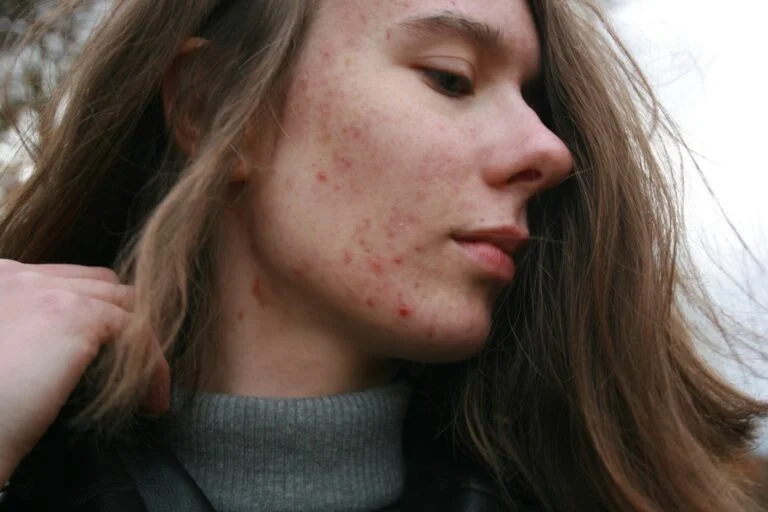
Most stress rashes are hives. The NHS describes them as raised bumps or patches in many shapes and sizes, which can itch, sting or burn.
- On white skin they look pink or red.
- On brown or black skin the colour is harder to see. Hives may look a little lighter or darker than your skin, or the same colour, so the raised feel and the itch are the main clues.
- They move around. Each welt usually fades within 24 hours, while new ones can pop up somewhere else.
A second type is cholinergic urticaria: lots of small, itchy bumps with redness that appear within minutes of sweating. The British Association of Dermatologists lists exertion, heat, spicy food and emotional stress as triggers. These bumps usually last less than an hour.
Stress rash on the face, neck and chest
Hives can appear anywhere on the body. On the face, neck and chest, it’s worth checking whether you have raised hives or flushing, because they behave differently.
A warm, blotchy redness without raised bumps that comes and goes within minutes is more likely flushing than hives. If your cheeks, nose and forehead flush often and the redness starts to stay, it could be rosacea, which the NHS says stress, alcohol, hot drinks and spicy food can trigger.
See also stress symptoms and stress and hair loss.
How long does a stress rash last?
| Type | How long |
|---|---|
| A single welt | Usually fades within 24 hours |
| Cholinergic bumps (after sweating) | Usually less than an hour |
| A typical bout of hives | Usually better within a few days |
| Acute urticaria | Up to 6 weeks |
| Chronic urticaria | 6 weeks or more; in about half of people with chronic spontaneous urticaria it clears within 6 to 12 months |
Why does stress cause a rash?
Hives happen when cells in the skin called mast cells release histamine and other chemicals. That causes the raised, itchy welts.
Your skin is closely wired to your stress system. Research reviews describe the skin as both a target and a source of stress hormones such as cortisol: skin cells respond to them and can make some themselves. Stress also makes you hotter and sweatier, which is a known trigger for hives.
The evidence is clearest for stress making existing skin conditions flare. The NHS lists stress as a trigger for both eczema and psoriasis flare-ups, and stress is linked with rosacea and acne too. For chronic hives, a 2020 systematic review found people often reported a major stressor before it began, but it’s still unclear whether stress causes it or adds to an underlying immune tendency.
If you live with eczema or psoriasis, our guides to CBD and eczema and CBD and psoriasis look at what the research does and doesn’t show so far.
How to treat a stress rash
The NHS says you can often treat hives yourself:
- Cool the skin. A cool shower, or a damp cloth or ice pack wrapped in a tea towel for up to 20 minutes, takes the heat out of the itch.
- Pat, don’t scratch. Scratching and pressure can bring up more welts.
- Wear loose, soft clothing. Tight waistbands and straps can trigger hives.
- Skip the triggers. The British Association of Dermatologists advises avoiding heat, tight clothes and alcohol. Use fragrance-free washes and moisturisers.
- Ask a pharmacist about antihistamines. Non-drowsy (non-sedating) antihistamines are the main treatment. Tell the pharmacist about any health conditions or medicines.
- Check your painkillers. Aspirin, ibuprofen and codeine can make hives worse in some people, so ask a pharmacist before taking them if you get hives often.
If hives keep coming back, a GP may prescribe a stronger antihistamine plan, a menthol cream or a short course of steroid tablets, or refer you to a dermatologist.
Calming the stress behind it
Treating the rash eases the itch; lowering your stress tackles the cause. Small, regular habits work best:
- Try box breathing or these grounding techniques when you feel a flare coming on.
- Build a toolkit: how to relieve stress quickly and how to lower cortisol naturally.
- Protect your sleep: how to sleep better.
- Go easy on caffeine and alcohol: see does caffeine cause anxiety?
- If you’re always “on”, read about high-functioning anxiety and the signs of burnout.
- If worrying about the rash is making it worse, read about health anxiety.
If you like a calming evening drink, our Magnesium Glycinate Sleep Complex is a caffeine-free bedtime drink with L-theanine, and magnesium contributes to normal psychological function. It isn’t a treatment for rashes or hives.
Is it a stress rash or something else?
| Rash | Clues |
|---|---|
| Stress hives | Raised, itchy welts that move around; often during or after a stressful time |
| Allergic hives | Starts soon after a food, medicine, sting or new product |
| Heat rash | Tiny raised spots 2 to 4mm across, prickly, after getting hot and sweaty |
| Shingles | Tingling or pain first, then blisters on one side of the body only. See a pharmacist within 3 days |
| Eczema or psoriasis flare | Dry, scaly or cracked patches that last for days or weeks, often where you’ve had them before |
| Meningitis or sepsis | Small red or purple pinpricks or blotches that don’t fade under a glass, and you feel very unwell. Call 999 |
The glass test: press the side of a clear glass firmly against the rash. If it doesn’t fade, call 999 or go to A&E. On brown or black skin, check paler areas such as the palms and soles. Not everyone with meningitis gets a rash, so don’t wait for one if someone seems seriously unwell.
When to see a GP or call 999
Call 999 if hives come with any signs of anaphylaxis:
- your lips, mouth, tongue or throat suddenly swell
- breathing is fast, difficult or wheezy, or your throat feels tight
- your skin or lips turn blue, grey or pale
- you feel suddenly confused, faint or dizzy
Use an adrenaline auto-injector if you have one.
Get an urgent GP appointment or call 111 if the rash isn’t improving after 2 days, is spreading, keeps coming back, comes with a high temperature, or you have swelling under the skin.
FAQs
Can stress cause a rash?
Yes. Stress can trigger hives, raised itchy welts, and it can make eczema, psoriasis and rosacea flare. Hot, sweaty skin from emotional stress is a known hives trigger.
What does a stress rash look like?
Usually raised, itchy bumps or patches that can join up and move around. They look pink or red on white skin and can be harder to see on brown or black skin.
How long does a stress rash last?
Each welt usually fades within 24 hours, and a bout of hives normally clears within a few days. Hives lasting 6 weeks or more are called chronic urticaria and need a GP.
How do I get rid of a stress rash fast?
Cool the skin, wear loose clothing, avoid heat and alcohol, and ask a pharmacist about a non-drowsy antihistamine. Calming techniques such as slow breathing help with the stress behind it.
Is a stress rash contagious?
No. Hives are your own skin reacting, not an infection, so you can’t catch them from someone or pass them on.
Can anxiety cause hives on the face and neck?
Yes. Anxiety and stress can bring on hives or blotchy flushing on the face, neck and chest. If facial redness becomes constant, see a GP, as it may be rosacea.
Sources
- NHS. Hives.
- British Association of Dermatologists. Urticaria and angioedema patient information leaflet.
- Pondeljak N, Lugović-Mihić L (2020). Stress-induced interaction of skin immune cells, hormones, and neurotransmitters. Clinical Therapeutics.
- Konstantinou GN, Konstantinou GN (2020). Psychological stress and chronic urticaria: a systematic review. Clinical Therapeutics.
- Mar K, Rivers JK (2023). The mind body connection in dermatologic conditions: a literature review. Journal of Cutaneous Medicine and Surgery.
- NHS. Atopic eczema, Psoriasis and Rosacea.
- NHS. Heat rash, Shingles, Meningitis and Anaphylaxis.
This guide is general information, not medical advice. Evopure makes the Magnesium Glycinate Sleep Complex.