Last updated: November 2026
Peripheral neuropathy is damage to the nerves outside the brain and spinal cord, and it usually starts in the feet. It causes numbness, tingling, burning pain and poor balance. The NHS says diabetes is the most common cause in the UK, and almost 1 in 10 people aged 55 or over are affected. See a GP early.
Get help straight away if you have diabetes and a foot wound, or a foot that is red, hot or swollen: call your GP or foot team today, or NHS 111. Sudden numbness or weakness with a drooping face or slurred speech: call 999. See all the warning signs.
What is peripheral neuropathy?
Peripheral neuropathy means damage to the nerves that carry messages between your brain and spinal cord and the rest of your body. The most common type, polyneuropathy, affects many nerves at once: it usually starts in the toes and can slowly spread up the legs and into the hands, a “stocking and glove” pattern. Damage to a single nerve is a mononeuropathy, such as carpal tunnel syndrome.
| Nerve type | What it controls | Typical symptoms |
|---|---|---|
| Sensory nerves | Touch, pain, temperature, position | Numbness, tingling, burning pain, poor balance |
| Motor nerves | Muscle movement | Weakness, cramps, twitching, foot drop |
| Autonomic nerves | Automatic body functions | Dizziness on standing, sweating changes, bladder, bowel or sexual problems |
What are the symptoms of peripheral neuropathy?
The main symptoms of peripheral neuropathy are numbness and tingling in the feet or hands, burning, stabbing or shooting pain, poor balance and coordination, and muscle weakness, especially in the feet. The NHS says they are usually constant but can come and go.
The NHS also lists not feeling pain or temperature properly (so cuts and burns go unnoticed), pain from a light touch such as bedsheets, cramps, twitching and foot drop. Autonomic nerve damage can cause dizziness on standing, sweating changes, and bladder, bowel or sexual problems.
Some people notice it more at night, and NICE lists disturbed sleep among the effects of nerve pain to discuss with your GP.
What causes peripheral neuropathy?
Diabetes is the most common cause of peripheral neuropathy in the UK. Long-term high blood sugar is thought to damage the small blood vessels that feed the nerves. The NHS says up to 1 in 4 people with diabetes have nerve-related pain, and the risk rises with poorly controlled blood sugar, smoking, heavy drinking and age over 40.
Other causes the NHS lists include:
- Alcohol: a 2019 review found nerve tests confirmed neuropathy in about 46% of people with long-term heavy drinking.
- Low vitamin B12: see our B12 deficiency symptoms guide.
- Chemotherapy and some other medicines, such as metronidazole or nitrofurantoin taken for months, long-term phenytoin and amiodarone.
- Infections such as shingles and HIV.
- Other conditions: an underactive thyroid, kidney or liver disease, rheumatoid arthritis, lupus, coeliac disease, inherited conditions and nerve injury.
Sometimes no cause is found (idiopathic neuropathy): a 2020 review put this at 25% to 46% of cases.
Can metformin cause neuropathy?
iNot directly, but long-term metformin can lower vitamin B12, which can cause neuropathy. The MHRA (2022) says B12 deficiency may affect up to 1 in 10 people taking metformin and advises B12 testing if new neuropathy develops. Don’t stop metformin: ask your GP about a B12 test.
Can too much vitamin B6 cause neuropathy?
iYes. The NHS says taking 200mg or more of vitamin B6 a day can cause a loss of feeling in the arms and legs, and advises not taking more than 10mg a day from supplements unless a doctor tells you to. Check B complex labels: see our vitamin B6 guide.
When to see a GP and when it’s urgent
iSee a GP if you have pain, tingling or loss of feeling in your feet, loss of balance or weakness, or a cut or ulcer on your foot that isn’t healing. The NHS says earlier diagnosis gives a better chance of limiting the damage, so don’t wait for it to spread.
Get urgent help if:
- You have diabetes and notice a new wound, a red, hot or swollen foot, or any change that worries you: call your GP or foot protection team straight away, or NHS 111 (Diabetes UK). An ulcer with a fever or signs of sepsis needs hospital care immediately (NICE).
- Tingling and weakness spread quickly over days: ask for an urgent GP appointment or call NHS 111 (possible Guillain-Barré syndrome).
- Numbness or weakness comes on suddenly with a drooping face, slurred speech or arm weakness: call 999 (possible stroke).
With diabetes, you should get a free foot check at your annual review. Our pins and needles guide covers when tingling alone is a worry.
How is peripheral neuropathy diagnosed?
A GP diagnoses peripheral neuropathy by asking about your symptoms and examining you, testing feeling, strength and reflexes. If you have diabetes, NICE says the foot check should include a thin nylon filament pressed on the soles of your feet. Blood tests look for treatable causes such as diabetes and low vitamin B12, and the GP will review your medicines.
If the cause isn’t clear, the NHS says a neurologist may arrange more blood tests, nerve conduction studies and electromyography (EMG), which measure how well nerves and muscles carry signals, and occasionally a nerve biopsy or scan.
Peripheral neuropathy treatment on the NHS
Treatment for peripheral neuropathy aims to treat the cause and ease symptoms. Better blood sugar control can stop diabetic neuropathy getting worse, B12 deficiency is treated with injections or tablets, and a medicine side effect may improve if a doctor changes it.
Medicines for nerve pain
The NHS says everyday painkillers such as paracetamol and ibuprofen usually don’t help nerve pain. NICE guidance for GPs says people with neuropathic pain should be offered a choice of amitriptyline, duloxetine, gabapentin or pregabalin, switching if the first doesn’t work or isn’t tolerated. The NHS also lists capsaicin cream or patches (from chilli peppers) for pain in one area, and tramadol short term only, as it can be addictive.
Doses start low and rise slowly. Common side effects are tiredness and dizziness, so don’t drive if you feel drowsy. Never stop one of these medicines suddenly: NICE says they can cause withdrawal symptoms, so talk to your GP or pharmacist first.
Physiotherapy, ankle splints and walking aids help with weakness, and NICE says a pain clinic referral should be considered if pain is severe or limits daily life. The NHS says the evidence for complementary therapies such as acupuncture, benfotiamine (a form of vitamin B1) and alpha-lipoic acid isn’t clear: speak to a doctor first, as they could interfere with your treatment.
Living with peripheral neuropathy: foot care and self-care
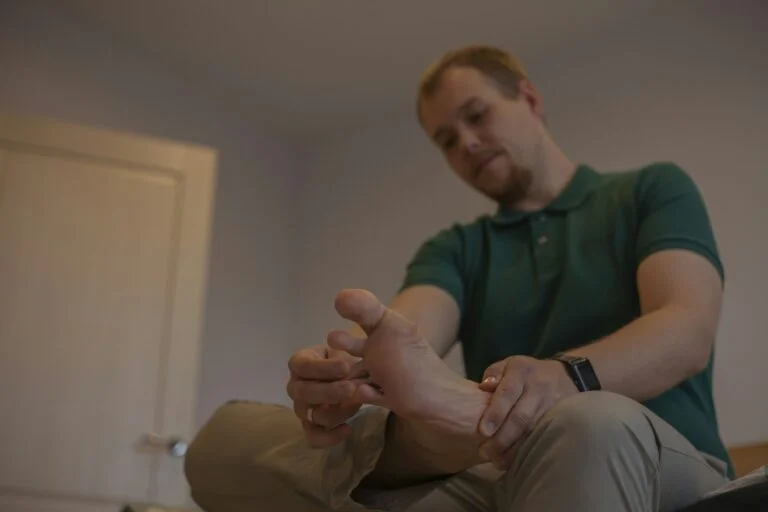
If you have numb feet, check them every day, because you may not feel a cut, blister or burn. Diabetes UK advises looking morning and night, using a mirror or a helper for the soles, and reporting any change quickly.
- Test water with your wrist or elbow before a bath or foot wash, and don’t soak your feet (Diabetes UK).
- Take care with heat. If you can’t feel temperature properly, a hot water bottle or electric blanket can burn without you noticing: warm the bed, then remove it. Bed socks are a safer way to warm cold feet.
- Wear well-fitting shoes with a wide, deep toe area and laces or a buckle, check inside them before you put them on, and see a podiatrist for corns rather than using corn plasters.
- Cut down on alcohol to no more than 14 units a week (UK guideline).
- Stop smoking and keep blood sugar on target if you have diabetes.
- Stay active with gentle walking (see how many steps a day) and clear trip hazards at home, as numb feet raise the risk of falls.
B12 and diet
Vitamin B12 is found naturally in meat, fish, eggs, milk and cheese, but not in fruit, vegetables or grains, so vegans need fortified foods or a supplement. If you think you’re low, ask your GP for a blood test rather than guessing: B12 deficiency affecting the nerves needs prompt treatment, usually by injection first. See our B vitamins guide and B12 supplements guide.
Can peripheral neuropathy be reversed?
Sometimes. Peripheral neuropathy can improve if the cause is treated early, for example low vitamin B12, a medicine side effect, alcohol or high-dose vitamin B6. Diabetic neuropathy usually can’t be reversed, but good blood sugar control can stop it getting worse. The NHS says some damage is permanent.
Left untreated, a foot ulcer can become infected and, in severe cases, lead to gangrene and amputation.
Neuropathy vs pins and needles, restless legs and carpal tunnel
A rough guide, not a diagnosis:
| Condition | Where you feel it | Typical clues |
|---|---|---|
| Peripheral neuropathy | Both feet first, later the hands | Constant numbness, tingling or burning; slowly spreading |
| Pins and needles | Wherever a nerve was pressed | Comes on after sitting or lying awkwardly; goes within minutes |
| Restless legs | Legs, mainly in the evening | Urge to move; eased by moving, not numbness |
| Carpal tunnel | Thumb and first fingers of one or both hands | Worse at night; one nerve at the wrist |
| Sciatica | Bottom and back of one leg | Shooting pain from the lower back |
Night-time leg pain can also be leg cramps; white or blue toes in the cold suggest Raynaud’s.

Next step
Magnesium Glycinate Sleep Complex
No supplement treats peripheral neuropathy or nerve pain, and nothing replaces your GP’s care. If you’d simply like a warm, caffeine-free drink for your evening wind-down, our Magnesium Glycinate Sleep Complex is a berry drink powder with 290mg of magnesium (77% NRV) per 4.75g scoop, from bisglycinate and citrate, plus glycine and L-theanine. Magnesium contributes to a reduction of tiredness and fatigue.
Add Magnesium Glycinate Sleep Complex to bag See ingredients
If you take any regular medicines, check with your GP or pharmacist first. It contains herbal extracts (hops, chamomile and passionflower), and the NHS says herbal products that cause drowsiness could add to the side effects of gabapentin. We don’t recommend our products during pregnancy or breastfeeding. Adults only. Vegan and made in the UK. Subscribe and save 25% on your first order, then 20%. New to Evopure? Join our emails for 20% off a one-off first order. Free UK delivery over £45.
Subscribe £22.49One-off £29.99
View productSources 10
- NHS. Peripheral neuropathy, including symptoms, causes, diagnosis and treatment.
- NICE Clinical Knowledge Summaries. Neuropathic pain: drug treatment. Last revised June 2026.
- NICE. Diabetic foot problems: prevention and management (NG19).
- Diabetes UK. Diabetes and your feet and Taking care of your feet.
- NHS. Vitamin B12 or folate deficiency anaemia and B vitamins and folic acid.
- NHS. Guillain-Barré syndrome and gabapentin with other medicines and supplements.
- MHRA. Metformin and reduced vitamin B12 levels: new advice for monitoring patients at risk. Drug Safety Update, 2022.
- Castelli G, et al. Peripheral neuropathy: evaluation and differential diagnosis. Am Fam Physician, 2020. PMID 33320513.
- Hanewinckel R, et al. Prevalence of polyneuropathy in the general middle-aged and elderly population. Neurology, 2016. PMID 27683845.
- Julian T, et al. Alcohol-related peripheral neuropathy: a systematic review and meta-analysis. J Neurol, 2019. PMID 30467601.
iThis guide is general information, not medical advice. If you’re worried about numbness, tingling or nerve pain, speak to a GP or pharmacist. Evopure makes the Magnesium Glycinate Sleep Complex.