
Last updated: October 2026
Garlic’s best-researched benefits are a modest drop in blood pressure in people with high blood pressure and a small fall in cholesterol when it’s raised, mostly from supplement trials. Evidence for colds, immunity, blood sugar and cancer is weak or mixed, and garlic has no authorised health claims in the UK.
Below: what the research honestly shows for each claim, why you should crush garlic and wait before cooking, raw vs cooked vs aged garlic extract, how much people take, the empty stomach and garlic in honey trends, and who should be careful.
Garlic in 30 seconds: modest evidence for blood pressure and cholesterol; one small trial for colds; mixed for blood sugar; no proof it prevents cancer. Cooking with garlic is safe for most people. Check with a pharmacist before supplements if you take blood thinners or HIV medicines, or have surgery coming up. Never give garlic to dogs.
What makes garlic special: allicin
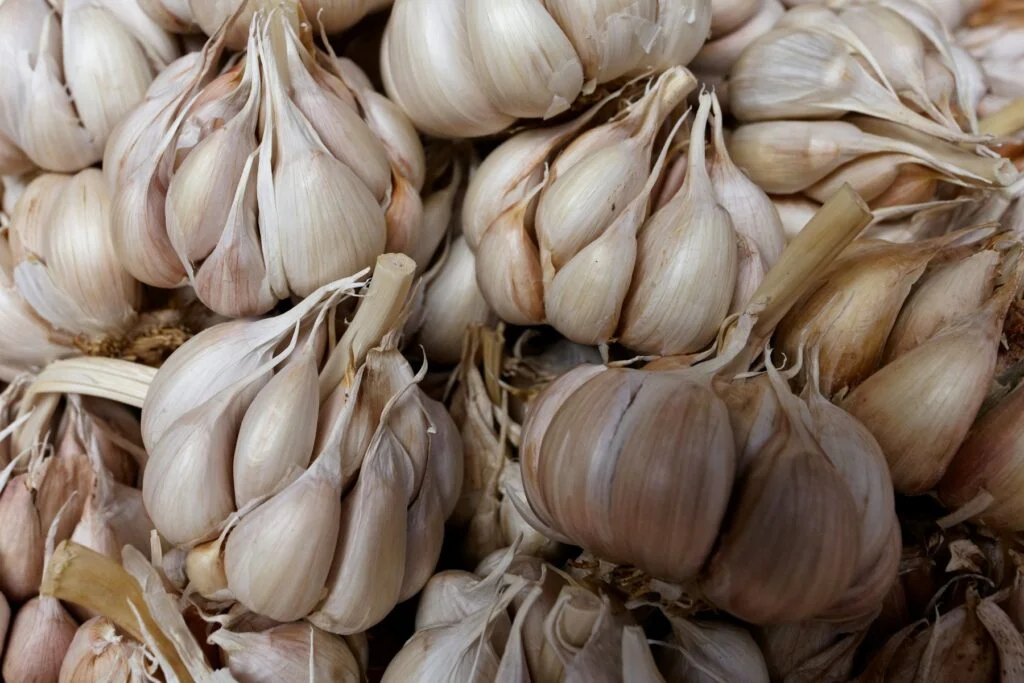
A whole garlic clove contains a compound called alliin and, stored separately, an enzyme called alliinase. When you crush, chop or chew the clove, the two meet and form allicin, the sulphur compound behind garlic’s sharp smell and most of its research. The Linus Pauling Institute notes this happens within seconds of crushing.
Heat switches the enzyme off. That’s why the order matters:
- Crush or chop first. In a lab study, crushed garlic kept more of its activity during short cooking than whole cloves did.
- Wait about 10 minutes. Some scientists recommend letting crushed garlic stand for at least 10 minutes before cooking. In an animal study, a 10 minute stand stopped a minute of microwaving from wiping out garlic’s activity completely.
- Add it near the end. Long cooking (more than about 10 minutes in boiling water or a hot oven) removed garlic’s anti-clotting activity in the lab, even when crushed.
It’s a sensible kitchen habit rather than a proven health rule: nobody has shown in people that the 10 minute wait changes blood pressure or cholesterol. In the UK, garlic has no authorised health claims on the Great Britain nutrition and health claims register, so everything below describes research, not a promise.
Garlic benefits: evidence by claim
Most garlic trials are small and short, and most use supplements (powder tablets or aged garlic extract) rather than garlic in food. Here’s an honest summary.
| Claim | What the research shows | Strength |
|---|---|---|
| Blood pressure | In 12 trials of people with high blood pressure, garlic supplements lowered the top number by about 8mmHg and the bottom number by about 5mmHg on average | Moderate |
| Cholesterol | Across 39 trials, total cholesterol fell by about 8% in people whose cholesterol was raised, if taken for more than 2 months. Little change in HDL or triglycerides | Moderate |
| Common cold | A Cochrane review found only one trial good enough to include: 146 people, fewer self-reported colds on garlic. Not enough to draw firm conclusions | Weak |
| Immunity | Very little research: a 2022 review found only two small, weak studies. The NHS says there’s little evidence garlic prevents colds | Weak |
| Blood sugar | A review of 9 small trials in type 2 diabetes found lower fasting blood sugar and HbA1c. Trials were short and varied | Early |
| Cancer | Mostly observational studies of diets. The US NCCIH says garlic doesn’t seem to lower stomach cancer risk, and its effect on bowel cancer is uncertain | Unproven |
Like onions and leeks, garlic also contains inulin, a prebiotic fibre. See our gut health guide.
Garlic for blood pressure and cholesterol
This is where garlic has its best evidence. Meta-analyses by the Australian researcher Karin Ried pooled the trials. In people with high blood pressure, garlic supplements reduced systolic pressure by around 8 to 9mmHg. Across all trials, including people with normal blood pressure, the average drop was smaller, about 5mmHg. For cholesterol, the drop was about 0.4mmol/L in people with raised levels, after at least 2 months.
Three honest caveats:
- Most trials used concentrated supplements, often aged garlic extract, not a clove in your dinner.
- Trials lasted weeks or months. None show that garlic prevents heart attacks or strokes.
- The pooled analyses and several of the recent trials come from the same research group, and many tested the same type of aged extract.
If you’ve been told your blood pressure or cholesterol is high, don’t swap prescribed medicine for garlic. Talk to your GP or pharmacist before adding a supplement, especially as garlic can interact with some medicines (see below). Diet changes that help include more fibre, oily fish and vegetables; see omega 3 and beetroot juice, which has its own blood pressure research.
Does garlic help colds and immunity?
Probably not enough to notice. The Cochrane review on garlic for the common cold found eight possible trials but only one met its standards. In that trial, 146 people took a garlic supplement or a placebo for 12 weeks; the garlic group reported 24 colds against 65 on placebo, but people recovered in about the same time once they had one. The reviewers concluded there is insufficient evidence and that most claims rely on poor-quality studies.
The NHS says there’s little evidence that supplements such as vitamin C, echinacea or garlic prevent colds or help you get better more quickly. Rest, fluids and time still do most of the work. For what does help, read how to boost your immune system and cold or flu?, and compare the evidence for echinacea, elderberry, vitamin C and zinc.
Raw vs cooked vs aged garlic extract vs tablets
| Form | What it is | Good to know |
|---|---|---|
| Raw, crushed | Fresh clove, crushed or chopped | Makes the most allicin. Strongest taste, breath and stomach effects |
| Cooked | Fried, roasted or simmered | Heat stops allicin forming. Crush first and add late to keep more |
| Aged garlic extract | Garlic soaked in a water and alcohol mix for up to 20 months | Little allicin; its main compound is S-allyl cysteine. Used in many blood pressure trials |
| Garlic powder tablets | Dried, powdered cloves, usually enteric coated | Contain no allicin themselves, only “allicin potential”. Lab tests found many tablets release little allicin |
For everyday eating, crushed garlic added towards the end of cooking is a good balance of taste and allicin. Raw garlic in dressings, dips or on toast gives you the most, if your stomach is happy with it.
How much garlic a day?
There’s no official UK recommended amount. A fresh clove weighs about 2 to 4g. Trials have typically used:
- Garlic powder: 600 to 900mg a day.
- Aged garlic extract: 1.2 to 2.4g a day in blood pressure studies, and up to 7.2g in some cholesterol studies.
As food, there’s no set limit, and a clove or two a day fits easily into normal cooking. We found no evidence that eating lots of extra raw garlic adds benefit, but it does add to the side effects: breath, wind and stomach upset. If you’re thinking of a supplement, check the safety section first and follow the label.
Garlic on an empty stomach and garlic in honey: do they work?
Raw garlic on an empty stomach
Swallowing a raw clove first thing is a popular morning habit online. We couldn’t find any trial showing it works better than garlic at other times of day. Garlic can cause stomach pain, wind and nausea, and many people find raw garlic gentler with food. If it gives you heartburn, the NHS advice is simply to avoid foods that trigger your symptoms; see acid reflux at night.
Garlic in honey
Crushed or whole cloves left in honey (sometimes “fermented honey garlic”) is a tasty way to eat garlic, but there are no trials of the mix itself. Any effect would come from the garlic, and the honey adds sugar. Never give honey to babies under 1: the NHS warns it can occasionally contain bacteria that cause infant botulism. Our manuka honey guide covers what honey can and can’t do.
The same goes for garlic water, garlic and lemon, and garlic with apple cider vinegar: harmless for most adults in food amounts, but none has trials of its own.
Side effects and who should be careful
Garlic is safe for most people in food amounts, and garlic taken by mouth has been used safely in studies lasting up to 7 years. The most common side effects are bad breath and body odour, tummy pain, wind and nausea. Some people are allergic. Raw garlic held against the skin can cause chemical burns, so don’t put cut cloves on spots, cold sores or warts.
Speak to a GP or pharmacist before taking garlic supplements if you:
- Take blood thinners such as warfarin, or aspirin, or have a bleeding disorder. Garlic supplements may increase the risk of bleeding, and case reports describe raised INR readings on warfarin.
- Have surgery coming up. Cancer centre guidance suggests stopping garlic supplements 1 to 2 weeks before, and always tell your surgical team.
- Take HIV medicines. In healthy volunteers, garlic caplets roughly halved blood levels of saquinavir, an HIV protease inhibitor. Check any supplement with your HIV clinic or pharmacist.
- Take diabetes or blood pressure medicines, as garlic might add to their effect.
- Are pregnant or breastfeeding. Garlic in normal cooking is fine, but amounts above food levels may not be safe. Ask your midwife or pharmacist first.
Take the same care if you already use other supplements that may affect bleeding: ask your pharmacist to check the combination. Our guides to ginger and turmeric cover their own safety notes.
Is garlic safe for dogs?
No. Despite the “garlic for dogs” searches, the PDSA says garlic, onions and leeks are poisonous to dogs, and all parts of these plants are toxic even when cooked or dried. That includes garlic powder in food. They can damage red blood cells and cause anaemia, and signs may take 1 to 5 days to appear. Watch for garlic in sauces, stock and leftovers. If your dog eats garlic, call your vet straight away and don’t try to make them sick at home.
Where garlic fits in a winter routine
Enjoy garlic for its flavour and as part of a vegetable-rich diet, not as a cure. A good winter routine is mostly sleep, regular meals, daylight and movement; see our winter wellness guide.
Evopure doesn’t sell garlic. If you feel run down and tired as the evenings draw in, our Magnesium Glycinate Sleep Complex is a berry-flavoured evening drink with magnesium bisglycinate and citrate, glycine, L-theanine and chamomile. It isn’t a cold remedy. Magnesium contributes to a reduction of tiredness and fatigue. We don’t recommend our products during pregnancy or breastfeeding, and they’re for adults only.
FAQs
What are the main benefits of garlic?
The best evidence is for a modest drop in blood pressure in people with high blood pressure and a small fall in raised cholesterol, mostly from supplement trials. Evidence for colds, immunity, blood sugar and cancer is weak or mixed.
Is it good to eat garlic every day?
For most adults, yes, in food amounts such as a clove or two a day. Check with a pharmacist before taking daily garlic supplements if you take blood thinners, HIV medicines or diabetes medicines, or have surgery coming up.
Is raw garlic better than cooked?
Raw, crushed garlic makes the most allicin, because heat stops the enzyme that forms it. Crushing garlic and waiting about 10 minutes before adding it late in cooking keeps more of it.
Does garlic lower blood pressure?
In trials of people with high blood pressure, garlic supplements lowered systolic pressure by about 8mmHg on average. Don’t replace prescribed medicine with garlic, and talk to your GP or pharmacist first.
Should I eat garlic on an empty stomach?
There’s no evidence it works better on an empty stomach, and raw garlic can cause stomach pain, wind and nausea. Many people find it easier with food.
Does garlic help with colds?
A Cochrane review found only one small trial, so there isn’t enough evidence. The NHS says there’s little evidence garlic prevents colds or helps you recover faster.
Can dogs eat garlic?
No. The PDSA says garlic is poisonous to dogs, even when cooked or dried. If your dog eats garlic, call your vet straight away.
Sources
- NHS. Common cold.
- NHS. Heartburn and acid reflux.
- NHS. Foods to avoid giving babies and young children.
- NCCIH. Garlic.
- Linus Pauling Institute, Oregon State University. Garlic.
- Memorial Sloan Kettering Cancer Center. Garlic.
- PDSA. Onion and garlic poisoning in dogs.
- Department of Health and Social Care. Great Britain nutrition and health claims (NHC) register.
- Ried K (2020). Garlic lowers blood pressure in hypertensive subjects, improves arterial stiffness and gut microbiota: a review and meta-analysis. Exp Ther Med.
- Ried K (2016). Garlic lowers blood pressure in hypertensive individuals, regulates serum cholesterol, and stimulates immunity: an updated meta-analysis and review. J Nutr.
- Ried K et al. (2013). Effect of garlic on serum lipids: an updated meta-analysis. Nutr Rev.
- Lissiman E et al. (2014). Garlic for the common cold. Cochrane Database Syst Rev.
- Wang J et al. (2017). Effect of garlic supplement in the management of type 2 diabetes mellitus: a meta-analysis of randomized controlled trials. Food Nutr Res.
- Piscitelli SC et al. (2002). The effect of garlic supplements on the pharmacokinetics of saquinavir. Clin Infect Dis.
- Cavagnaro PF et al. (2007). Effect of cooking on garlic antiplatelet activity and thiosulfinates content. J Agric Food Chem.
- Song K, Milner JA (2001). The influence of heating on the anticancer properties of garlic. J Nutr.
This guide is general information, not medical advice. Evopure makes the Magnesium Glycinate Sleep Complex.