

Last updated: October 2026
The best breakfast for energy combines protein, fibre and slower-release carbohydrate with a little healthy fat: think porridge with berries and nuts, eggs on wholegrain toast, or Greek yoghurt with fruit and seeds. These digest more slowly than sugary cereals or pastries, so they keep you fuller and help you avoid the mid-morning slump.
Below: what makes a breakfast last, the best breakfasts for energy with UK examples, what to limit, quick options for busy mornings, a 5-day plan, coffee timing, whether skipping breakfast matters and when tiredness isn’t about breakfast at all.
Quick picks: 5 minutes? Greek yoghurt with berries and seeds, or overnight oats. 10 minutes? Porridge with fruit and nuts, or eggs or beans on wholegrain toast. Always pair a protein food with a wholegrain or fruit.
What makes a breakfast keep you going?
No single food gives you energy all morning: it’s the mix on your plate. NHS and British Nutrition Foundation advice points to four building blocks:
- Slower-release carbohydrate. The NHS says higher-fibre starchy foods such as oats and wholegrain bread can provide a slow release of energy.
- Fibre. UK adults are advised to eat 30g of fibre a day, but most of us manage only about 20g. Breakfast is an easy place to catch up.
- Protein. Eggs, yoghurt, milk, beans, tofu, nuts and seeds help you feel full for longer. The British Nutrition Foundation puts adult needs at about 56g a day for men and 45g for women.
- A little healthy fat from nuts, seeds, nut butter or eggs.
Blood sugar and the mid-morning crash
A breakfast that is mostly sugar or refined starch is digested quickly, so a couple of hours later you’re hungry again and reaching for a biscuit. Fibre and protein slow that process.
In a small trial of 36 adults, porridge oats left people fuller and less hungry than the same calories of a refined flaked corn cereal, and they ate less at lunch. Their stomachs emptied more slowly, and three hours after the corn cereal, blood sugar was at its lowest of the test mornings.
To be honest, though: a 2014 systematic review found only “emerging, but still equivocal” evidence that breakfasts with a lower blood sugar response help concentration, from mostly small, short studies. The mid-morning crash is real as hunger and flagging focus, but the science is less clear-cut than social media suggests.
If you often feel sleepy after eating rather than mid-morning, see our guide to feeling tired after eating.
The best breakfasts for energy
These everyday UK breakfasts tick most of the boxes. Each one pairs a protein food with a fibre-rich carbohydrate or fruit.
| Breakfast | Why it works | Swap tip |
|---|---|---|
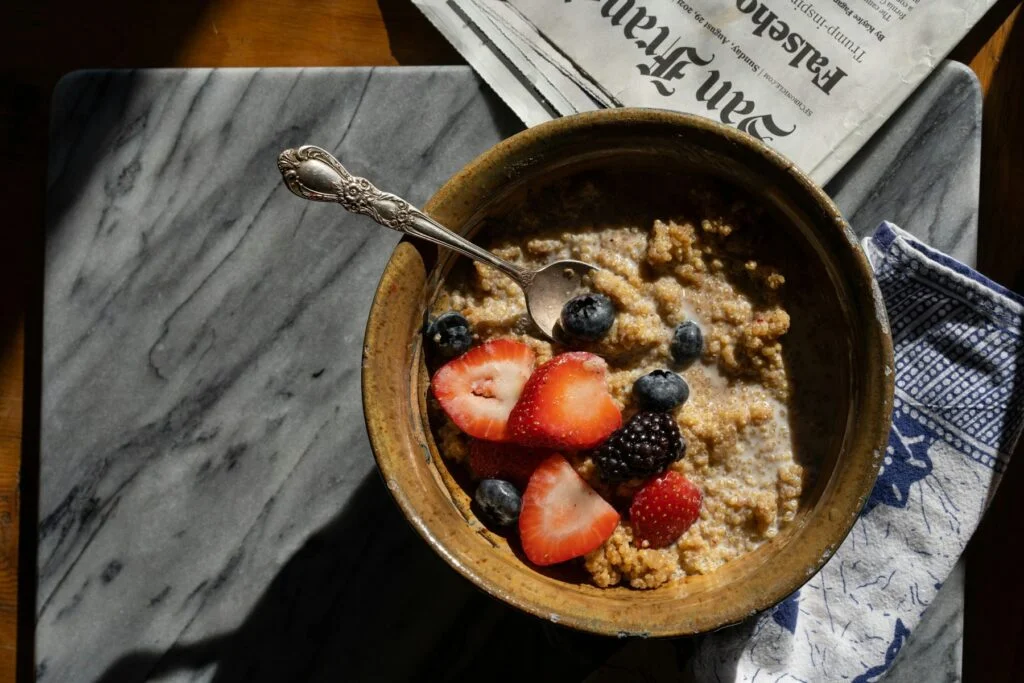
| Porridge with berries and nuts | Oats bring fibre and slower-release carbs; nuts add protein and fat; berries add fibre and sweetness | Swap sugar or syrup for fruit; make it with milk or soya milk for extra protein |
| Eggs on wholegrain toast | Eggs are a good source of protein; wholegrain bread adds fibre | Swap white toast for wholemeal or seeded; add tomatoes or spinach |
| Greek yoghurt with fruit and seeds | The NHS lists yoghurt as a good source of protein; fruit and seeds add fibre | Swap flavoured yoghurt for plain and add your own fruit |
| Overnight oats | Same benefits as porridge, ready when you wake | Use plain oats, milk or yoghurt, chia or other seeds, and fruit instead of honey |
| Beans on wholegrain toast | Beans are a good source of fibre and protein and low in fat | Choose reduced sugar and salt beans |
| Peanut butter on wholemeal toast with an orange | The NHS estimates this gives about 8.3g of fibre, over a quarter of the daily 30g | Choose nut butter with no added sugar or palm oil |
| Wholegrain cereal with milk and fruit | The NHS suggests a wholegrain, lower-sugar cereal with semi-skimmed milk and sliced fruit | Swap frosted or chocolate cereal for a plain wholegrain one |
| A smoothie done right | Quick to drink on the go, with protein if you add yoghurt or milk | Blend whole fruit with yoghurt, oats and seeds; keep it to 150ml if it’s mostly fruit |
| Scrambled tofu on toast (vegan) | Tofu gives plant protein; wholegrain toast gives fibre | Add mushrooms or spinach for extra veg |
Why protein matters at breakfast
In a small trial, 20 overweight young women who usually skipped breakfast ate either a cereal breakfast with 13g of protein or an egg and meat breakfast with 35g. Both reduced hunger compared with skipping, but the higher-protein one made them feel fuller still and cut evening snacking on high-fat foods. It’s a pointer rather than proof.
Smoothies done right
The NHS says fruit juice and smoothies should be limited to a combined 150ml a day, because blending releases the sugars from the fruit. Make yours more meal than juice: one portion of fruit, milk or yoghurt for protein, and some oats, nut butter or seeds.
What to limit at breakfast
Many popular breakfasts are high in free sugars, which the NHS says adults should keep to 30g a day at most, about 7 sugar cubes. The ones to watch:
- Sugary cereals. The NHS lists sugary breakfast cereals among the main sources of free sugars. Choose unsweetened wholegrain cereals that aren’t frosted or coated with chocolate or honey, and add fruit for sweetness.
- Pastries, croissants and muffins. Fine as an occasional treat, but the NHS lists pastries among common sources of free sugars, and they offer little protein or fibre, so they don’t keep you going for long.
- Large glasses of juice. Even unsweetened juice counts as free sugar. Keep juice and smoothies to 150ml a day in total.
- Sweetened yoghurts and breakfast bars. Check the label. The NHS says more than 22.5g of total sugars per 100g is high, and 5g or less per 100g is low.
- Sugar in tea and coffee. If you take sugar, cut it down gradually.
Quick breakfasts for busy mornings
A good breakfast doesn’t have to take long. These take 5 minutes or less, or can be made the night before:
- Overnight oats in a jar: oats, milk or yoghurt, seeds and fruit, made the evening before.
- Greek yoghurt pot with a handful of berries and a spoonful of seeds or nuts.
- Batch-boiled eggs: boil a few on Sunday and keep them in the fridge, then have two with a slice of wholegrain toast.
- Nut butter on wholemeal toast with a banana or an orange.
- Microwave porridge: about 2 minutes, topped with frozen berries.
- A breakfast smoothie made with milk or yoghurt, oats, one fruit and seeds.
Even an apple and a handful of nuts on the way out beats nothing. For the rest of your morning, see our morning routine for energy.
A 5-day breakfast plan for energy
A simple working week that rotates protein and fibre sources, so you don’t get bored. Swap days around to suit your schedule.
| Day | Breakfast | Prep time | Protein from | Fibre from |
|---|---|---|---|---|
| Monday | Porridge with blueberries and chopped walnuts | 5 minutes | Milk, walnuts | Oats, berries |
| Tuesday | Overnight oats with grated apple, cinnamon and chia seeds | 5 minutes the night before | Yoghurt or milk, seeds | Oats, apple, chia |
| Wednesday | Two eggs on wholegrain toast with cherry tomatoes | 10 minutes | Eggs | Wholegrain bread, tomatoes |
| Thursday | Greek yoghurt with raspberries, pumpkin seeds and a sprinkle of oats | 3 minutes | Yoghurt, seeds | Raspberries, oats, seeds |
| Friday | Reduced sugar beans on wholemeal toast with spinach | 5 minutes | Beans | Beans, wholemeal bread, spinach |
At the weekend, try scrambled tofu or a veg-packed omelette. Through the day, the NHS suggests regular meals and healthy snacks every 3 to 4 hours rather than one big meal less often. If you dip after lunch, see our guide to the afternoon slump.
Breakfast and coffee: getting the timing right
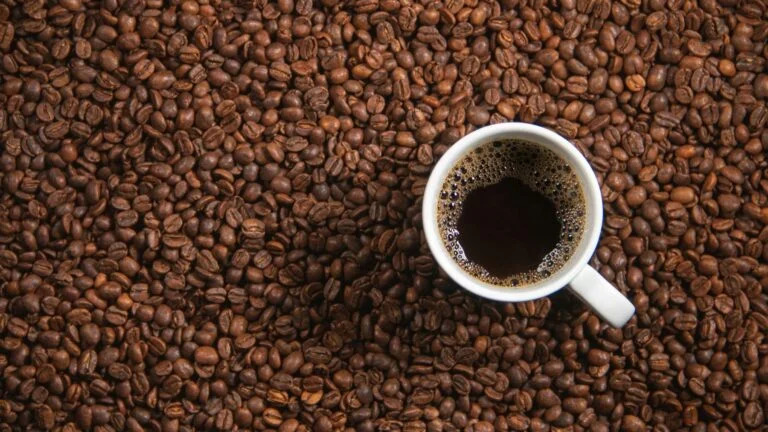
Coffee makes you feel more awake, but it isn’t food. If it replaces breakfast, you may be running on caffeine alone until lunch.
In a University of Bath study of 29 healthy adults, strong black coffee (about 300mg of caffeine) after a broken night raised peak blood sugar after a sugary drink by about 9%. It’s a short-term lab result, not a reason to quit coffee, but one more reason to have it with or after breakfast. More in is coffee on an empty stomach bad for you?
- Have coffee with or after food, especially if it makes you jittery or gives you a coffee crash later.
- Mind the afternoon. The NHS says caffeine’s effects can last up to 7 hours, so a late cup can affect your sleep. See how long caffeine lasts.
- The “wait 90 minutes” rule is popular online, but we haven’t found good trials behind it.
- Want a gentler cup? The NHS estimates about 75mg of caffeine in a cup of tea against about 100mg in instant coffee. See matcha and our coffee alternatives.
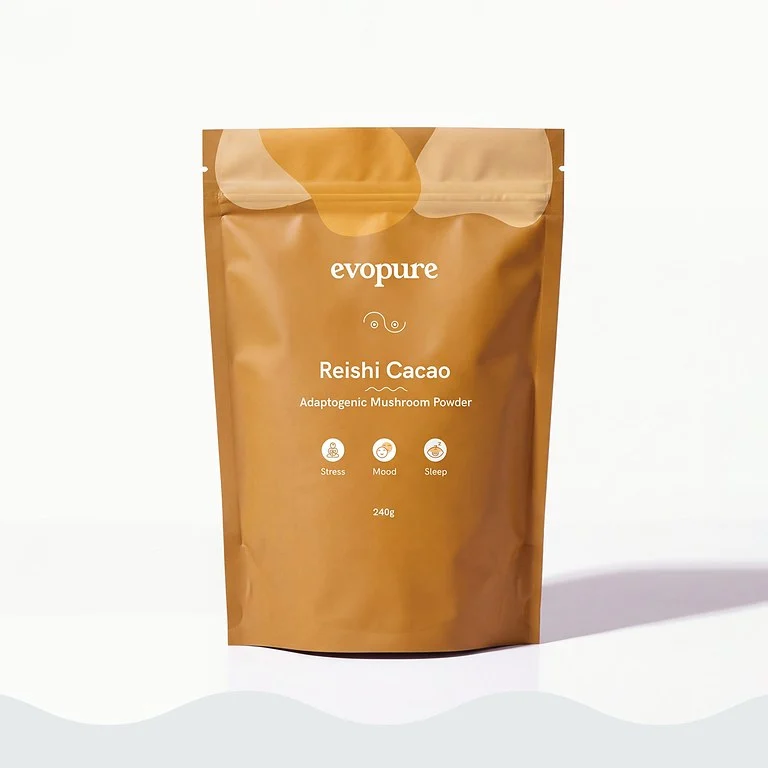
If you’d like a warm morning drink that isn’t coffee, our Reishi Mushroom Adaptogenic Complex is a reishi hot chocolate made with reishi mushroom extract, organic cacao, maca and coconut milk powder. Cacao contains a little natural caffeine, so it isn’t caffeine-free, and it’s sweetened with coconut sugar, so have it alongside a protein-rich breakfast, not instead of one. See also healthy hot chocolate.
Does skipping breakfast matter?
Honestly, the evidence is mixed, and it depends on you.
- For weight, breakfast isn’t magic. A 2019 BMJ review of 13 trials found breakfast eaters ate about 260 more calories a day than skippers and weighed about 0.44kg more. The trials were short and mostly low quality.
- For energy and activity, the picture is more positive. In the UK’s Bath Breakfast Project, 33 adults ate breakfast or fasted until midday for 6 weeks. Breakfast eaters were more physically active (about 442 more calories a day burned through movement) and had steadier blood sugar in the afternoon and evening, though they also ate about 539 more calories a day.
- The NHS view: a healthy breakfast high in fibre and low in fat, sugar and salt can help you get the nutrients you need.
Our take: if you’re not hungry first thing and feel fine until lunch, a later breakfast is OK. If skipping leaves you shaky, unfocused or raiding the biscuit tin at 11am, eat a balanced breakfast. If you have diabetes, follow your care team’s advice on meal timing.
When tiredness isn’t about breakfast
If you eat well and still feel drained, breakfast probably isn’t the problem. The NHS lists causes of tiredness that no breakfast will fix:
- Iron deficiency anaemia: lack of energy, heart palpitations, shortness of breath and pale skin. See iron deficiency symptoms, and our list of iron-rich foods (the NHS includes cereals and bread with added iron, dried fruit and pulses). The NHS also advises cutting down on tea and coffee if you have iron deficiency anaemia, as large amounts can reduce iron absorption.
- Vitamin B12 deficiency: see vitamin B12 deficiency symptoms.
- Thyroid problems: see underactive thyroid symptoms.
- Poor sleep, including sleep apnoea, where loud snoring and gasping at night leave you tired by day.
- Diabetes: very tired, very thirsty and peeing more than usual.
See a GP if you’ve been tired for a few weeks and aren’t sure why, if it affects daily life, or if it comes with symptoms such as weight loss or mood changes. Blood tests can check for anaemia, diabetes and thyroid problems. See also why am I always tired?
Sleep is the other half of morning energy, so give your evenings a calm wind-down too. Our Magnesium Glycinate Sleep Complex is a caffeine-free evening drink; magnesium contributes to a reduction of tiredness and fatigue. For supplements, see the best supplements for energy, ranked by evidence.
FAQs
What is the best breakfast for energy?
One that combines protein, fibre and slower-release carbohydrate, such as porridge with berries and nuts, eggs on wholegrain toast, or Greek yoghurt with fruit and seeds.
What should I eat in the morning for energy and focus?
Pair a protein food such as eggs, yoghurt, beans or nuts with a wholegrain or fruit, keep added sugar low, and have coffee with breakfast rather than instead of it.
Is porridge good for energy?
Yes. Oats are a high-fibre wholegrain, and in a small trial porridge kept people fuller than a refined corn cereal with the same calories. Top it with fruit and nuts rather than sugar.
Are eggs a good breakfast for energy?
Yes. Eggs are a good source of protein, which helps you feel full. Have them with wholegrain toast or vegetables for fibre.
Is it bad to skip breakfast?
Not necessarily. The evidence is mixed, but in one UK trial breakfast eaters were more active and had steadier blood sugar later in the day. If skipping leaves you shaky or unfocused, eat breakfast.
Should I drink coffee before or after breakfast?
With or after breakfast is a good default. In a small UK study, strong black coffee after a broken night raised the blood sugar response to a sugary drink.
Why do I feel tired after breakfast?
A breakfast high in sugar or refined carbohydrate can leave you hungry and flat soon after. Try more protein and fibre. If you’re tired most of the time, see a GP to rule out anaemia or thyroid problems.
Sources
- NHS. 8 tips for healthy eating.
- NHS. The Eatwell Guide.
- NHS. Starchy foods and carbohydrates.
- NHS. How to get more fibre into your diet.
- NHS. Sugar: the facts.
- NHS. Self-help tips to fight tiredness.
- NHS. Iron deficiency anaemia.
- NHS. Foods to avoid in pregnancy (caffeine in common drinks).
- NHS. Tiredness and fatigue.
- British Nutrition Foundation. Fibre and Protein.
- Geliebter A et al (2015). Effects of oatmeal and corn flakes cereal breakfasts on satiety, gastric emptying, glucose, and appetite-related hormones. Annals of Nutrition and Metabolism.
- Leidy HJ et al (2013). Beneficial effects of a higher-protein breakfast on the appetitive, hormonal, and neural signals controlling energy intake regulation in overweight/obese, “breakfast-skipping,” late-adolescent girls. American Journal of Clinical Nutrition.
- Edefonti V et al (2014). The effect of breakfast composition and energy contribution on cognitive and academic performance: a systematic review. American Journal of Clinical Nutrition.
- Sievert K et al (2019). Effect of breakfast on weight and energy intake: systematic review and meta-analysis of randomised controlled trials. BMJ.
- Betts JA et al (2014). The causal role of breakfast in energy balance and health: a randomized controlled trial in lean adults. American Journal of Clinical Nutrition.
- Smith HA et al (2020). Glucose control upon waking is unaffected by hourly sleep fragmentation during the night, but is impaired by morning caffeinated coffee. British Journal of Nutrition.
This guide is general information, not medical advice. Evopure makes the Reishi Mushroom Adaptogenic Complex and Magnesium Glycinate Sleep Complex.