Last updated: October 2026
Caffeine withdrawal is the headache, tiredness, low mood, foggy head and irritability you can get when you suddenly cut down or stop caffeine. Symptoms usually start 12 to 24 hours after your last dose, peak at around 20 to 51 hours and last 2 to 9 days. Cutting down gradually over a few weeks is the gentler way to quit.
Below: the symptoms, a day-by-day timeline, why it happens, how much caffeine is in UK drinks, a 4-week plan to cut down without the crash, honest swaps and when a headache needs a GP.
Caffeine withdrawal symptoms
The biggest review of caffeine withdrawal looked at 66 studies and confirmed 10 core symptoms. Three more were judged likely to be real too.
| Core symptoms | Also likely |
|---|---|
| Headache | Flu-like feelings |
| Fatigue and low energy | Nausea or vomiting |
| Drowsiness and feeling less alert | Muscle pain or stiffness |
| Low mood and feeling less content | |
| Difficulty concentrating | |
| Irritability | |
| Feeling foggy or not clear-headed |
Headache is the classic one: it affected about half of people in the experiments. For most people it’s unpleasant rather than serious, but in the same review about 13% had symptoms bad enough to cause real distress or get in the way of work and daily life. That’s why “I’ll just stop on Monday” goes wrong so often.
You don’t need to be a heavy drinker to feel it. Stopping from as little as 100mg a day, about one mug of instant coffee, produced symptoms, and the more you usually have, the more likely and stronger they are. If your headaches tend to come at weekends, a later-than-usual first cup could be the reason. If you’re often foggy and flat, see also why am I always tired?
How long does caffeine withdrawal last?
Typically 2 to 9 days. Symptoms start 12 to 24 hours after your last caffeine, are worst at around 20 to 51 hours (roughly days 1 to 2), then fade. Here’s what that tends to look like if you stop all at once:
| When | What you might notice |
|---|---|
| First 12 hours | Usually little or nothing. You may just want your usual cup |
| 12 to 24 hours (day 1) | A dull headache starts, with tiredness, yawning and less focus |
| 20 to 51 hours (days 1 to 2) | The peak: headache, fatigue, low mood, irritability, brain fog; some people feel flu-ish or a bit sick |
| Days 3 to 4 | Easing for most people, though energy may still be low |
| Days 5 to 9 | Most people feel back to normal by the end of this window |
This is a typical pattern, not a rule: the more caffeine you were having, the tougher it tends to be. If you feel worse after 2 weeks, or a headache keeps getting worse, something else may be going on (see when to see a GP). For how long a single coffee stays in your system, see how long does caffeine last?
Why does caffeine withdrawal happen?
It comes down to a brain chemical called adenosine. Adenosine builds up the longer you’re awake and adds to the feeling of sleepiness. At everyday doses, caffeine works mainly by blocking adenosine receptors, so the tired signal can’t land properly.
Have caffeine every day and your body adapts to it being there. Dependence can develop at fairly low daily doses and after quite short periods of regular use. Take the caffeine away and the adenosine signal hits harder than normal, which is why the first thing most people feel is tiredness and fog.
Blood flow is part of it too. Caffeine reduces blood flow in the brain. In a carefully controlled study, regular users who swapped to a dummy pill had faster blood flow in the main brain arteries within 24 hours, alongside feeling more tired, sluggish and less energetic. That’s the same window in which the headache usually starts.
The same study found something worth knowing if you’re on the fence: after 2 weeks on 400mg a day, there was almost no net benefit compared with 2 weeks on no caffeine at all. A lot of the morning boost is simply undoing the overnight withdrawal. More on that in why coffee crashes happen.
The caffeine withdrawal headache
The withdrawal headache usually starts 12 to 24 hours after your last caffeine and is at its worst over the next day or two. It can feel a lot like a tension headache. If you regularly wake with one, especially at weekends, read waking up with a headache.
What helps, following NHS self-care advice for headaches:
- Drink plenty of water.
- Rest, and try to relax: stress can make headaches worse.
- Paracetamol or ibuprofen if you need them, following the pack.
- Don’t skip meals, don’t sleep much more than usual and take screen breaks.
Two cautions. Some tablets and supplements contain caffeine, so check the label before you take one mid-detox. And try not to rely on painkillers every day: the NHS lists taking too many painkillers as a common cause of headaches in its own right.
If you’re tapering and the headache is bad, it’s fine to go back to the previous week’s amount for a few days, then carry on more slowly.
How much caffeine is in UK drinks?
Before you cut down, add up what you actually have. These are typical figures from the NHS (UK mugs and cans) and from the European Food Safety Authority’s caffeine data (smaller cups), so the serving size matters:
| Drink or food | Serving | Caffeine (about) |
|---|---|---|
| Instant coffee | Mug | 100mg |
| Filter coffee | 200ml cup | 90mg (a mug, or coffee-shop coffee, can be much more) |
| Espresso | 60ml | 80mg |
| Decaf coffee | 200ml cup | 4mg |
| Tea (black or green) | Mug | 75mg |
| Green tea | 250ml cup | 38mg |
| Decaf tea | 250ml cup | 8mg |
| Cola | Can | 40mg |
| Energy drink | 250ml can | 80mg |
| Chocolate milk made with cocoa | 200ml | 34mg |
| Plain dark chocolate | 50g bar | Under 25mg |
| Plain milk chocolate | 50g bar | Under 10mg |
| Herbal teas and rooibos | Any | None |
The NHS notes that filter coffee and coffee from coffee shops can contain more than instant, and a latte or cappuccino has roughly the caffeine of the espresso shots in it. Strength varies a lot with the beans, the brew and the size of the cup, so treat any single figure as a guide. Energy drinks are covered in are energy drinks bad for you?, and matcha in matcha benefits.
How much caffeine is safe?
- Healthy adults: up to 400mg a day is unlikely to cause problems for most people. That’s the figure the Food Standards Agency uses, based on the European Food Safety Authority’s 2015 opinion. Single doses up to 200mg are also fine for most adults.
- Pregnancy: the NHS says no more than 200mg a day, because too much caffeine has been linked to a higher chance of miscarriage and stillbirth. That’s about two mugs of instant coffee. If you’re pregnant and well over this, cut down steadily rather than suddenly and talk to your midwife or GP if you’re struggling.
- Sensitive people: the FSA notes that some people get jittery, anxious or find it hard to concentrate at lower doses, especially with underlying health conditions.
You don’t have to quit completely to feel better. Coming down to a level that suits your sleep and mood is a perfectly good goal.
How to cut down without the crash: a 4-week plan
Gradual reduction works. In two randomised trials from Johns Hopkins, people who followed a simple written plan to cut caffeine step by step over 6 weeks drank much less, and kept it down for months. In the 2026 trial, average intake fell from 565mg to 233mg a day, with fewer sleep, anxiety and gut symptoms.
A sensible pace is to cut by about 10 to 25% a week. Here’s an example for someone starting on four mugs of instant coffee a day (about 400mg). Half-caf means half regular and half decaf, so roughly half the caffeine.
| Week | Your day | Caffeine (about) |
|---|---|---|
| Now | 4 mugs of instant coffee | 400mg |
| Week 1 | 3 mugs regular, 1 half-caf | 350mg |
| Week 2 | 2 mugs regular, 2 half-caf | 300mg |
| Week 3 | 2 mugs regular, 1 half-caf, 1 decaf or herbal tea | 255mg |
| Week 4 | 1 mug regular, 2 half-caf, 1 decaf or herbal tea | 205mg |
Want to stop completely? Keep going at the same pace, swapping one more drink each week until you’re on decaf, herbal tea or other caffeine-free drinks.
Tips that make it easier:
- Cut the afternoon ones first. They do the most damage to sleep, and keeping your first morning cup makes the early weeks easier.
- Swap coffee for tea for a gentler step down: a mug of tea has about three quarters of the caffeine of instant coffee.
- Keep the ritual. A warm mug at the same times of day matters more than people expect.
- Watch hidden caffeine in cola, energy drinks, pre-workout powders and some tablets.
- Plan the hard days. Start a new step at the weekend or on a lighter week, not before a big deadline.
For the dip that often follows lunch, our afternoon slump guide has ideas that don’t involve another coffee.
Caffeine, sleep and anxiety
Sleep. Caffeine lasts longer than most people think. In one study, a large dose taken 6 hours before bed still cut sleep noticeably. A major review found that regular daily caffeine is linked with more disturbed sleep and daytime sleepiness, and that the risks to sleep are widely underestimated. It’s an easy loop to fall into: poor sleep, more coffee, worse sleep. If that sounds familiar, read tired but wired and our sleep hygiene habits.
Anxiety. Caffeine can cause jitteriness and anxious feelings in sensitive people, and withdrawal can bring a short-term dip in mood and more irritability. Cutting down slowly gives your body time to adjust, and in the 2026 trial, people who cut down reported fewer anxiety symptoms by the end. See does caffeine cause anxiety? for more.
Good swaps
Honest swaps, from most to least caffeine:
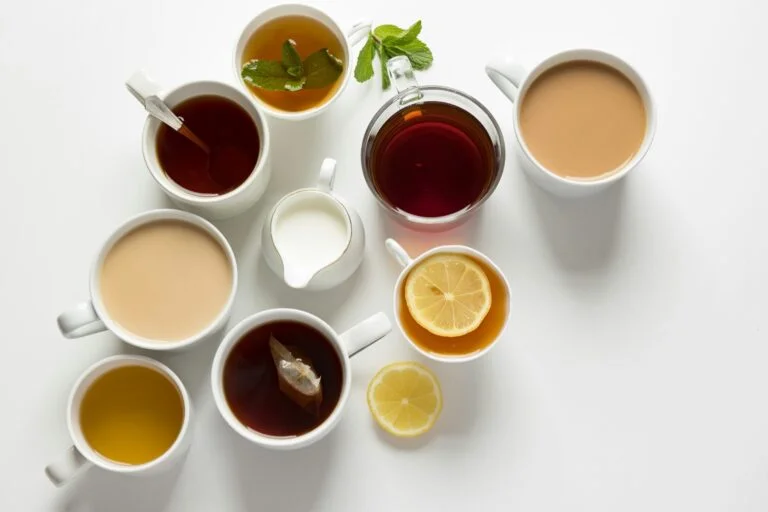
- Tea instead of coffee: a gentler step down, with plenty of ritual.
- Half-caf, then decaf: same taste, much less caffeine. Decaf still has a small amount. See decaf coffee.
- Green tea or matcha: less than coffee per cup, but not caffeine-free.
- Mushroom coffee: many blends still contain real coffee, so check the label. See does mushroom coffee work?
- Hot chocolate or cacao: cacao contains a little natural caffeine, much less than coffee. See healthy hot chocolate.
- Herbal teas, rooibos and hot water with lemon: caffeine-free and good for the afternoon and evening.
More ideas in our list of coffee alternatives.
Two of our own drinks fit into this. The Reishi Mushroom Adaptogenic Complex is a hot chocolate made with reishi mushroom extract, cacao, maca, coconut milk powder and coconut sugar. Cacao contains a little natural caffeine, so it isn’t caffeine-free, but it makes a warm, comforting swap for an afternoon coffee. The Magnesium Glycinate Sleep Complex is a berry-flavoured drink with no caffeine, made with magnesium bisglycinate and citrate, L-theanine and chamomile. Magnesium contributes to a reduction of tiredness and fatigue.
We don’t recommend our products during pregnancy or breastfeeding, and they’re for adults (18+) only.
When to see a GP
A withdrawal headache usually fades within a few days. See a GP if:
- your headache isn’t getting better with self-care, or is getting worse
- you regularly get headaches
- you still feel very tired, low or foggy 2 weeks after cutting down
- you take regular medication and are unsure about caffeine or painkillers (a pharmacist can help too)
Ask for an urgent GP appointment or contact NHS 111 if a headache comes with vision problems, is triggered or made worse by coughing, sneezing, bending or exercise, comes with being sick, or comes with jaw pain when eating or a tender scalp.
Call 999 or go to A&E if a headache started suddenly and is extremely painful, or comes with numbness or weakness, difficulty speaking, balancing or walking, confusion or drowsiness, a seizure, loss of vision, a recent head injury, a rash that doesn’t fade under a glass, or a very high temperature with a stiff neck.
FAQs
How long does caffeine withdrawal last?
Usually 2 to 9 days. Symptoms start 12 to 24 hours after your last caffeine and are worst at around 20 to 51 hours, then gradually fade.
What are the symptoms of caffeine withdrawal?
Headache, tiredness, low energy, drowsiness, low mood, irritability, difficulty concentrating and feeling foggy. Some people also get flu-like feelings, nausea or muscle aches.
How do I get rid of a caffeine withdrawal headache?
Drink water, rest, eat regular meals and take paracetamol or ibuprofen if needed. If you’re cutting down, going back to the previous step for a few days and tapering more slowly usually helps.
Is it better to quit caffeine cold turkey or gradually?
Gradually, for most people. Cutting by about 10 to 25% a week, using half-caf, decaf and tea, gives your body time to adjust and is the approach used in caffeine reduction trials. Stopping suddenly is fine if you can handle a rough few days.
Can you get caffeine withdrawal from tea?
Yes. A mug of tea has about 75mg of caffeine, and withdrawal has been seen after stopping as little as 100mg a day, so a few mugs of tea a day can be enough.
How much caffeine is too much?
Up to 400mg a day is unlikely to cause problems for most healthy adults. In pregnancy the NHS advises no more than 200mg a day. Sensitive people may notice side effects at lower amounts.
Sources
- Juliano LM, Griffiths RR (2004). A critical review of caffeine withdrawal: empirical validation of symptoms and signs, incidence, severity, and associated features. Psychopharmacology.
- Sigmon SC et al (2009). Caffeine withdrawal, acute effects, tolerance, and absence of net beneficial effects of chronic administration. Psychopharmacology.
- Nehlig A et al (1992). Caffeine and the central nervous system: mechanisms of action, biochemical, metabolic and psychostimulant effects. Brain Research Reviews.
- Porkka-Heiskanen T et al (1997). Adenosine: a mediator of the sleep-inducing effects of prolonged wakefulness. Science.
- Sweeney MM et al (2019). A randomized controlled trial of a manual-only treatment for reduction and cessation of problematic caffeine use. Drug and Alcohol Dependence.
- Knerr AW et al (2026). Randomized controlled trial of a remote-guided caffeine reduction intervention. Drug and Alcohol Dependence.
- Drake C et al (2013). Caffeine effects on sleep taken 0, 3, or 6 hours before going to bed. Journal of Clinical Sleep Medicine.
- Roehrs T, Roth T (2008). Caffeine: sleep and daytime sleepiness. Sleep Medicine Reviews.
- NHS. Headaches.
- NHS. Foods to avoid in pregnancy (caffeine).
- Food Standards Agency. Food supplements containing caffeine.
- EFSA. Caffeine; and EUFIC. Caffeine levels in different foods and drinks (based on EFSA data).
This guide is general information, not medical advice. Evopure makes the Reishi Mushroom Adaptogenic Complex and the Magnesium Glycinate Sleep Complex.