Last updated: October 2026
Turmeric is a spice whose main active compound, curcumin, has been studied for joint pain in osteoarthritis, indigestion, inflammation markers, mood and post-exercise soreness. Results are promising but mostly from small, short trials, and no health claim is authorised in the UK. Curcumin is poorly absorbed, and concentrated supplements carry a rare risk of liver injury.
Below: what the research really shows for each use, why black pepper is added, food vs supplement doses, and who should avoid turmeric supplements.
What are turmeric and curcumin?
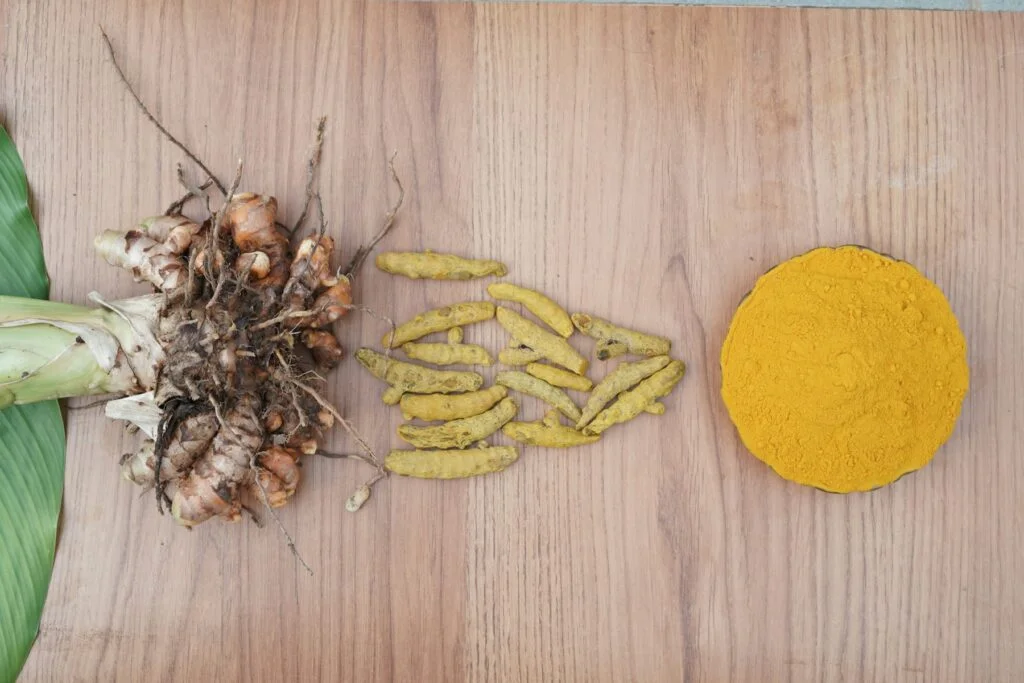
Turmeric is the dried underground stem (rhizome) of Curcuma longa, a plant in the ginger family grown mainly in India. Ground into a bright yellow powder, it has been used for centuries to colour and flavour food, and in traditional Indian and Chinese medicine.
Curcumin is the best known of turmeric’s natural compounds, called curcuminoids. It is also the yellow colouring E100 used in many foods. Most turmeric research is really curcumin research, and the difference matters: pure turmeric powder contains only about 3% curcumin by weight, while supplements are often concentrated extracts.
In the UK, turmeric is mostly sold as a food and as a food supplement. Like other popular herbal supplements such as berberine, black seed oil and holy basil, it has no authorised health claims. So anything below describes what studies have found, not a promise of what turmeric will do for you.
Turmeric benefits: the evidence at a glance
An honest summary of the main areas studied, and how strong the evidence is.
| Area studied | What studies show | Strength of evidence |
|---|---|---|
| Knee osteoarthritis | Reviews of 8 to 15 trials found lower pain and stiffness scores than placebo, and similar results to anti-inflammatory painkillers in head-to-head trials | Moderate to low: many small, short trials |
| Indigestion | Recognised in Europe as a traditional herbal use for fullness, slow digestion and wind. One trial of 206 adults found curcumin similar to omeprazole over 4 weeks | Traditional use plus one good trial |
| Irritable bowel syndrome | 3 trials with 326 people showed a small improvement that was not statistically significant | Low |
| Inflammation markers | Trials found lower C-reactive protein (CRP), a blood marker of inflammation, than placebo, mostly in people with long-term conditions | Low to moderate: a lab marker, not a symptom |
| Mood | A 2026 review of 19 trials found improved depression scores, but the authors called the effect fragile | Low: short trials, mixed results |
| Exercise recovery | Lower creatine kinase (a muscle damage marker) and soreness ratings after hard exercise | Low to moderate: small trials |
| Blood sugar | 18 trials in type 2 diabetes found modest falls in fasting glucose and HbA1c | Low to moderate; mainly matters as a medicine interaction |
| Skin, weight loss, brain, heart | Mostly lab, animal or small early studies | Very low |
The US National Center for Complementary and Integrative Health sums it up plainly: there isn’t yet enough evidence to say for certain that turmeric or curcumin is beneficial for any health purpose, though some early results, especially for osteoarthritis, are positive.
Turmeric for joints and osteoarthritis
Joints are where turmeric has been studied most. A 2016 review of 8 randomised trials found that turmeric extracts, usually giving about 1,000mg of curcumin a day, lowered arthritis pain scores compared with placebo. In the trials that compared them, turmeric did about as well as common painkillers. The authors were clear that the trials were too few, too small and of mixed quality to draw firm conclusions.
A larger 2021 review pooled 15 trials with 1,621 people with osteoarthritis. It found better pain, stiffness and function scores than placebo, side effects similar to placebo, and results similar to non-steroidal anti-inflammatory drugs (NSAIDs).
One of the better designed trials, published in 2020, gave 70 people with knee osteoarthritis turmeric extract or a placebo for 12 weeks. Knee pain improved more with turmeric, but MRI scans showed no change in swelling inside the knee or in the cartilage. The trial was partly funded by a herbal products company.
Arthritis UK’s view is cautious: it says there is only limited trial evidence so far, that turmeric seems to have only minor side effects, and that it can interact with medicines, so medical advice is important. Turmeric is not a treatment for arthritis and isn’t a replacement for the exercise, weight management and medicines your GP may recommend. Our guide to joint pain covers the causes and the approaches with the strongest evidence, and CBD and arthritis looks at what the trials show for CBD.
Turmeric for digestion
Digestion is turmeric’s oldest use. The European Medicines Agency recognises turmeric as a traditional herbal medicine for mild digestive complaints such as feeling full, slow digestion and wind. That status rests on at least 30 years of safe traditional use, not on proof from clinical trials. It also says to see a doctor if symptoms last longer than 2 weeks.
The best modern trial, published in 2023, randomly gave 206 adults with functional dyspepsia (ongoing indigestion with no obvious cause) curcumin at 2,000mg a day, the stomach acid medicine omeprazole, or both, for 28 days. All three groups improved by a similar amount. There was no placebo group, so it can’t show how much of the improvement was down to time or expectation.
For irritable bowel syndrome, the evidence is weaker: a review of 3 trials with 326 people found a small benefit that could have been down to chance. If you’re working on your gut, our guides to gut health and supplements for digestion cover the options with more evidence. Persistent indigestion, heartburn or a change in bowel habits should always be checked by a GP.
Inflammation markers, mood and exercise recovery
Inflammation markers
Curcumin’s reputation rests on lab studies of inflammation signalling. In people, a 2022 review of trials found that curcumin lowered CRP, a blood marker of inflammation, by an average of about 3.7mg/L compared with placebo, mostly in people with long-term inflammatory conditions. A change in a blood marker isn’t the same as feeling better, and these trials used concentrated supplements, not food amounts.
Mood
A 2017 review of 6 small trials and a 2026 review of 19 trials both found improved depression scores with curcumin. But the newer review found the results varied widely between trials and called the effect fragile, and most trials lasted only 4 to 8 weeks. Curcumin is not a treatment for depression or anxiety. If your mood has been low for more than a couple of weeks, speak to your GP, and see our guide to low mood. Other herbs studied for stress include ashwagandha, which has its own evidence and safety points.
Exercise recovery
A 2021 review of trials found that curcumin taken around hard exercise lowered creatine kinase, a marker of muscle damage, and muscle soreness ratings compared with placebo. The trials were small and used varied doses and exercise tests. Sleep, food and sensible training load still do most of the work: see our guide to muscle recovery.
Why turmeric is taken with black pepper
Curcumin is poorly absorbed. It dissolves badly in water, and what does get absorbed is quickly broken down by the gut wall and liver. In a well known 1998 study, when healthy volunteers took 2g of curcumin on its own, levels in their blood were very low or too low to measure.
Piperine, the compound that gives black pepper its heat, slows that breakdown. In the same study, adding 20mg of piperine to the 2g of curcumin raised the amount reaching the blood by 2,000%. That’s why most turmeric supplements now include black pepper extract, and others use oils, phospholipids or tiny particles to raise absorption.
Two honest caveats:
- The evidence is thinner than the marketing. The 2,000% figure comes from one small study. The UK Committee on Toxicity, which advises the Food Standards Agency, described the claim that piperine improves curcumin absorption as questionable, with high uncertainty.
- Better absorption cuts both ways. The committee says safety limits set for curcumin in food may not protect people taking forms designed to be absorbed better, and it flagged these products as an area of particular concern. Piperine also slows the processes the body uses to clear some medicines, which is one more reason to check with a pharmacist if you take any.
Turmeric in food vs supplements
The gap between a curry and a capsule is bigger than most people realise. Analysis of shop-bought spices found pure turmeric powder averaged 3.14% curcumin, so 1g of powder holds roughly 30mg of curcumin. Curry powders usually contain much less.
| Form | Typical curcumin | What to know |
|---|---|---|
| Turmeric in cooking | About 30mg per gram of powder | Normal food use generally keeps intake within safe limits |
| Traditional herbal use (EMA) | 0.5 to 1g of powder, 2 to 3 times a day: roughly 30 to 95mg | For mild indigestion; adults only |
| Curcumin supplements in joint trials | Often about 1,000mg a day | Equal to more than 30g of turmeric powder |
| High-absorption formulas | Lower doses, much higher blood levels | Featured in liver injury reports and flagged by UK toxicology experts |
So the doses that showed results in trials are far beyond what you’d eat in food. Cooking with turmeric, or enjoying a golden milk, is a different thing from taking a concentrated extract, both for any effect and for safety.
How much turmeric a day?
There is no UK recommended daily amount of turmeric. These are the reference points:
- Food safety limit for curcumin: international food safety experts set an acceptable daily intake of up to 3mg of curcumin per kg of body weight. For a 70kg adult that’s about 210mg a day.
- Supplement labels: in a recent survey of 15 supplements reviewed by the Committee on Toxicity, 2 would take people above that limit if taken as directed. It judged this minor and not a significant risk for the population as a whole.
- Trial doses: joint trials commonly used around 1,000mg of curcumin a day, and the indigestion trial used 2,000mg.
- Duration: the NCCIH says ordinary curcumin is likely safe in recommended amounts for up to 2 or 3 months. Longer-term safety is less well known.
In practice: stick to the dose on the label, don’t stack several turmeric products, and talk to a pharmacist before starting if you take any regular medication. No time of day has been shown to work better than another; many people take turmeric with a meal.
Turmeric side effects and liver safety
Common side effects
Most side effects are mild and affect the gut. The European Medicines Agency lists dry mouth, wind and stomach irritation. Nausea, heartburn and dizziness have also been reported in trials. People prone to kidney stones are advised to talk to their doctor before using turmeric supplements.
Liver injury: rare, but real
This is the side effect to take seriously. In December 2024, the UK Committee on Toxicity reviewed the reports and concluded that, although data are limited, there is reasonable evidence linking turmeric supplements to liver toxicity. In the cases it reviewed, liver problems appeared after people started taking turmeric and cleared up after they stopped.
What the research says about who is affected:
- It is rare and unpredictable. The committee describes an idiosyncratic reaction, meaning it affects a small number of susceptible people rather than everyone who takes too much. It can happen even at low supplement doses, and you can’t know in advance whether you’re susceptible.
- Genes seem to play a part. A US series of 10 cases from the Drug-Induced Liver Injury Network found 7 people carried a gene variant called HLA-B*35:01, far more often than in the general population.
- It can be serious. In that US series, 5 of the 10 people were admitted to hospital and 1 died of liver failure. Injury typically appeared 1 to 4 months after starting turmeric. All 10 cases were from 2011 onwards, and 3 of the 7 products tested also contained black pepper.
- High-strength, high-absorption products feature heavily. In 7 cases from Tuscany, Italy, every one involved a high-dose, high-absorption curcumin product. In a review of 23 published cases, most people were also taking at least one other medicine.
Stop taking turmeric and see a doctor urgently if you notice yellowing of your skin or the whites of your eyes, dark urine, nausea or unusual tiredness. Tell them which supplements you’ve been taking.
These reports involve supplements. The Committee on Toxicity found that normal use of turmeric in food generally keeps intake within safe limits.
Who should avoid turmeric supplements
Cooking with turmeric is fine for almost everyone. Concentrated turmeric or curcumin supplements are a different matter. Avoid them, or only take them on your doctor’s advice, if you:
- have liver disease, gallstones, a blocked bile duct, cholangitis or any other gallbladder or bile duct condition. Turmeric may stimulate bile flow, and the European Medicines Agency advises against it in all of these.
- take blood thinners such as warfarin, apixaban or rivaroxaban, or antiplatelet medicines such as clopidogrel or aspirin. Turmeric may increase the risk of bleeding.
- take diabetes medicines, as curcumin may lower blood sugar further.
- take cancer treatment or medicines that suppress the immune system, such as tacrolimus.
- take any other regular medication. The Committee on Toxicity says the risk is greater for people taking other medicines at the same time. See how supplements interact with medication.
- have surgery planned. Because of the bleeding risk, tell your surgeon or pre-op team about any turmeric supplement and ask when to stop. Our guide to CBD before surgery covers the same question for CBD.
- are pregnant or breastfeeding. Safety hasn’t been established, and the European Medicines Agency doesn’t recommend turmeric preparations in pregnancy or while breastfeeding.
- are under 18. Turmeric preparations aren’t recommended for children and teenagers because there isn’t enough safety data.
Never stop or swap a prescribed medicine for a supplement. A pharmacist can check your medicines against a supplement for you.
Where our Relief CBD Oil fits
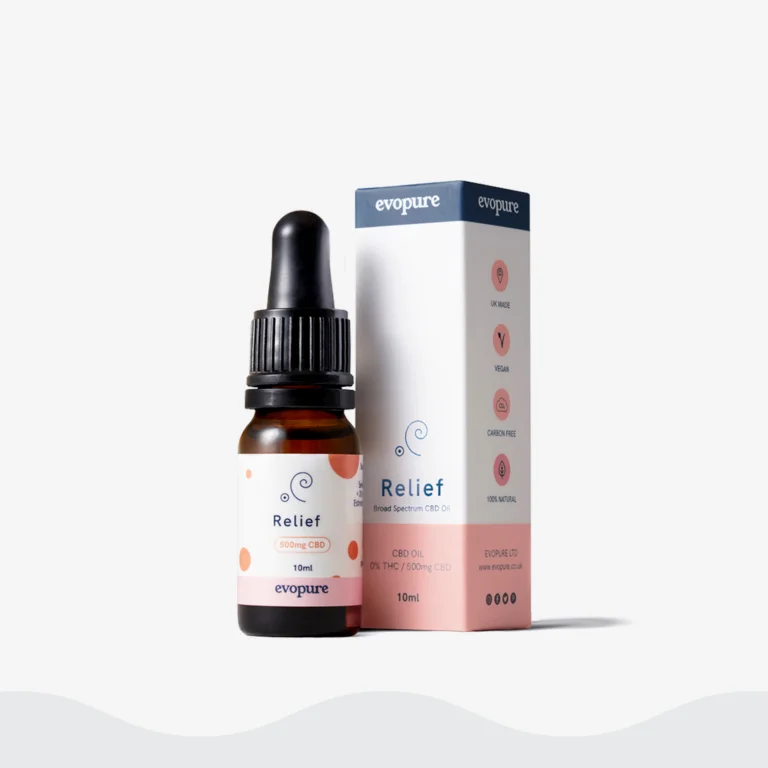
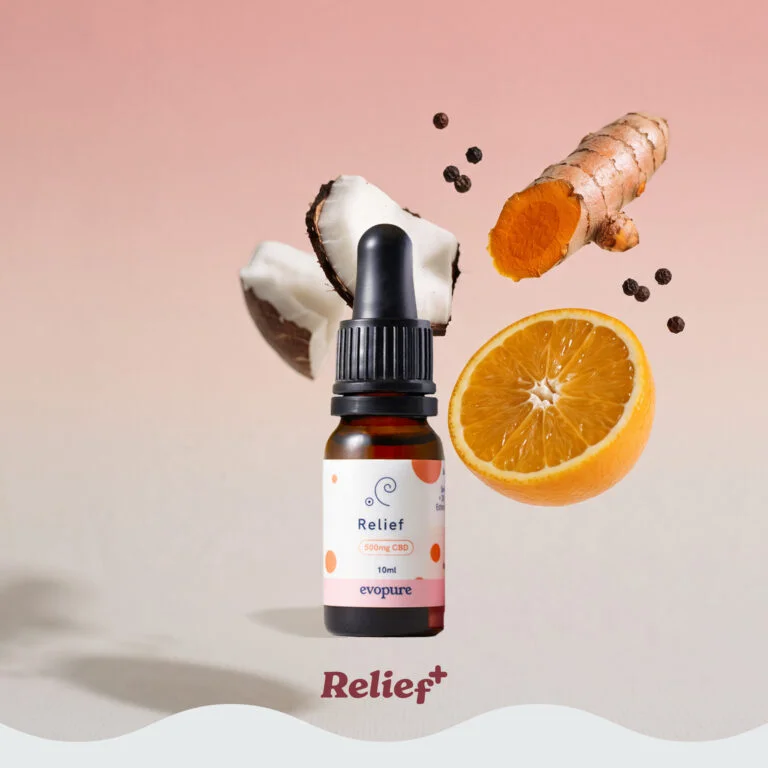
Our Relief CBD Oil is a broad spectrum CBD oil with turmeric extract and black pepper extract in MCT oil, in 500mg and 1,000mg strengths, with 0% THC. It is a food supplement. It isn’t a treatment for pain, arthritis or any other condition, and we don’t make health claims for turmeric.
Because Relief contains turmeric and black pepper, everything in the safety sections above applies to it too. Don’t use it if you have a liver, gallbladder or bile duct condition. Check with your GP or pharmacist first if you take blood thinners, diabetes medicines or any regular medication. Stop and see a doctor if you notice yellowing skin or eyes or dark urine. If you also take a separate turmeric or curcumin supplement, count both. CBD is also processed by the liver: see CBD and the liver, and our guide to taking CBD and turmeric together.
The FSA’s 10mg a day figure is precautionary advice rather than a legal limit, set while longer-term safety research continues. At Evopure we think it is a very cautious figure, and many adults use more. If you go above it, increase slowly, and check with your GP or pharmacist first if you take any medication.
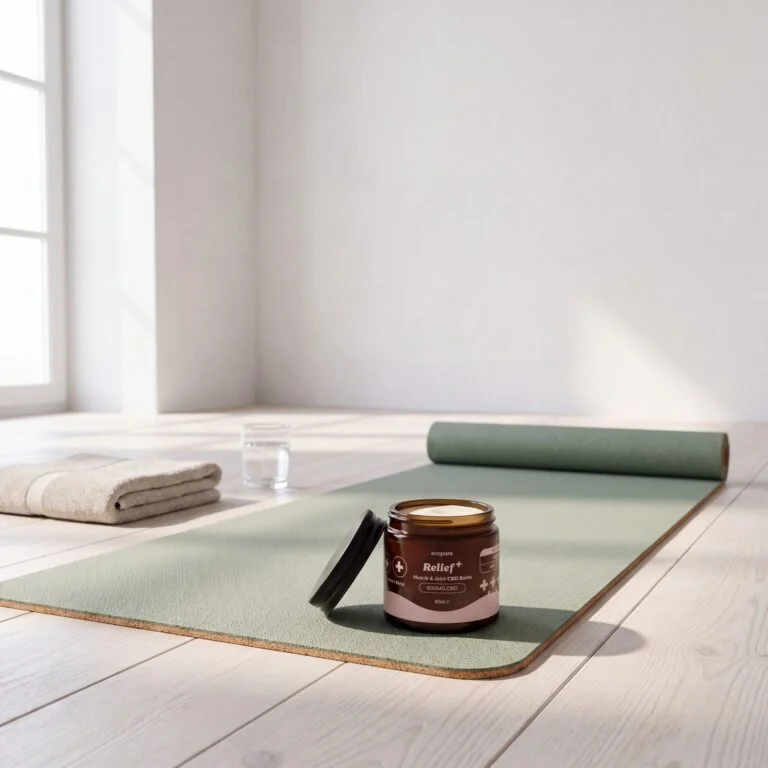
Our CBD Balm is for the skin rather than for swallowing: broad spectrum CBD with peppermint, eucalyptus and juniper, with a cooling feel and a non-greasy finish. To compare oils, see how to choose a CBD oil for pain.
All our products are for adults only, and we don’t recommend our products during pregnancy or breastfeeding.
FAQs
What are the main benefits of turmeric?
Turmeric’s main compound, curcumin, has been studied most for knee osteoarthritis pain, where trials are promising but small. There is also research on indigestion, inflammation markers, mood and post-exercise soreness. No health claim for turmeric is authorised in the UK, and it isn’t a treatment for any condition.
Is it better to take turmeric with black pepper?
Curcumin is poorly absorbed, and one small study found 20mg of piperine from black pepper raised the amount reaching the blood by 2,000%. The UK Committee on Toxicity calls this uncertain, and notes that better absorption may also raise the risk of side effects, so stick to the label dose.
How much turmeric should I take a day?
There’s no UK recommended amount. Cooking amounts are fine. The acceptable daily intake for curcumin is up to 3mg per kg of body weight, about 210mg for a 70kg adult. Joint trials used around 1,000mg of curcumin a day. Follow the label and check with a pharmacist if you take medication.
Is turmeric bad for your liver?
Turmeric in food isn’t a concern. Supplements have been linked to rare but sometimes serious liver injury, often 1 to 4 months after starting, and the UK Committee on Toxicity found reasonable evidence for the link. Stop and see a doctor if you notice yellow skin or eyes or dark urine.
Can I take turmeric with blood thinners or other medicines?
Not without advice. Turmeric supplements may increase bleeding risk with warfarin, other anticoagulants and antiplatelet medicines, may add to the effect of diabetes medicines, and can interact with others. Ask your GP or pharmacist before starting, and never stop a prescribed medicine.
What is the difference between turmeric and curcumin?
Turmeric is the whole spice. Curcumin is its main active compound, making up about 3% of turmeric powder. Most research uses concentrated curcumin extracts at doses far higher than you’d get from food.
Is it safe to take turmeric every day?
Cooking with turmeric every day is fine for most people. For supplements, the NCCIH says ordinary curcumin is likely safe in recommended amounts for up to 2 or 3 months. Avoid supplements if you have liver or gallbladder problems, are pregnant or breastfeeding, or are under 18.
Sources
- Committee on Toxicity (2024). Statement on the potential risk to human health of turmeric and curcumin supplements (COT/2024/07): summary and conclusions. UK Government Web Archive.
- Food Standards Agency, Committee on Toxicity (2025). Novel formulations of supplement compounds designed to increase oral bioavailability. GOV.UK.
- European Medicines Agency (2018). European Union herbal monograph on Curcuma longa L., rhizoma; and Curcumae longae rhizoma summary.
- Arthritis UK. Turmeric.
- NCCIH. Turmeric: usefulness and safety.
- Memorial Sloan Kettering Cancer Center. Turmeric.
- Halegoua-DeMarzio D et al (2023). Liver injury associated with turmeric: a growing problem. Ten cases from the Drug-Induced Liver Injury Network. American Journal of Medicine.
- Lombardi N et al (2021). Acute liver injury following turmeric use in Tuscany. British Journal of Clinical Pharmacology.
- Shoba G et al (1998). Influence of piperine on the pharmacokinetics of curcumin in animals and human volunteers. Planta Medica.
- Tayyem RF et al (2006). Curcumin content of turmeric and curry powders. Nutrition and Cancer.
- Daily JW et al (2016). Efficacy of turmeric extracts and curcumin for alleviating the symptoms of joint arthritis. Journal of Medicinal Food; Zeng L et al (2021). The efficacy and safety of Curcuma longa extract and curcumin supplements on osteoarthritis. Bioscience Reports.
- Wang Z et al (2020). Effectiveness of Curcuma longa extract for the treatment of symptoms and effusion-synovitis of knee osteoarthritis. Annals of Internal Medicine.
- Kongkam P et al (2023). Curcumin and proton pump inhibitors for functional dyspepsia: a randomised, double blind controlled trial. BMJ Evidence-Based Medicine; Ng QX et al (2018). A meta-analysis of the clinical use of curcumin for irritable bowel syndrome. Journal of Clinical Medicine.
- Gorabi AM et al (2022). Effect of curcumin on C-reactive protein as a biomarker of systemic inflammation. Phytotherapy Research.
- Ng QX et al (2017). Clinical use of curcumin in depression: a meta-analysis. JAMDA; Musazadeh V et al (2026). Efficacy of curcumin in depression: a GRADE-assessed systematic review and meta-analysis. Annals of General Psychiatry.
- Fang W, Nasir Y (2021). The effect of curcumin supplementation on recovery following exercise-induced muscle damage and delayed-onset muscle soreness. Phytotherapy Research.
- Mokgalaboni K et al (2024). Curcumin attenuates hyperglycemia and inflammation in type 2 diabetes mellitus. Nutrients.
This guide is general information, not medical advice. Evopure doesn’t sell turmeric or curcumin supplements. Evopure makes Relief CBD Oil with Turmeric and Black Pepper and the CBD Balm mentioned above.