Last updated: October 2026
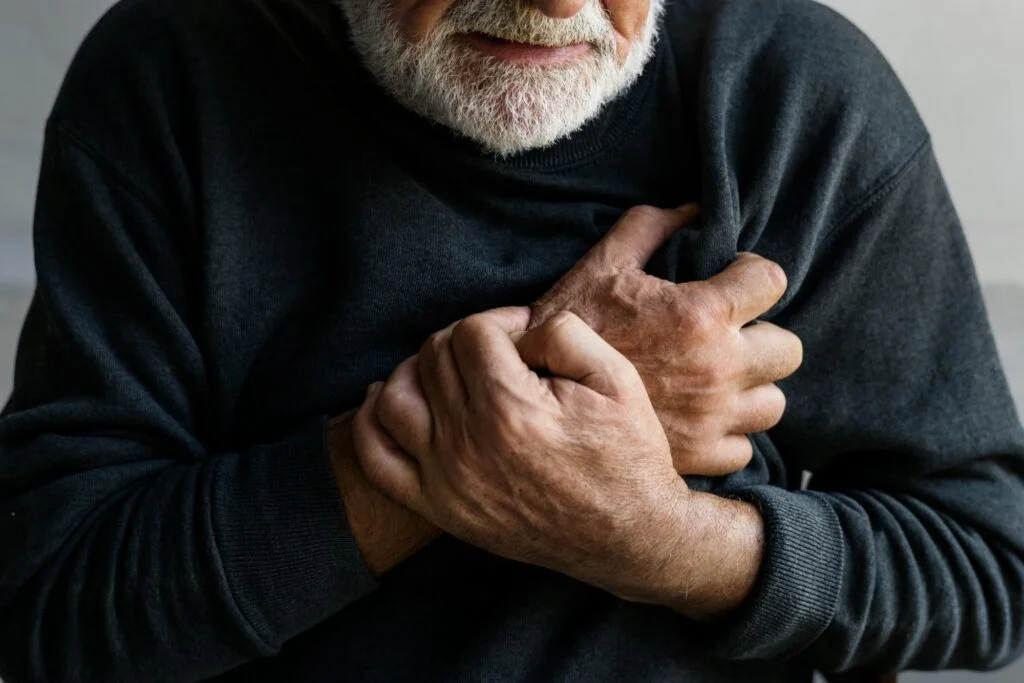
Anxiety can cause real chest pain or tightness, often a sharp or stabbing pain, with a racing heart, sweating, dizziness and fast breathing, usually triggered by worry or panic. It typically eases as you calm down. You can’t always tell the difference yourself, so call 999 for chest pain that feels heavy or spreads.
Below: what anxiety chest pain feels like, how it differs from a heart attack, why it happens, how to calm it, and when to get help.
Call 999 if you have sudden chest pain that doesn’t go away, pain that feels like squeezing, pressure or burning, pain spreading to your arms, neck, jaw, stomach or back, or chest pain with sweating, feeling sick, light-headed or short of breath. These can be signs of a heart attack. Don’t drive yourself to A&E.
What does anxiety chest pain feel like?
People describe it as:
- a sharp, stabbing or shooting pain
- tightness or a “band” around the chest
- an ache or soreness in the chest muscles
- feeling like you can’t take a full breath
- a pounding or fluttering heart. See heart palpitations
The NHS lists chest pain that is often sharp and continuous, triggered by worries or stress, with a faster heartbeat, sweating and dizziness, as a possible sign of anxiety or a panic attack.
Anxiety chest pain vs heart attack
| More typical of anxiety | More typical of a heart attack | |
|---|---|---|
| Feeling | Sharp, stabbing, often in one spot | Crushing, squeezing, heavy or pressure-like |
| Trigger | Worry, stress or panic | Can start at rest or with exertion |
| Spread | Usually stays in the chest | Can spread to arms, neck, jaw, back or stomach |
| Other signs | Tingling, fast breathing, fear | Sweating, sickness, breathlessness, grey or pale skin |
| Pattern | Eases as you calm down | Doesn’t go away |
This table is a guide, not a test. Symptoms overlap, especially in women and older people. If you’re unsure, treat it as a possible heart attack and call 999. Doctors would always rather check.
Why does anxiety cause chest pain?
When you’re anxious, your body’s fight-or-flight response kicks in. Your heart beats faster, chest muscles tense and you breathe faster and higher in the chest. Over-breathing (hyperventilation) can cause tightness, tingling and dizziness. Long periods of stress can also leave the chest wall muscles sore. See anxiety symptoms and how to stop a panic attack.
How to calm anxiety chest pain
Only use these once you’re confident it isn’t an emergency, or after a doctor has checked you.
- Slow your breathing. Breathe in through your nose for 4, out for 6. See box breathing.
- Relax your shoulders and chest. Put a hand on your belly and breathe into it.
- Ground yourself. See grounding techniques.
- Remind yourself: “This is anxiety. It’s uncomfortable but it will pass.”
- Move gently once it eases, such as a slow walk.
Longer term, cutting back on caffeine and alcohol, sleeping well and regular exercise all help. Alcohol can trigger a racing heart and next-day anxiety; see hangxiety. Ongoing stress keeps the body on high alert; see stress symptoms and sleep deprivation. See does caffeine cause anxiety? and how to deal with anxiety.
Our Magnesium Glycinate Sleep Complex is a caffeine-free evening drink with L-theanine, and magnesium contributes to normal psychological function and normal muscle function.
When to see a GP
See a GP if you have chest pain that comes and goes, or that went away quickly but you’re still worried, as the NHS advises. They can check your heart and talk about anxiety support. If you keep worrying about your heart even after tests are normal, see health anxiety. Adults in England can refer themselves to NHS Talking Therapies.
FAQs
Can anxiety cause chest pain?
Yes. Anxiety and panic can cause sharp chest pain or tightness, with a racing heart, sweating and fast breathing. Always get new chest pain checked.
How do I know if chest pain is anxiety or my heart?
You can’t always tell. Call 999 for chest pain that feels heavy, tight or squeezing, spreads to your arm, neck, jaw or back, or comes with sweating, sickness or breathlessness.
How long does anxiety chest pain last?
Often a few minutes, easing as you calm down, though muscle soreness can linger. Pain that doesn’t go away needs urgent checking.
Is anxiety chest pain on the left side?
It can be anywhere in the chest, including the left side. The side alone doesn’t tell you the cause, so get it checked if you’re worried.
Sources
- NHS. Chest pain.
- NHS. Heart attack.
- NHS. Panic disorder.
This guide is general information, not medical advice. Evopure makes the Magnesium Glycinate Sleep Complex.