Last updated: 17 November 2026
Can you take CBD with levothyroxine? Talk to your GP or pharmacist before combining them. No study has tested CBD with levothyroxine and the BNF lists no interaction, but levothyroxine works in a narrow range: small changes in how much reaches your blood can move your thyroid blood test (TSH). So check first, then keep your routine steady.
iBelow: why levothyroxine needs extra care, what is and isn’t known about CBD with it, the signs your levels may have shifted and what to ask your pharmacist. This is general information, not medical advice. Never stop or change levothyroxine to make room for CBD.
Can you take CBD with levothyroxine?
Some people may be able to, but only after checking with their GP or pharmacist. Nobody can promise the combination is safe, because it hasn’t been studied. The evidence for a problem is thin, but so is the evidence that there isn’t one.
The Food Standards Agency (FSA) advises, as a precaution, that people taking any medication should not use CBD unless under medical direction. The NHS levothyroxine page also asks you to tell your doctor about any herbal remedies, vitamins or supplements. For the wider picture, see can CBD interact with medication?
Why levothyroxine needs extra care
Levothyroxine is what pharmacists call a narrow therapeutic index medicine: the gap between too little and too much is small. Your GP sets your dose from blood tests, mainly TSH (thyroid stimulating hormone), and the NHS says you’ll have regular tests to check the dose is right. Being on the wrong dose can cause side effects such as feeling sick, diarrhoea, headaches or problems sleeping.
How sensitive is it? The MHRA, the UK medicines regulator, has reported that a small number of people notice symptoms just from switching between levothyroxine brands, and advises doctors to check thyroid function when that happens. Levothyroxine also stays in the body for about a week, so a change can take weeks to show on a blood test. That’s why anything that might nudge your levels, CBD included, deserves a check first.
What is known about CBD and levothyroxine
Not much, and we’d rather say so plainly. Here’s what we found when we checked on 17 November 2026:
| Question | What we found | How strong |
|---|---|---|
| Studies of CBD with levothyroxine in people | None found | No data |
| BNF interaction list for cannabidiol | Levothyroxine isn’t listed | Not proof it’s fine |
| Liver enzymes | A CBD breakdown product slows UGT1A1, one enzyme that clears levothyroxine, in lab tests | Theoretical |
| Thyroid hormone levels | Changes seen in animal studies of CBD | Weak for people |
| Older people on medical cannabis and levothyroxine | More heart failure, not more overactive thyroid | Observational, not CBD only |
Enzymes. Unlike atorvastatin and simvastatin (see CBD and statins), levothyroxine isn’t broken down by CYP3A4. Part of it is converted to the active hormone T3, and part is cleared by liver enzymes called UGTs, mainly UGT1A1 and UGT1A3. The UK product information for prescription CBD (Epidyolex) says CBD slows UGT1A9 and UGT2B7, and a CBD breakdown product slows UGT1A1, in lab tests. Nobody has checked whether that matters for levothyroxine.
Hormone levels. In 2026 the European Food Safety Authority (EFSA) noted altered thyroid hormone levels in animal studies of CBD, and said the safety of CBD for people taking other medicines can’t be established. A 2022 review linked cannabis use (mostly THC) with lower thyroid hormone levels in the short term.
Real-world data. A 2025 Canadian study of older people prescribed medical cannabis found that those also taking levothyroxine had a higher rate of heart failure, but not of an overactive thyroid. It was observational, the cannabis products weren’t CBD only, and it can’t show cause. It’s one more reason to involve your GP.
CBD and an underactive or overactive thyroid
CBD isn’t a treatment for an underactive thyroid, Hashimoto’s or an overactive thyroid, and there’s no human evidence that it helps any of them. Don’t use it instead of levothyroxine or any other thyroid medicine.
If you have an overactive thyroid and take carbimazole or propylthiouracil, ask your specialist or pharmacist before using CBD; we found no studies of CBD with these medicines either. Considering ashwagandha too? It can raise thyroid hormone, so read ashwagandha and thyroid medication first.
Does the amount of CBD matter?
Probably. The enzyme findings come from prescription CBD, used at many times the FSA’s 10mg a day advice. A 2023 review in a German medical journal suggested that clinically relevant interactions are likely only above about 300mg of CBD a day. Supplement amounts haven’t been tested with levothyroxine, so a small amount still needs a check first. See our CBD dosage guide for what 10mg looks like.
Signs your thyroid levels may have changed
Levels that drift too high or too low can show up as symptoms. The NHS lists difficulty sleeping, headaches, feeling anxious, sweating and hair loss as common side effects of levothyroxine, usually when the dose is too high. Tiredness, weight gain and low mood can mean your underactive thyroid symptoms are coming back.
Speak to your GP or a pharmacist if you notice any of these after starting CBD or any other new supplement. If you’ve recently started CBD, stop it and tell them you took it.
Call NHS 111 if you take levothyroxine and get a high temperature with a fast or irregular heartbeat, feel dizzy or faint, or notice yellowing of your skin or eyes. The NHS lists these as signs of a rare but serious reaction.
CBD isn’t a treatment for these symptoms. A blood test is the only way to know whether your thyroid levels have changed. If CBD itself is the worry, see CBD side effects.
What to ask your GP or pharmacist
Take your medicine list and the CBD product, or a photo of its label, and ask:
- Is CBD a reasonable idea with my levothyroxine and my other medicines, and at what amount?
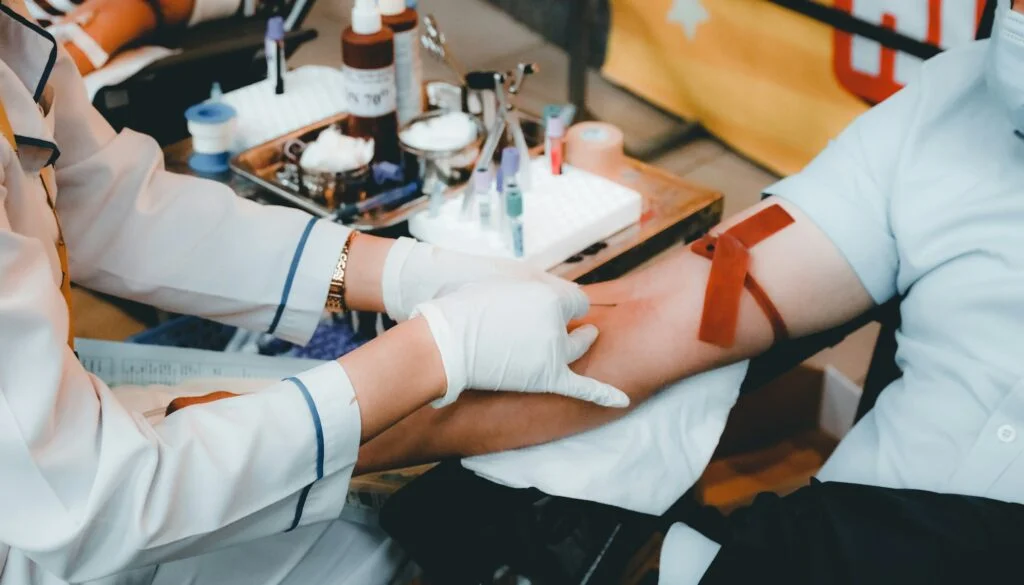
- Should I have a thyroid blood test a few weeks after starting it?
- What time of day should I take each one?
On timing, the NHS says to take levothyroxine on an empty stomach 30 to 60 minutes before breakfast, caffeine or any other medicine. Its product information adds that fibre supplements can reduce absorption. CBD capsules often contain a little fibre (ours contain inulin), so taking CBD later in the day, away from levothyroxine, keeps your morning dose clean.
Many people on levothyroxine take other medicines too, and some affect it. See CBD and HRT, CBD and blood pressure medication, CBD and blood thinners, CBD and antidepressants and CBD and painkillers. Taking magnesium as well? Read magnesium and levothyroxine for the 4 hour gap.
If your GP or pharmacist says CBD is OK
Start low and keep it steady: a small fixed amount at the same time each day makes any change easy to spot. The FSA’s 10mg a day figure is precautionary advice rather than a legal limit, set while longer-term safety research continues. At Evopure we think it is a very cautious figure, and many adults use more. If you go above it, increase slowly, and check with your GP or pharmacist first if you take any medication.
With levothyroxine, stay at the amount your GP or pharmacist agreed, take CBD at a different time of day, and mention it at your next thyroid blood test.
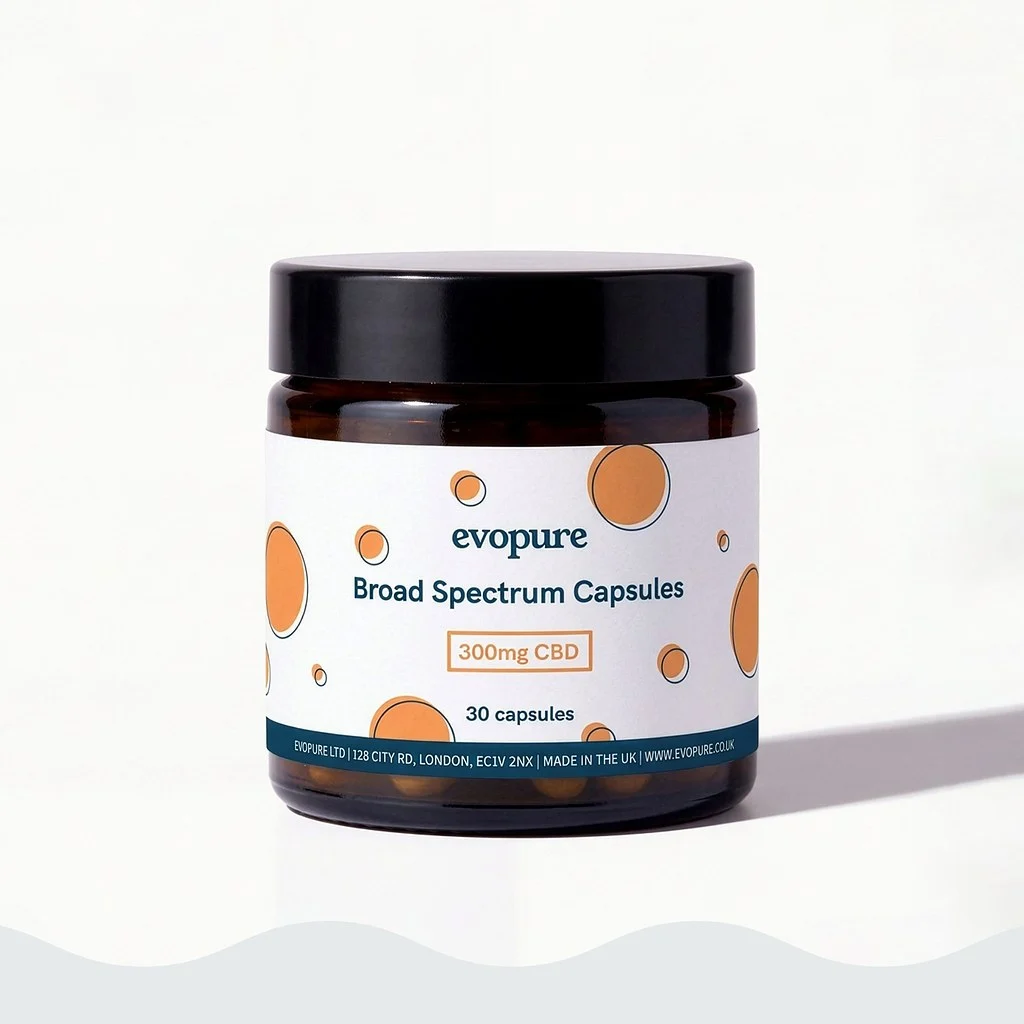
If your GP or pharmacist is happy for you to try it
our Broad Spectrum CBD Capsules give one 10mg capsule, a measured dose with nothing to work out (rated 4.7 from 126 ratings). Prefer drops? Broad Spectrum CBD Oil is CBD and MCT oil only: 10mg is about 0.2ml of the 500mg oil (rated 4.7 from 43 ratings). Both have 0% THC, are vegan, made in the UK from US-grown hemp, third-party lab tested and on the FSA public list.
Add Broad Spectrum CBD Capsules 10mg to bag or choose another strength
Add Broad Spectrum CBD Oil 500mg to bag or choose another strength
Subscribe and save 25% on your first order, then 20%. New to Evopure? Join our emails for 20% off a one-off first order. Free UK delivery over £40. The FSA advises healthy adults to take no more than 10mg of CBD a day. Adults only. If you take levothyroxine or any other medicine, check with your GP or pharmacist first. We don’t recommend our products during pregnancy or breastfeeding.
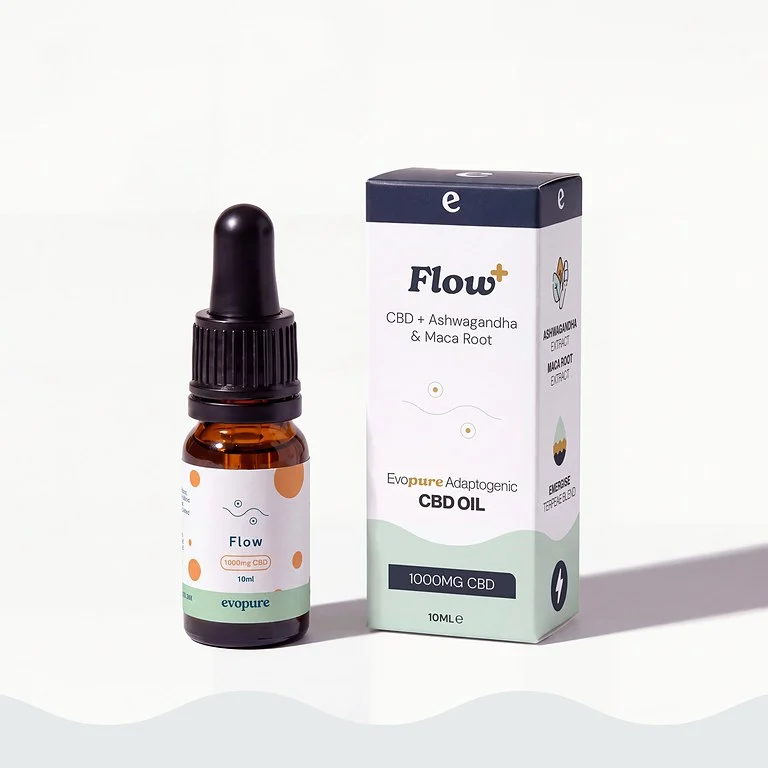
Why not Flow? Our Flow CBD Oil contains ashwagandha, which isn’t suitable with a thyroid condition unless your GP agrees. Comparing gentle options for later life? Our best CBD oil for over 50s guide and CBD for older adults cover what to check. Batch reports for our CBD are on request via our lab testing page.
Sources 13
- NHS. Levothyroxine: a medicine for an underactive thyroid. Reviewed 6 July 2026.
- NHS. Underactive thyroid (hypothyroidism). Reviewed 28 April 2025.
- BNF (NICE). Cannabidiol: interactions and levothyroxine: interactions. Checked 17 November 2026.
- emc. Levothyroxine 100mcg tablets: summary of product characteristics (sections 4.5 and 5.2). Revised 16 October 2026.
- emc. Epidyolex 100 mg/ml oral solution: summary of product characteristics (sections 4.5 and 5.2). Revised 8 June 2026.
- MHRA (GOV.UK). Levothyroxine: new prescribing advice for patients who experience symptoms on switching between different levothyroxine products. Drug Safety Update, May 2021.
- Dempsey AL et al. Concomitant use of levothyroxine and interacting medications in U.S. ambulatory care visits. J Am Pharm Assoc, 2023.
- Kato Y et al. Hepatic UDP-glucuronosyltransferases responsible for glucuronidation of thyroxine in humans. Drug Metab Dispos, 2008.
- EFSA NDA Panel. Update of the statement on safety of cannabidiol as a novel food. EFSA J, 2026.
- Meah F et al. The effects of cannabis and cannabinoids on the endocrine system. Rev Endocr Metab Disord, 2022.
- Bérété ZC et al. Concomitant use of medical cannabis and drugs associated with risks of interaction in older patients. Age Ageing, 2025.
- Herdegen T, Cascorbi I. Drug interactions of tetrahydrocannabinol and cannabidiol in cannabinoid drugs. Dtsch Arztebl Int, 2023.
- Food Standards Agency (GOV.UK). Cannabidiol (CBD) guidance. Updated 28 August 2026.