










Last updated: October 2026
There are eight B vitamins, and together they help your body release energy from food and keep your nerves, blood and skin working normally. Most people in the UK get enough from a varied diet. The main exceptions are B12 for vegans, folic acid before and in early pregnancy, some older adults and people on certain medicines.
Below: a table of all eight, what each one does, the best foods, how much you need, safe upper amounts, deficiency signs, testing and whether a B complex is worth taking.
The short version: food first. If you’re tired, get the cause checked rather than guessing with a B complex. If you do take one, check the vitamin B6 on every label you use and keep the total from supplements at 10mg a day or less unless a doctor advises more.
What are the B vitamins?
The B vitamins are a group of eight water-soluble vitamins: thiamin (B1), riboflavin (B2), niacin (B3), pantothenic acid (B5), B6, biotin (B7), folate (B9) and B12. They work as a team, mostly as helpers for the reactions that turn food into usable energy, and several are also needed to make red blood cells and keep the nervous system healthy.
Because they dissolve in water, the body can’t store most of them for long. The NHS says thiamin, riboflavin, niacin and pantothenic acid can’t be stored, so you need them every day, and folate stores last about 4 months. B12 is the exception: stores can last 2 to 5 years, which is why a deficiency can take years to show after a change in diet.
All 8 B vitamins at a glance
Daily amounts are NHS figures for adults aged 19 to 64. The last column is the Department of Health and Social Care (DHSC) daily supplement amount the NHS says is unlikely to cause harm. Functions use authorised GB health claim wording.
| Vitamin | What it does (authorised claims) | Good food sources | Adults need a day | Supplements: upper amount |
|---|---|---|---|---|
| B1 thiamin | Contributes to normal energy-yielding metabolism and normal functioning of the nervous system | Peas, bananas, oranges, nuts, wholegrain bread, fortified cereals | 1mg (men), 0.8mg (women) | 100mg or less |
| B2 riboflavin | Contributes to the reduction of tiredness and fatigue and to the maintenance of normal skin and vision | Milk, eggs, plain yoghurt, mushrooms, fortified cereals | 1.3mg (men), 1.1mg (women) | 40mg or less |
| B3 niacin | Contributes to normal energy-yielding metabolism and the maintenance of normal skin | Meat, fish, wheat flour, eggs | 16.5mg (men), 13.2mg (women) | 17mg or less as nicotinic acid, or 500mg or less as nicotinamide |
| B5 pantothenic acid | Contributes to normal mental performance and the reduction of tiredness and fatigue | Chicken, beef, eggs, mushrooms, avocado, wholegrains | No UK amount set | 200mg or less |
| B6 pyridoxine | Contributes to normal red blood cell formation and the regulation of hormonal activity | Pork, poultry, some fish, peanuts, soya beans, oats, bananas, milk | 1.4mg (men), 1.2mg (women) | No more than 10mg unless a doctor advises it |
| B7 biotin | Contributes to the maintenance of normal hair and skin | Found at low levels in many foods; gut bacteria also make it | No UK amount set | 0.9mg or less |
| B9 folate / folic acid | Contributes to normal blood formation; folate contributes to maternal tissue growth during pregnancy | Broccoli, Brussels sprouts, leafy greens, peas, chickpeas, kidney beans, fortified cereals | 200 micrograms (400 micrograms as a supplement if you could get pregnant) | 1mg or less (higher doses only on medical advice) |
| B12 cobalamin | Contributes to the reduction of tiredness and fatigue and normal red blood cell formation | Meat, fish, milk, cheese, eggs, fortified cereals | 1.5 micrograms | 2mg or less |
A microgram is 1,000 times smaller than a milligram, so the amounts you need of folate and B12 are tiny. The NHS lists liver as a good source of thiamin, pantothenic acid and folate, but says to avoid liver if you’re pregnant. For everyday meal ideas that cover many of these foods, see our guide to brain foods.
What each B vitamin does
Vitamin B1 (thiamin)
Thiamin helps the body release energy from food and keeps the nervous system healthy. Its authorised claims also include that thiamine contributes to the normal function of the heart. UK law already requires it in non-wholemeal wheat flour, alongside calcium, iron and niacin, so bread is a quiet everyday source. It matters most for people who drink heavily: NICE asks clinicians to offer thiamine to harmful or dependent drinkers who are malnourished or at risk of it.
Vitamin B2 (riboflavin)
Riboflavin helps keep skin, eyes and the nervous system healthy and helps release energy from food. Riboflavin also contributes to the normal metabolism of iron. Dairy and eggs are the easiest sources, and the NHS notes that UV light destroys riboflavin, so milk is best kept out of direct sunlight.
NICE says people with migraine can be told that riboflavin at 400mg once a day may reduce how often migraines happen, and how bad they are, for some people. That’s ten times the 40mg the DHSC treats as a safe everyday supplement amount, so agree it with your GP. See magnesium for migraines for the wider picture.
Vitamin B3 (niacin)
Niacin helps release energy from food and keeps the nervous system and skin healthy. It comes as nicotinic acid or nicotinamide. The NHS warns that high doses of nicotinic acid can cause skin flushing, and over a long time could lead to liver damage, which is why the safe supplement amount for that form is just 17mg a day.
Vitamin B5 (pantothenic acid)
The NHS says pantothenic acid is in almost all vegetables, wholegrains and meats. Pantothenic acid contributes to normal mental performance. No UK daily amount has been set, as it’s in so many foods.
Vitamin B6 (pyridoxine)
B6 helps the body use and store energy from protein and carbohydrates and form haemoglobin, which carries oxygen in red blood cells. It’s the B vitamin where too much is a real risk (see B complex safety). Foods, PMS and dosing are covered in our vitamin B6 guide.
Vitamin B7 (biotin)
Biotin helps the body make fatty acids, and the NHS says gut bacteria make it, so it isn’t clear you need any extra from food. Biotin contributes to the maintenance of normal hair, which is why it’s in so many hair and nail products, but a true deficiency is rare. If nails are your worry, our guide to brittle nails covers the more common causes. High-dose biotin can also upset blood tests (see testing).
Vitamin B9 (folate and folic acid)
Folate is the natural form in food; folic acid is the manufactured form in supplements and fortified foods. The NHS says folate helps form healthy red blood cells and reduces the risk of neural tube defects such as spina bifida. It also warns that folic acid above 1mg a day can mask the symptoms of B12 deficiency, a particular concern for older people, who absorb B12 less well.
Vitamin B12 (cobalamin)
B12 helps make red blood cells, keep the nervous system healthy, release energy from food and use folate. It’s found naturally only in animal foods, so vegans need fortified foods or a supplement. See our guides to vitamin B12 supplements and B12 deficiency symptoms.
Is there a vitamin B10?
No. “Vitamin B10” is a name sometimes used online and on supplement labels for PABA (para-aminobenzoic acid). It isn’t one of the eight B vitamins the NHS lists, no UK daily amount exists for it, and there’s no authorised health claim for it. You’ll see searches for it rising, often alongside hair and skin products, but there’s no reason to seek it out.
The same goes for other “missing” numbers you may see on labels, such as “B8”: if it isn’t one of the eight above, it isn’t a B vitamin in UK nutrition advice.
Do B vitamins give you energy?
Not in the way the marketing suggests. B vitamins are needed to release energy from food, which is why most carry the authorised claim that they contribute to normal energy-yielding metabolism, and B2, B3, B5, B6, folate and B12 can say they contribute to the reduction of tiredness and fatigue.
The key word is “normal”. These vitamins keep the energy machinery working; they aren’t fuel or a stimulant. A 2020 review of vitamins and minerals for energy and fatigue describes tiredness as one of the problems that can appear when supplies of these nutrients are not adequate. If your levels are already fine, there’s no good reason to expect a top-up to make you feel more energetic.
So if you’re tired all the time, a B complex is a guess. Find the cause first: sleep, iron, thyroid, stress, diet or low B12 or folate. See why am I always tired?, the best supplements for energy and breakfasts for energy.
Where magnesium fits
Magnesium is another nutrient with an authorised tiredness claim: magnesium contributes to a reduction of tiredness and fatigue. Our guide to the signs of magnesium deficiency explains what to look out for.
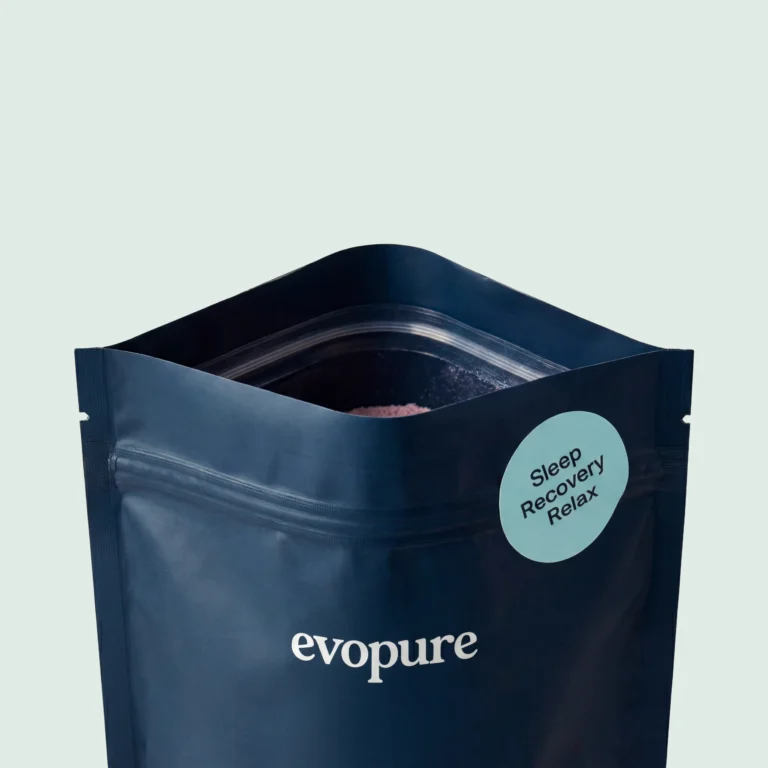
For an evening routine, our Magnesium Glycinate Sleep Complex is a berry-flavoured drink with 148mg of magnesium per serving from bisglycinate and citrate, plus glycine and L-theanine. It contains no B vitamins, so it won’t add to your B6 total if you already take a B complex or multivitamin. It’s for adults only, and we don’t recommend our products during pregnancy or breastfeeding.
B vitamin deficiency: signs and who’s at risk
Low B12 and low folate are the deficiencies you’re most likely to meet in the UK. The NHS says they affect around 1 in 10 people aged 75 or over and 1 in 20 people aged 65 to 74.
The NHS lists these symptoms of B12 or folate deficiency:
- extreme tiredness and a lack of energy
- pins and needles
- a sore, red tongue and mouth ulcers
- muscle weakness
- problems with your vision
- low mood, anxiety, confusion, and problems with memory, understanding and judgement
Some problems, especially nerve damage, can be permanent if a deficiency isn’t treated, so see a GP sooner rather than later. Many symptoms overlap with iron deficiency, another reason to test rather than guess.
| Who | Why | What to do |
|---|---|---|
| Vegans, and vegetarians who eat few eggs or little dairy | B12 isn’t found naturally in plant foods | Use B12-fortified foods (cereals, soya drinks, yeast extract) or a B12 supplement |
| People with pernicious anaemia | The immune system stops the stomach absorbing B12. It’s the most common cause of B12 deficiency in the UK and more common in women around 60 | Usually needs B12 injections from your GP; shop tablets aren’t enough |
| Older adults | Absorbing B12 from food gets harder with age | Ask your GP about a blood test if you have symptoms |
| People taking metformin | The MHRA says metformin commonly reduces B12, more so at higher doses and with longer use | Ask about B12 checks. Don’t stop metformin without talking to your doctor |
| People taking PPIs (acid-reducing medicines) or some anti-seizure medicines | The NHS says these can affect how much B12 or folate you absorb | Ask your GP or pharmacist whether checks are needed |
| After stomach surgery, or with Crohn’s or coeliac disease | These can stop B12 or folate being absorbed | Your GP or specialist will advise |
| People who drink heavily | Alcohol is linked to low folate and low thiamin | See a GP; thiamine may be offered |
B12 also features in our guides to supplements for men over 40 and 50 and the best supplements for menopause.
Getting a B vitamin test in the UK
If you have symptoms or one of the risk factors above, your GP can arrange blood tests. B12 and folate are the usual ones, often as part of wider blood tests for tiredness. The NHS says these conditions can often be diagnosed from your symptoms and a blood test.
Two things to know before a test:
- Tell the clinician about any supplements. NICE guidance on B12 deficiency says over-the-counter B12, including tablets, sprays and B complex or multivitamin products, can raise B12 test results without fully treating a deficiency. That’s a good reason to get tested before you start, not after.
- Mention biotin. In a small 2017 study, healthy adults who took 10mg of biotin a day (a dose the authors describe as common in over-the-counter products) for a week had misleading results in 9 of 23 lab tests that use biotin in their chemistry, including some thyroid tests. Results came out falsely high or falsely low depending on the test. Ask your GP or the lab how long to stop beforehand.
If you use a private finger-prick test, take abnormal results to your GP rather than treating yourself.
Do you need a B complex?
Most people don’t. The NHS says you should be able to get all the B vitamins you need from a varied and balanced diet. Its specific advice is narrower: folic acid if you could get pregnant, and B12 for vegans.
Who might consider one
- Vegans who’d rather take one product than a separate B12.
- People with a small appetite or a very restricted diet, including some older adults. A multivitamin may cover more gaps at once.
- Anyone whose GP or dietitian has advised it after a blood test.
Who probably doesn’t need one
- People eating a varied diet that includes meat, fish, eggs or dairy.
- People hoping it will fix tiredness without knowing the cause.
- Anyone already taking a multivitamin, which usually contains B vitamins anyway.
What to check on the label
- Vitamin B6: keep your total from all supplements at 10mg a day or less unless a doctor advises more. Some “high strength” products contain more than this, so read the milligrams, not just the name.
- Niacin form: nicotinic acid above 17mg a day can cause flushing; nicotinamide is the gentler form.
- Folic acid: stay at 1mg a day or less unless prescribed.
- Biotin: the DHSC figure is 0.9mg a day or less, and high doses can affect blood tests.
- %NRV: this shows how much of the daily reference amount you’re getting. Thousands of per cent isn’t a sign of quality.
- Doubling up: add up B vitamins across your multivitamin, B complex, “energy” products and any magnesium with B6 combinations.
Why B6 is the one to watch
The NHS says 200mg or more of B6 a day can cause loss of feeling in the arms and legs (peripheral neuropathy). This usually improves after stopping, but in a few cases, particularly after large amounts for more than a few months, it can be permanent, and the effect of 10mg to 200mg is unclear. A 2023 systematic review of 20 studies agreed that high B6 levels, usually from supplements, can cause a mainly sensory nerve problem. If you notice numbness, tingling or burning in your hands or feet while taking any supplement with B6, stop it and see a GP.
“Methylated” products are often sold as better absorbed. For shop-bought B12, NICE simply advises choosing a product with cyanocobalamin, methylcobalamin or adenosylcobalamin, so you don’t need to pay extra for a particular form unless a health professional has a specific reason to suggest it.
Folic acid before and during pregnancy
This is the one B vitamin supplement the NHS recommends to a large group of healthy people. If you’re pregnant, trying for a baby or could get pregnant, the NHS advises:
- 400 micrograms of folic acid every day, ideally from 3 months before you get pregnant, or as soon as you find out you are, until you’re 12 weeks pregnant.
- Start before you stop using contraception, because the baby’s spine forms very early, often before you know you’re pregnant.
- A higher 5mg dose, prescribed by a GP, if you or the baby’s father has a neural tube defect or a family history of one, you’ve had a previous pregnancy affected by one, you have diabetes, you have a blood condition such as sickle cell anaemia or thalassaemia, or you take medicine for epilepsy or HIV.
The NHS says folic acid reduces the chance of a neural tube defect such as spina bifida, and that it’s hard to get enough from food alone at this stage. Your midwife, GP or pharmacist can help you choose a supplement.
Folic acid in flour from December 2026
From December 2026, UK law requires non-wholemeal wheat flour to be fortified with folic acid, at 0.25mg per 100g of flour. The Food Standards Agency estimates this will reduce neural tube defects by around 20%. Wholemeal flour and gluten-free products aren’t included, and fortified flour will be shown in the ingredients list. The FSA is clear that fortification supports, but doesn’t replace, the advice to take a folic acid supplement.
Our products are for adults, and we don’t recommend our products during pregnancy or breastfeeding.
Best time to take B vitamins, and do they mix with caffeine?
There’s no UK guidance on the best time of day to take a B complex. Most labels say to take it with food, and breakfast is the easiest time to remember.
If B12 tablets are prescribed for a diet-related deficiency, the NHS says they’re taken between meals, so follow your GP or pharmacist’s instructions.
B vitamins and caffeine
B vitamins don’t contain caffeine and aren’t stimulants, so a B complex won’t give you the lift of a coffee. Some “energy” drinks, shots and gummies list B vitamins next to caffeine on the label, but the alertness people notice comes from the caffeine. There’s no UK advice to avoid tea or coffee with a B complex.
Why B vitamins turn urine bright yellow
If your urine turns a vivid, almost neon yellow after a B complex or multivitamin, that’s riboflavin (B2). Riboflavin is a naturally yellow compound (its name comes from the Latin flavus, yellow), and your body passes out what it doesn’t need in urine. The MSD Manual describes riboflavin as not toxic, so the colour itself is harmless. It’s also a sign that much of a high dose is simply leaving your body.
See a GP if your urine is dark brown, red or pink, or if you have pain, a burning feeling or a fever.
See also riboflavin and migraine prevention.
For the other causes of poor concentration, see what is brain fog and what causes it.
FAQs
What are the 8 B vitamins?
Thiamin (B1), riboflavin (B2), niacin (B3), pantothenic acid (B5), vitamin B6, biotin (B7), folate or folic acid (B9) and vitamin B12. Together they help release energy from food and keep the nervous system, blood and skin working normally.
Is it OK to take a vitamin B complex every day?
For most adults a low-dose B complex is unlikely to cause harm, but most people don’t need one. Check the vitamin B6: the UK advice is no more than 10mg a day from supplements unless a doctor advises it. Add up every product you take.
Are all B vitamins good for you?
All eight are essential, but more isn’t better. High doses of B6 can damage nerves, high-dose nicotinic acid can cause flushing and liver problems, and folic acid above 1mg can mask low B12. Food first, then fill gaps you know you have.
How long does a B complex take to work?
If you’re not deficient, you’re unlikely to notice a difference. If a blood test shows you’re low, your GP will advise on treatment and how long it takes; the NHS says folic acid tablets for folate deficiency are usually taken for 4 months.
Can I take a B complex with magnesium?
Yes, B vitamins and magnesium can generally be taken together. Check whether your magnesium product also contains B6 so you don’t go over 10mg of B6 a day from supplements. Ask a pharmacist if you take any medicines.
Is vitamin B10 real?
No. “Vitamin B10” is a name sometimes used for PABA (para-aminobenzoic acid). It isn’t one of the eight B vitamins, and there’s no UK daily amount for it.
Sources
- NHS. B vitamins and folic acid.
- NHS. Vitamin B12 or folate deficiency anaemia and causes.
- NHS. Vitamins, supplements and nutrition in pregnancy.
- NHS. The vegan diet.
- GOV.UK. Great Britain nutrition and health claims (NHC) register.
- Food Standards Agency, GOV.UK. Folic acid: fortification of flour.
- MHRA. Metformin and reduced vitamin B12 levels.
- NICE. Vitamin B12 deficiency in over 16s: diagnosis and management (NG239).
- NICE. Headaches in over 12s: diagnosis and management (CG150).
- NICE. Alcohol-use disorders: physical complications (CG100).
- MSD Manual. Riboflavin deficiency.
- Tardy AL, et al. Vitamins and minerals for energy, fatigue and cognition: a narrative review of the biochemical and clinical evidence. Nutrients, 2020. PMID 31963141.
- Muhamad R, et al. The role of vitamin B6 in peripheral neuropathy: a systematic review. Nutrients, 2023. PMID 37447150.
- Li D, et al. Association of biotin ingestion with performance of hormone and nonhormone assays in healthy adults. JAMA, 2017. PMID 28973622.
This guide is general information, not medical advice. Evopure makes the Magnesium Glycinate Sleep Complex. We don’t sell a B vitamin supplement.