Last updated: October 2026
Tryptophan is an essential amino acid your body uses to make serotonin, melatonin and niacin. You get it from protein foods such as chicken, turkey, fish, eggs, cheese, tofu, oats and seeds, and most adults eat plenty. Food tryptophan won’t knock you out, and supplements show only modest, mixed effects on sleep and mood.
Below: UK food portions, why carbs matter, the Christmas turkey myth, the sleep and mood evidence, tryptophan vs 5-HTP vs melatonin, and safety.
What is tryptophan?
Tryptophan (L-tryptophan, the form found in food) is an essential amino acid: your body can’t make it, so it must come from your diet.
It is used in two main ways:
- The serotonin pathway: tryptophan becomes 5-HTP, then serotonin (the brain messenger linked with mood), then melatonin (the hormone that helps set sleep timing). See how to boost serotonin naturally.
- The kynurenine pathway, which among other things makes niacin (vitamin B3).
How much do you need? The estimated average requirement used in nutrition research is 4mg per kilo of body weight a day, or about 280mg for a 70kg adult. A large survey of US adults found people actually ate about 826mg a day, several times that. A normal diet with some protein at most meals covers it easily.
Tryptophan-rich foods (UK portions)
Any food with protein contains some tryptophan. These figures come from the USDA FoodData Central database (per 100g values), converted to typical UK portions. Treat them as approximate.
| Food | Typical portion | Approx. tryptophan |
|---|---|---|
| Pork loin, lean, roasted | 120g | 440mg |
| Chicken breast, roasted | 120g | 430mg |
| Turkey breast, roasted | 120g | 340mg |
| Cod fillet, baked | 120g | 310mg |
| Salmon fillet, baked | 120g | 300mg |
| Tuna, tinned in water, drained | 100g | 290mg |
| Tofu, firm | 100g | 235mg |
| Pumpkin seeds | 30g handful | 170mg |
| Eggs, boiled | 2 eggs (about 100g) | 150mg |
| Cottage cheese | 100g | 140mg |
| Lentils, cooked | 150g | 120mg |
| Chickpeas, cooked | 120g (half a tin, drained) | 100mg |
| Baked beans | 200g (half a tin) | 100mg |
| Cheddar | 30g | 95mg |
| Whole milk | 200ml glass | 80mg |
| Porridge oats (dry weight) | 40g | 75mg |
| Peanut butter | 30g (2 tablespoons) | 70mg |
| Almonds | 30g handful | 65mg |
| White rice, cooked | 180g | 55mg |
| Banana | 1 medium (120g peeled) | 10mg |
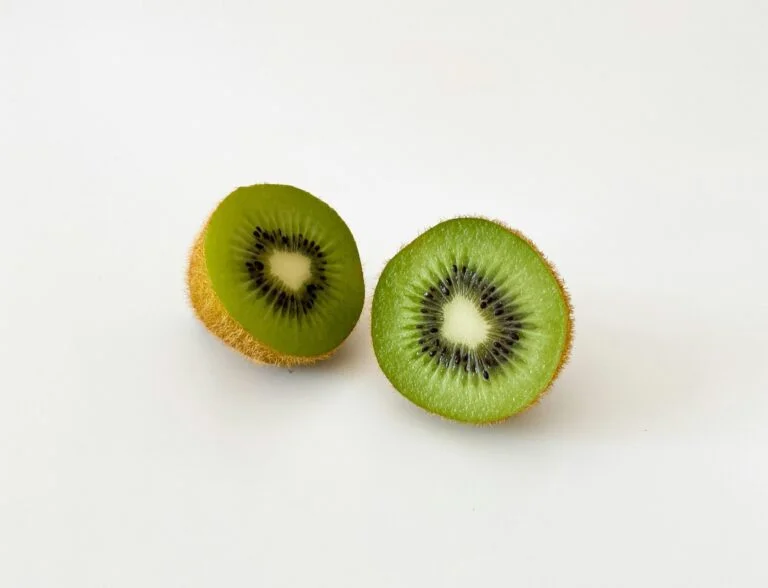
| Kiwi | 1 fruit (75g) | 10mg |
What stands out:
- Meat and fish top the list, but one portion of chicken or fish covers a typical adult’s daily requirement.
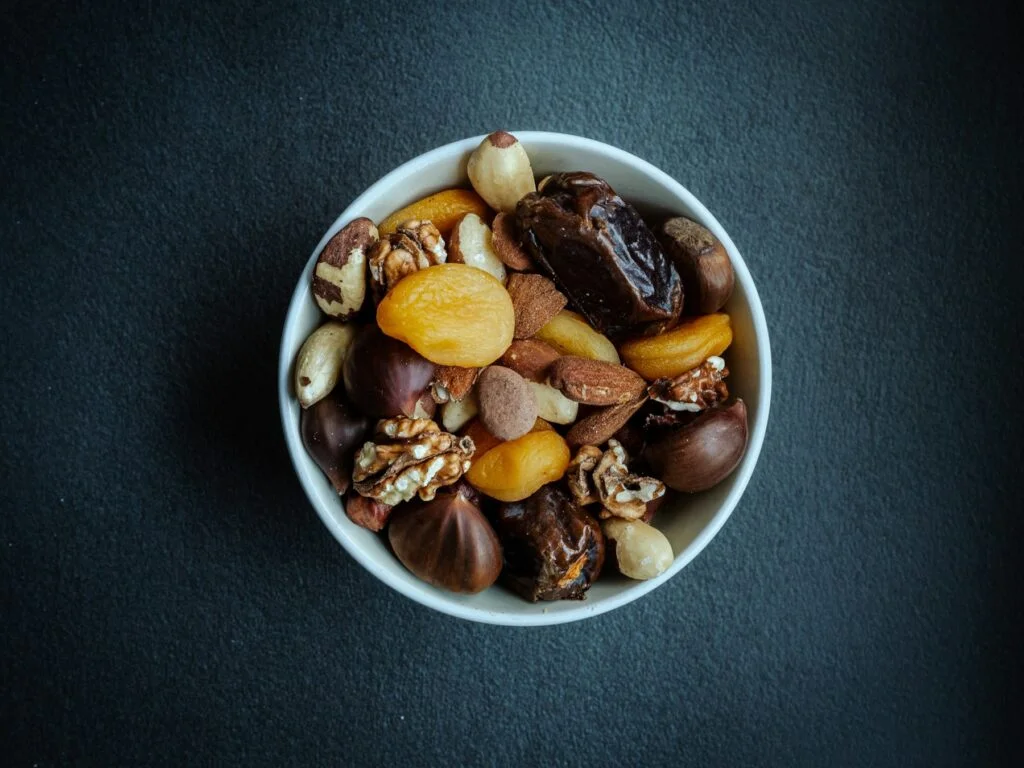
- Vegetarian and vegan sources (tofu, seeds, pulses, nuts, oats, eggs, dairy) add up over a day.
- Bananas and kiwis are low in tryptophan, despite appearing on many “sleepy foods” lists. See kiwi for sleep and our wider guide to foods that help you sleep.
Why carbs matter: the competition problem
Here’s the part most food lists leave out. To reach the brain, tryptophan shares an entry route with several other “large neutral amino acids” from protein, and it is usually outnumbered.
So a high-protein meal brings plenty of tryptophan but even more competitors, and the share reaching the brain can actually fall.
Carbohydrate changes the balance. Carb-rich meals raise the ratio of tryptophan to its competitors in the blood (the insulin released after carbs is thought to be part of the reason), while protein-rich meals lower it. In one study of real breakfasts, a carbohydrate-rich breakfast and a protein-rich breakfast produced a median 54% difference in the blood tryptophan ratio that predicts how much reaches the brain.
This may be one reason a carb-heavy meal leaves some people drowsy. In a small sleep lab study of 12 healthy young men, a high glycaemic index rice meal eaten 4 hours before bed shortened the time it took to fall asleep (about 9 minutes, compared with about 17.5 minutes after a low glycaemic index rice meal). Eating the same meal 1 hour before bed worked less well. See is eating before bed bad?
Does turkey make you sleepy?
Not because of its tryptophan. According to the USDA figures, roast turkey breast has about 230 to 360mg of tryptophan per 100g depending on the cut, while roast chicken breast has about 360mg. Nobody blames chicken for an afternoon nap.
The post-Christmas-dinner slump is better explained by everything else:
- A very large meal, plus pudding.
- Lots of carbohydrate (potatoes, stuffing, bread sauce, Christmas pudding), which, as above, helps tryptophan reach the brain far more than the turkey does.
- Alcohol from the fizz, wine and port.
- A late night before, a warm room and a sofa.
Turkey is a decent source of tryptophan, but no more “sleepy” than other lean meat. See also how to sleep on Christmas Eve.
Does tryptophan help sleep?
There is some evidence for supplements, but it’s modest and the doses are far higher than any bedtime snack.
- The best summary so far is a 2022 systematic review and meta-analysis in Nutrition Reviews. It found 18 relevant articles, but only 4 had data that could be pooled. Tryptophan supplements shortened the time spent awake after first falling asleep, with a bigger effect at 1g a day or more. They did not improve the other sleep measures the review analysed.
- Diet studies only show associations: in a survey of nearly 30,000 US adults, those eating more tryptophan reported slightly longer sleep.
- A glass of milk gives you about 80mg, a small fraction of the gram-level doses in the trials.
Regulators haven’t been convinced either. Health claims that tryptophan helps “normal sleep” have been assessed and are listed as non-authorised in the Great Britain nutrition and health claims register, so no food or supplement sold in Great Britain is allowed to make that claim.
The honest picture: tryptophan is not a fast-acting sedative. If you struggle most nights, the habits in our insomnia guide will do more than any single nutrient, and see a GP if it has gone on for months.
Tryptophan, mood, anxiety and depression
Because tryptophan feeds serotonin, it has long been studied for mood:
- Lowering tryptophan on purpose in research settings (a “depletion” study) can lower serotonin, and low brain serotonin has been linked with low mood and poorer memory in these experiments.
- In healthy adults, a 2021 systematic review found 11 randomised trials. Four reported less negative mood or more positive mood with tryptophan, at doses ranging from 0.14g to 3g a day on top of normal meals. The authors called for better-designed studies.
- For depression, a Cochrane review found 108 trials of tryptophan and 5-HTP, but only 2 (64 people in total) were good enough to include. The results leaned towards a benefit, but the evidence was too weak to be conclusive, and the reviewers noted that proven antidepressants already exist.
In the UK, tryptophan, usually at 1g three times a day, is a prescription medicine for treatment-resistant depression, started only under a hospital consultant. At those doses it is treated as a drug, not a do-it-yourself option.
As with sleep, mood claims for tryptophan in food and supplements are non-authorised in Great Britain. If you’re feeling low or anxious most days, please talk to your GP. Our guides to low mood, food and mood and happy hormones cover the everyday habits that help alongside proper support.
Tryptophan vs 5-HTP vs melatonin
These three sit on the same chain: tryptophan becomes 5-HTP, 5-HTP becomes serotonin, and serotonin becomes melatonin.
| Tryptophan | 5-HTP | Melatonin | |
|---|---|---|---|
| What it is | Essential amino acid in protein foods | The next step after tryptophan, sold as a supplement | Hormone that helps set your sleep timing |
| UK status | Food supplements allowed at a recommended dose of no more than 220mg a day (England); higher-dose prescription medicine for treatment-resistant depression | Sold as a food supplement | Prescription-only medicine |
| Sleep evidence | Modest; mainly less time awake in the night at 1g a day or more | Very limited (see our 5-HTP guide) | Prescribed mainly for short-term sleep problems in people aged 55 and over |
| Authorised GB health claims | None (sleep and mood claims rejected) | None | Not usable in practice: in the UK melatonin is a prescription-only medicine |
| Main caution | Serotonin-raising medicines | Serotonin-raising medicines | Only available on prescription |
See our guides to 5-HTP and melatonin in the UK. Glycine and magnesium work in different ways and don’t act on serotonin.
Tryptophan supplements: UK rules and safety
UK rules
Under the Tryptophan in Food (England) Regulations 2005, tryptophan can only go into a food supplement if it meets European Pharmacopoeia purity standards and the recommended daily dose is no more than 220mg. That is far below the 1g or more used in the sleep trials, which is worth knowing before you compare a supplement label with the studies.
Side effects
Reported side effects, mostly at higher doses, include nausea, dizziness, drowsiness, headache and tremor. Don’t drive until you know how it affects you.
Medicines: the serotonin syndrome risk
This is the big one. Tryptophan adds to serotonin, so combining it with other medicines that raise serotonin can cause serotonin syndrome (also called serotonin toxicity), which the NHS describes as rare but serious. Symptoms can include a fast heartbeat, muscle twitching or jerking, confusion and a high temperature.
The BNF, the UK prescribing reference, lists interactions between tryptophan and medicines including:
- SSRI antidepressants such as sertraline, citalopram, escitalopram, fluoxetine and paroxetine
- other antidepressants, including venlafaxine, duloxetine, clomipramine, imipramine and MAOIs such as phenelzine
- the painkillers tramadol, pethidine and fentanyl
- bupropion, dexamfetamine, the antibiotic linezolid and the herbal remedy St John’s wort
That list isn’t complete, and 5-HTP raises the same concern. If you take any prescribed medicine, especially for depression, anxiety or pain, speak to your GP or pharmacist before taking tryptophan, and never take it alongside an antidepressant without their say-so.
The 1989 EMS story
In 1989 a new illness, eosinophilia-myalgia syndrome (EMS), causing severe muscle pain and a high count of one type of white blood cell, was linked to tryptophan supplements. The UK banned adding tryptophan to food and supplements in 1990. Most researchers concluded that the cause was a contaminant in certain production batches rather than tryptophan itself, though a 2023 review notes that the exact impurity has never been proven. England allowed tryptophan back into supplements in 2005, with the purity standard and dose limit above. The BNF still lists EMS as a possible side effect.
Who should avoid tryptophan supplements
- Anyone pregnant or breastfeeding: there isn’t enough safety information.
- Under-18s: get tryptophan from food, not supplements.
- Anyone taking antidepressants or other serotonin-raising medicines, unless a doctor advises it.
- Anyone who has had EMS.
A tryptophan-friendly bedtime snack
You don’t need a supplement to get tryptophan. If you like an evening snack, pair a little protein with some carbohydrate and keep it light. The NHS advises against a big meal late at night, so have your main meal a few hours before bed.
- A small bowl of porridge made with milk and topped with a few pumpkin seeds.
- Wholemeal toast with a thin layer of peanut butter.
- Two oatcakes with a little cheddar or cottage cheese.
- A banana with a small handful of almonds or cashews (the nuts bring the tryptophan).
- A warm milk drink, or a caffeine-free option from our best teas for sleep. Some people also like a small glass of tart cherry juice.
Our Magnesium Glycinate Sleep Complex is a berry-flavoured drink powder you can make part of your wind-down. It contains magnesium bisglycinate and citrate (148mg of magnesium per serving), glycine, L-theanine, chamomile, passionflower, hops and oat straw. It doesn’t contain tryptophan. Magnesium contributes to normal psychological function and to the normal functioning of the nervous system.
Prefer hot chocolate? Our Reishi Mushroom Adaptogenic Complex is a reishi and cacao drink. Cacao contains a little natural caffeine, so have it earlier in the evening if you’re sensitive.
Our products are for adults only, and we don’t recommend them during pregnancy or breastfeeding. If you take any medication, check with your pharmacist first.
FAQs
What foods are highest in tryptophan?
Lean meat and fish top the list: a 120g portion of chicken breast, pork loin, turkey, cod or salmon gives roughly 300 to 440mg. Good vegetarian sources include tofu, pumpkin seeds, eggs, cottage cheese, lentils and cheddar.
Does tryptophan make you sleepy?
Not the amount in a normal meal. Studies of supplements, especially at 1g a day or more, found a modest reduction in time awake during the night, but no clear effect on other sleep measures. Large carb-heavy meals are more likely to make you drowsy.
Is L-tryptophan the same as tryptophan?
Yes, in practice. L-tryptophan is the natural form found in food and used in supplements, and it is what people usually mean by tryptophan.
Is tryptophan better than 5-HTP or melatonin?
They do different jobs. Tryptophan is a food amino acid, 5-HTP is the next step towards serotonin, and melatonin is a sleep-timing hormone that is prescription-only in the UK. Neither tryptophan nor 5-HTP has authorised health claims for food or supplements in Great Britain, and both carry the same caution with serotonin-raising medicines.
Can I take tryptophan with sertraline or other antidepressants?
Not without medical advice. The BNF lists tryptophan interactions with SSRIs, other antidepressants, tramadol and several other medicines because the combination can raise the risk of serotonin syndrome. Speak to your GP or pharmacist first.
Do bananas contain tryptophan?
Only a little: about 10mg in a medium banana, compared with about 150mg in two eggs. Bananas can be part of a light bedtime snack, but they are not a meaningful source of tryptophan.
Sources
- USDA. FoodData Central, SR Legacy entries for each food in the table (tryptophan per 100g).
- Sutanto CN et al. The impact of tryptophan supplementation on sleep quality: a systematic review, meta-analysis, and meta-regression. Nutr Rev, 2022.
- Kikuchi AM et al. A systematic review of the effect of L-tryptophan supplementation on mood and emotional functioning. J Diet Suppl, 2021.
- Shaw K et al. Tryptophan and 5-hydroxytryptophan for depression. Cochrane Database Syst Rev, 2002.
- Wurtman RJ et al. Effects of normal meals rich in carbohydrates or proteins on plasma tryptophan and tyrosine ratios. Am J Clin Nutr, 2003.
- Afaghi A et al. High-glycemic-index carbohydrate meals shorten sleep onset. Am J Clin Nutr, 2007.
- Lieberman HR et al. Tryptophan intake in the US adult population is not related to liver or kidney function but is associated with depression and sleep outcomes. J Nutr, 2016.
- Fernstrom JD. Effects and side effects associated with the non-nutritional use of tryptophan by humans. J Nutr, 2012.
- Jenkins TA et al. Influence of tryptophan and serotonin on mood and cognition with a possible role of the gut-brain axis. Nutrients, 2016.
- Comai S et al. Tryptophan in health and disease. Adv Clin Chem, 2020.
- Ko SM et al. Safety concerns regarding impurities in L-tryptophan associated with eosinophilia myalgia syndrome. Food Chem Toxicol, 2023.
- NICE BNF. Tryptophan and tryptophan interactions.
- legislation.gov.uk. The Tryptophan in Food (England) Regulations 2005.
- gov.uk. Great Britain nutrition and health claims (NHC) register.
- NHS. About melatonin, Sertraline and Insomnia.
This guide is general information, not medical advice. Evopure does not sell tryptophan. Evopure makes the Magnesium Glycinate Sleep Complex and the Reishi Mushroom Adaptogenic Complex.