

















Last updated: October 2026
Magnesium supplements are safe for most adults at sensible doses. The most common side effects are diarrhoea, stomach cramps and nausea, usually from high doses or forms like oxide and citrate. The NHS advises no more than 400mg a day from supplements. People with kidney disease, and those taking certain antibiotics or osteoporosis medicines, should check with a doctor first.
Below: the common and rare side effects, which forms are gentlest, how much is too much, medicine interactions, who should avoid magnesium, and how to reduce side effects.
Common side effects of magnesium
| Side effect | How common | Why |
|---|---|---|
| Diarrhoea or loose stools | The most common | Unabsorbed magnesium draws water into the bowel. The NHS says more than 400mg in a short time can cause it |
| Stomach cramps or bloating | Common at higher doses | The same laxative effect |
| Nausea | Occasional | Often when taken on an empty stomach |
| Drowsiness | Some people | Usually welcome in the evening; take it at night if it makes you sleepy |
| Skin stinging | With sprays and oils | The salty solution irritates skin. See magnesium spray |
Rare but serious: very high magnesium levels in the blood, mostly in people with kidney failure or who take large amounts of laxatives or antacids containing magnesium. Signs include weakness, very low blood pressure, confusion, a slow or irregular heartbeat and difficulty breathing. Get urgent medical help if this happens.
Which magnesium is gentlest on the stomach?
| Form | Stomach side effects | Often used for |
|---|---|---|
| Glycinate (bisglycinate) | Usually gentle | Evening routines, sleep. See magnesium glycinate |
| Citrate | Mild laxative effect at higher doses | General use, constipation. See magnesium for constipation |
| Oxide | Most likely to cause loose stools | Cheap tablets, constipation |
| Sulphate (Epsom salts) | Strong laxative if swallowed | Baths |
| Threonate, malate, taurate | Generally gentle | Various |
See types of magnesium for a full comparison.
How much magnesium is too much?
- Daily needs: the NHS says adults need 300mg (men) or 270mg (women) a day, and most can get this from food.
- Supplement limit: the NHS advises 400mg a day or less from supplements, which is unlikely to cause harm.
- Count everything: multivitamins, sleep blends, antacids and laxatives can all contain magnesium.
Magnesium from food doesn’t cause these problems, because the body controls how much it absorbs. See signs of magnesium deficiency.
Magnesium and medicines
| Medicine | What to do |
|---|---|
| Some antibiotics (tetracyclines such as doxycycline, and quinolones such as ciprofloxacin) | Magnesium can stop them being absorbed properly. Take them at different times; ask your pharmacist how far apart |
| Osteoporosis medicines (bisphosphonates such as alendronic acid) | Can reduce absorption. Take magnesium at a different time of day; ask your pharmacist |
| Thyroid tablets (levothyroxine) | Can reduce absorption. Take them at different times; ask your pharmacist how far apart |
| Some diuretics (water tablets) | Can raise or lower magnesium levels; check with your GP |
| Long-term acid-reducing medicines (such as omeprazole) | Can lower magnesium; your GP may check your levels |
If you take any regular medicine, check with your pharmacist before starting a magnesium supplement.
Who should avoid magnesium supplements?
- people with kidney disease, unless a doctor advises it
- people with a slow heartbeat or heart block
- people with myasthenia gravis
- anyone taking the medicines above, without checking timings first
Our products are for adults only, and we don’t recommend them during pregnancy or breastfeeding. See magnesium in pregnancy and magnesium for kids.
How to reduce side effects
- Choose a gentle form, such as glycinate.
- Start low and build up over a week or two.
- Take it with food if it upsets your stomach.
- Split the dose if you take a larger amount.
- Stay within 400mg a day from supplements.
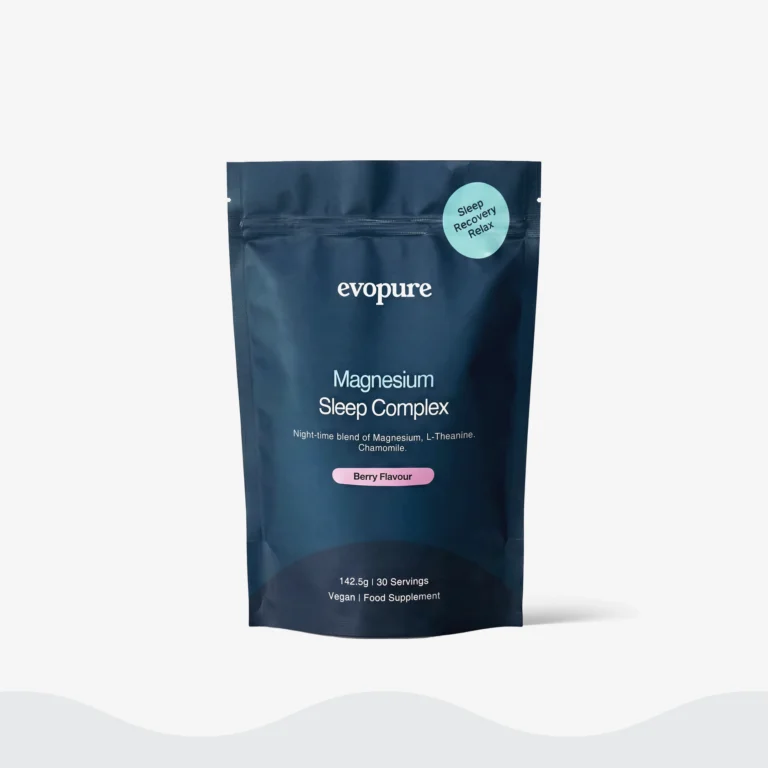
Our Magnesium Glycinate Sleep Complex provides 148mg of elemental magnesium per serving from bisglycinate and citrate, well within the NHS limit. Magnesium contributes to the reduction of tiredness and fatigue and to normal psychological function. See the best time to take magnesium.
FAQs
What are the side effects of magnesium?
The most common are diarrhoea, stomach cramps and nausea, usually from high doses or forms like oxide. Serious side effects are rare.
Can magnesium cause diarrhoea?
Yes, especially above 400mg a day or with oxide and citrate. Glycinate is usually gentler.
Is it safe to take magnesium every day?
For most adults, yes, at 400mg a day or less from supplements. Check with your GP if you have kidney disease or take regular medicines.
Who should not take magnesium?
People with kidney disease, a slow heartbeat or myasthenia gravis, unless a doctor advises it. Ask a pharmacist about timing if you take certain antibiotics, thyroid or osteoporosis medicines.
Which magnesium has the fewest side effects?
Magnesium glycinate (bisglycinate) is usually the gentlest on the stomach.
Sources
- NHS. Vitamins and minerals: others (magnesium).
- NHS. Levothyroxine.
- NHS. Doxycycline.
- NHS. Alendronic acid.
This guide is general information, not medical advice. Evopure makes the Magnesium Glycinate Sleep Complex.