





Last updated: October 2026
Most trials used 250 to 600mg a day of a standardised ashwagandha root extract, often split into two doses, such as 300mg twice a day, for 6 to 12 weeks. Plain root powder trials used far more, around 5g a day. There is no official UK dose, so follow one product’s label and never go above it.
Ashwagandha isn’t right for everyone. Avoid it if you’re pregnant, breastfeeding, under 18 or have a liver condition, and speak to your GP or pharmacist first if you have a thyroid or autoimmune condition or take any regular medicine.
Below: the doses trials used, a table by extract type (KSM-66, Shoden, Sensoril, powder and tinctures), amounts for women, men, sleep and stress, how much is too much, timing, how long to take it, and UK safety.
The short version: 300mg of root extract twice a day (600mg in total) is the most studied amount. Reviews found clearer results at 300 to 600mg a day for stress and at 600mg or more for sleep, after at least 8 weeks. More isn’t better: the strength of the extract matters as much as the milligrams.
How much ashwagandha per day? What the trials used
Ashwagandha (Withania somnifera) is a shrub whose root has been used in Ayurvedic practice for centuries. In the UK it’s sold as a food supplement, and there is no official recommended daily amount, safe upper level or legal limit for it. What we do have is the amounts used in clinical trials:
- Extracts: the US National Institutes of Health summarises stress and anxiety trials as using 240 to 1,250mg of extract a day. The most common pattern is 300mg twice a day.
- Root powder: much higher amounts, because powder isn’t concentrated. One anxiety trial used 12g of root granules a day (equal to about 6g of powder), and a fertility trial in men used 5g of root powder a day for 3 months.
- Stress: a 2022 meta-analysis of 12 trials with 1,002 adults found the clearest effect on stress scores at 300 to 600mg a day. It rated the certainty of the evidence as low.
- Sleep: a 2021 meta-analysis of 5 trials with 400 adults found clearer effects at 600mg a day or more, taken for 8 weeks or longer.
- Lower doses: in one 8-week trial, stressed adults took 250mg or 600mg a day of root extract. Stress scores and cortisol fell at both doses compared with placebo, with stronger statistical results at 600mg.
So “how much ashwagandha should I take?” has an honest answer: the trials point to 250 to 600mg of a standardised root extract a day, but that range only applies to similar extracts. A 500mg capsule of plain powder is not the same as 500mg of a concentrated extract. For what ashwagandha is and what the wider research covers, see what does ashwagandha do?
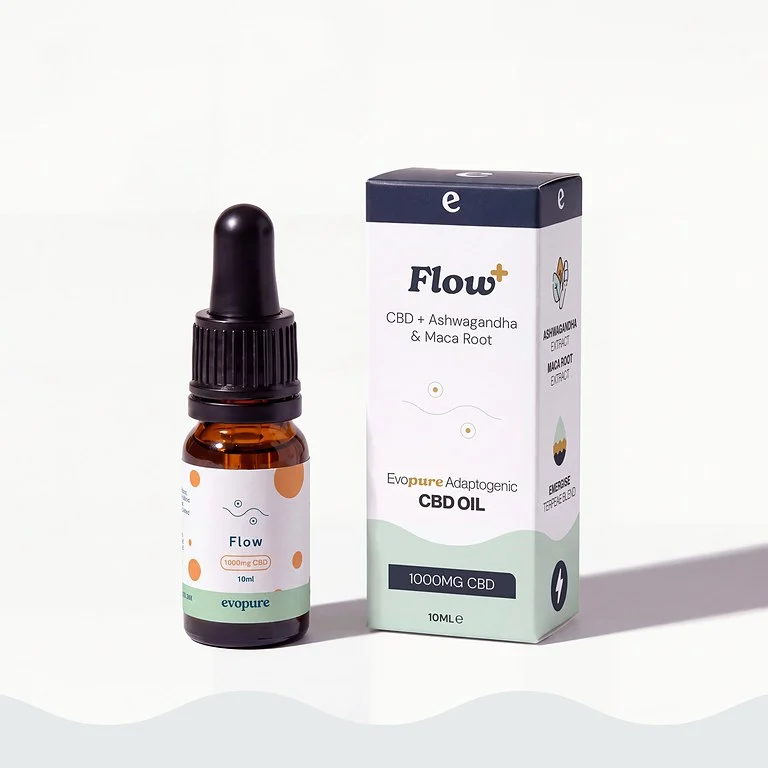
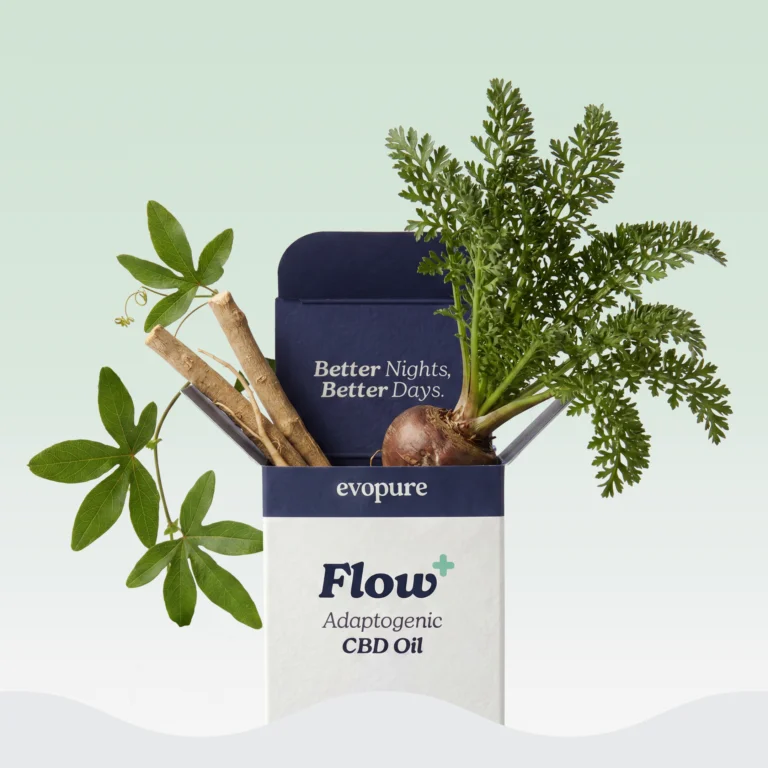
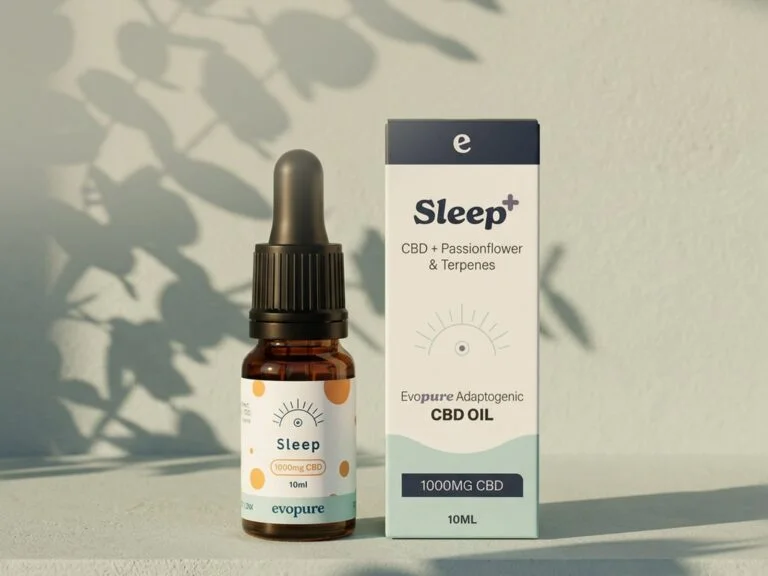
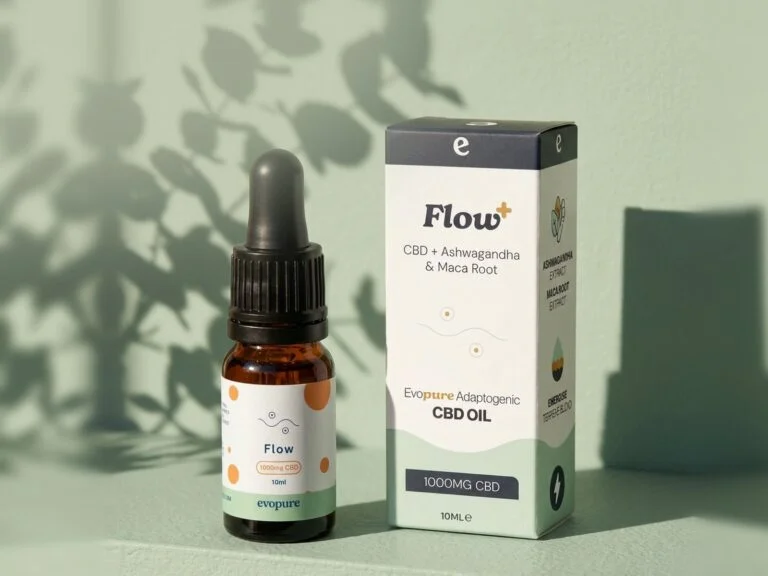
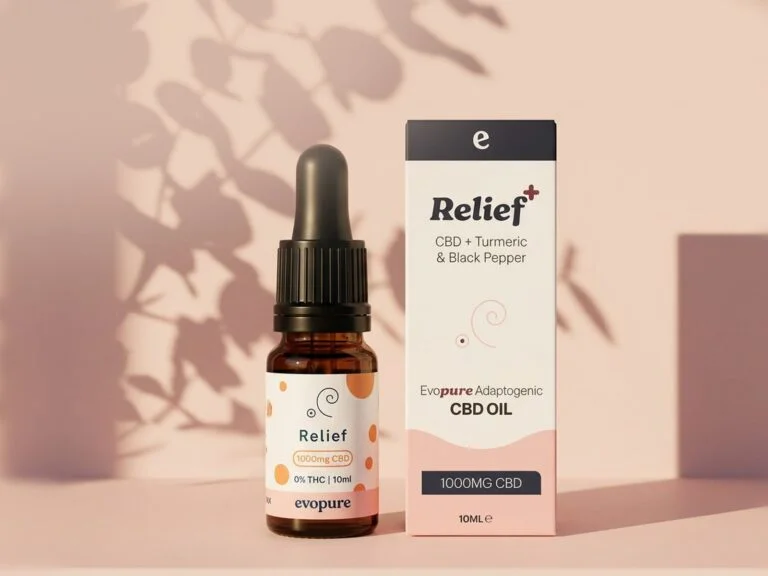
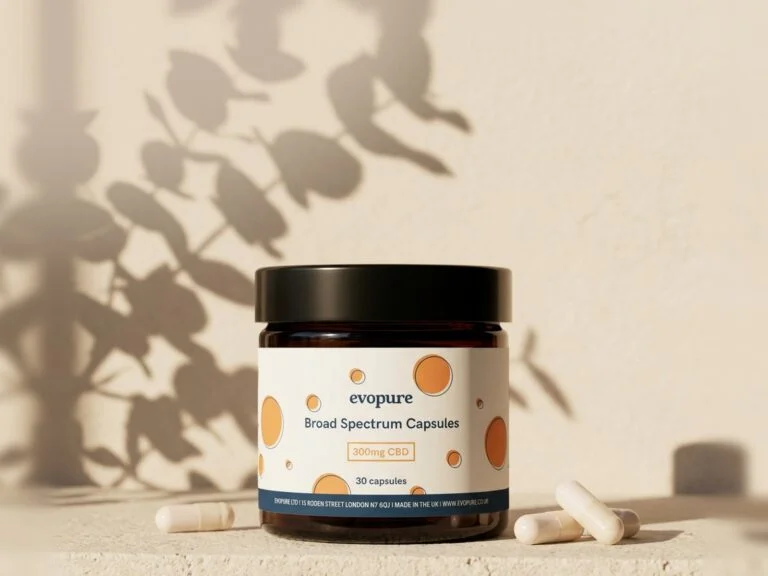
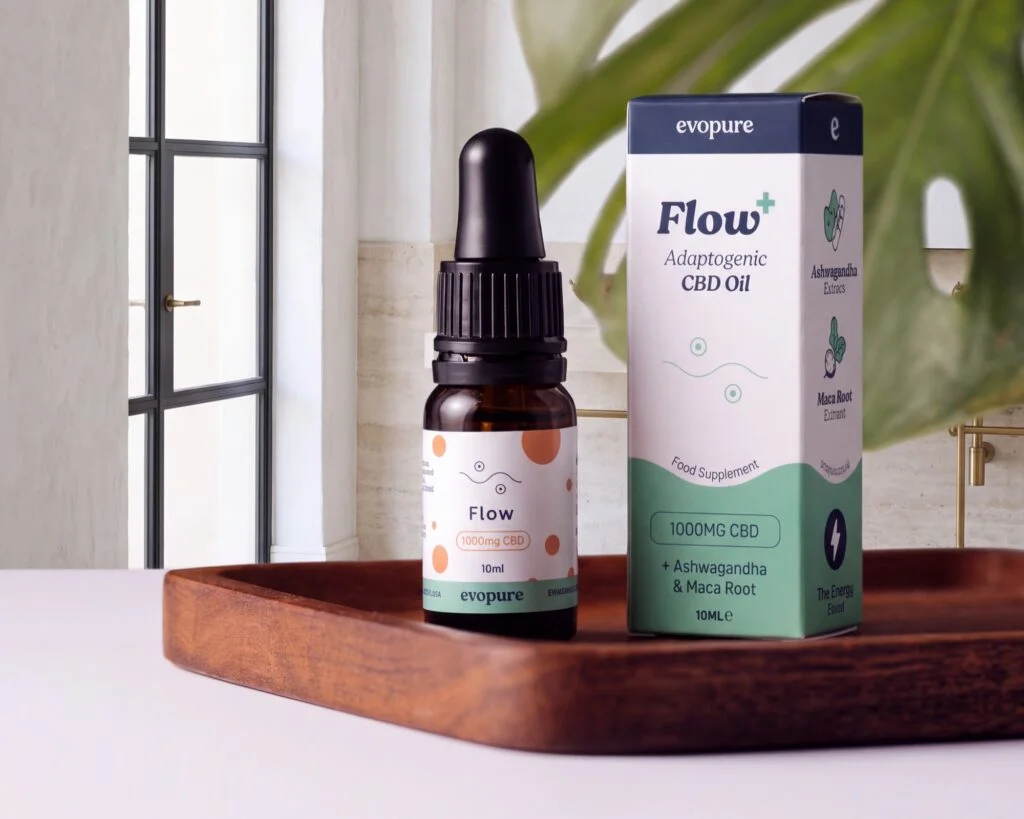
If you’re comparing options, our Flow CBD Oil blends broad spectrum CBD with ashwagandha and maca, and we make two ashwagandha-free options too:
Ashwagandha dosage by type: KSM-66, Shoden, Sensoril and powder
Labels can say ashwagandha, ashwaganda, Indian ginseng or Withania somnifera: it’s the same plant. What changes the dose is the plant part, how it was extracted and how concentrated it is. These are the forms you’ll see most in the UK:
| Extract or form | Typical daily amount in trials | Withanolides | Notes |
|---|---|---|---|
| KSM-66 (root only) | 600mg (300mg twice a day) | At least 5% | The most studied extract in stress trials |
| Shoden (root and leaf) | 240mg once a day | At least 35% withanolide glycosides | Concentrated, so the dose is lower |
| Sensoril (root and leaf, water extract) | 500mg a day | Standardised by its maker | Contains leaf, which is less studied |
| Root powder | 5 to 6g a day | Not standardised | Much weaker per gram |
| Tinctures and liquid extracts | Not tested in trials | Rarely stated | Follow the label; see below |
Two practical points follow from this:
- How much ashwagandha KSM-66 per day? The KSM-66 trials mostly used 300mg twice a day. That’s the amount most KSM-66 capsules are built around.
- How many mg of ashwagandha in a teaspoon? It depends on the powder, and teaspoons vary, so use the scoop or the gram weight on the label rather than guessing. A spoonful of powder is a very different thing from a capsule of extract.
Most trial extracts were made from the root, and a branded extract’s results may not apply to another product. Our guide to ashwagandha for anxiety has a fuller buying checklist, including why root is generally preferred to leaf.
How many mg of ashwagandha per day for women, men, sleep and stress?
Trials haven’t found different doses for different people. The amounts below are what studies used, not personal advice, and each links to our full guide:
| Goal or group | Amounts used in trials | Full guide |
|---|---|---|
| Women | Mostly 600mg root extract a day, split into two doses | Ashwagandha for women |
| Men | 240 to 675mg extract a day; 5g in a powder trial | Ashwagandha for men |
| Sleep | 120 to 600mg a day; clearer results at 600mg or more | Ashwagandha for sleep |
| Stress and anxiety | 240 to 600mg a day in most trials | Ashwagandha for anxiety |
How much ashwagandha per day for females? The same range as for men. Women’s trials in perimenopause and after menopause mostly used 300mg twice a day. The extra cautions for women are about pregnancy, breastfeeding, thyroid and hormone-related conditions, not a different dose.
How much ashwagandha per day to lower cortisol?
Trials that measured cortisol used 240mg a day of Shoden, 300mg twice a day of KSM-66, and 250 or 600mg a day of another root extract, for about 8 weeks. Cortisol fell in all three small trials. That’s a research finding, not a promise. Our guide on how to lower cortisol naturally covers sleep, exercise and the signs that need a GP.
How much ashwagandha is too much? 1,000mg, 2,000mg and 3,000mg
There is no agreed maximum. Here’s what the evidence shows at different amounts:
- 600mg a day: the best-tested amount. In an 8-week trial of 1,002 adults with stress and anxiety, side effects were no more common than on placebo, and liver and kidney blood tests didn’t change. An earlier 8-week trial in 80 healthy adults, at 300mg twice a day, found no changes in blood tests, including thyroid hormones.
- Is 1,000mg of ashwagandha a day too much? It’s above the usual trial range but within the 240 to 1,250mg of extract that stress and anxiety trials have used. There’s little reason to go this high, and no evidence that it works better.
- 2,000mg a day: one 12-week study gave 145 healthy adults 2,000mg of root extract daily and reported no clinically significant changes in blood tests. It had no placebo group and came from the same research group as several of the trials above, so it’s weak evidence of safety.
- 3,000mg or more of extract: we found no trials. Don’t take this much.
The rare serious problems don’t appear to need huge doses. In a case series from Iceland and the US, five people developed liver injury after taking supplements containing 450 to 1,350mg of ashwagandha a day, with symptoms starting 2 to 12 weeks in. A case of an overactive thyroid involved 1,950mg a day for over 2 months. Stop taking it and see a GP if you notice yellow skin or eyes, dark urine, itching, a racing heart or unusual tiredness. Our guide to ashwagandha side effects covers the common and rare effects in full.
When should I take ashwagandha? Morning, night and with food
There’s no proven best time. Many trials split the dose into two (morning and evening), and the Shoden trial gave one capsule after dinner. Taking it with food is a sensible default if it upsets your stomach, and keeping the same time each day matters more than the clock. Our guide on when to take ashwagandha goes through morning, evening and split doses by goal.
Can you take ashwagandha at night or before bed?
Yes. Drowsiness is one of its more common side effects, so many people prefer it in the evening, and it’s the obvious choice if sleep is your goal. If it leaves you groggy the next morning, try taking it earlier in the evening or lowering the amount. Don’t combine it with sleeping tablets or other sedatives without checking with a pharmacist. For how it compares with other options, see ashwagandha vs magnesium.
How long should you take ashwagandha, and do you need breaks?
- Trial length: most trials lasted 6 to 12 weeks. The sleep meta-analysis found clearer results after 8 weeks or more, so a few days isn’t a fair test.
- Long-term use: the US National Center for Complementary and Integrative Health says ashwagandha may be safe in the short term, up to 3 months, and that there isn’t enough information to judge long-term safety.
- Cycling: no trial has tested an on-and-off schedule, so there’s no evidence-based break pattern. A sensible approach is to review it after 8 to 12 weeks: if you can’t tell it’s making a difference, stop.
Keep a simple note of how you sleep and feel each week before and while you take it, so you can judge it honestly. If you’re choosing between herbs, our guide to ashwagandha vs rhodiola compares the evidence.
Ashwagandha tinctures and drops: how much should you take?
Tinctures and liquid extracts haven’t been tested in clinical trials, so there’s no trial dose to copy. Things to know before you buy:
- Ratios aren’t milligrams. A label like 1:2 or 1:5 tells you how much dried herb went into the liquid, not how much ashwagandha is in each dose. Look for an amount per serving.
- Many tinctures are made with alcohol. That matters if you avoid alcohol, and a few drops is a very different amount from a 300mg capsule.
- “Mother tincture” is a term from homeopathy. These products aren’t standardised to the extracts used in research.
- Tincture or capsule? If you want to match the research, a capsule of a named, standardised root extract is the closest you’ll get. Drops suit people who prefer a liquid, but you can’t compare them with the trials.
Whatever the form, use one ashwagandha product at a time and don’t go above its label dose.
Who should avoid ashwagandha, and is it safe in the UK?
Don’t take ashwagandha, or speak to your GP or pharmacist first, if any of these apply:
- Pregnancy or breastfeeding: avoid it. See ashwagandha and breastfeeding. We don’t recommend our products during pregnancy or breastfeeding.
- Liver conditions: avoid it, and stop if you get signs of liver problems.
- Thyroid conditions: in an 8-week trial, 600mg a day changed thyroid blood test results, so check first, especially if you take levothyroxine.
- Autoimmune conditions, or surgery coming up.
- Medicines: diabetes and blood pressure medicines, immunosuppressants, sedatives, anti-seizure medicines and thyroid hormones.
- Under 18s: there’s no good evidence on dosing in children. Our products are for adults only.
The UK position (October 2026): ashwagandha is legal to sell as a food supplement. The Food Standards Agency asked its Committee on Toxicity to review its safety, ran a call for evidence in 2024, and says a risk assessment will be published. While the review continues, the FSA told Which? in June 2026 that it would advise people with pre-existing liver conditions and pregnant women to avoid ashwagandha supplements. Denmark banned ashwagandha in food supplements in 2023, and France’s food safety agency advised certain groups, including pregnant and breastfeeding women, against it in 2024. Our UK ashwagandha safety review tracks every step.
Ashwagandha and alcohol
We found no human studies on ashwagandha and alcohol together. The caution comes from what each does on its own: ashwagandha can make some people drowsy, alcohol is a sedative, and both have links to liver problems. Keep drinks light while you take it, don’t take it to help you sleep after a heavy night, and skip it altogether if you have a liver condition. Alcohol also disrupts sleep in its own right: see alcohol and sleep.
Ashwagandha in Evopure products
Our Flow CBD Oil combines broad spectrum CBD (0% THC) with ashwagandha root extract, maca root extract and our Energise terpene blend in MCT oil. It comes in 500mg and 1,000mg strengths in a 10ml bottle and is designed as a daytime oil. Half a pipette gives about 17.5mg of CBD on the 500mg and about 35mg on the 1,000mg. The product page doesn’t list a milligram amount of ashwagandha per serving, so you can’t compare it directly with the trial doses above, and it isn’t meant to replace an ashwagandha capsule. Don’t stack it with a separate ashwagandha supplement without checking the total with a pharmacist. CBD isn’t a treatment for anxiety or any condition, and we don’t claim Flow treats or prevents anything. Read more in our guides to CBD and ashwagandha and CBD dosage.
The FSA’s 10mg a day figure is precautionary advice rather than a legal limit, set while longer-term safety research continues. At Evopure we think it is a very cautious figure, and many adults use more. If you go above it, increase slowly, and check with your GP or pharmacist first if you take any medication.
If you’d rather skip ashwagandha, our Magnesium Glycinate Sleep Complex contains none. It’s an evening drink with magnesium bisglycinate and citrate, glycine, L-theanine, chamomile, passionflower, hops and oat straw. Magnesium contributes to a reduction of tiredness and fatigue and to normal psychological function.
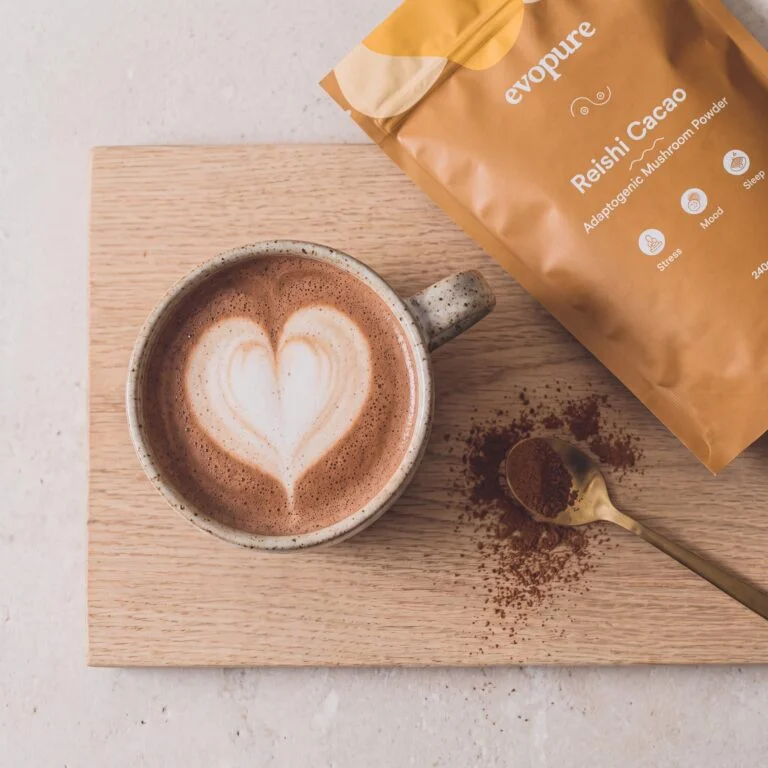
Our Reishi Mushroom Adaptogenic Complex is a hot chocolate powder made with reishi mushroom extract, cacao, maca, coconut milk powder and coconut sugar, with no ashwagandha. The cacao contains a little natural caffeine, so it suits earlier in the day. All our products are vegan, made in the UK and for adults only.
See also what Home Bargains ashwagandha labels say.
Buying on the high street? See Holland and Barrett ashwagandha: KSM-66, strengths and UK safety.
FAQs
How much ashwagandha should I take a day?
Trials mostly used 250 to 600mg a day of a standardised root extract, often 300mg twice a day. Root powder trials used about 5g a day. There’s no official UK dose, so follow one product’s label and don’t exceed it.
Is 1000mg of ashwagandha a day too much?
It’s above the usual trial range of 250 to 600mg of extract, though some stress and anxiety trials used up to 1,250mg. There’s no evidence it works better than 600mg, and rare liver problems have been reported at 450 to 1,350mg a day, so most people have no reason to take this much.
How much ashwagandha per day for females?
The same range as for men. Trials in women mostly used 600mg of root extract a day, split into two doses. Avoid it if you’re pregnant or breastfeeding, and check with your GP first if you have a thyroid or hormone-related condition.
Can you take ashwagandha at night?
Yes. It can make some people drowsy, so many take it in the evening, and sleep trials found clearer results at 600mg a day or more for 8 weeks or longer. Don’t combine it with sleeping tablets or sedatives without checking with a pharmacist.
How much ashwagandha powder per day?
Powder trials used about 5 to 6g of root powder a day, because powder is far weaker than an extract. Use the scoop or gram weight on the label rather than a teaspoon, and don’t mix powder with an extract capsule.
Is it OK to take ashwagandha every day?
Trials gave it daily for 6 to 12 weeks, and US health authorities say it may be safe for up to 3 months. Long-term safety isn’t known, so review it after 8 to 12 weeks and stop if it isn’t making a clear difference.
How much ashwagandha is in Flow CBD Oil?
Flow contains ashwagandha root extract and maca root extract with broad spectrum CBD, but the product page doesn’t list a milligram amount of ashwagandha per serving. It’s a CBD oil with botanicals, not a high-dose ashwagandha supplement, so don’t compare it with capsule trial doses.
Can I drink alcohol while taking ashwagandha?
There are no human studies on the combination. Both can make you drowsy and both have links to liver problems, so keep drinks light, don’t use it after heavy drinking, and avoid it altogether if you have a liver condition.
Sources
- NIH Office of Dietary Supplements. Ashwagandha: fact sheet for health professionals.
- NCCIH. Ashwagandha: usefulness and safety.
- FSA. Summary of responses to call for evidence on ashwagandha, June 2026.
- Which? Ashwagandha: stress buster or health risk? June 2026 (includes the FSA’s statement).
- Akhgarjand C et al (2022). Does ashwagandha supplementation have a beneficial effect on the management of anxiety and stress? A systematic review and meta-analysis. Phytotherapy Research. PMID 36017529.
- Cheah KL et al (2021). Effect of ashwagandha (Withania somnifera) extract on sleep: a systematic review and meta-analysis. PLoS One. PMID 34559859.
- Salve J et al (2019). Adaptogenic and anxiolytic effects of ashwagandha root extract in healthy adults. Cureus. PMID 32021735.
- Chandrasekhar K et al (2012). A randomized, placebo-controlled study of a high-concentration full-spectrum extract of ashwagandha root in reducing stress and anxiety in adults. Indian Journal of Psychological Medicine. PMID 23439798.
- Lopresti AL et al (2019). An investigation into the stress-relieving and pharmacological actions of an ashwagandha extract. Medicine (Baltimore). PMID 31517876.
- Ziegenfuss TN et al (2018). Effects of an aqueous extract of Withania somnifera on strength training adaptations and recovery: the STAR trial. Nutrients. PMID 30463324.
- Mahdi AA et al (2011). Withania somnifera improves semen quality in stress-related male fertility. Evidence-Based Complementary and Alternative Medicine. PMID 19789214.
- Pakhale K et al (2026). Safety of 8-week administration of ashwagandha root extract in adults with stress and anxiety. Phytotherapy Research. PMID 41943502.
- Verma N et al (2021). Safety of ashwagandha root extract: a randomized, placebo-controlled study in healthy volunteers. Complementary Therapies in Medicine. PMID 33338583.
- Movva N et al (2026). Safety and tolerability of ashwagandha root extract in healthy adults: a prospective, non-comparative study. Frontiers in Nutrition. PMID 42253745.
- Björnsson HK et al (2020). Ashwagandha-induced liver injury: a case series from Iceland and the US Drug-Induced Liver Injury Network. Liver International. PMID 31991029.
- Sharma AK et al (2018). Efficacy and safety of ashwagandha root extract in subclinical hypothyroid patients. Journal of Alternative and Complementary Medicine. PMID 28829155.
This guide is general information, not medical advice. Evopure makes Flow CBD Oil, the Magnesium Glycinate Sleep Complex and the Reishi Mushroom Adaptogenic Complex.