
Last updated: October 2026
Breathwork is any practice where you deliberately change the way you breathe, from slow, steady breathing at around six breaths a minute to fast, intense styles such as Wim Hof or holotropic breathing. Slow breathing is free, gentle and backed by reasonable research for stress. Fast styles carry real risks and need more care.
Below: the main types of breathwork compared, what the research shows, a 5-minute routine to start today, breathwork for anxiety and sleep, and who should be careful.
Safety first: never practise fast breathing or breath holds in or near water (including the bath), while driving or while standing. They can make you faint without warning. If you are pregnant or have epilepsy, a heart condition, a lung condition or a history of serious mental illness, stick to gentle slow breathing and check with your GP or midwife before trying anything more intense.
What is breathwork?
Breathing happens on autopilot, but you can also take control of it. Breathwork is the umbrella term for doing that on purpose: changing how fast you breathe, how deeply, whether you use your nose or mouth, and whether you pause or hold your breath.
At one end are calm, slow techniques most people know as breathing exercises, such as belly breathing and box breathing. Many come from yoga, where breath control is called pranayama. At the other end are fast, deep styles that push your body chemistry and can bring on tingling, strong emotions or an altered state of mind.
Breathwork vs meditation: they overlap but aren’t the same. Meditation usually asks you to notice your breath without changing it. Breathwork asks you to change it. Many people find breathwork easier than sitting meditation because it gives the mind a clear job. If you want to try both, our mindfulness for beginners guide is a good partner to this one.
Types of breathwork compared
Most techniques fall into two families. Slow breathing (under about 10 breaths a minute) tends to settle the body. Fast or high ventilation breathing deliberately over-breathes and is stimulating. Here is how the main types compare.
| Type | Pattern or pace | Most used for | Intensity | Full guide |
|---|---|---|---|---|
| Slow (resonance) breathing | About 6 breaths a minute, e.g. in for 5, out for 5 | Everyday stress, daily practice | Gentle | Starter routine below |
| Belly (diaphragmatic) breathing | Breathe low into the belly, counting up to 5 in and 5 out | Beginners, stressful moments | Gentle | Starter routine below |
| Physiological sigh (cyclic sighing) | Two inhales through the nose, then one long sigh out | A quick reset in the moment | Gentle | How to calm down |
| Box breathing | In 4, hold 4, out 4, hold 4 | Staying focused under pressure | Gentle to moderate | Box breathing |
| 4-7-8 breathing | In 4, hold 7, out 8 | Winding down at bedtime | Gentle to moderate | 4-7-8 breathing |
| Alternate nostril breathing | Slow breaths, closing one nostril at a time | Yoga practice, calm focus | Gentle | See below |
| Buteyko breathing | Light, slow nose breathing with short, easy pauses | Asthma (alongside medicine), mouth breathing | Gentle to moderate | Mouth breathing at night |
| Wim Hof breathing | About 30 fast, deep breaths, then a hold on empty lungs | Energy, cold training | Intense | Wim Hof breathing |
| Holotropic and conscious connected breathwork | Continuous fast, deep breathing with no pause, in guided sessions | Emotional or experiential work | Very intense | Risks below |
Slow and resonance breathing
The foundation of calming breathwork. Heart rate variability (HRV) research found heart rhythms swing most strongly at about six breaths a minute, which is why this pace is called resonance breathing. See our guides to the vagus nerve and nervous system regulation for why slow breathing settles you.
Alternate nostril and Buteyko breathing
Alternate nostril breathing (nadi shodhana) is a yoga technique: close one nostril with your thumb, breathe in slowly through the other, then switch sides to breathe out. Skip it if your nose is blocked. Buteyko, developed for asthma, trains light, slow nose breathing with short pauses. It is never a replacement for inhalers or other asthma medicine.
Fast breathing: Wim Hof, holotropic and conscious connected
These styles over-breathe on purpose. In one study of holotropic and conscious connected sessions, the drop in carbon dioxide from deliberate over-breathing tracked closely with people entering altered states of consciousness, some similar to psychedelic experiences. That is powerful, and it is why these styles need the most care.
Breathwork benefits: what the research says
Breathwork has more evidence behind it than many wellness trends, but the studies are mostly small and short. Here is what holds up.
- Stress, anxiety and low mood. A 2023 meta-analysis by researchers at the University of Sussex pooled 12 randomised trials with 785 adults. People who did breathwork reported lower stress than control groups, a small to medium effect. Similar effects were seen for anxiety (20 trials) and depressive symptoms (18 trials). The authors also urged caution, as most trials had a moderate risk of bias.
- Heart rate variability. A 2022 meta-analysis of 223 studies found voluntary slow breathing raised vagally mediated HRV, a marker of the body’s calming, rest and digest branch, during practice, straight afterwards and after several weeks.
- Mood, day to day. In a one-month Stanford study, five minutes a day of cyclic sighing improved mood and slowed resting breathing more than the same time spent on mindfulness meditation.
- In stressful moments. A small 2026 study found that one minute of cyclic sighing or box breathing, done in real-life anxious moments, lowered anxiety more than doing nothing.
- Asthma. A Cochrane review of 22 trials found breathing exercises may improve quality of life in adults with mild to moderate asthma, though the evidence for symptoms and lung function was less clear.
What’s hype: claims that breathwork detoxes your body, burns fat, fixes your skin or “releases” trauma on its own aren’t supported by good evidence. Breathwork is a useful skill for managing how you feel. It isn’t a cure for any health condition, and it shouldn’t replace treatment you’ve been prescribed.
How to start: a 5-minute breathwork routine
You don’t need an app, a class or any kit. This routine builds on the NHS breathing exercise for stress, which suggests at least 5 minutes and doing it regularly as part of your day.
- Get comfortable (30 seconds). Sit in a chair that supports your back with both feet flat on the floor, or lie down. Loosen anything tight around your waist.
- Notice your breath (30 seconds). Breathe normally. Put one hand on your belly and notice whether it rises as you breathe in.
- Belly breathing (2 minutes). Breathe in gently through your nose, letting the breath flow low into your belly, counting steadily from 1 to 5 if that’s comfortable. Breathe out gently through your mouth, counting from 1 to 5 again. Don’t force it: you may not reach 5 at first.
- Slow it to about six a minute (1 minute). Once it feels easy, keep the in-breath at around 5 seconds and let the out-breath stretch to 5 or 6.
- Finish with three sighs (30 seconds). Two short breaths in through the nose, one long, slow breath out through the mouth.
- Sit quietly (30 seconds). Let your breathing return to normal before you get up.
How often? Once or twice a day is a good start. Morning, a work break and bedtime all work. Little and often beats one long session a week, and it gets easier with practice.
Feeling dizzy? You’re breathing too hard or too deeply. Make each breath smaller and softer, and breathe normally for a minute.
Breathwork for anxiety
Anxiety often shows up in your breathing: quick, shallow breaths high in the chest. Breathwork gives you a way to work from the body back to the mind. A 2023 scoping review of 16 studies in adults diagnosed with anxiety disorders found a range of breathwork approaches improved anxiety symptoms, although the findings on fast breathing were mixed.
For anxiety, slow, out-breath-focused techniques are the safest bet. Fast styles can bring on the same feelings as panic, such as tingling fingers, light-headedness and a racing heart, which can be frightening if you’re prone to panic attacks.
- In the moment: a physiological sigh or a minute of slow breathing. See how to calm down.
- During a panic attack: the NHS advice is to breathe slowly and deeply and remind yourself it will pass. Our guide to how to stop a panic attack walks you through it.
- As a daily habit: 5 minutes of slow breathing or box breathing.
Breathwork works best as one tool among several. If anxiety is affecting your daily life, see a GP. In England you can also refer yourself to NHS Talking Therapies. Our guide to how to deal with anxiety covers the options.
Breathwork for sleep
A 2026 systematic review of nine studies with 457 people looked at slow breathing (10 breaths a minute or fewer) before bed. People reported sleeping longer and better, mostly in studies lasting around a month. Results from sleep trackers and sleep lab tests were less clear, so the evidence is promising rather than proven.
The best breathwork for sleep is slow and soft. Try:
- 4-7-8 breathing once you’re in bed
- a slow breathing body scan or a short sleep meditation
- yoga nidra, which uses the breath to guide you into deep rest
Keep fast, energising styles such as Wim Hof for the morning. They are designed to wake you up. If you breathe through your mouth at night, snore loudly or stop breathing in your sleep, read mouth breathing at night and speak to your GP. For a full wind-down, see our bedtime routine for adults.
Is breathwork safe? Risks and who should be careful
Slow, gentle breathing is low risk for almost everyone. A large review of slow breathing studies expected few adverse effects. The risks sit mainly with fast breathing and breath holds.
Common side effects of fast breathing: tingling or pins and needles in the hands, feet or around the mouth, light-headedness, cramping or tightness in the hands, and feeling emotional. These come from blowing off carbon dioxide and usually pass within minutes once you breathe normally.
Fainting and water: the Royal Life Saving Society UK warns that over-breathing and then holding your breath can cause a blackout in any depth of water, often with no warning, and without fast rescue this leads to drowning. Never practise in a bath, pool or open water, or just before a swim. Don’t do it while driving, standing or anywhere a fall could hurt you.
Check with your GP or midwife first, and stick to gentle slow breathing, if you:
- Have epilepsy. Over-breathing is used in hospital EEG tests because it can bring on seizure activity, and it can trigger seizures in up to half of people with generalised epilepsy.
- Are pregnant. Avoid fast breathing and breath holds. Gentle breathing for relaxation and labour, as taught in antenatal classes, is a different thing.
- Have a heart condition or high blood pressure, or have had a stroke or fainting episodes.
- Have asthma or COPD. Breathing exercises can sit alongside your treatment but never replace it. Keep taking your inhalers, and don’t change medicine without your GP or asthma nurse.
- Have panic disorder. Fast breathing can bring on panic-like symptoms. Slow breathing is a better fit.
- Have a history of psychosis, bipolar disorder, severe trauma or dissociation, before trying holotropic or conscious connected breathwork. These sessions can produce intense experiences and strong emotions. Talk to your GP or mental health team first.
Stop straight away if you feel chest pain, an irregular heartbeat, severe dizziness, confusion or panic. Call 999 if chest pain doesn’t settle.
Breathwork apps, classes and teachers
For slow breathing, a free app with a visual pacer or a simple timer is all you need. For anything more intense, a good teacher matters, and training varies a lot from one teacher to the next. Before you book a class, retreat or one-to-one session, check that the teacher:
- asks about your health before the session, including epilepsy, heart problems, pregnancy and mental health
- can tell you about their training and insurance
- never pressures you to keep going when you want to stop
- doesn’t promise to cure anxiety, trauma or any illness
- runs fast breathing sessions lying down on dry land, with someone watching the room
Yoga classes are another easy way in, as most include some pranayama. Breathwork for children should stay simple and playful, and slow, never fast.
Making breathwork part of a calm routine
Breathwork sticks best when you attach it to something you already do: three slow breaths before you open your laptop, or five minutes after brushing your teeth at night.
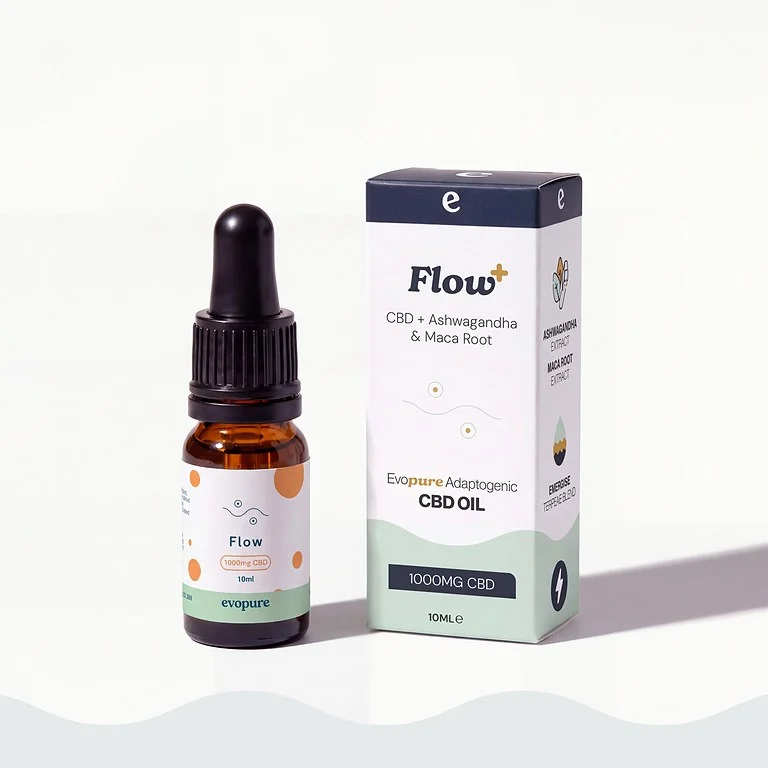
Some people like to add a supplement to their evening wind-down. Our Magnesium Glycinate Sleep Complex is a caffeine-free evening drink with glycine and L-theanine, and magnesium contributes to normal psychological function. Others take our Flow CBD Oil, with ashwagandha and maca, as part of their routine. CBD isn’t a treatment for anxiety or stress. The FSA’s 10mg a day figure is precautionary advice rather than a legal limit, set while longer-term safety research continues. At Evopure we think it is a very cautious figure, and many adults use more. If you go above it, increase slowly, and check with your GP or pharmacist first if you take any medication.
All our products are for adults only. We don’t recommend our products during pregnancy or breastfeeding.
FAQs
What is breathwork?
Any practice where you deliberately change your breathing, such as its speed, depth or rhythm. It ranges from gentle slow breathing and box breathing to fast, intense styles such as Wim Hof and holotropic breathwork.
Is breathwork good for anxiety?
Slow breathing can help many people feel calmer, and a 2023 meta-analysis linked breathwork with lower anxiety and stress. It isn’t a cure. If anxiety is affecting your life, see a GP or refer yourself to NHS Talking Therapies.
How often should you do breathwork?
Five minutes once or twice a day is a good starting point for slow breathing. Keep intense styles such as Wim Hof to once a day at most, and stop if you feel faint.
Is breathwork dangerous?
Slow breathing is low risk. Fast breathing and breath holds can cause tingling, dizziness and fainting, and are dangerous in water or while driving. People with epilepsy, heart conditions or who are pregnant should check with a GP first.
Is breathwork the same as meditation?
No. Meditation usually means noticing your breath without changing it. Breathwork means changing it on purpose. They work well together, and slow breathing is often used to start a meditation.
What is the best breathwork for sleep?
Slow, gentle breathing with a long out-breath, such as 4-7-8 breathing or a few minutes at about six breaths a minute. Avoid fast, energising styles in the evening.
Is breathwork safe during pregnancy?
Gentle relaxation breathing is generally fine, but avoid fast breathing and breath holds, and check with your midwife or GP before starting any new breathwork practice.
Sources
- NHS. Breathing exercises for stress.
- NHS. Panic disorder.
- NHS. Electroencephalogram (EEG).
- RLSS UK. Shallow water blackout, hyperventilation and breath holding (GS005).
- Fincham GW et al (2023). Effect of breathwork on stress and mental health: a meta-analysis of randomised-controlled trials. Scientific Reports.
- Laborde S et al (2022). Effects of voluntary slow breathing on heart rate and heart rate variability: a systematic review and a meta-analysis. Neuroscience and Biobehavioral Reviews.
- Balban MY et al (2023). Brief structured respiration practices enhance mood and reduce physiological arousal. Cell Reports Medicine.
- Riedl EM et al (2026). Simply breathing anxiety away? A pilot, just-in-time ecological momentary intervention study of one-minute cyclic sighing versus box breathing. Anxiety, Stress and Coping.
- Lehrer PM, Gevirtz R (2014). Heart rate variability biofeedback: how and why does it work? Frontiers in Psychology.
- Banushi B et al (2023). Breathwork interventions for adults with clinically diagnosed anxiety disorders: a scoping review. Brain Sciences.
- Eide EM et al (2026). Slow breathing techniques before bedtime and the effects on sleep: a systematic review. Sleep Medicine Reviews.
- Santino TA et al (2020). Breathing exercises for adults with asthma. Cochrane Database of Systematic Reviews.
- Havenith MN et al (2025). Decreased CO2 saturation during circular breathwork supports emergence of altered states of consciousness. Communications Psychology.
- Fincham GW et al (2023). High ventilation breathwork practices: an overview of their effects, mechanisms, and considerations for clinical applications. Neuroscience and Biobehavioral Reviews.
- Rana M et al (2023). Hyperventilation and seizures: not a new sense: a literature review. Neuropediatrics.
This guide is general information, not medical advice. Evopure makes the Magnesium Glycinate Sleep Complex and Flow CBD Oil.