

















Last updated: October 2026
Sleep problems are very common with ADHD. Racing thoughts, a body clock that runs late, restless legs and the timing of stimulant medicine can all make it hard to fall asleep. A consistent routine, morning light, a “brain dump” before bed and reviewing medicine timing with your prescriber can help. Talk to your GP if it persists.
Below: how common ADHD sleep problems are, why your brain won’t switch off, the medication question, practical tips for adults, children and ADHD, and when to get help.
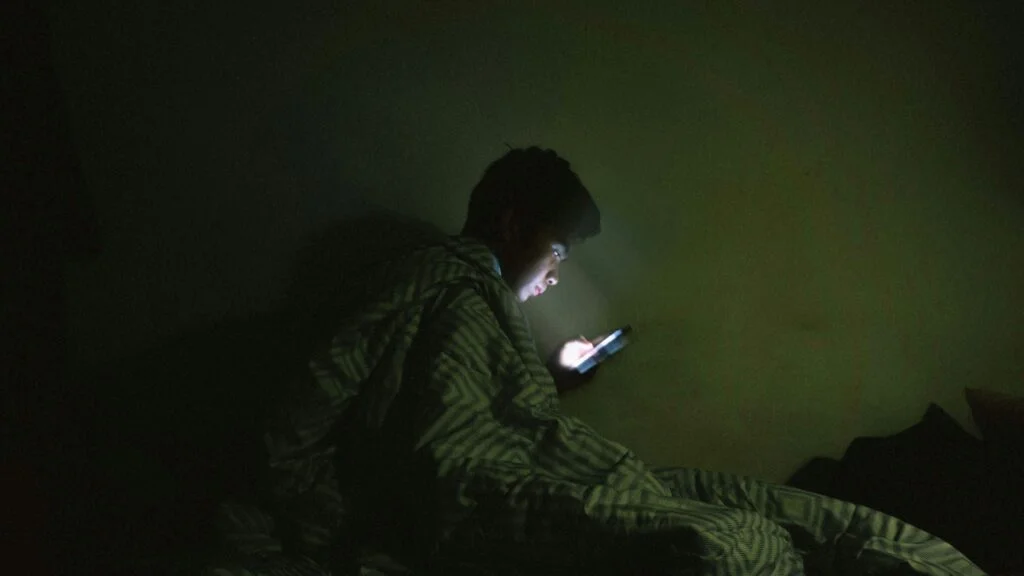
The ADHD sleep loop: ADHD makes it harder to get to sleep, and a short night makes ADHD harder to manage the next day: more distraction, more forgetting, shorter fuse. Breaking the loop usually starts with your wake time, not your bedtime.
How common are sleep problems with ADHD?
Very common. A 2017 review of adult ADHD and insomnia found that between 43% and 80% of adults with ADHD had insomnia across the studies it looked at. A 2018 analysis of 13 studies found adults with ADHD reported more sleep problems on most measures, and sleep trackers showed they took longer to fall asleep than adults without ADHD.
A 2025 consensus of 212 UK clinicians agreed that the most common pattern is delayed sleep onset: you go to bed, but sleep doesn’t come until very late. The same group warned that these problems are often overlooked, which can lead to unsafe self-medication.
Typical signs: lying awake with a busy mind, feeling most alert late at night, very hard mornings and bedtimes that vary by hours.
Why it’s hard to switch off with ADHD
A mind that won’t slow down
Many adults with ADHD describe a “busy brain” at bedtime: thoughts jumping between tomorrow’s tasks, conversations from earlier and new ideas. With fewer distractions in a dark room, that mental noise can feel louder. See how to stop overthinking at night.
A body clock that runs late
In a 2010 Dutch study of 40 adults with ADHD, those who struggled to fall asleep had a later release of melatonin, the hormone that signals night, and a later sleep window than adults without ADHD. A 2019 review estimated that a delayed body clock (delayed sleep phase) affects 73% to 78% of children and adults with ADHD. If you sleep well when allowed to go to bed at 2am and wake at 10am, this may be you. See circadian rhythm and night owl.
Time blindness and hyperfocus
The NHS lists finding it hard to organise your time as a sign of ADHD in adults. Add hyperfocus on a game, a show or a project, and “one more episode” turns into 1am. Staying up late to claw back time for yourself has a name: revenge bedtime procrastination.
Restless legs
Restless legs syndrome causes an urge to move your legs, usually in the evening and at night. A 2023 review found restless legs symptoms in 20% to 33% of adults with ADHD in the studies it included, compared with 2.6% to 15.3% in large general population studies. The NHS says restless legs can be linked to low iron, so it’s worth asking your GP. See magnesium and restless legs for what the evidence shows.
Sleep apnoea
In sleep apnoea, breathing repeatedly stops and starts during sleep. A 2024 review suggested that sleep-disordered breathing, including sleep apnoea, may affect up to half of people with ADHD and is often missed, partly because the daytime result (poor concentration, distractibility) looks like ADHD itself. Loud snoring, gasping in sleep and daytime sleepiness are the clues. See sleep apnoea.
Medication
Stimulant ADHD medicines can make it harder to sleep, especially if a dose is still working in the evening. More on this below.
ADHD sleep problems at a glance
| Sleep problem | Why it happens with ADHD | What may help |
|---|---|---|
| Can’t fall asleep | Racing thoughts, hyperarousal, late body clock | Fixed wake time, morning light, a written brain dump, a wind-down alarm |
| Going to bed too late | Time blindness, hyperfocus, revenge bedtime procrastination | Alarm for the start of your wind-down, phone charged outside the bedroom |
| Restless, twitchy legs at night | Restless legs syndrome is more common with ADHD | See a GP; ask about an iron (ferritin) blood test |
| Snoring, gasping, waking unrefreshed | Possible sleep apnoea | See a GP; a sleep study can check |
| Awake late on medication days | A stimulant dose still active in the evening | Talk to your prescriber about timing; don’t change it yourself |
| Can’t sleep in silence | Quiet makes a busy mind feel louder | Low-volume steady background sound such as pink or brown noise |
| Exhausted in the morning | Short sleep from a late sleep onset | Same wake time daily, daylight soon after waking |
ADHD medication and sleep
Trouble sleeping is a known side effect of stimulant ADHD medicines. The NHS lists it as a common side effect of methylphenidate, and its medicine leaflet notes that taking the last dose more than 6 hours before bedtime can make it easier to sleep. Agree any change in timing with your prescriber first. In clinical trials reviewed in 2017, insomnia was reported by 10% to 19% of adults on lisdexamfetamine and 11% on extended-release methylphenidate.
Medicine timing is a balance between daytime focus and evening sleep, so work out any change with your prescriber:
- Keep a simple diary for a week or two: dose times, bedtime, time you fell asleep, wake time.
- Take it to your ADHD team or GP. They can look at timing, the type of medicine or the formulation.
- Don’t change, skip or stop your medicine yourself. The NHS says to stop methylphenidate only if your doctor advises it.
- Ask a pharmacist before adding any supplement or sleep product, including herbal ones.
Melatonin is prescription-only in the UK. Specialists sometimes prescribe it for longer-term sleep problems in some adults and children. See melatonin in the UK.
How to sleep better with ADHD: 10 tips for adults
The NHS advice for adults with ADHD is a regular bedtime, a quiet, dark bedroom, and avoiding screens, caffeine, sugar and alcohol close to bedtime. These tips make that easier when routine doesn’t come naturally.
- Anchor your wake time. Get up at the same time every day, weekends included. It helps pull a late body clock earlier.
- Get daylight early. A short time outside soon after waking, even on a grey day, tells your body clock it’s morning. Keep evening light dim and warm.
- Set an alarm to start winding down, not just to wake up. Time blindness means “I’ll go to bed at 11” rarely happens without a prompt.
- Do a five-minute brain dump. Write tomorrow’s to-do list on paper before bed, as specifically as you can. In a 2018 sleep lab study, young adults who wrote a specific to-do list fell asleep faster than those who wrote about tasks they’d finished.
- Charge your phone outside the bedroom. Endless feeds are built to hold attention, which can be especially hard to resist with ADHD. See doomscrolling.
- Set a caffeine cut-off. Caffeine can stay in your system for many hours, so stop by early afternoon. Energy drinks count too. See how long caffeine lasts.
- Use sound if silence is the problem. Many people with ADHD say a steady background sound lets their brain go quiet. Keep it low. See brown noise vs white noise.
- Try deep pressure. Some people find a heavier blanket calming. A Swedish trial in adults with insomnia and conditions including ADHD is covered in our weighted blankets guide.
- Move in the day, not late at night. Regular exercise helps burn off restlessness; finish hard workouts a few hours before bed.
- Use body doubling. Winding down at the same time as a partner or housemate (lights down, phones away) makes the routine easier to start.
If you’re still awake after about 20 minutes, get up and do something calm in dim light, then go back when you feel sleepy. Our bedtime routine for adults has a full 60-minute wind-down, with a section on ADHD.
Where an evening drink fits
Some adults like a warm drink as a fixed cue that the day is over. Our Magnesium Glycinate Sleep Complex is a caffeine-free evening drink with magnesium bisglycinate and citrate, glycine, L-theanine and chamomile. Magnesium contributes to normal psychological function and to the reduction of tiredness and fatigue.
To be clear: it isn’t a treatment for ADHD or for sleep problems, and it doesn’t replace assessment, medication or therapy. It’s for adults only. If you take ADHD medication or any other medicine, check with your pharmacist before adding it. People often ask about CBD too: our guide to CBD and ADHD covers what the research does and doesn’t show.
Does lack of sleep make ADHD worse?
It can. The UK clinician consensus noted that a sleep disorder can make ADHD symptoms worse and affect thinking skills. The 2019 review went further, suggesting that in some people part of what looks like ADHD may be the result of long-term disrupted sleep, and that the sleep problem should be treated alongside the ADHD.
This works the other way too. Being short of sleep makes anyone more distracted, forgetful and irritable, which is why researchers recommend screening for sleep problems as part of an ADHD assessment. If you’re always tired, see our guides to sleep debt and insomnia.
Do people with ADHD need more sleep? There’s no evidence of that. The NHS says adults need 7 to 9 hours on average. The difference is that getting it is harder.
ADHD and sleep in children
Sleep problems are common in children with ADHD too, and they’re best handled with your child’s GP or ADHD team. The NHS advises parents to encourage regular sleep, and points to the Royal College of Psychiatrists’ sleep advice for parents for practical help with routines.
- Keep bedtimes and wake times regular, with a calm, predictable routine.
- Talk to the GP or your child’s ADHD specialist if sleep doesn’t improve, or if your child snores loudly or seems to stop breathing in sleep.
- Melatonin is prescription-only in the UK. The NHS says it may be used for children with ADHD when other ways of improving sleep haven’t worked, started and monitored by a specialist.
- Don’t give children supplements or sleep products without medical advice. Evopure products are for adults only.
When to see a GP
See a GP if poor sleep has gone on for more than a few weeks, is affecting your work, driving or relationships, or hasn’t improved after changing your habits. Book sooner if you:
- snore loudly, gasp or stop breathing in your sleep, or feel very sleepy in the day
- have an uncomfortable urge to move your legs in the evening
- think your ADHD medicine is keeping you awake
- think you might have ADHD and haven’t been assessed
- feel low, anxious or hopeless as well as sleeping badly
The GP can check for other causes, refer you for an ADHD assessment, and talk about CBT for insomnia (CBT-I), which helps you change the thoughts and habits that keep you awake. If you feel unable to cope, call NHS 111, or Samaritans on 116 123.
See also tired but wired: causes and fixes.
See also decision fatigue and ADHD.
FAQs
Why do people with ADHD struggle to sleep?
Usually several reasons at once: a busy mind at bedtime, a body clock that runs later than average, time blindness and hyperfocus, and sometimes restless legs, sleep apnoea or stimulant medicine still working in the evening.
Can ADHD cause insomnia?
ADHD and insomnia often go together. A 2017 review found studies reporting insomnia in 43% to 80% of adults with ADHD. If it lasts more than a few weeks, see a GP.
Does ADHD medication affect sleep?
It can. Trouble sleeping is a common side effect of stimulant medicines such as methylphenidate. Talk to your prescriber about timing, and don’t change or stop your medicine yourself.
Why can’t I sleep in silence with ADHD?
Quiet can make a busy mind feel louder. Many people with ADHD find a steady, low-volume background sound such as pink or brown noise helps, though there is little research on it.
Do people with ADHD need more sleep?
There’s no evidence they need more. Most adults need around 7 to 9 hours. With ADHD, the challenge is usually getting to sleep early enough to get it.
Can children with ADHD take melatonin?
Only on prescription. In the UK, melatonin for children is started and monitored by a specialist, usually when other ways of improving sleep haven’t worked.
Sources
- NHS. ADHD in adults.
- NHS. ADHD in children and young people.
- NHS. Side effects of methylphenidate for adults.
- Wynchank D et al (2017). Adult attention-deficit/hyperactivity disorder (ADHD) and insomnia: an update of the literature. Current Psychiatry Reports.
- Bijlenga D et al (2019). The role of the circadian system in the etiology and pathophysiology of ADHD: time to redefine ADHD? ADHD Attention Deficit and Hyperactivity Disorders.
- Migueis DP et al (2023). Attention deficit hyperactivity disorder and restless leg syndrome across the lifespan: a systematic review and meta-analysis. Sleep Medicine Reviews.
- Asherson P et al (2025). The optimal system of care for the management of delayed sleep onset in adult ADHD in the UK: a modified Delphi consensus. Frontiers in Psychiatry.
Also referenced: Van Veen MM et al (2010), Delayed circadian rhythm in adults with ADHD and chronic sleep-onset insomnia, Biological Psychiatry (PMID 20163790); Díaz-Román A et al (2018), Sleep in adults with ADHD: systematic review and meta-analysis, Neuroscience and Biobehavioral Reviews (PMID 29477617); Ivanov I et al (2024), Sleep disordered breathing and risk for ADHD, Journal of Attention Disorders (PMID 38353411); Scullin MK et al (2018), The effects of bedtime writing on difficulty falling asleep, Journal of Experimental Psychology: General (PMID 29058942); Royal College of Psychiatrists, Sleep problems for parents.
This guide is general information, not medical advice. Evopure makes the Magnesium Glycinate Sleep Complex.




















