














Last updated: October 2026
Creatine is one of the most researched supplements. For women, especially after menopause, a 2026 review found that about 5g a day combined with strength training gave small but meaningful gains in muscle and strength. Effects on bone are unclear. It’s generally safe for healthy adults; check with your GP if you have kidney problems.
Below: what creatine does, the evidence for women over 40 and after menopause, brain and mood research, how much to take, side effects, and how to choose a product.
What is creatine?
Creatine is a natural compound made in the body and found in meat and fish. It’s stored mainly in muscles, where it helps supply quick energy for short, intense efforts like lifting or sprinting. Women tend to have lower creatine stores than men, and vegetarians and vegans lower still, because they get little from food. Creatine monohydrate is the form used in almost all research.
Creatine benefits for women: the evidence
| Area | What the research shows |
|---|---|
| Muscle and strength | Small but meaningful gains when combined with strength training |
| Exercise performance | Helps with repeated short, high-intensity efforts |
| Bone | Unclear: no consistent effect on bone density yet |
| Brain | A 2024 meta-analysis found benefits for memory and attention, but EFSA rejected a brain-function claim |
| Weight loss | Not a fat-loss supplement; it may cause a small increase in water weight at first |
Creatine for women over 40 and after menopause
Women lose muscle and strength faster around and after menopause. A 2026 meta-analysis of 7 trials in 608 postmenopausal women (average age about 62) found that creatine, especially 5g or more a day combined with strength training, gave small but meaningful gains in lean mass (about 0.4kg) and leg strength, without evidence of harm. Creatine on its own, without training, did much less. Effects on bone density were unclear.
The lesson: strength training is the main event, and creatine may help you get a little more from it. For other menopause support, see perimenopause and sleep and magnesium for menopause. Magnesium contributes to normal muscle function and the maintenance of normal bones.
Creatine, brain and mood
The brain also uses creatine. A 2024 meta-analysis of 16 trials found creatine improved memory and attention, but the European Food Safety Authority concluded the same year that a cause-and-effect link with brain function hadn’t been established. It’s an interesting area, not a proven one. See nootropics UK and brain fog.
How much creatine should women take?
- Dose: 3g to 5g of creatine monohydrate a day is typical; the menopause trials that worked mostly used 5g or more.
- Loading: not necessary; a daily dose reaches the same level within a few weeks.
- Timing: any time of day; consistency matters more.
- Pair it with strength training two or three times a week.
- Drink enough water.
Side effects and safety
- Water weight: a small increase on the scales in the first weeks, as muscles hold more water.
- Stomach upset: occasional, usually with large single doses; split the dose if needed.
- Kidneys: a 2026 meta-analysis found creatine raises blood creatinine, a marker used in kidney tests, without changing kidney function measures. Tell your doctor you take it before blood tests, and avoid it if you have kidney disease unless advised.
- Pregnancy and breastfeeding: there’s not enough safety data; check with your GP or midwife.
- Choose a tested product listing creatine monohydrate as the single ingredient.
See also best supplements for energy and electrolytes.
FAQs
Is creatine good for women?
Yes, for many. Combined with strength training, it gives small gains in muscle and strength, and it’s well studied and generally safe for healthy adults.
Should women over 50 take creatine?
It may help alongside strength training. A 2026 review in postmenopausal women found small gains in lean mass and strength with 5g or more a day.
Will creatine make me bulky?
No. Gains are small and depend on training. Any early weight change is mostly water held in muscle.
How much creatine should a woman take?
3g to 5g of creatine monohydrate a day is typical. Loading isn’t necessary.
Is creatine bad for your kidneys?
In healthy people, research hasn’t found harm to kidney function, though it raises a blood marker used in kidney tests. Avoid it if you have kidney disease unless advised.
Sources
- Naddafha S et al (2026). Creatine monohydrate for lean mass, strength, and bone density in postmenopausal women: a systematic review and meta-analysis. Journal of the International Society of Sports Nutrition.
- Xu C et al (2024). The effects of creatine supplementation on cognitive function in adults: a systematic review and meta-analysis. Frontiers in Nutrition.
- EFSA Panel (2024). Creatine and improvement in cognitive function: evaluation of a health claim. EFSA Journal.
- Tsiaras A et al (2026). The effect of creatine supplementation on kidney function: a systematic review and meta-analysis of randomized controlled trials. Journal of Renal Nutrition.
- Smith-Ryan AE et al (2021). Creatine supplementation in women’s health: a lifespan perspective. Nutrients.
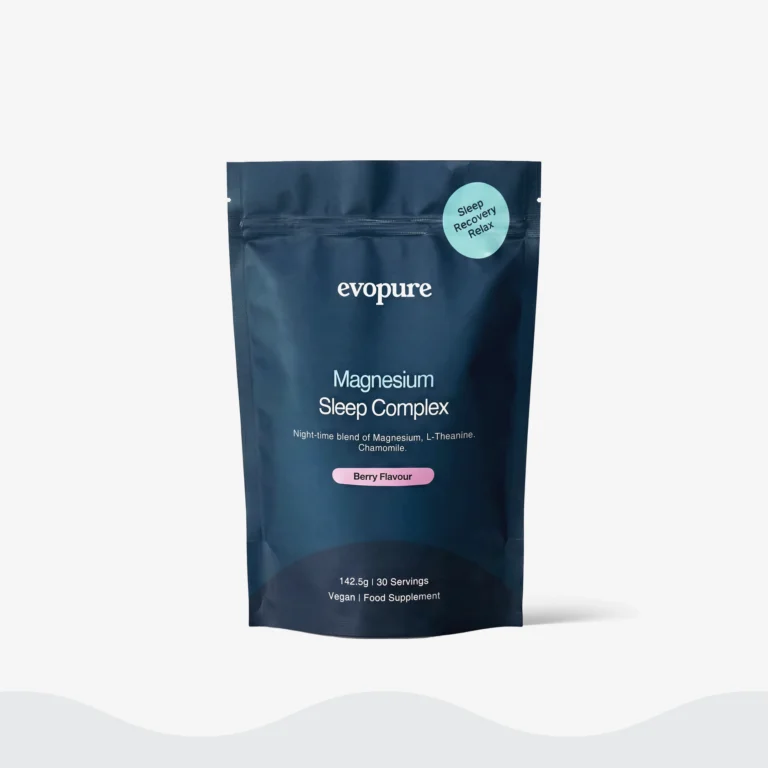
This guide is general information, not medical advice. Evopure makes the Magnesium Glycinate Sleep Complex and CBD Balm.