Last updated: November 2026
The Hospital Anxiety and Depression Scale (HADS) is a 14-question form that screens for anxiety and depression. Seven questions cover each, scored 0 to 3, giving two scores out of 21. On each, 0 to 7 counts as normal, 8 to 10 as borderline and 11 or more as a likely problem. It’s a screening tool, not a diagnosis.
What is the Hospital Anxiety and Depression Scale?
Psychiatrists Anthony Zigmond and Philip Snaith published the HADS in 1983 for hospital outpatient clinics, where anxiety and depression in physically ill patients were often missed. So it leaves out symptoms an illness itself could cause, such as loss of appetite. A review of 747 studies found it also works well in primary care and the general population.
It takes 2 to 5 minutes, asks how you have felt over the past week and is for adults (17 and over). Hospital teams, GPs and researchers use it.
What do the HADS questions ask?
The HADS is copyright and licensed by its publisher, GL Education, so we don’t reproduce the questions. In general terms:
- Anxiety (HADS-A), 7 questions: tension, worry, restlessness, sudden panic and a sense of dread.
- Depression (HADS-D), 7 questions: mostly loss of enjoyment, plus laughter, cheerfulness and looking forward to things.
The focus on lost enjoyment was deliberate: Snaith saw it as a core feature of depression. For the physical signs the HADS skips, see anxiety symptoms.
How is the HADS scored?
Each answer scores 0 to 3. The anxiety and depression answers are added up separately, never together, giving two scores from 0 to 21. These are the bands Zigmond and Snaith set out:
| Score (each half) | How it’s usually read |
|---|---|
| 0 to 7 | Normal range |
| 8 to 10 | Borderline: anxiety or depression may be present |
| 11 to 21 | Abnormal: anxiety or depression is probably present |
The publisher’s current version uses four bands: normal, mild, moderate and severe. In the 747-study review, a cut-off of 8 picked up about 80% of people with anxiety or depression and correctly ruled out about 80% of those without.
What does my HADS score mean?
A high score means your answers look like those of people with anxiety or depression; only a clinical assessment can diagnose either. At a cut-off of 8, about 1 in 5 people without either condition still score that high. A borderline score that lasts a few weeks is worth talking about.
Stress can push scores up too: see stress vs anxiety and low mood vs depression, or count recent life changes with the Holmes and Rahe stress scale.
HADS vs GAD-7 and PHQ-9
NHS Talking Therapies uses the free GAD-7 and PHQ-9 instead, usually at each session to track progress.
| Questionnaire | What it checks | Questions | Common cut-off |
|---|---|---|---|
| HADS | Anxiety and depression, two scores | 14 | 8 or 11 on each half |
| GAD-7 | Anxiety, mainly generalised anxiety | 7 | 8 or more |
| PHQ-9 | Depression severity | 9 | 10 or more |
PHQ-9 scores of 5, 10, 15 and 20 mark mild, moderate, moderately severe and severe depression. Unlike the HADS, it includes physical symptoms such as sleep and appetite. For practical help with worry, see how to deal with anxiety.
When to get help
Get support if your score is borderline or high, or you’ve felt anxious or low most days for two weeks or more. See also how to stop a panic attack and burnout symptoms.
Where to get help
- Your GP: to talk through your score and your options.
- NHS Talking Therapies (England): if you’re 18 or over (16 or over in some areas), you can refer yourself without seeing a GP.
- NHS 111: if you need help urgently but it isn’t an emergency, call 111 and choose the mental health option.
- Samaritans: call 116 123, free, day or night.
- Shout: text SHOUT to 85258, free and 24/7.
- 999 or A&E: if someone’s life is at risk or they have seriously harmed themselves.
Supplements and your routine
No supplement changes a HADS score or treats anxiety or depression; therapy, sleep, movement and people come first. Some adults like a few drops or an evening drink as part of a calmer routine.
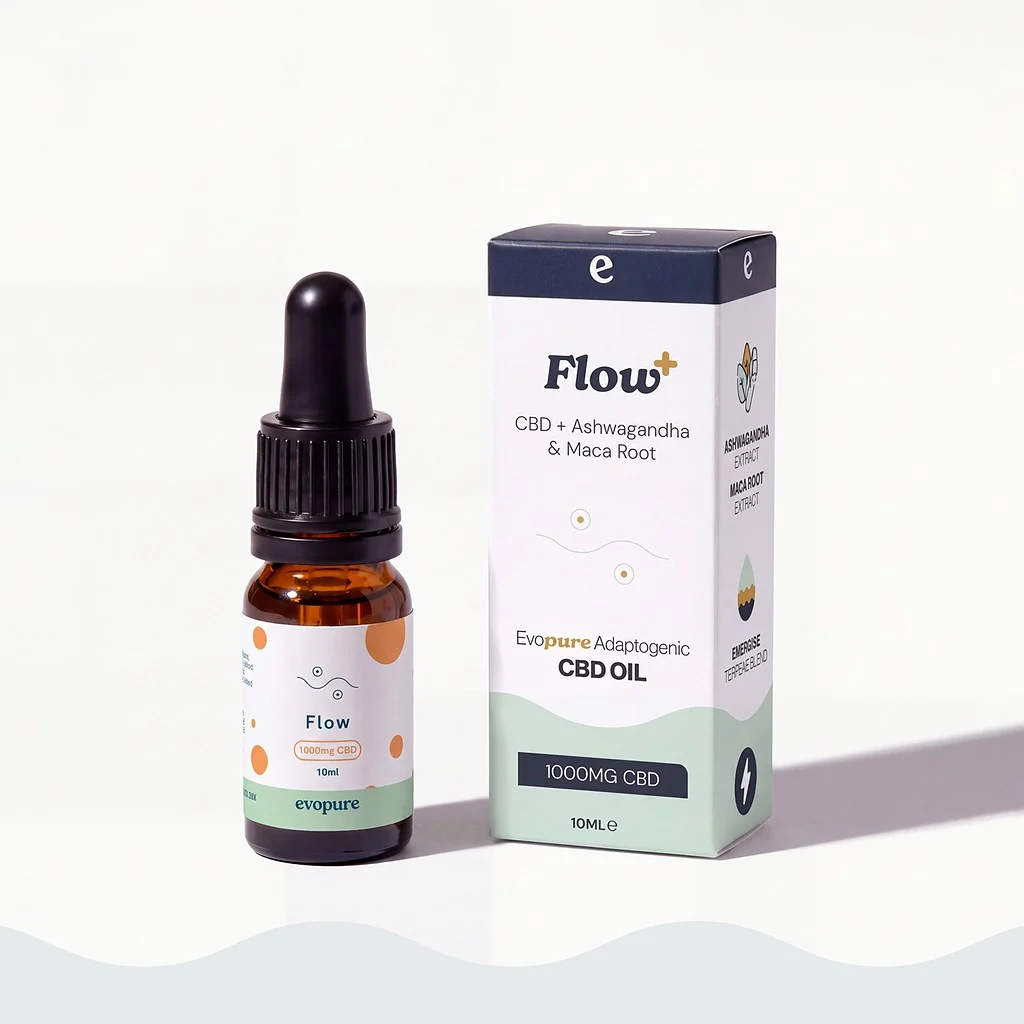
Our pick
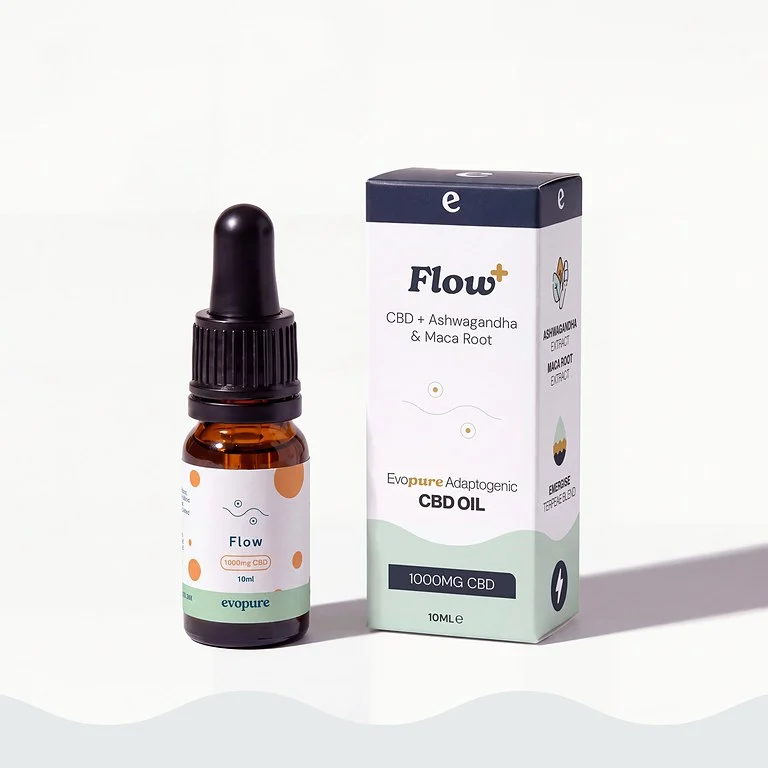
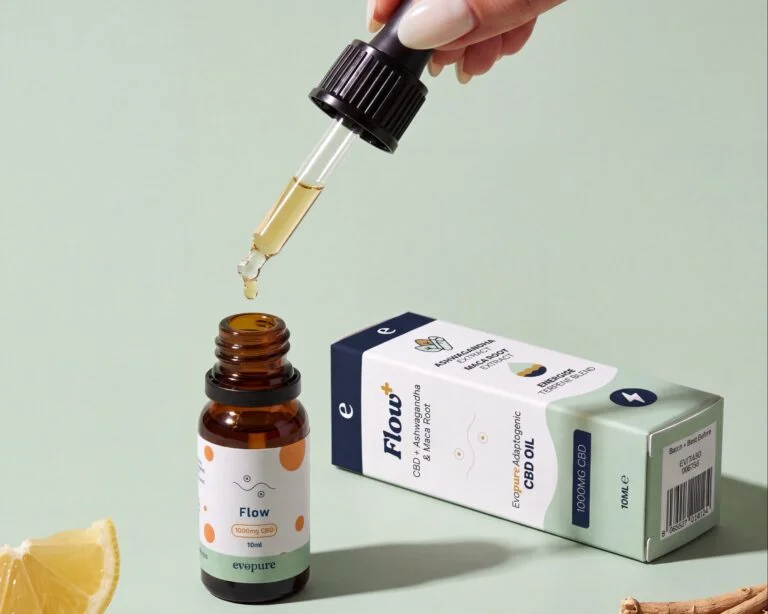
Flow CBD Oil With Ashwagandha & Maca
for daytime, Flow CBD Oil is broad spectrum CBD with 35mg ashwagandha root extract and 35mg maca root extract per half pipette (0.35ml), which gives 17.5mg CBD on the 500mg bottle. Because it contains ashwagandha, it isn’t for anyone with a thyroid, liver or autoimmune condition, and don’t take it alongside another ashwagandha product.
Add Flow CBD Oil 500mg to bag or choose another strength
Vegan, made in the UK, adults only. 0% THC, on the FSA public list (validated), batch reports on our lab testing page. Free UK delivery over £45, 14-day returns on unopened items.
Subscribe from £22.49One-off from £29.99
View productThe FSA’s 10mg a day figure is precautionary advice rather than a legal limit, set while longer-term safety research continues. At Evopure we think it is a very cautious figure, and many adults use more. If you go above it, increase slowly, and check with your GP or pharmacist first if you take any medication. On Flow, about 0.2ml on the 500mg (0.1ml on the 1,000mg) gives 10mg.
For evenings, our Magnesium Glycinate Sleep Complex is a berry drink with 290mg of magnesium per 4.75g serving; magnesium contributes to normal psychological function. The Reishi Mushroom Adaptogenic Complex is a reishi hot chocolate that contains a little natural caffeine from the cacao.
iIf you take antidepressants or any regular medicines, check with your GP or pharmacist first. We don’t recommend our products during pregnancy or breastfeeding. More on the evidence: magnesium for anxiety and ashwagandha side effects.
Sources 7
- Zigmond AS, Snaith RP (1983). The hospital anxiety and depression scale. Acta Psychiatr Scand.
- Snaith RP (2003). The Hospital Anxiety And Depression Scale. Health Qual Life Outcomes.
- Bjelland I, et al. (2002). The validity of the Hospital Anxiety and Depression Scale. J Psychosom Res.
- GL Education. Hospital Anxiety and Depression Scale (checked November 2026).
- Spitzer RL, et al. (2006). The GAD-7. Arch Intern Med; Kroenke K, et al. (2001). The PHQ-9. J Gen Intern Med.
- Gyani A, et al. (2013). Enhancing recovery rates: lessons from year one of IAPT. Behav Res Ther.
- NHS. Find an NHS Talking Therapies service; PHQ Screeners.
General information, not medical advice. Evopure is not connected with GL Education. Evopure makes Flow CBD Oil, the Magnesium Glycinate Sleep Complex and the Reishi Mushroom Adaptogenic Complex.